Board of Peace Hardens Gaza Withdrawal Terms, Demanding Full Hamas Disarmament Before Any Israeli Pullback
The United States-backed Board of Peace has significantly escalated the conditions for an Israeli withdrawal from the Gaza Strip, abandoning its previously articulated phased approach in favor of a demand for complete disarmament by Hamas before any Israeli forces pull back. This dramatic policy reversal came after senior officials from the Board met with Israeli Prime Minister Benjamin Netanyahu, signaling a significant concession to Israel’s long-standing demands and potentially unraveling previously established understandings with Palestinian factions.
The Policy Reversal: From Phased Approach to Absolute Disarmament
The core of the Board’s revised stance dictates that any Israeli withdrawal beyond the "Yellow Line"—a demarcation established following the October 2025 ceasefire and dividing Gaza into areas of Israeli and Palestinian control—is now contingent upon the full and verifiable disarmament of Hamas. This includes light weapons, heavy weapons, and the destruction of its extensive tunnel network. "Contrary to inaccurate reports, we note that the withdrawal of the IDF beyond the Yellow Line will take place only once decommissioning is complete, as Hamas committed to the mediators. This applies to light weapons, heavy weapons and the tunnels alike," the Board stated following its Monday meeting in Washington D.C., held on August 4, 2026. This declaration marks a stark departure from the Board’s earlier proposal, which had envisioned a gradual, reciprocal process of Israeli withdrawals paired with the progressive decommissioning of Palestinian weaponry.
Background to the ‘Board of Peace’ and the October 2025 Ceasefire
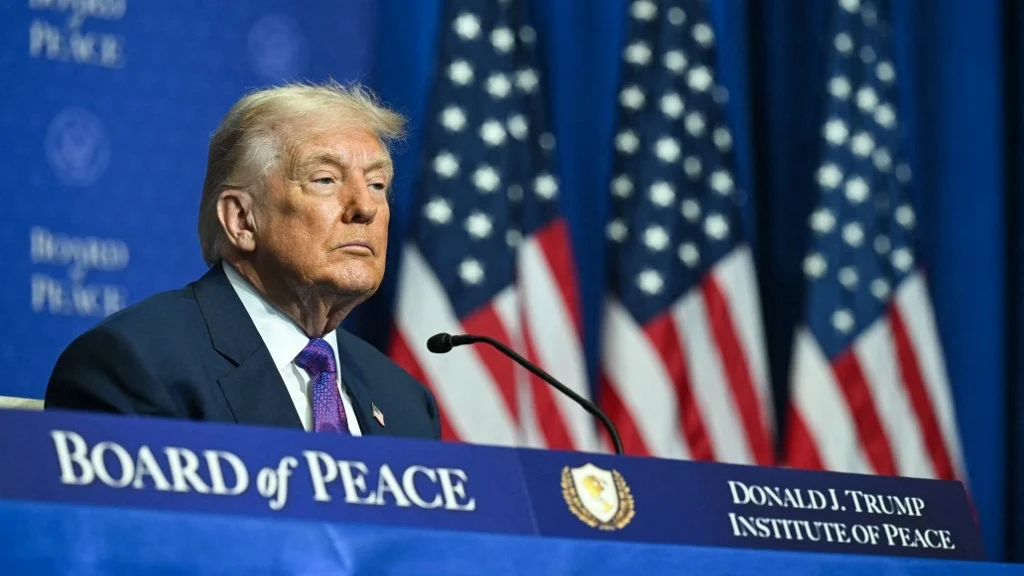
The Board of Peace, inaugurated in February 2026 with US President Donald Trump attending its inaugural meeting, was established in the tumultuous aftermath of the protracted conflict that ravaged Gaza in late 2025. Its primary mandate was to broker and oversee a durable peace framework between Israel and Palestinian factions, particularly Hamas, following the devastating hostilities. The October 2025 ceasefire, which brought a temporary cessation to widespread violence, was a fragile agreement that introduced the "Yellow Line" as a provisional boundary. This line was intended to delineate zones of control and facilitate humanitarian aid while long-term peace negotiations progressed. However, since its establishment, Israel has incrementally expanded its control, seizing additional Palestinian territory within the enclave. Current estimates indicate Israel now controls over 60 percent of Gaza, with Prime Minister Netanyahu publicly stating an ambition to increase this to approximately 70 percent, further exacerbating humanitarian challenges and territorial disputes.

The Original Proposal and Hamas’s Initial Acceptance
Just last week, officials from the Board of Peace had outlined a more conciliatory framework. This initial proposal stipulated that Israel would commence its withdrawal to the Yellow Line as a first phase, contingent upon Hamas’s commitment to a disarmament plan. The overall plan then linked subsequent phased Israeli withdrawals to the gradual decommissioning of Palestinian weapons. Nickolay Mladenov, the Board’s high representative, had explicitly affirmed this reciprocal arrangement, stating, "Withdrawal must move in lockstep with decommissioning." Crucially, Hamas had reportedly accepted the sequence and conditions of this original proposal, viewing it as a viable pathway towards de-escalation and potential reconstruction efforts in the besieged territory. This acceptance was seen as a rare moment of consensus, offering a glimmer of hope for a region perpetually mired in conflict.
Netanyahu’s Unyielding Demands and Israel’s Stance
The latest shift in the Board’s position appears to be a direct consequence of intense pressure from the Israeli government. Prime Minister Benjamin Netanyahu has consistently maintained an unyielding stance, insisting that Israel would not withdraw its forces nor cease its military operations in Gaza until Hamas was completely disarmed. According to reports from Israel Hayom, Netanyahu conveyed to Mladenov that Israel would neither halt its attacks on Gaza nor pull back from the Yellow Line under the previous terms. Furthermore, Israel has sought explicit assurances that even after Hamas’s hypothetical disarmament, it would retain the right to launch military operations in Gaza. The Israeli government also voiced strong objections to the proposed participation of Turkish and Qatari representatives in any committee tasked with monitoring disarmament, advocating instead for the complete destruction of Hamas’s weapons rather than their storage, a point of contention given the political implications of such a move.
A Chronology of Contradictions and Revisions
The sequence of events on Monday, August 4, 2026, highlighted the Board’s rapid pivot. Initially, the Board’s statement referred to the "full withdrawal of the IDF," which, while ambiguous, left open the possibility of earlier partial withdrawals as per the original phased plan. However, within minutes of its initial publication, the Board’s communication was revised, with the word "full" conspicuously removed. This subtle yet significant alteration brought the Board’s official position firmly in line with Netanyahu’s demand for Israeli forces to remain in place until Hamas is entirely disarmed, effectively nullifying any prior commitment to phased withdrawals. This revision not only contradicted the Board’s high representative, Nickolay Mladenov, but also fundamentally undermined the agreement that Hamas had previously accepted.

Immediate Aftermath and Continued Escalation
The meeting and the subsequent policy shift did little to quell the immediate violence. Hours after the Board of Peace concluded its discussions and announced its revised terms, an Israeli air strike targeted Gaza City’s Sheikh Ajlin neighborhood, resulting in the deaths of two Palestinians. This incident underscored the volatile and fragile security situation on the ground, emphasizing the disconnect between diplomatic efforts and the realities of ongoing conflict. Mladenov, reflecting on the challenging nature of the talks, acknowledged the arduous path ahead. On X (formerly Twitter), he wrote, "This is the start of the hard phase and I have never pretended otherwise. Not much of what we do now is dramatic. It is slow, grinding and technical work." His statement, while aiming to manage expectations, implicitly acknowledged the significant hurdles and potential for stagnation in the peace process.
Implications for Peace, Stability, and the Board’s Credibility
The Board of Peace’s decision to cave to Israeli demands carries profound implications for the future of peace efforts in the region. By abandoning its phased approach and tying any Israeli withdrawal to absolute Hamas disarmament, the Board risks several critical outcomes:
- Undermining Trust and Agreements: Hamas’s previous acceptance of the original sequence was a rare diplomatic breakthrough. This reversal could severely erode any trust built with Palestinian factions, making future negotiations significantly more difficult. It could be perceived as a betrayal, strengthening the arguments of hardliners within Hamas who distrust external mediation.
- Empowering Hardline Positions: The move effectively rewards Israel’s uncompromising stance, potentially encouraging similar tactics in future negotiations. It signals that sustained pressure and refusal to concede can yield favorable outcomes, diminishing the incentive for flexibility.
- Increased Instability and Renewed Conflict: With the previous agreement now undermined, the prospects for a lasting ceasefire appear even dimmer. If Hamas perceives this as a unilateral shift against its interests, it could lead to a resurgence of hostilities, further destabilizing an already volatile region.
- Humanitarian Crisis Exacerbation: The continued Israeli control over a significant portion of Gaza, coupled with a lack of a clear withdrawal timeline, perpetuates the severe humanitarian crisis within the enclave. Any delay in full Israeli withdrawal hampers reconstruction efforts, restricts movement, and exacerbates the suffering of Gaza’s population.
- Credibility of the Board of Peace: The rapid change in policy, particularly after a meeting with one party, raises serious questions about the Board’s impartiality and effectiveness as a mediator. Its ability to command respect and facilitate genuine dialogue could be severely compromised, diminishing its role as a credible peace broker.
- Regional Dynamics: The shift could also influence regional dynamics, potentially alienating key stakeholders like Turkey and Qatar, whose participation in monitoring was explicitly rejected by Israel. Their exclusion could further complicate international efforts to stabilize the region.
Future Outlook
The path forward for the Board of Peace appears fraught with challenges. The immediate impact of this policy shift is likely to be a deepening of mistrust and an intensification of the stalemate. For any sustainable peace to emerge, a framework that addresses the security concerns of both Israelis and Palestinians, while also respecting the dignity and rights of all parties, is essential. The current trajectory, heavily favoring one side’s demands, risks perpetuating the cycle of violence and rendering the "Board of Peace" an ineffective instrument for achieving its stated goals. The international community will be closely watching whether this hardened stance leads to genuine disarmament and withdrawal, or merely to a further entrenchment of conflict and despair in the Gaza Strip. The onus now falls on the Board to demonstrate how this revised strategy can realistically lead to de-escalation and a lasting resolution, rather than merely reflecting the demands of the most powerful actor in the conflict.

Related Posts

Over 150 Israeli Settlers Storm Al-Aqsa Compound and Perform Prayers, Violating Status Quo Under Police Protection.
UN Report Highlights Over 900 Obstacles Hampering West Bank Aid Amid Escalating Humanitarian Crisis