BAE Systems Unveils Brontanax Unmanned Combat Aircraft at Farnborough as Britain Accelerates Sovereign Storm Fighter Program
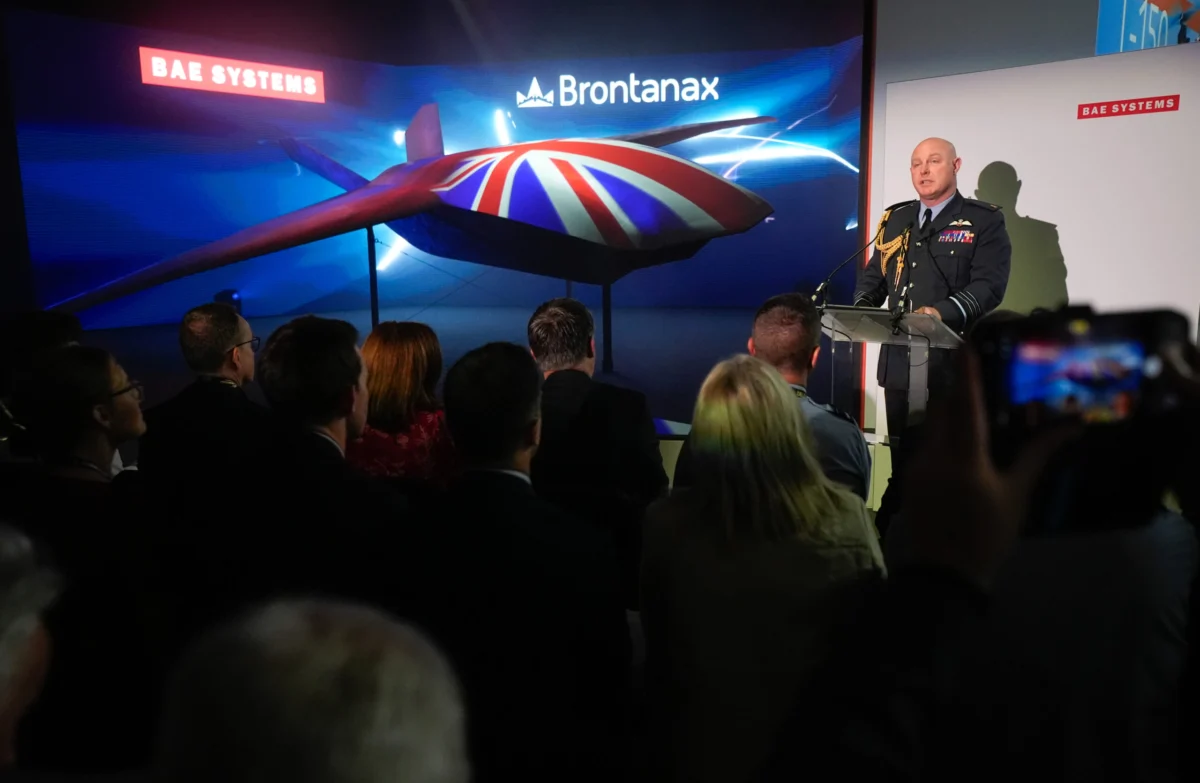
The landscape of global aerial warfare underwent a significant shift on Wednesday at the Farnborough International Airshow, where BAE Systems, the United Kingdom’s premier defense contractor, officially pulled the curtain back on Brontanax. This new uncrewed autonomous Collaborative Combat Aircraft (CCA) represents a pivotal entry into a defense market that has become the most fiercely contested sector of the mid-2020s. Named after the ancient Greek words for "thunder" and "king," the Brontanax is designed to serve as a high-performance "loyal wingman," augmenting traditional piloted fighter fleets with a blend of stealth, modularity, and cost-effective mass. The unveiling, attended by senior military officials and government ministers, signals a major acceleration in the U.K.’s ambition to maintain air superiority in an era increasingly defined by autonomous systems and high-intensity peer-to-peer conflict.
A New Era of Autonomous Air Combat
The Brontanax, roughly the size of a Hawk advanced trainer jet, is the physical manifestation of several years of clandestine development and internal investment by BAE Systems. During the presentation, British Air Chief Marshal Sir Harvey Smyth emphasized that the aircraft is not merely a prototype but an "operational concept demonstrator" that bridges the gap between current fourth- and fifth-generation fighters and the future Global Combat Air Programme (GCAP). The aircraft’s design philosophy centers on the "loyal wingman" concept, where unmanned platforms fly alongside manned jets like the F-35 Lightning II or the Eurofighter Typhoon, performing dangerous tasks such as electronic warfare, surveillance, or direct kinetic strikes to shield human pilots from the highest risks.
BAE Systems’ leadership noted that the Brontanax has been developed to provide approximately 70% to 80% of the capability of a traditional crewed fighter jet but at a fraction of the cost. With an estimated price tag of roughly $25 million per unit, the aircraft is projected to cost less than 25% of a modern frontline fighter. This economic shift is critical for Western air forces, which have struggled with the "exquisite" nature of modern platforms—high-cost, low-quantity assets that are difficult to replace if lost in combat.
Chronology of Development and the Path to 2030
The development of Brontanax traces back to 2022, when BAE Systems began a collaborative project with the Royal Air Force (RAF) Rapid Capabilities Office. While many defense projects of this scale rely heavily on government seed funding from the outset, BAE Systems took the unusual step of investing hundreds of millions of pounds of its own capital into the CCA program. This "self-funded" approach allowed the company to bypass some of the bureaucratic delays inherent in early-stage defense procurement, leading to the rapid assembly of a full-scale demonstrator at BAE’s Warton facility in Lancashire.
The timeline for Brontanax is aggressive, reflecting the urgency felt across European defense ministries following the invasion of Ukraine. BAE Systems confirmed that the first flight tests are scheduled to commence in 2027. If the testing phase proceeds as planned, the aircraft could enter full operational service by 2030. This puts BAE Systems in direct competition with international rivals who are operating on similar or slightly more advanced schedules. For instance, Boeing’s MQ-28 Ghost Bat has already begun flight testing in Australia and is expected to be operational by 2028. However, BAE officials argue that the Brontanax offers superior stealth characteristics and a more "open" software architecture that will make it more adaptable to the evolving electronic threats seen in modern theaters of war.
Technical Specifications and Strategic Modularity
The Brontanax is built on a modular, open-architecture framework. This design choice is a direct response to the rapid pace of technological change; by decoupling the software from the hardware, BAE ensures that the aircraft can receive "over-the-air" updates to its mission systems, sensors, and autonomous algorithms. This flexibility allows the aircraft to be reconfigured for different roles—such as reconnaissance, decoy missions, or offensive strikes—within hours rather than weeks.
Key technical highlights of the Brontanax include:
- Stealth Integration: Unlike some earlier drone concepts, the Brontanax features a low-observable airframe designed to operate in contested "anti-access/area denial" (A2/AD) environments.
- Size and Scale: By mirroring the dimensions of a Hawk trainer, the aircraft can utilize existing hangar infrastructure and maintenance equipment, reducing the logistical footprint for the RAF.
- Autonomous Logic: The aircraft utilizes advanced AI capable of making real-time tactical decisions under the supervision of a human "mission commander" in a nearby crewed aircraft.
- Non-Military Supply Chain: In a bid to drive down costs and increase production speed, BAE Systems is looking toward non-traditional defense suppliers, including automotive and commercial tech firms, to provide components for the Brontanax.
The Sovereign "Storm Fighter" Program and Government Support
The unveiling of Brontanax coincides with a significant policy shift by the British government. Earlier in July 2026, the U.K. Ministry of Defence announced the launch of "Storm Fighter," a sovereign CCA program backed by an initial £300 million ($401 million) investment. This program is intended to ensure that the U.K. retains the industrial capability to design and build its own autonomous combat systems rather than relying solely on American or other foreign platforms.
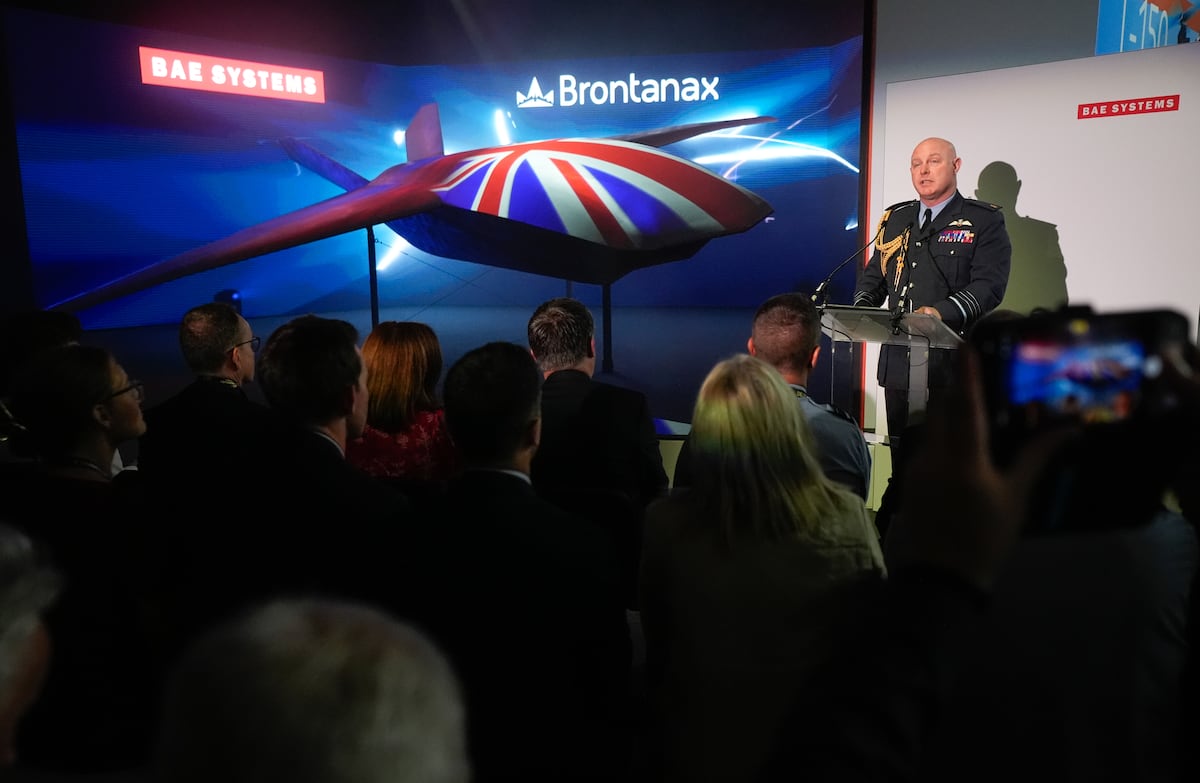
Wes Streeting, the U.K.’s newly appointed Defence Secretary, hailed the Brontanax reveal as a "groundbreaking moment" for British industry. Speaking at Farnborough, Streeting emphasized that the government views autonomous systems as the backbone of future national security. "We are moving away from the era of the ‘few and the expensive’ toward a future of ‘the many and the capable,’" Streeting remarked. He confirmed that the Ministry of Defence would adopt the Brontanax as its primary demonstrator for the Storm Fighter initiative, signaling a tight alignment between BAE Systems’ private investment and the government’s strategic requirements.
Market Context: A Crowded and Competitive Skies
BAE Systems enters a market that is rapidly becoming saturated with high-tech competitors. At the Farnborough Airshow, the presence of other CCA contenders was palpable.
- The United States: The U.S. Air Force has already awarded initial production contracts to Anduril and General Atomics for its own CCA program.
- Boeing: The MQ-28 Ghost Bat continues to be a frontrunner in the "loyal wingman" space, with strong backing from the Royal Australian Air Force and significant interest from the U.S. Pentagon.
- Airbus: In Europe, Airbus is developing its own Remote Carriers as part of the Future Combat Air System (FCAS/SCAF) program involving Germany, France, and Spain.
BAE Systems CEO Charles Woodburn acknowledged the competition but noted that BAE’s deep integration with the RAF and its experience with the F-35 program gives Brontanax a unique advantage. "We could see where the market was going," Woodburn told Reuters. "We’ve put our money where our mouth is because we believe the Brontanax offers the right balance of stealth, capability, and price that the U.K. and its allies need."
Analysis of Global Implications and the "Ukraine Lesson"
The strategic impetus behind the Brontanax and the wider CCA movement is rooted in the hard lessons learned from the conflict in Ukraine. Defense analysts have noted that without air superiority, modern warfare devolves into a grueling, attritional struggle characterized by trench warfare and massive artillery exchanges. To avoid this, Western air forces must be able to suppress enemy air defenses and maintain control of the skies.
However, the proliferation of advanced surface-to-air missiles (SAMs) has made the environment too dangerous for traditional, manned-only fleets. The loss of a single $100 million F-35 and its highly trained pilot is a strategic blow that few nations can afford to sustain repeatedly. The Brontanax provides a solution to this "attrition reserve" problem. By deploying a mass of $25 million drones, an air force can overwhelm enemy defenses, force them to deplete their missile stocks on cheaper targets, and provide the necessary cover for manned assets to complete their missions.
Furthermore, the Brontanax addresses the pilot shortage currently facing many NATO members. While autonomous, these aircraft still require human oversight, but one pilot can potentially command a "swarm" of four to six CCAs, effectively acting as a force multiplier that triples or quadruples the combat power of a single squadron.
Economic and Export Potential
Beyond the immediate defense benefits, the Brontanax program is a major economic engine for the U.K.’s aerospace sector. BAE Systems employs thousands of engineers at its Warton and Samlesbury sites, and the CCA program is expected to create or sustain hundreds of high-skilled jobs.
Export potential is also a key factor in BAE’s strategy. Company officials indicated that several nations in Europe and the Middle East have already expressed interest in the Brontanax. Because the aircraft is designed with modularity in mind, it can be tailored to meet the specific regulatory and operational requirements of different allied nations. This exportability is vital for driving down the unit cost through economies of scale, making the platform even more attractive to the U.K. Ministry of Defence.
Conclusion and Future Outlook
As the Farnborough International Airshow continues, the Brontanax remains the centerpiece of discussions regarding the future of European defense. The transition from the "Storm Fighter" demonstrator to a fully operational fleet will be the primary focus for BAE Systems and the RAF over the next three years. With flight testing looming in 2027, the defense world will be watching closely to see if the "Thunder King" can live up to its name and deliver the autonomous revolution that modern air forces so urgently require. The successful integration of Brontanax into the RAF’s order of battle would not only secure the U.K.’s position as a leader in autonomous technology but also redefine the economics and tactics of 21st-century aerial combat.

Related Posts
Pentagon Forges Landmark Seven-Year Agreements with Boeing and RTX to Accelerate Standard Missile-3 Production and Stabilize Defense Supply Chains
Boeing Unveils Ultra Low-Cost Seeker to Enhance Missile Inventory and Combat Cost Challenges in Modern Warfare