Australia-Vietnam Relations Under Scrutiny as To Lam Arrives in Canberra Amid Growing Human Rights Concerns and Regional Security Shifts
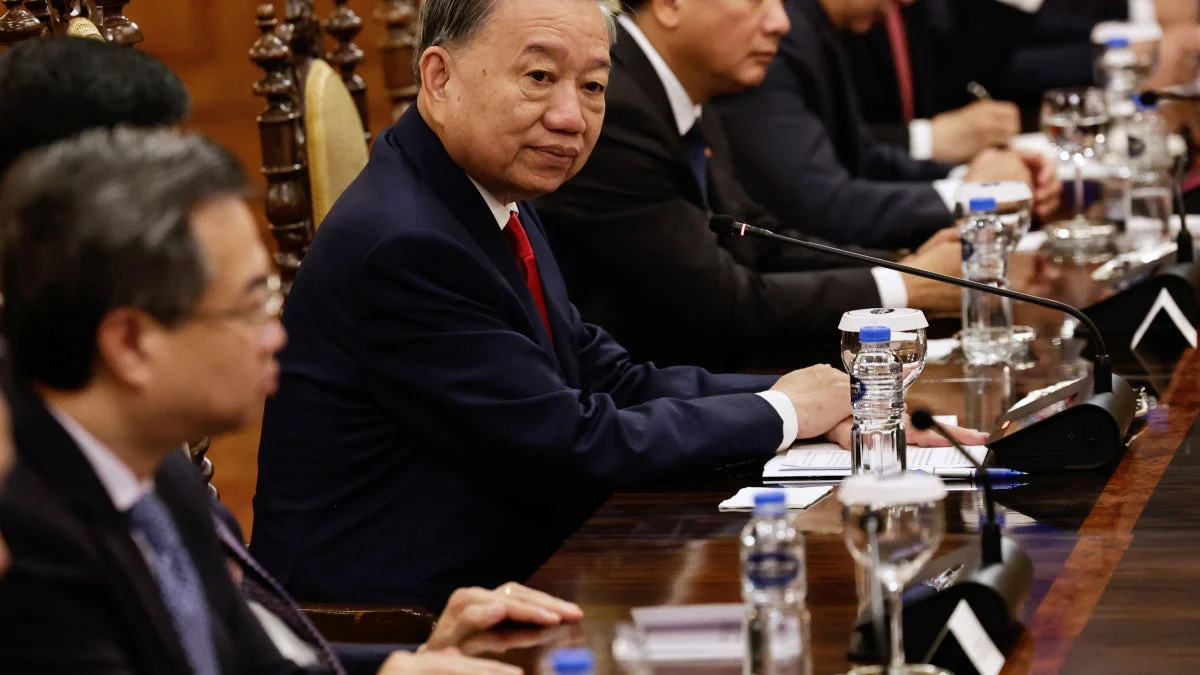
As Australian Prime Minister Anthony Albanese prepares to host To Lam, Vietnam’s President and General Secretary of the Communist Party, in Canberra this week, the diplomatic fanfare surrounding the visit is being shadowed by urgent calls from international observers and human rights organizations. The visit, intended to solidify a burgeoning security and economic alliance, comes at a pivotal moment for Vietnam’s internal politics. To Lam, who recently ascended to the pinnacle of the Vietnamese political hierarchy, is increasingly viewed by the international community as one of the most repressive leaders in Southeast Asia, raising difficult questions for the Australian government regarding its commitment to human rights within its Indo-Pacific strategy.
The meeting follows the elevation of the bilateral relationship to a Comprehensive Strategic Partnership (CSP) in March 2024, a move that signaled Australia’s desire to diversify its regional dependencies and deepen ties with a key ASEAN member. However, the rapid consolidation of power by To Lam and the subsequent intensification of a domestic crackdown on civil society have created a friction point. Critics argue that while Canberra seeks to leverage Hanoi as a counterweight to regional volatility, it must not overlook the systematic erosion of fundamental freedoms that has defined To Lam’s tenure in the Ministry of Public Security and his subsequent rise to the leadership of the Communist Party.
The Architect of a Decadelong Crackdown
To Lam’s influence on the modern Vietnamese state is profound, rooted in his eight-year tenure as the Minister of Public Security from 2016 to 2024. During this period, he oversaw the Ministry of Public Security (MPS), a sprawling apparatus responsible for internal security, intelligence, and the policing of political dissent. Under his leadership, the MPS spearheaded a far-reaching campaign that decimated Vietnam’s budding civil society, which had seen a modest expansion in the early 2010s during negotiations for various free trade agreements.
The crackdown targeted a broad spectrum of the population, including independent journalists, environmentalists, human rights lawyers, and social media commentators. High-profile figures such as Pham Doan Trang, an internationally acclaimed journalist and author, were swept up in this wave of arrests. Others, including Pham Chi Dung, Nguyen Tuong Thuy, Nguyen Lan Thang, and the land rights activist Can Thi Theu, received lengthy prison sentences for their peaceful advocacy. The legal basis for these detentions often rested on vaguely worded provisions of the Vietnamese Penal Code, specifically Article 117 (distributing anti-state propaganda) and Article 331 (abusing democratic freedoms to infringe upon the interests of the State).
Since To Lam’s transition to the roles of President and General Secretary in 2024—effectively making him the most powerful figure in the country—the situation has worsened. His administration has expanded the scope of draconian laws to further criminalize free speech. Recent legislative amendments mean that citizens now risk up to seven years in prison for raising complaints about government policies or local officials on digital platforms. This "legalistic" approach to repression has effectively silenced the majority of domestic dissent, forcing many activists into exile in neighboring countries or further abroad.
Chronology of Political Consolidation and Repression (2016–2026)
The trajectory of To Lam’s rise and the simultaneous decline of civil liberties in Vietnam can be traced through several key milestones:
- 2016–2021: To Lam serves as Minister of Public Security. This period marks the beginning of the "Blazing Furnace" (Đốt Lò) anti-corruption campaign. While ostensibly aimed at cleaning up government graft, observers noted it was also used to purge political rivals and consolidate the power of the security apparatus.
- October 2020: The arrest of Pham Doan Trang just hours after the conclusion of an annual human rights dialogue between the US and Vietnam, signaling Hanoi’s indifference to international pressure.
- March 2024: Australia and Vietnam officially sign the Comprehensive Strategic Partnership (CSP), focusing on five key pillars: political-security cooperation, economic engagement, climate and energy, education, and digital innovation.
- May–August 2024: Following the death of General Secretary Nguyen Phu Trong and the resignation of several top officials amidst the anti-corruption sweep, To Lam is appointed President and subsequently General Secretary of the Communist Party of Vietnam.
- Late 2025 – Early 2026: Vietnamese authorities intensify "transnational repression," targeting activists living in Thailand. Courts begin conducting trials in absentia for high-profile exiles, including Doan Bao Chau and Nguyen Van Dai, issuing sentences ranging from 7 to 17 years.
- June 2026: Police arrest five individuals associated with the publication of a book about Ho Chi Minh that deviated from the official state narrative, demonstrating that even historical and academic inquiry remains a red line for the regime.
- August 2026: To Lam’s state visit to Canberra and New Zealand to strengthen the CSP.
Data and Global Standings: A Record of Decline
The quantitative data regarding Vietnam’s human rights record under the current leadership provides a stark contrast to the country’s economic success. According to the 2024 World Press Freedom Index compiled by Reporters Without Borders (RSF), Vietnam ranks 174th out of 180 countries, placing it among the world’s worst jailers of journalists, alongside China and North Korea.
Human rights organizations estimate that there are currently over 160 political prisoners being held in Vietnamese detention centers and prisons. Many of these individuals are kept in conditions that fall far short of international standards, with reports of restricted access to legal counsel, inadequate medical care, and prolonged periods of solitary confinement.
Furthermore, the reach of the Vietnamese security services has extended beyond its borders. The phenomenon of transnational repression—whereby the state targets its critics living abroad—has become a hallmark of the To Lam era. In Thailand, a traditional sanctuary for Vietnamese refugees, activists have reported being surveilled, harassed, and in some cases, abducted. The recent in absentia convictions of activists like Le Trung Khoa, Dinh Yum, and Siu Di underscore a new strategy of using the domestic legal system to delegitimize and threaten those who have fled the country.
Strategic Interests and the Australian Dilemma
For the Australian government, the visit of To Lam presents a complex diplomatic challenge. Vietnam is Australia’s 12th largest trading partner, and the relationship is vital for Canberra’s regional strategy. The two nations share significant concerns regarding maritime security in the South China Sea and the maintenance of a rules-based order in the Indo-Pacific.
The Comprehensive Strategic Partnership established in 2024 was designed to deepen these ties. Australia is heavily invested in Vietnam’s education sector, with RMIT University maintaining a significant presence in Ho Chi Minh City. Additionally, there is growing cooperation in the transition to green energy and the securing of critical mineral supply chains—areas where Vietnam holds significant potential.
However, human rights advocates argue that these strategic and economic interests should not come at the cost of silence. The annual human rights dialogue between Australia and Vietnam, while a formal mechanism for raising concerns, is often criticized as being a "box-ticking exercise" that yields few tangible results on the ground. Critics suggest that the Australian government should leverage the higher-level access granted by the CSP to press for specific outcomes, such as the release of political prisoners and the repeal of restrictive articles in the Penal Code.
Official Responses and International Reactions
The Vietnamese government consistently maintains that it does not hold "political prisoners" and that only those who have "violated the law" are prosecuted. During previous international engagements, the Vietnamese Ministry of Foreign Affairs has dismissed criticisms of its human rights record as interference in its internal affairs and a failure to understand the specific social and historical context of the country.
In contrast, international bodies and NGOs have been vocal in their condemnation. Human Rights Watch has urged Prime Minister Albanese to move beyond the "quiet diplomacy" of the past. Elaine Pearson, Asia Director at Human Rights Watch, emphasized that the Australian government should be "clear-eyed" about who they are dealing with. "To Lam’s record as the head of the security forces is one of systematic suppression," Pearson noted in a recent briefing. "If the Comprehensive Strategic Partnership is to mean anything, it must include a commitment to the fundamental rights of the Vietnamese people."
Within Australia, members of the Vietnamese diaspora—one of the country’s largest and most vibrant migrant communities—have also expressed concern. Many members of the community fled the Communist regime and remain deeply invested in the cause of democracy and human rights in their homeland. Protests and advocacy efforts from these groups often coincide with high-level visits, putting further pressure on Australian officials to address these issues publicly.
Broader Impact and Regional Implications
The outcome of To Lam’s visit to Canberra will be closely watched by other regional actors and international partners. As Vietnam continues its "Bamboo Diplomacy"—a strategy of flexible engagement with major powers including the United States, China, and Australia—the international community’s response to its domestic repression will set a precedent.
If Australia and other Western democracies prioritize security and trade to the exclusion of human rights, it may embolden the Vietnamese leadership to further tighten its grip on power without fear of international consequence. Conversely, a principled stance that links economic and security cooperation to progress on human rights could provide much-needed support to the embattled civil society activists remaining in Vietnam.
As To Lam and Anthony Albanese sit down to discuss the future of the Indo-Pacific, the shadow of Vietnam’s political prisoners will loom large. The challenge for Canberra is to manage a partnership that is strategically necessary while upholding the democratic values that Australia purports to champion on the world stage. Whether the Comprehensive Strategic Partnership can serve as a platform for genuine reform or merely a shield for continued authoritarianism remains the central question of this high-stakes diplomatic encounter.

Related Posts
Human Rights Watch Calls for Investigation into Death of Detainee Following Removal from Najaf Hospital by Iraqi Drug Police
Human Rights Watch Urges UN Security Council to Extend Lebanon Peacekeeping Mission Amid Escalating Conflict and Humanitarian Crisis