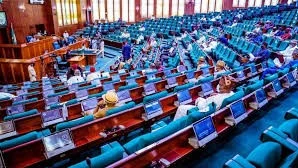
ADC Demands Recommittal of State Police Bill Alleging Procedural Irregularities in House of Representatives
The African Democratic Congress has officially petitioned the House of Representatives to suspend the current legislative progress of the proposed state police constitutional amendment, citing grave concerns over the integrity of the voting process. The opposition party, through its National Publicity Secretary, Bolaji Abdullahi, alleged that the bill’s recent passage on July 23 was marred by procedural violations that undermine the sanctity of the Nigerian Constitution. At the heart of the controversy is the allegation that the House utilized unconventional methods—including the acceptance of votes via WhatsApp from absent lawmakers and the inclusion of members who had signed the attendance register but were not physically present during the voting session—to reach the required constitutional threshold.
This development casts a shadow over one of the most anticipated legislative reforms in Nigeria’s recent history. As the nation grapples with multifaceted security challenges, ranging from insurgency in the Northeast to banditry in the Northwest and kidnapping for ransom in the South, the debate over decentralized policing has moved from the periphery to the center of the national discourse.
A Chronology of the Legislative Push
The quest for state-controlled policing in Nigeria is not a new phenomenon; it has been a recurring theme in every constitutional review exercise since the return to democracy in 1999. However, the current momentum began in earnest following the 2023 general elections, which saw an uptick in regional security concerns.
On July 23, the House of Representatives convened a plenary session to deliberate on the constitution alteration bill. Proponents within the chamber argued that the bill represented a long-overdue response to the failure of the centralized Nigeria Police Force to effectively maintain order across the federation’s 36 states. The session, which was highly charged, culminated in the announcement that the bill had garnered the necessary support to move forward.
The ADC’s intervention, issued on Tuesday, represents the first formal, high-level legislative challenge to the outcome of that session. By questioning the legitimacy of the vote, the party has effectively stalled the perceived consensus, forcing a re-evaluation of the standards applied during the plenary.
The Allegations of Procedural Misconduct
The crux of the ADC’s argument lies in the strict adherence to the Standing Orders of the House of Representatives and the 1999 Constitution (as amended). The party asserts that the "WhatsApp voting" method is not only an innovation that lacks legal standing but a direct contradiction of the requirement for physical presence during constitutional amendments.
"The Constitution is not amended by convenience," Abdullahi stated in the official communique. "It is amended through strict procedures that leave no room for improvisation. Therefore, regardless of the noble intentions behind the amendment, the constitutional process for amendment must not be circumvented."
Furthermore, the party highlighted that the bill failed to undergo a rigorous clause-by-clause scrutiny. By allegedly curtailing the opportunity for lawmakers to debate specific provisions, the House is accused of prioritizing political expediency over the constitutional duty of exhaustive legislative review. This lack of transparency, the ADC argues, makes the resulting bill vulnerable to future litigation and constitutional challenges, potentially rendering any state police force established under this law legally toothless.
Data and Context: The Security Landscape
To understand the urgency of the state police debate, one must consider the deteriorating security statistics of the past decade. According to data from the Nigeria Security Tracker (NST), the country has witnessed a consistent rise in non-state actor violence. Between 2020 and 2024, incidents of mass abduction and communal clashes have increased by approximately 40%, placing an unprecedented strain on the Nigeria Police Force.
The current ratio of police personnel to the population remains well below the United Nations recommendation of one officer for every 450 citizens. Nigeria’s current ratio is estimated to be roughly one officer for every 800 to 1,000 citizens, depending on the region. Supporters of the state police bill argue that localized recruitment, combined with better intelligence gathering at the grassroots level, would bridge this gap.
However, critics, including some civil society organizations, have raised valid concerns regarding the "politicization of policing." There is a legitimate fear that state governors—who already wield significant influence over state electoral commissions—could leverage state police forces to suppress political opposition, a concern that the ADC alluded to when it demanded "safeguards" and "robust public debate."
Implications for the Federal Structure
The establishment of state police would represent the most significant shift in Nigeria’s federal structure since the transition to civil rule. It effectively moves the country closer to true federalism, where sub-national units share the burden of maintaining internal order.
However, the legal implications are profound. If the bill is passed via a process that is later found to be unconstitutional, it could lead to a constitutional crisis. Legal experts note that any amendment to the Constitution must follow the procedure outlined in Section 9, which requires a two-thirds majority of all members of the National Assembly and the subsequent approval of two-thirds of the State Houses of Assembly. If the base vote in the House is tainted, the entire foundation of the subsequent state-level ratifications could be deemed invalid by the Supreme Court.
Official Responses and the Path Forward
While the leadership of the House of Representatives has yet to issue a detailed rebuttal to the specific claims of "WhatsApp voting," the incident has sparked a wider conversation about the necessity of technological modernization in legislative procedures versus the requirements of physical accountability.
Other political stakeholders, including the main opposition party, the Peoples Democratic Party (PDP), and various civil society groups, have begun to weigh in. There is a growing consensus that the House must allow for a period of public hearing to pacify concerns regarding the bill’s content. The ADC has urged the House to recommit the bill to a process that involves:
- A formal re-voting process: Ensuring that all votes are cast by members physically present in the chamber.
- Extended Public Hearings: Providing the Nigerian public, civil society, and security experts an opportunity to scrutinize the clauses of the bill.
- Constitutional Audit: A review of the bill’s provisions by a neutral body of legal experts to ensure the language does not grant governors unchecked power.
Conclusion: The Necessity of Legitimacy
The push for state police is, by all accounts, a noble and necessary objective to salvage Nigeria’s security architecture. However, as the ADC correctly points out, the nobility of an objective does not excuse the violation of the process. If Nigeria is to successfully transition to a decentralized policing model, the legislative process must be as transparent as the expected outcome is transformative.
For the House of Representatives, the path forward is clear: either address the allegations with total transparency—perhaps through an independent review of the plenary recordings and records—or recommit the bill to a fresh, above-board process. Failure to do so risks creating an institution that, while intended to solve the insecurity crisis, may eventually serve as a catalyst for further political instability. The Nigerian people deserve a security framework that is born of consensus and strict constitutional adherence, rather than one forged in the shadow of procedural shortcuts. As the nation watches, the House’s next move will define whether this landmark legislation is remembered as a triumph of democracy or a cautionary tale of legislative haste.