Accountability for Climate Inaction and the Legal Framework for State Responsibility in the Fossil Fuel Era
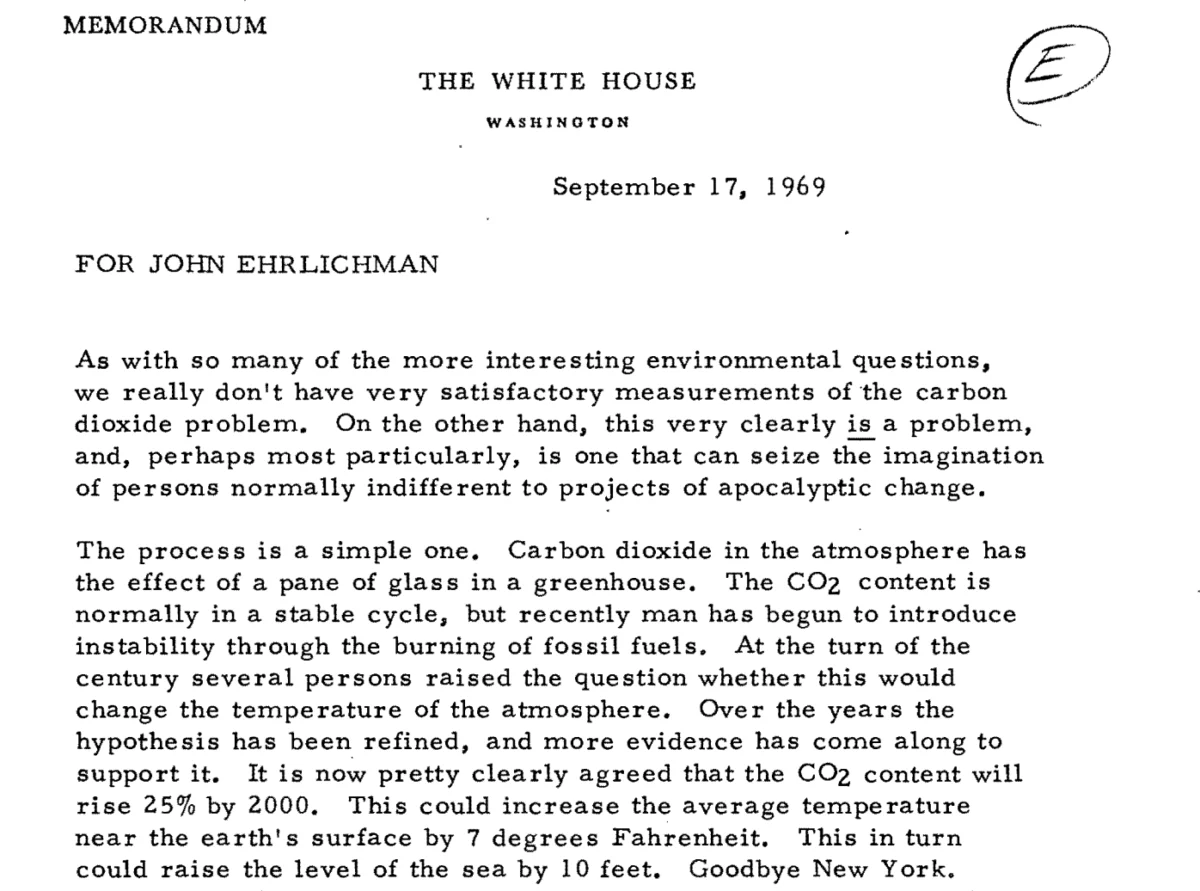
The focus of climate litigation and public discourse has long centered on the actions of private fossil fuel corporations, specifically regarding the timeline of when these entities first became aware that their products were causing catastrophic harm to the global climate, public health, and the environment. However, a significant shift is occurring in the international legal landscape as attention turns toward the role of national governments. Legal experts and researchers are increasingly examining not only what states knew about climate risks, but also when that knowledge was acquired and how they failed to act upon it. This inquiry is no longer merely a pursuit of historical record; it has become a central pillar of legal responsibility under international law.
Recent developments in international courts have solidified the premise that states possess a clear legal obligation to mitigate climate change and provide remedies for its harms. A landmark advisory opinion delivered by the world’s highest judicial bodies has affirmed that countries have been under a binding obligation to curb climate change since the moment they became aware of the foreseeable risks it posed. This historic ruling has opened the door for states to be held accountable not only for general policy failures but for the specific perpetuation of fossil fuel production and consumption—the primary drivers of the climate crisis.
The Legal Pivot: From Corporate Knowledge to State Responsibility
For decades, the "Exxon Knew" narrative dominated the intersection of climate science and law, focusing on how private companies suppressed internal research regarding the greenhouse effect. While this remains a critical area of litigation, the focus on state knowledge introduces a broader dimension of liability. Under international law, states are required to exercise "due diligence" to ensure that activities within their jurisdiction do not cause significant transboundary harm.
The Center for International Environmental Law (CIEL) has highlighted that while the content of climate duties is becoming clearer, the specific timing of when these duties were breached remains a subject of intense scrutiny. The earlier a government can be proven to have known about the dangers of carbon emissions, the longer it has been in breach of its international obligations. This duration of breach is directly proportional to the potential liability for "Loss and Damage" claims brought by vulnerable nations and affected communities.
Once a state is informed of a risk, international legal principles dictate that it must take all reasonable measures to prevent that risk from materializing. In the context of climate change, this implies a duty to transition away from fossil fuels. Instead, data suggests that many of the world’s largest economies continued to provide subsidies, issue permits for new exploration, and integrate fossil fuels into their long-term economic planning well after the scientific consensus was established.
A Chronology of State Knowledge and the Evolution of Climate Science
The timeline of government awareness regarding climate change stretches back much further than the 2015 Paris Agreement or even the 1992 Rio Earth Summit. Historical records indicate that major powers were briefed on the "greenhouse effect" as early as the mid-20th century.
1950s–1960s: Early Scientific Warnings
In 1957, scientists Roger Revelle and Hans Suess published a paper noting that humanity was performing a "great geophysical experiment" by returning to the atmosphere the organic carbon stored in sedimentary rocks over hundreds of millions of years. By 1965, the U.S. President’s Science Advisory Committee issued a landmark report titled Restoring the Quality of Our Environment, which explicitly warned President Lyndon B. Johnson that carbon dioxide emissions from fossil fuels were "causing significant changes" in the atmosphere that could lead to the melting of the Antarctic ice cap and rising sea levels.
1970s: The Emergence of Global Environmental Policy
The 1972 United Nations Conference on the Human Environment in Stockholm marked the first time climate change was recognized on a global diplomatic stage. During this decade, internal memos from various governments acknowledged that a 2-degree Celsius rise in temperature could have "catastrophic" consequences. Despite this, the global energy infrastructure continued to expand its reliance on coal and oil.
1988: The Establishment of the IPCC
The formation of the Intergovernmental Panel on Climate Change (IPCC) by the United Nations and the World Meteorological Organization signaled a definitive acknowledgment by world governments that climate change was a credible, evidence-based threat. In the same year, NASA scientist James Hansen testified before the U.S. Congress, stating with "99 percent confidence" that the greenhouse effect had been detected and was changing the climate.
1992: The UNFCCC and the Formal Duty to Act
The adoption of the United Nations Framework Convention on Climate Change (UNFCCC) at the Rio Earth Summit represented a formal, treaty-based acknowledgment by nearly every country that human-induced climate change was a serious threat. By signing this treaty, states committed to "stabilize greenhouse gas concentrations in the atmosphere at a level that would prevent dangerous anthropogenic interference with the climate system."
Supporting Data: The Gap Between Knowledge and Action
Despite the established timeline of knowledge, the actions of states have often run contrary to their stated obligations. Data from the International Energy Agency (IEA) and the International Monetary Fund (IMF) provide a stark look at the continued promotion of fossil fuels.
According to IMF data, global fossil fuel subsidies reached a record $7 trillion in 2022, representing roughly 7.1% of global GDP. These subsidies—consisting of explicit financial support and implicit costs such as environmental damage and health impacts—demonstrate that many governments continue to incentivize the very products they are legally obligated to phase out.
Furthermore, the "Production Gap" report, produced by the UN Environment Programme (UNEP), consistently finds that governments plan to produce more than double the amount of fossil fuels in 2030 than would be consistent with limiting global warming to 1.5°C. This discrepancy between scientific warnings and state-sponsored production plans forms the basis of the legal argument that states are willfully breaching their duty of care.
| Year | Milestone | Scientific/Legal Significance |
|---|---|---|
| 1965 | LBJ Science Report | First high-level government acknowledgment of CO2 risks. |
| 1988 | IPCC Formed | Institutionalization of state knowledge on climate. |
| 1992 | UNFCCC Signed | Global legal commitment to prevent "dangerous interference." |
| 2024 | ITLOS Advisory Opinion | Affirmation of state duty to protect the marine environment from GHGs. |
| 2025 | Expected ICJ Opinion | Definitive ruling on state obligations regarding climate change. |
Official Responses and the International Judicial Landscape
The international community’s response to these legal developments has been divided along geopolitical and economic lines. Small Island Developing States (SIDS), which face existential threats from rising sea levels, have been the primary drivers of this legal movement.
The Commission of Small Island States on Climate Change and International Law (COSIS) was instrumental in seeking the advisory opinion from the International Tribunal for the Law of the Sea (ITLOS). Following the tribunal’s ruling, representatives from nations like Tuvalu and Antigua and Barbuda hailed the decision as a "victory for the rule of law." They argued that for the first time, a global court had explicitly linked the protection of the marine environment with the obligation to regulate greenhouse gas emissions.
In contrast, several high-emitting industrialized nations have expressed reservations. While publicly supporting climate action through the Paris Agreement, these states have often argued in legal filings that climate change should be managed through political negotiation rather than judicial mandates. They maintain that specific timelines for "knowledge" are difficult to define and that the transition to renewable energy must be balanced with national energy security and economic stability.
Legal scholars, however, point out that the ITLOS ruling suggests that "due diligence" is an objective standard. It is not enough for a state to simply participate in international meetings; they must take concrete, effective measures within their own borders to limit emissions, regardless of their economic interests.
Fact-Based Analysis of Legal Implications
The implications of holding states accountable for their historical knowledge are profound. First, it shifts the burden of proof in climate litigation. If it is established that a state knew of the risks in the 1970s or 1980s, any subsequent policy that expanded fossil fuel infrastructure can be viewed as a knowing violation of international law.
Second, this legal framework strengthens the case for "Loss and Damage" financing. At COP28, a fund was established to assist vulnerable nations, but contributions remain voluntary and relatively small. If the International Court of Justice (ICJ) issues a similar opinion to ITLOS, the pressure for mandatory reparations or significantly higher compensation could become a legal requirement rather than a charitable gesture.
Third, the focus on state responsibility addresses the issue of "state-owned enterprises" (SOEs). A significant portion of global oil and gas production is managed by companies owned or heavily controlled by national governments. By framing the issue as a matter of state responsibility, the legal veil between the government and the corporation is removed, making the state directly liable for the emissions produced by its national oil companies.
Conclusion: The Road to the International Court of Justice
As the world awaits a comprehensive advisory opinion from the International Court of Justice—requested by the UN General Assembly in 2023—the evidence of state knowledge continues to mount. Researchers at organizations like CIEL are documenting the specific instances where governments ignored their own scientists in favor of short-term economic gains from the fossil fuel industry.
The transition from "we didn’t know" to "we knew but failed to act" marks a turning point in the global climate crisis. While fossil fuel companies played a major role in obfuscating the truth, it was the governments that held the ultimate power to regulate, tax, and phase out these industries. The legal consensus is now moving toward a reality where states must answer for the gap between their knowledge and their actions. For the millions of people living on the front lines of climate change, this legal evolution represents more than just a matter of record; it represents the first real hope for institutional accountability on a global scale.

Related Posts
Constitutional Court of South Africa Bars Shell Oil Exploration in Landmark Victory for Environmental and Community Rights

The Battle for Saldanha Bay: South Africa’s Ambitious Ocean Economy Strategy Faces Legal and Environmental Reckoning