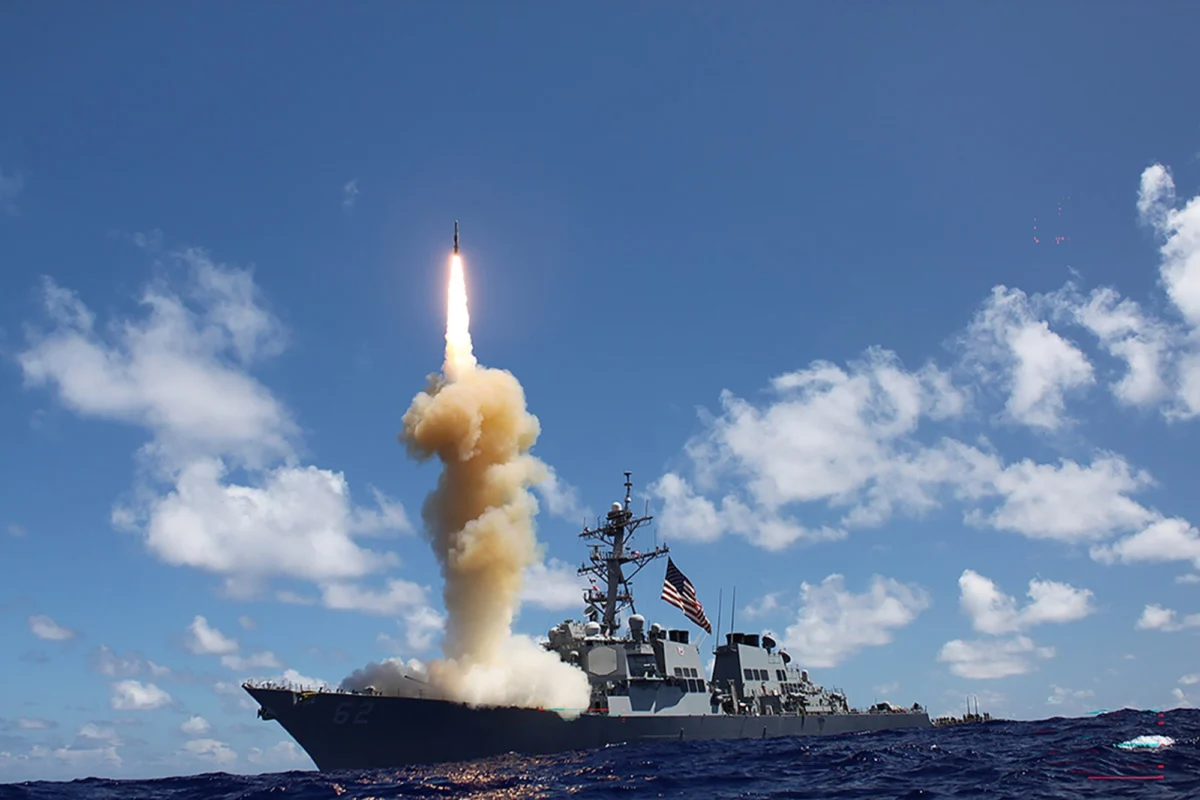
Pentagon Forges Landmark Seven-Year Agreements with Boeing and RTX to Accelerate Standard Missile-3 Production and Stabilize Defense Supply Chains
The Department of Defense announced on Friday the signing of two pivotal framework agreements with Boeing and RTX, the parent company of Raytheon, aimed at significantly expanding the production capacity of critical components for the Standard Missile-3 (SM-3). This strategic move is designed to fortify the supply chain for the U.S. Navy’s premier ship-launched interceptor, which serves as a cornerstone of the nation’s exoatmospheric ballistic missile defense. The agreements specifically target the production of avionics and ejector assemblies, essential subsystems that Boeing provides to Raytheon for the assembly of both the SM-3 Block IB and the more advanced Block IIA variants. By establishing a long-term commitment, the Pentagon aims to transition the defense industrial base toward a "wartime footing," ensuring that the rate of production can meet the surging global demand driven by recent high-intensity conflicts.
The framework agreements are structured to span seven years, providing a rare level of long-term predictability for the defense industry. This duration is intended to signal a consistent "demand signal" to subcontractors, allowing them to invest in infrastructure, specialized tooling, and workforce expansion without the risk of annual budget fluctuations. Under the terms of these agreements, Boeing is authorized to begin the manufacturing of long-lead components even before formal procurement contracts are finalized, a move that bypasses traditional bureaucratic delays and accelerates the delivery timeline for finished interceptors. While specific dollar amounts and exact production quantities were not disclosed in the initial release, the Pentagon emphasized that these deals are foundational to a broader multiyear procurement strategy currently under negotiation between the government and the two defense giants.
The Strategic Importance of the SM-3 Interceptor
The Standard Missile-3 is a critical asset within the Aegis Ballistic Missile Defense (BMD) system, capable of intercepting short- to intermediate-range ballistic missiles during the midcourse phase of their flight. Unlike traditional air defense missiles that explode near a target, the SM-3 utilizes a Kinetic Warhead (KW)—often described as a "hit-to-kill" vehicle—to destroy incoming threats through the sheer force of impact outside the Earth’s atmosphere. This capability is vital for protecting not only carrier strike groups at sea but also entire regions through the Aegis Ashore sites located in Europe and the Pacific.
The two variants covered by the new agreements represent the current and future backbone of this defense layer. The SM-3 Block IB, which has been the fleet’s workhorse for several years, features an enhanced two-color infrared seeker and a Throttleable Divert and Attitude Control System (TDACS) for improved maneuverability. The newer SM-3 Block IIA, a co-development project between the United States and Japan, features a larger rocket motor and a more sensitive seeker, allowing it to defend larger geographic areas against more sophisticated and faster ballistic missile threats. The Block IIA is specifically designed to counter the growing proliferation of advanced missile technology among near-peer adversaries and rogue states.
Combat Validation and the Surge in Demand
The urgency behind Friday’s announcement is rooted in the recent and unprecedented combat utilization of the SM-3. In April 2024, U.S. Navy destroyers operating in the Eastern Mediterranean launched SM-3 interceptors to successfully neutralize Iranian ballistic missiles targeting Israel. This marked the first time the SM-3 was used in a real-world combat engagement, proving the effectiveness of the system’s exoatmospheric capabilities under extreme pressure. Following this engagement, the U.S. military has continued to rely on the Aegis BMD system during Operation Epic Fury and other regional stability missions, leading to a rapid expenditure of existing stocks.
Before these engagements, the SM-3 was largely viewed as a deterrent asset with limited expected expenditure. However, the reality of modern "gray zone" conflicts and direct state-on-state missile volleys has forced a reevaluation of inventory requirements. According to data provided by the Center for Strategic and International Studies (CSIS), the total U.S. inventory of SM-3 missiles was estimated at approximately 414 units as of December 2025. Analysis conducted in May suggested that recent wartime expenditures had depleted these stocks by 130 to 250 missiles, leaving the Navy in a precarious position regarding its readiness for a potential larger-scale conflict in the Indo-Pacific or elsewhere.
Strengthening the Industrial Base
Michael P. Duffey, the Under Secretary of War for Acquisition and Sustainment, highlighted the broader implications of these agreements for the American industrial landscape. "These agreements ensure our Warfighters get the munitions they need to win," Duffey stated. "We are stabilizing our supply chains, expanding munitions production, and putting our entire defense industrial base on a wartime footing." This sentiment reflects a shift in Pentagon policy toward "multiyear procurement" (MYP) authorities, which Congress has increasingly supported to prevent the "boom and bust" cycles that often plague defense manufacturing.
For Boeing, the agreement represents a significant expansion of its role as a key Tier-1 supplier to Raytheon. Bob Ciesla, Vice President of Boeing Precision Engagement Systems, noted that the clear demand signal allows the company to align its resources more effectively. "The SM-3 is an essential part of the layered air and missile defense architecture that protects the U.S. and its allies worldwide," Ciesla said. This framework mirrors a previous seven-year deal Boeing signed in April to triple the production of seekers for the PAC-3 Missile Segment Enhancement (MSE), another critical interceptor used by the U.S. Army.
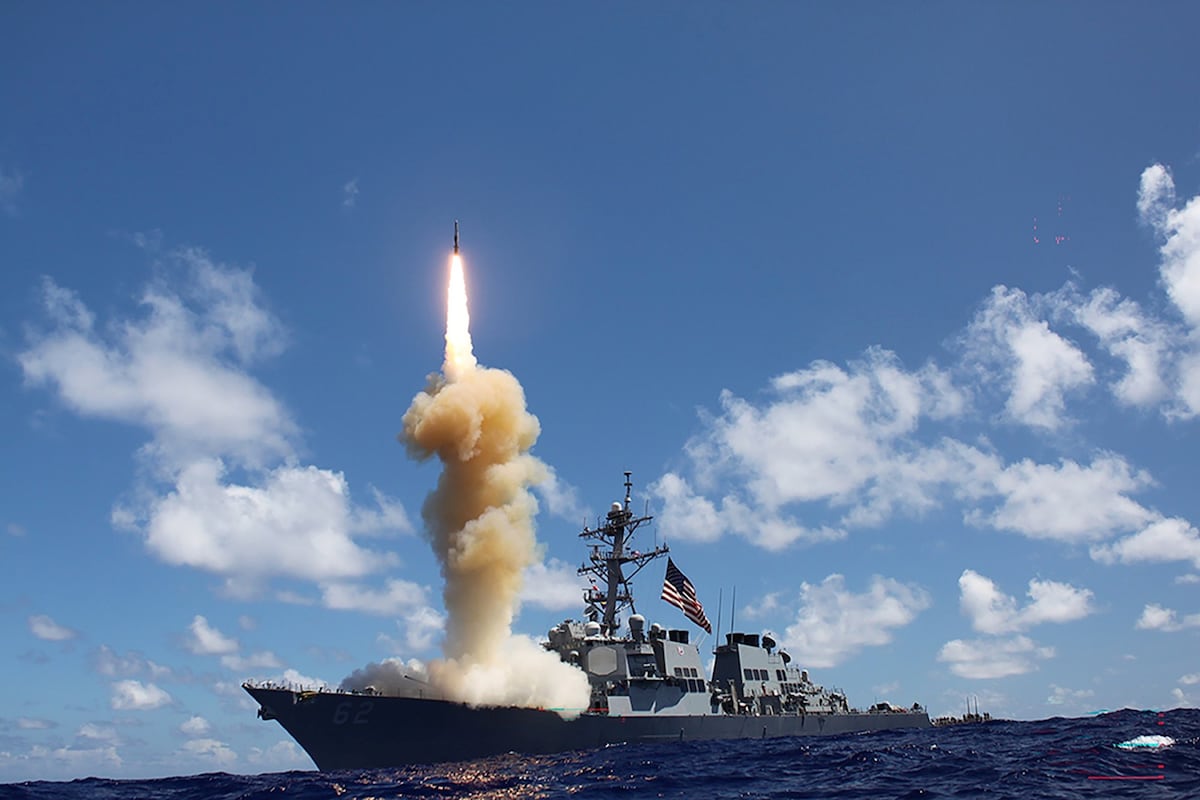
The complexity of SM-3 production cannot be overstated. Each missile requires highly specialized components, including advanced sensors, precision-machined rocket casings, and sophisticated guidance software. Expanding production requires more than just increasing assembly line shifts; it requires the cultivation of a "deep" supply chain involving hundreds of sub-tier suppliers who provide everything from specialized chemicals for solid rocket fuel to radiation-hardened microchips.
Chronology of Recent Procurement and Development
The path to Friday’s framework agreements has been marked by several key milestones over the past two years:
- April 2024: U.S. Navy destroyers achieve the first combat interceptions using SM-3s against Iranian ballistic missiles.
- May 2024: CSIS and other defense think tanks issue warnings regarding the depletion of the interceptor stockpile, noting that replenishment could take several years at current production rates.
- July 2024: The Missile Defense Agency (MDA) and the Navy begin high-level talks with Raytheon and Boeing to identify bottlenecks in the SM-3 Block IIA and Block IB production lines.
- August 10, 2024: Raytheon is awarded a $745 million contract for the production of fully assembled SM-3 Block IIA interceptors, intended for both the United States and the Japan Maritime Self-Defense Force.
- August 23, 2024: The Pentagon officially signs the seven-year framework agreements with Boeing and RTX to secure the sub-component supply chain.
This timeline illustrates a rapid transition from combat validation to industrial mobilization. It also highlights the role of international partnerships, particularly with Japan, which has been a primary funder and technical partner for the Block IIA variant. The U.S.-Japan alliance relies heavily on the interoperability of the SM-3, making the stabilization of the production line a matter of international diplomatic and security concern.
Congressional Intervention and Budgetary Dynamics
The future of the SM-3 program has not been without controversy. Earlier in the fiscal 2025 budget planning cycle, the Missile Defense Agency proposed a plan to sunset the production of the SM-3 Block IB variant in favor of focusing exclusively on the more expensive Block IIA. The MDA argued that the Block IIA provided superior capability against modern threats. However, members of Congress and naval strategists pushed back, arguing that the Block IB remains a highly capable and more cost-effective solution for a wide range of medium-range threats.
Congress ultimately intervened to keep the Block IB production line open, citing the need for "capacity over pure capability" in a scenario involving high-volume missile attacks. By including the Block IB in the new framework agreements, the Pentagon is signaling its compliance with Congressional intent to maintain a diverse and deep inventory of interceptors. This dual-track production strategy ensures that the Navy can deploy the Block IIA for the most challenging threats while maintaining a robust stock of Block IBs for more conventional ballistic missile defense missions.
Implications for Future Missile Defense
The move to put the defense industrial base on a "wartime footing" carries significant implications for the future of global security. First, it serves as a deterrent to adversaries who might believe they can overwhelm U.S. defenses through a "strategy of exhaustion." By demonstrating the ability to rapidly replenish high-end interceptors, the U.S. reinforces the credibility of its integrated air and missile defense (IAMD) umbrella.
Second, these agreements represent a test case for a new model of defense acquisition. If the seven-year framework successfully reduces lead times and lowers per-unit costs through economies of scale, it could become the blueprint for other critical munitions programs, such as the Long Range Anti-Ship Missile (LRASM) or the Joint Air-to-Surface Standoff Missile (JASSM).
Finally, the focus on Boeing and RTX highlights the consolidation of the defense industry. While the framework provides stability, it also underscores the military’s heavy reliance on a small number of "prime" contractors and their key partners. Moving forward, the Pentagon will likely face continued pressure to ensure that these long-term deals do not stifle innovation or prevent the entry of smaller, more agile tech firms into the defense ecosystem.
As the geopolitical landscape remains volatile, particularly in the Middle East and the Taiwan Strait, the SM-3 will continue to be a primary tool for crisis management. The agreements signed this Friday are a recognition that in modern warfare, the "arsenal of democracy" must be as ready as the forces on the front lines. The focus now shifts to the factory floors in Alabama, Arizona, and Missouri, where the components for the next generation of missile defense will be forged.

Related Posts
Boeing Unveils Ultra Low-Cost Seeker to Enhance Missile Inventory and Combat Cost Challenges in Modern Warfare
US Army Pursues 50mm Cannon Solutions to Counter Growing Drone Threats on the Modern Battlefield