President Donald Trump Confirms Secret Departure from Turkey Amidst Assassination Threat
WASHINGTON D.C. – President Donald Trump confirmed Tuesday that his departure from Turkey in early July was orchestrated through a clandestine flight operation, necessitated by credible intelligence indicating a direct threat against his life. The highly unusual maneuver, executed after the NATO summit in Ankara, involved a covert change of aircraft and deliberately concealed his movements from journalists and a portion of his White House staff. The operation highlights the escalating security concerns faced by the U.S. presidency, particularly in volatile geopolitical regions, and raises questions about the transparency of presidential travel and the dissemination of critical threat information.
Trump, speaking to reporters in Washington, acknowledged the directive from U.S. intelligence services, stating, "They wanted me to take a different flight, a different plane, with the same security, but they wanted me to do it, so I do it. I do what they say." This statement underscores a rare instance where the president publicly deferred to the operational recommendations of his security apparatus, even when those recommendations involved extraordinary measures designed to obscure his movements.
The revelation follows a report by The Washington Post, which detailed the intelligence warning of a potential assassination plot orchestrated by Iran. This specific threat, the report suggested, was the primary catalyst for the elaborate and secretive departure plan. While Trump indicated he was aware of a threat, he admitted to not seeking extensive details, a stance consistent with his public persona of projecting unwavering confidence and downplaying personal risks. "I suppose there was a threat, but I didn’t ask too many questions," he commented.
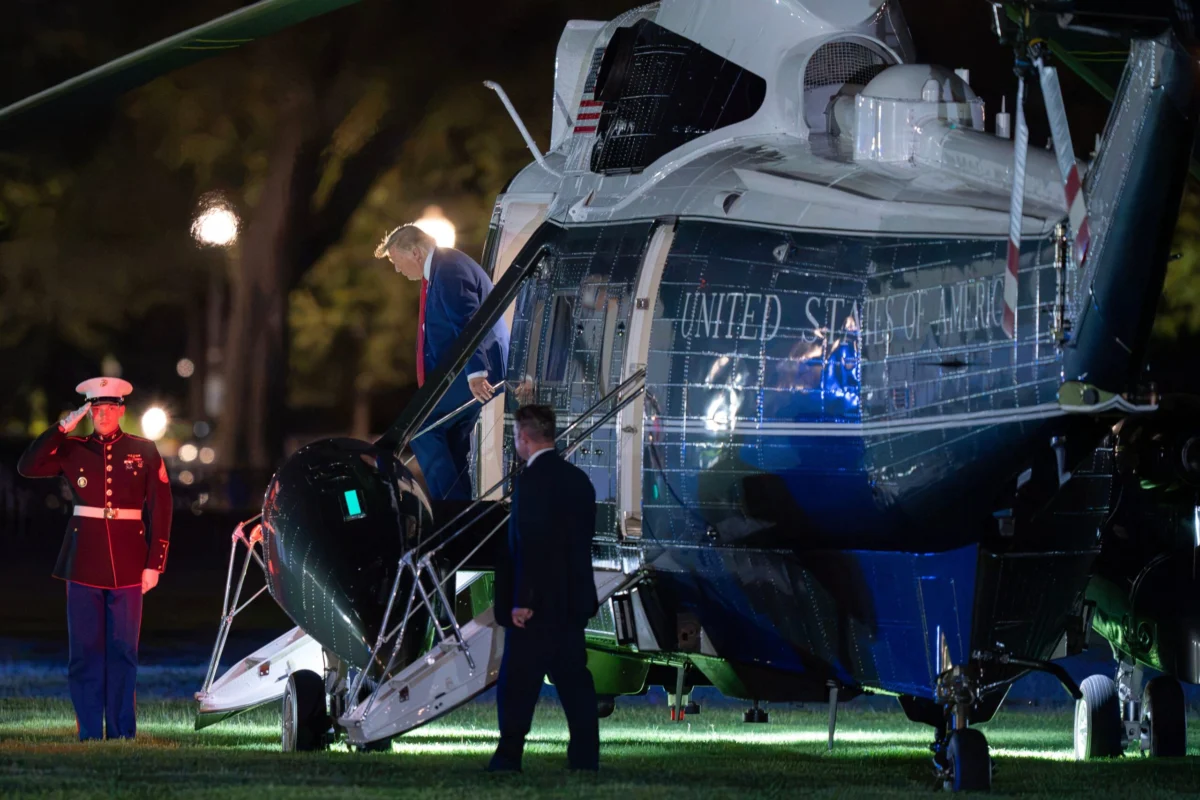
The intricate operation began with a public appearance designed to suggest a standard departure. President Trump was filmed boarding the iconic Air Force One, the presidential aircraft, in full view of the press corps and photographers. However, this was a carefully managed deception. Instead of departing on the familiar Boeing 747, Trump was covertly transported via a catering service cargo container to a U.S. Air Force C-32A aircraft, a military variant of a Boeing 757 often utilized for presidential transport when Air Force One is unavailable or when enhanced operational security is required. This secondary aircraft then departed for the United Kingdom, where Trump subsequently boarded a Qatar-donated aircraft to return to Washington D.C.
"I think, actually, the plane I was on was at greater risk," the President speculated, implying that the perceived target would likely be the more recognizable and prestigious Air Force One. This assertion suggests a strategic calculation by the perceived adversaries, aiming to strike at the heart of American presidential power and symbolism.
Meanwhile, a contingent of approximately a dozen journalists and some White House personnel departed Turkey on the original Air Force One, unaware that the President was no longer aboard. During their flight, the U.S. Secret Service issued an unusual directive to keep the aircraft’s window blinds closed, a measure typically reserved for operations in active combat zones or highly sensitive clandestine missions, further emphasizing the gravity of the perceived threat. This lack of transparency, while understandable from a security perspective, led to consternation among some members of the traveling press. They expressed feelings of being used as unwitting decoys and voiced complaints about the lack of communication from the White House, which they characterized as a deception.
The security protocols surrounding presidential travel are a complex and multi-layered endeavor, constantly adapting to evolving threats. The C-32A, while a capable aircraft, does not possess the same comprehensive defensive systems as the Air Force One fleet, which includes advanced countermeasures against missile threats and electronic warfare capabilities. The decision to use the C-32A, therefore, suggests a specific risk assessment that prioritized evading detection and potential interception over the standard defensive suite of the primary presidential aircraft.
Background and Context of the Threat
The alleged Iranian threat against President Trump stems from a period of heightened tensions between the United States and Iran, particularly following the U.S. drone strike that killed Iranian General Qasem Soleimani in January 2020. Iran had vowed retaliation for Soleimani’s death, and U.S. intelligence agencies had been on high alert for potential retaliatory actions, including asymmetric attacks and direct threats against U.S. interests and personnel. The specific nature of the intelligence warning that prompted the secret departure from Turkey has not been fully disclosed, but reports suggest it involved a credible plot to target the President during his overseas visit.
Chronology of the Secret Departure
- Early July 2020: President Donald Trump attends the NATO summit in Ankara, Turkey.
- Post-Summit: Following the summit, intelligence agencies provide a credible threat assessment regarding an assassination plot targeting President Trump.
- Security Briefing: U.S. Secret Service and intelligence officials brief the President on the threat and recommend an alternative departure plan.
- Deceptive Boarding: President Trump publicly boards the Air Force One at an undisclosed location in Turkey.
- Covert Transfer: Trump is secretly transported via a catering service cargo container to a U.S. Air Force C-32A aircraft.
- Secret Departure: The C-32A aircraft, carrying President Trump, departs Turkey under enhanced security protocols.
- Journalists Depart on Air Force One: Approximately a dozen journalists and some White House staff depart on the original Air Force One, unaware of the President’s altered travel plans.
- Window Blind Directive: During the flight, the Secret Service instructs the journalists and staff to keep the window blinds closed.
- Transit to the UK: The C-32A carrying Trump travels to the United Kingdom.
- Boarding of Chartered Aircraft: In the UK, Trump boards a Qatar-donated aircraft for his return journey to Washington D.C.
- Confirmation and Public Statement: President Trump publicly confirms the secret departure and the underlying threat upon his return to Washington D.C.
Supporting Data and Operational Details
The C-32A is a modified Boeing 757 typically operated by the 89th Airlift Wing of the U.S. Air Force, which provides special air missions for the President, Vice President, and other high-ranking officials. While it offers robust communication and security features, it is not equipped with the same level of defensive countermeasures as the specially designed Air Force One fleet, which includes capabilities like chaff and flare dispensers, electronic countermeasures, and a hardened airframe. The choice of aircraft suggests a tactical decision to prioritize speed, maneuverability, and discretion over the full defensive suite available on the primary presidential transport.
The decision to use a catering container for the transfer of the President is a highly unorthodox security measure. These containers are typically used for transporting food and supplies to aircraft and are designed to be nondescript and blend in with other ground support equipment. This method of movement would have minimized the visual signature of the President’s transfer, making it less likely to be detected by potential surveillance.
The presence of journalists on the original Air Force One, while a standard practice for transparency and public information, also served a dual purpose in this instance. Their departure on the perceived "main" aircraft would have created a diversion, drawing attention away from the President’s actual departure route and aircraft. This tactic, while effective in enhancing security, also raises ethical considerations regarding the use of the press as unwitting participants in national security operations.
Official Responses and Perspectives
President Trump’s public acknowledgement of the threat and the secret departure was delivered with a characteristic blend of seriousness and nonchalance. "Every important president gets a lot of threats," he stated, attempting to normalize the situation. "The truth is, I don’t worry about it at all. Whatever it is, you know my attitude: ‘I don’t care.’" This statement, while intended to project strength, could be interpreted as downplaying the severity of the intelligence received, potentially creating a disconnect between the perceived threat level and the President’s public demeanor.
The Secret Service, responsible for the protection of the President, has a mandate to employ all necessary measures to ensure his safety. Their decision to implement such a covert operation reflects a high degree of concern regarding the specific intelligence received. While the agency typically operates with a high degree of discretion, their actions in this instance have inadvertently brought the complexities of presidential security into the public spotlight.
The White House, in its communication strategy surrounding this event, has prioritized national security over immediate journalistic transparency. The rationale is that publicizing specific threat intelligence or operational details could compromise future security measures and potentially embolden adversaries. However, this approach has led to criticism from media organizations who argue for greater transparency and accountability in presidential travel and security arrangements.
Broader Impact and Implications
The incident serves as a stark reminder of the persistent and evolving threats facing world leaders, particularly those in positions of significant geopolitical influence. The alleged involvement of Iran in the plot underscores the ongoing tensions in the Middle East and the potential for state-sponsored actions against U.S. officials.
The use of deception and covert operations in presidential travel, while sometimes necessary for security, raises important questions about the balance between transparency and operational effectiveness. The media’s role in providing oversight and informing the public is a cornerstone of democratic governance, and instances where this role is perceived as compromised can erode public trust.
Furthermore, the situation highlights the sophisticated capabilities of modern intelligence agencies in both detecting threats and implementing complex security protocols. The ability to orchestrate such a secret departure, involving multiple aircraft, agencies, and covert transfers, demonstrates a high level of operational proficiency.
The long-term implications of this event may include a re-evaluation of presidential travel security protocols, particularly concerning the dissemination of information to the traveling press corps. It may also fuel further debate about the nature of U.S.-Iran relations and the ongoing security challenges posed by state actors in the international arena. The incident underscores that in the high-stakes world of international diplomacy and security, even the most visible figures must sometimes operate in the shadows to ensure their survival and the continuity of their mission.