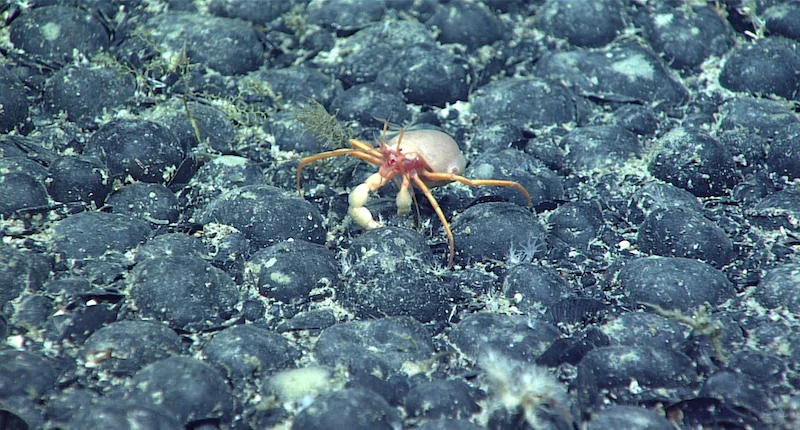
UN Maritime Tribunal Rejects Bid by Deep-Sea Mining Firms to Halt International Seabed Authority Inquiry into Contractual Compliance
The International Tribunal for the Law of the Sea (ITLOS) has formally declined a request from two prominent deep-sea mining subsidiaries to suspend an ongoing investigation into their operations, marking a pivotal moment in the governance of international waters. In two separate orders issued on Saturday, the Hamburg-based tribunal ruled against Tonga Offshore Mining Ltd (TOML) and Nauru Ocean Resources Inc (NORI), both of which are subsidiaries of the Canadian-headquartered firm, The Metals Company (TMC). The ruling allows the International Seabed Authority (ISA) to continue its inquiry into whether these permit holders have breached their legal and contractual obligations under United Nations exploration contracts, specifically following a controversial attempt by the parent company to secure mining permits through United States domestic channels rather than international regulatory frameworks.
The conflict represents a significant escalation in the race to extract critical minerals from the ocean floor, pitting the commercial ambitions of private corporations against the complex regulatory architecture established by the United Nations Convention on the Law of the Sea (UNCLOS). While the tribunal’s decision permits the ISA investigation to proceed, it also placed strict conditions on the regulator, mandating that the inquiry adhere to rigorous standards of due process. The ITLOS judges emphasized that the ISA must provide a clear factual and legal basis for its investigation and afford the mining firms a meaningful opportunity to defend their actions, balancing the need for oversight with the protection of corporate legal rights.
The Genesis of the Regulatory Conflict
The current legal battle stems from a strategic move made by The Metals Company earlier this year. TMC, through its subsidiaries, holds exploration licenses granted by the ISA for specific areas of the Clarion-Clipperton Zone (CCZ), a vast abyssal plain in the Pacific Ocean rich in polymetallic nodules containing cobalt, nickel, copper, and manganese. However, in a move that startled international regulators, TMC sought permits from the United States government to commercially mine the deep seabed in areas already covered by its UN-backed exploration licenses.
The United States is notably not a party to UNCLOS, the "constitution for the oceans" that established the ISA as the sole body authorized to organize and control activities in the "Area"—the seabed beyond national jurisdiction. By approaching the U.S. for domestic permitting, TMC appeared to be seeking a "parallel track" for commercialization that could potentially bypass the ISA’s slower, more stringent environmental and royalty-sharing regulations. This move prompted the ISA to launch an inquiry to determine if TOML and NORI were in breach of their contracts, which require permit holders to act in good faith and adhere to the international legal order governed by the ISA.
In June 2024, the subsidiaries filed a lawsuit against the ISA at ITLOS, alleging that the regulator was targeting them unfairly. The companies argued that the ISA’s inquiry was launched "in breach of due process" and lacked "good faith," characterizing the investigation as an overreach of administrative power designed to stifle their commercial progress.
Chronology of the Deep-Sea Mining Dispute
To understand the weight of the ITLOS ruling, it is essential to examine the timeline of events that led to this judicial standoff:
- 1994: The International Seabed Authority is established in Kingston, Jamaica, following the entry into force of UNCLOS. Its mandate is to ensure that the deep seabed is managed as the "Common Heritage of Mankind."
- 2011-2012: TOML and NORI receive exploration contracts from the ISA, sponsored by the nations of Tonga and Nauru, respectively.
- June 2021: The Republic of Nauru triggers the "two-year rule," a legal provision within UNCLOS that requires the ISA to finalize mining regulations within two years. If the regulations are not finished, the ISA must consider and provisionally approve mining applications based on existing (and potentially incomplete) rules.
- July 2023: The two-year deadline passes without a finalized "Mining Code." The ISA enters a period of intense negotiation to bridge the gap between pro-mining states and those calling for a moratorium.
- Early 2024: The Metals Company engages with U.S. officials, exploring domestic legislative avenues to support deep-sea mining, effectively signaling a potential departure from the UN-led process.
- March-May 2024: The ISA Secretariat initiates an inquiry into the contractual compliance of TOML and NORI, citing concerns over the companies’ commitment to the ISA’s exclusive jurisdiction.
- June 2024: TOML and NORI initiate legal proceedings at ITLOS to stay the ISA inquiry.
- August 2024: ITLOS issues its orders, rejecting the stay but demanding transparency and due process from the ISA.
Supporting Data: The Stakes of the Clarion-Clipperton Zone
The intensity of this legal dispute is driven by the immense economic potential of the seabed. The Clarion-Clipperton Zone, which spans approximately 4.5 million square kilometers (1.7 million square miles) between Hawaii and Mexico, is estimated to contain more nickel, manganese, and cobalt than all terrestrial deposits combined.
According to data provided by The Metals Company, the NORI-D area alone—a subset of their exploration site—contains enough battery metals to electrify 140 million mid-sized electric vehicles. The polymetallic nodules found on the surface of the sediment are often referred to as a "battery in a rock." For companies like TMC, the transition to green energy represents a multi-billion-dollar opportunity. However, for the ISA and environmental scientists, the extraction of these minerals poses an existential threat to deep-sea ecosystems that have remained undisturbed for millions of years.
Research published in Current Biology suggests that upwards of 5,000 species new to science reside in the CCZ, many of which are highly specialized and sensitive to the sediment plumes and noise pollution generated by industrial mining equipment. The ISA’s inquiry is therefore not merely a bureaucratic exercise; it is a test of whether the international community can maintain control over a resource that is legally defined as belonging to all of humanity.
Official Responses and Judicial Reasoning
In its ruling, ITLOS took a measured approach. While it did not grant the injunction sought by the mining firms, it issued a stern reminder to the ISA regarding administrative fairness. The tribunal stated that while the ISA has the "competence and the duty" to ensure compliance with its contracts, it must do so through "transparent and predictable procedures."
A spokesperson for The Metals Company expressed a nuanced view of the ruling, stating, "While we would have preferred a total suspension of what we view as an unfounded inquiry, we are encouraged that the Tribunal has mandated the ISA to provide the clarity and due process that has been lacking thus far. We remain committed to the international process, provided it is conducted fairly."
Conversely, representatives from the International Seabed Authority welcomed the decision to let the inquiry proceed. "The ISA remains the sole authority for the management of the Area," a statement from the Secretariat read. "It is imperative that all contractors respect the legal framework of UNCLOS. This investigation is a necessary step in maintaining the integrity of the international regime."
Legal experts suggest that the ITLOS order acts as a "yellow card" for both sides. It warns the mining companies that they cannot easily bypass UNCLOS, while simultaneously warning the ISA that it cannot use its investigative powers as a political tool to delay mining indefinitely without clear legal justification.
Geopolitical Implications and the U.S. Position
The involvement of the United States adds a layer of geopolitical complexity to the case. The U.S. has long maintained a "deep seabed mining" domestic law (the Deep Seabed Hard Mineral Resources Act of 1980), which predates the finalization of UNCLOS. While the U.S. participates in ISA meetings as an observer, it is not a member.
TMC’s attempt to leverage U.S. support is seen by many analysts as a hedge against the possibility that the ISA will never finalize its Mining Code or will impose royalty rates and environmental standards that make the venture unprofitable. If a major Canadian firm, using subsidiaries sponsored by Pacific Island nations, successfully pivots to a U.S.-backed regulatory model, it could undermine the very foundation of UNCLOS. This would potentially lead to a "fragmented" ocean where different nations recognize different mining claims, leading to maritime disputes and a lack of uniform environmental protection.
Analysis: The Future of Deep-Sea Governance
The ITLOS decision ensures that the ISA inquiry will remain a central fixture of the deep-sea mining landscape for the remainder of 2024 and into 2025. The outcome of the investigation could have several consequences:
- Contractual Penalties: If the ISA finds that TOML and NORI breached their "good faith" obligations, it could theoretically lead to the suspension or termination of their exploration licenses.
- Regulatory Acceleration: The pressure from the industry and the legal pushback may force the ISA to accelerate the completion of the Mining Code to provide the "certainty" that the tribunal alluded to.
- Diplomatic Strain: The relationship between the ISA and the sponsoring states (Nauru and Tonga) may be tested, as these nations rely on the potential revenue from mining to bolster their developing economies.
The broader implication of this ruling is the reinforcement of the rule of law at sea. By declining to halt the inquiry, ITLOS has affirmed that private entities operating in international waters are subject to the oversight of the global community. However, by demanding due process, the court has also signaled that the "Common Heritage of Mankind" must be managed with professional rigor, not just political intent.
As the ISA prepares its detailed explanation of the inquiry’s factual basis, the eyes of the global mining industry, environmental advocates, and international lawyers will remain fixed on Kingston and Hamburg. The resolution of this dispute will likely define the parameters of resource extraction in the final frontier of the planet for decades to come. For now, the investigation continues, and the deep ocean remains a contested space where law, environment, and profit collide.

Related Posts
Constitutional Court of South Africa Bars Shell Oil Exploration in Landmark Victory for Environmental and Community Rights

The Battle for Saldanha Bay: South Africa’s Ambitious Ocean Economy Strategy Faces Legal and Environmental Reckoning