US Army Pursues 50mm Cannon Solutions to Counter Growing Drone Threats on the Modern Battlefield
The U.S. Army has issued a formal request for information seeking industry partners capable of providing a 50mm cannon and specialized ammunition to bolster its counter-unmanned aircraft system (C-UAS) capabilities. This move, initiated by the Army’s Project Manager, Maneuver Ammunition Systems (PM MAS) office, underscores a strategic shift toward kinetic, cost-effective solutions for neutralizing a broad spectrum of aerial threats that have increasingly dominated the modern theater of war. According to the official "Sources Sought" notice, the primary objective is to integrate a 50mm ammunition solution designed to effectively track, engage, and defeat Class 1, 2, and 3 Unmanned Aircraft Systems (UAS).
The solicitation marks a pivotal moment in the Army’s modernization efforts, as it seeks to address the vulnerabilities of armored formations against swarms of relatively inexpensive but highly lethal drones. With a deadline set for August 31, 2026, the Army is moving rapidly to evaluate the feasibility of utilizing high-caliber, rapid-fire cannons as a frontline defense mechanism. The centerpiece of this evaluation will be a live-fire demonstration featuring Northrop Grumman’s XM913 Bushmaster 50mm chain gun, a weapon system originally envisioned for the next generation of infantry fighting vehicles but now increasingly viewed as a cornerstone of mobile air defense.
Technical Specifications and the Push for 50mm Lethality
The XM913 Bushmaster 50mm chain gun represents a significant leap in lethality over the legacy 25mm M242 Bushmaster currently mounted on the M2 Bradley Fighting Vehicle. While the 25mm cannon has served the U.S. military for decades, the evolving nature of the battlefield—characterized by standoff engagements and small, agile aerial targets—has necessitated a larger caliber.
The XM913 weighs approximately 692 pounds and is capable of firing at a rate of up to 200 rounds per minute. It is designed to fire the 50x228mm cartridge, a round that offers substantially more internal volume for advanced fuzing and explosive payloads compared to smaller calibers. For the C-UAS mission, the Army is particularly focused on two types of ammunition: the XM1203 Armor Piercing Fin Stabilized Discarding Sabot with Trace (APFSDS-T) for hardened targets, and the XM1204 High Explosive Airburst with Trace (HEAB-T).
The HEAB-T round is expected to be the primary tool for drone interception. Unlike traditional high-explosive rounds that require a direct hit or a point-detonating impact, the HEAB-T utilizes a programmable fuze. This allows the vehicle’s fire control system to "talk" to the round as it leaves the chamber, telling it exactly when to explode in mid-air. By creating a cloud of fragments in the path of an incoming drone, the airburst capability significantly increases the probability of a kill (Pk) against small, fast-moving targets like Group 1 quadcopters or Group 3 loitering munitions.
Categorizing the Threat: UAS Groups 1, 2, and 3
The Army’s requirement specifically targets three distinct classes of drones, each presenting unique challenges to traditional air defense systems:
- Group 1 UAS: These are typically small, portable drones weighing less than 20 pounds, such as the ubiquitous DJI Mavic series or specialized FPV (First Person View) kamikaze drones. They operate at low altitudes (under 1,200 feet) and slow speeds but are difficult to detect via radar and are often deployed in large numbers.
- Group 2 UAS: These medium-sized tactical drones, such as the ScanEagle, weigh between 21 and 55 pounds. They typically have longer endurance and higher operating altitudes (up to 3,500 feet), providing persistent surveillance or acting as laser designators for other munitions.
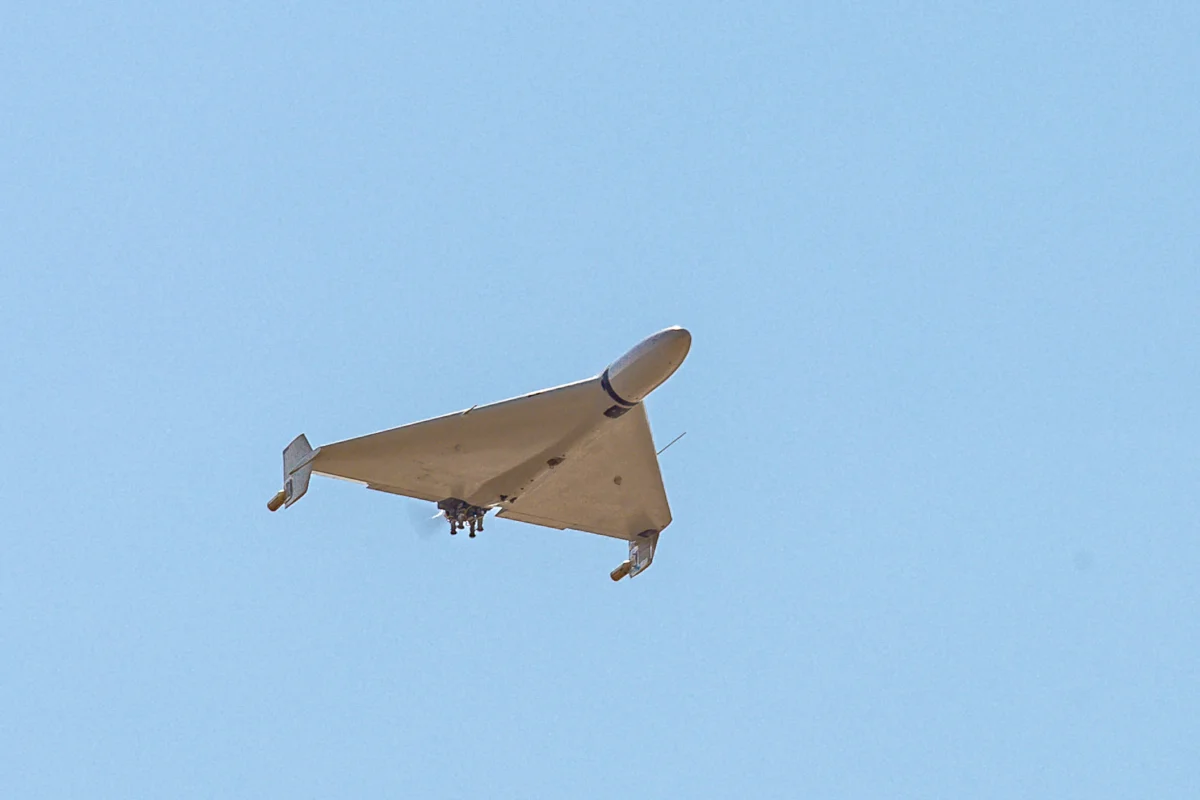
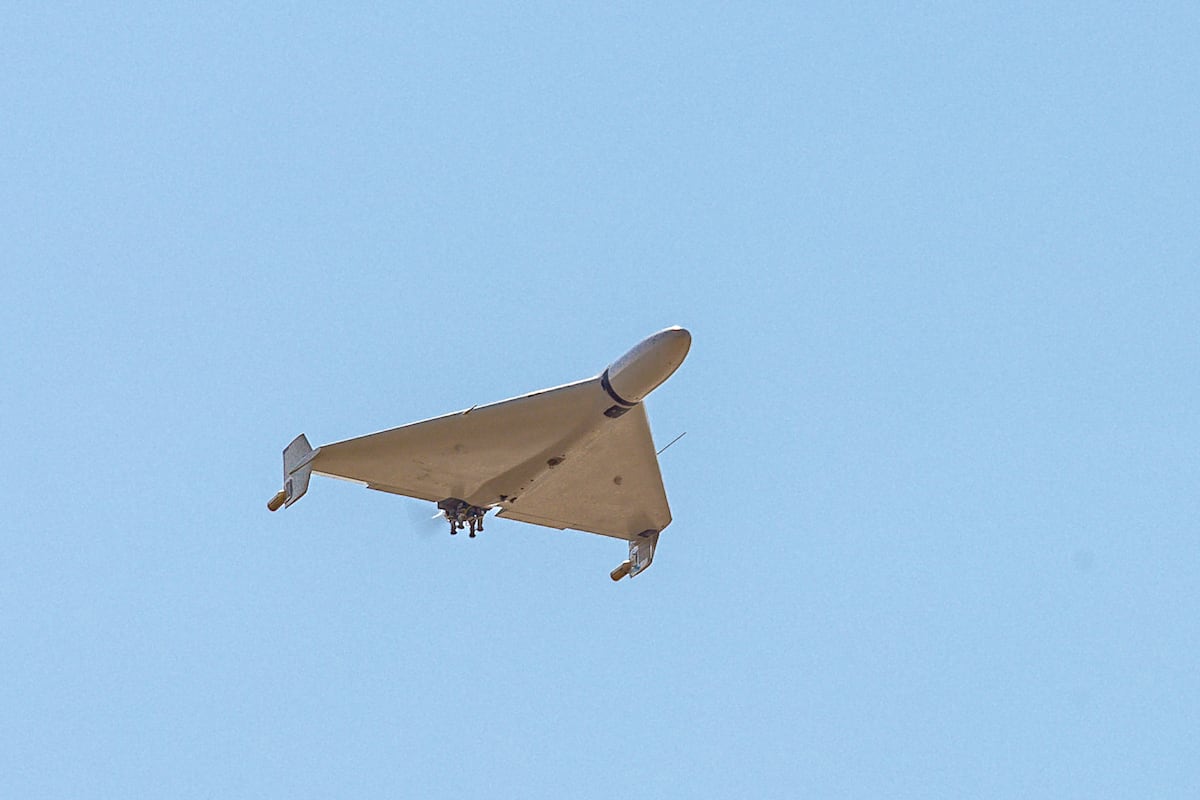
- Group 3 UAS: This category includes larger drones weighing up to 1,320 pounds, capable of flying at altitudes of 18,000 feet and speeds up to 250 knots. Examples include the Iranian-made Shahed-136, which has been used extensively in recent conflicts to strike infrastructure and concentrated military positions.
By seeking a 50mm solution, the Army aims to create a "one-size-fits-all" kinetic interceptor that can reach the higher altitudes of Group 3 drones while maintaining the rapid-fire capability needed to swat away Group 1 swarms.
The XM30 Program and the Future of Ground Combat
The development of the 50mm cannon is inextricably linked to the XM30 Mechanized Infantry Combat Vehicle program. Formerly known as the Optionally Manned Fighting Vehicle (OMFV), the XM30 is slated to replace the aging M2 Bradley. In 2023, the Army awarded contracts totaling billions of dollars to American Rheinmetall Vehicles and General Dynamics Land Systems (GDLS) to develop prototypes for this program.
The XM30 is designed to be a "digital-first" platform, featuring modular open systems architecture that allows for rapid upgrades as technology evolves. The integration of the XM913 50mm cannon as its primary armament is intended to give U.S. mechanized infantry an overmatch capability against near-peer adversaries. However, the recent shift in focus toward C-UAS indicates that the Army no longer views the 50mm cannon solely as an anti-armor or anti-infantry weapon, but as a critical component of the vehicle’s self-protection suite.
Chronology of Development: From Concept to Live-Fire
The path to the 50mm C-UAS solution has been marked by several key milestones:
- 2019–2020: The U.S. Army Combat Capabilities Development Command (DEVCOM) begins testing the XM913 at Picatinny Arsenal, focusing on its ability to outrange the 30mm cannons used by Russian and Chinese armored vehicles.
- August 2023: The Army selects American Rheinmetall and General Dynamics Land Systems to proceed to the prototype phase of the XM30 program, with both designs incorporating the 50mm chain gun.
- Early 2024: Observations from the conflict in Ukraine highlight the devastating effectiveness of low-cost drones against modern main battle tanks and IFVs, prompting a re-evaluation of vehicle-mounted air defense.
- August 4, 2026: The Army expresses interest in a new surface-to-air missile for small drones, acknowledging that a multi-layered approach (missiles and cannons) is necessary.
- August 10, 2026: The PM MAS office issues the "Sources Sought" notice for the 50mm cannon and ammunition specifically for C-UAS, setting an August 31 deadline for industry responses.
Economic and Strategic Rationale: The Cost-Per-Kill Equation
One of the most compelling arguments for a 50mm cannon solution is the economic reality of modern warfare. In recent engagements, military forces have been forced to use multi-million-dollar surface-to-air missiles, such as the Patriot or the NASAMS, to intercept drones that cost as little as $20,000 to produce. This "asymmetric cost exchange" is unsustainable in a prolonged high-intensity conflict.
A 50mm shell, even with an advanced programmable fuze, costs a fraction of a guided missile. Furthermore, a vehicle equipped with a 50mm cannon can carry dozens of rounds, allowing it to engage multiple targets in rapid succession without needing a lengthy reload process. This makes the cannon an ideal solution for "magazine depth," ensuring that high-value missiles are reserved for larger threats like manned aircraft or cruise missiles.
The strategic shift back toward anti-aircraft artillery—often referred to as "flak"—is a direct response to the saturation tactics employed by modern drone operators. While electronic warfare (EW) and jammers are effective, they are often bypassed by drones with autonomous terminal guidance or those operating on frequency-hopping radio links. Kinetic interception remains the only 100% reliable method of stopping a drone once it has reached the terminal phase of its flight.
Industry Expectations and Next Steps
The Army has requested that contractors provide a detailed description of their system architecture, fire control integration, and a draft test plan. A critical component of the response must include a timeline for designing and delivering a weapon system ready for live-fire demonstration.

Industry analysts expect that the integration of sophisticated sensors—such as AESA (Active Electronically Scanned Array) radars and high-definition electro-optical/infrared (EO/IR) cameras—will be necessary to provide the 50mm cannon with the tracking accuracy required to hit a Group 1 drone at a distance of several kilometers.
"The challenge isn’t just the gun; it’s the ‘brain’ behind the gun," noted one defense consultant familiar with the program. "To hit a small quadcopter with a 50mm shell, the fire control system must calculate lead, windage, and fuze timing with incredible precision in a matter of milliseconds."
Broader Implications for Global Defense
The U.S. Army’s pursuit of a 50mm C-UAS solution is likely to set a trend for NATO allies and other global military powers. As the proliferation of drone technology continues, the requirement for organic, vehicle-mounted air defense will become a standard feature of mechanized forces.
The success of the upcoming live-fire demonstrations will determine whether the 50mm cannon becomes the "gold standard" for the next generation of combat vehicles. If the XM913 proves capable of consistently downing Class 1-3 UAS, it could redefine the role of the infantry fighting vehicle, transforming it from a troop transport into a multi-domain platform capable of clearing the skies as effectively as it clears the ground.
For now, the defense industry remains focused on the August 31 deadline, as companies scramble to prove that their ammunition and integration solutions can meet the rigorous demands of a battlefield that is increasingly being fought in the "low and slow" altitudes of the unmanned era.

Related Posts
Pentagon Forges Landmark Seven-Year Agreements with Boeing and RTX to Accelerate Standard Missile-3 Production and Stabilize Defense Supply Chains
Boeing Unveils Ultra Low-Cost Seeker to Enhance Missile Inventory and Combat Cost Challenges in Modern Warfare