Iran Characterizes Its Populace as Professional Chess Players Amidst US Strait of Hormuz Standoff
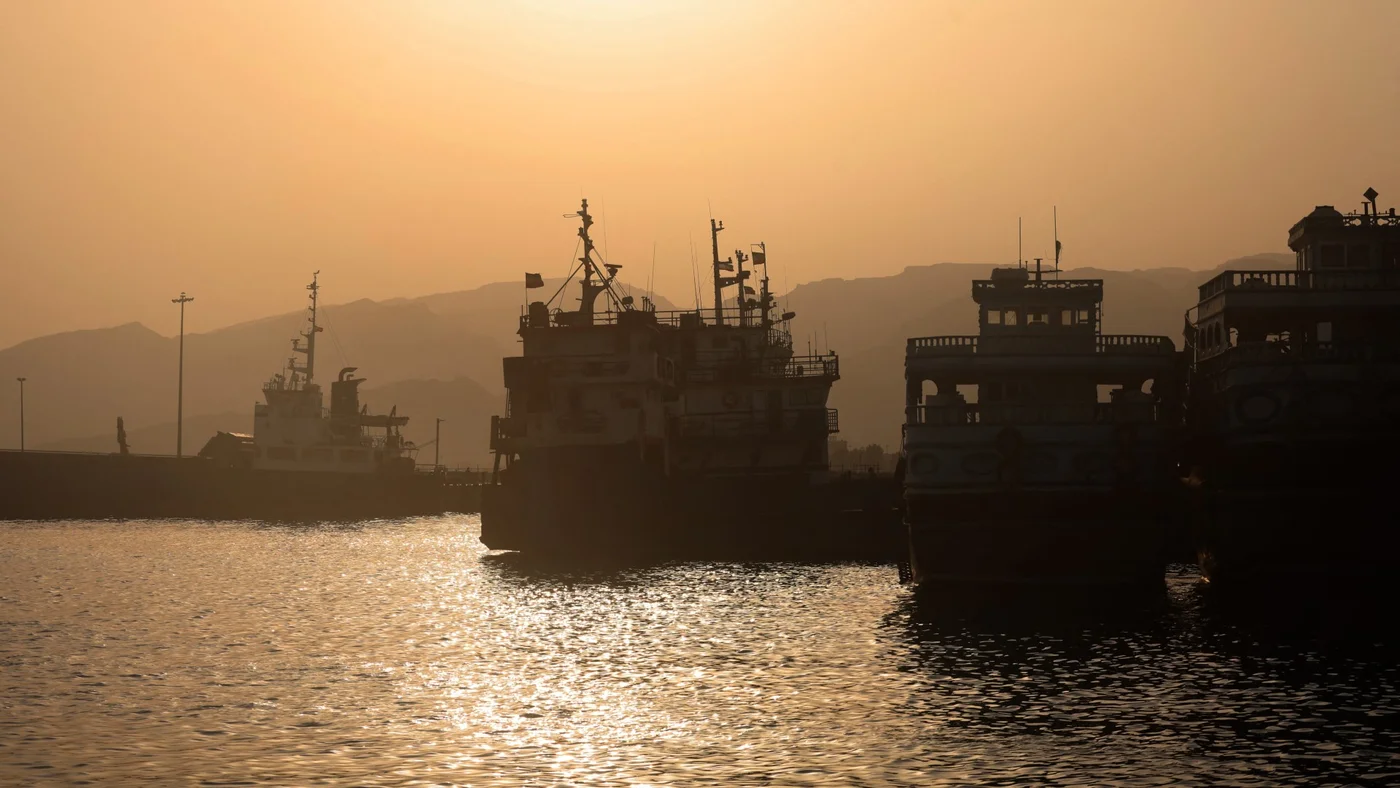
Tehran has strategically positioned its citizens as "professional chess players" in their intricate dealings with the United States, vehemently insisting that Washington must acquiesce to its specific demands for the unhindered reopening of the Strait of Hormuz. This declaration comes as former US President Donald Trump, during his tenure, signaled a calculated shift towards intensifying economic pressure on Iran, seemingly stepping back from more overt military confrontations following Iran’s articulation of conditions for the critical waterway’s access. Trump was quoted at the time by Axios, stating he was "low-keying it" with Iran, elaborating, "We are only semi-negotiating with them. We are just watching Iran with its huge inflation and the fact they have no money. It will work out. It always works out. It’s like a chess game." This exchange underscores the deeply entrenched geopolitical stalemate between the two nations, characterized by a complex interplay of economic coercion, strategic posturing, and high-stakes diplomatic rhetoric surrounding one of the world’s most vital maritime choke points.
Background Context: A Decade of Escalating Tensions
The relationship between the United States and the Islamic Republic of Iran has been fraught with tension since the 1979 Iranian Revolution, punctuated by periods of acute crisis and indirect confrontation. The specific events leading to the "chess game" analogy and the Strait of Hormuz demands are rooted in the Trump administration’s "maximum pressure" campaign, initiated in May 2018 following the US withdrawal from the Joint Comprehensive Plan of Action (JCPOA), commonly known as the Iran nuclear deal. This landmark agreement, signed in 2015 by Iran and the P5+1 group (China, France, Russia, United Kingdom, United States, plus Germany), had aimed to curb Iran’s nuclear program in exchange for sanctions relief.
The Trump administration’s rationale for exiting the JCPOA was that the deal was fundamentally flawed, insufficient in preventing Iran from developing nuclear weapons in the long term, and failed to address Iran’s ballistic missile program or its regional destabilizing activities. Upon withdrawal, the US began reimposing and expanding a comprehensive suite of economic sanctions that had been lifted under the JCPOA. These sanctions targeted Iran’s vital oil exports, its banking sector, shipping, and other critical industries, with the explicit goal of compelling Tehran to negotiate a new, more stringent agreement that would cover its nuclear program, missile development, and regional policies.
The "maximum pressure" campaign quickly devastated the Iranian economy. The rial plummeted against major currencies, inflation soared, and access to international financial markets became severely restricted. Iran’s oil exports, a primary source of government revenue, significantly declined as the US pressured international buyers to halt purchases of Iranian crude. This economic strangulation created immense domestic pressure on the Iranian government, setting the stage for its retaliatory measures and its hardened stance in international negotiations.
The Strait of Hormuz: A Global Economic Lifeline
At the heart of this geopolitical chess game lies the Strait of Hormuz, a narrow waterway connecting the Persian Gulf with the Arabian Sea and the broader Indian Ocean. It is arguably the most strategically important choke point for global oil shipments, through which approximately one-fifth of the world’s total oil consumption, and roughly one-third of all seaborne oil, passes daily. This includes crude oil and refined petroleum products from major producers like Saudi Arabia, Iran, Iraq, Kuwait, Qatar, and the United Arab Emirates. The strait is also crucial for the transit of liquefied natural gas (LNG) from Qatar, one of the world’s largest exporters.
The geographical reality of the Strait—only about 21 nautical miles (39 kilometers) wide at its narrowest point, with a navigable channel of just two miles in either direction for inbound and outbound shipping lanes—makes it highly vulnerable to disruption. Iran controls the northern coastline of the Strait, granting it significant strategic leverage. For decades, Iran has periodically threatened to close the Strait in response to perceived external threats or economic pressure, understanding that such a move would trigger a global energy crisis, sending oil prices skyrocketing and severely impacting the world economy. These threats are not merely rhetoric; Iran has demonstrated its capacity for disrupting shipping through its naval forces, including the Islamic Revolutionary Guard Corps (IRGC) Navy, which operates fast attack craft, anti-ship missiles, and mines.
Timeline of Escalation and Retaliation (Inferred during Trump Administration):
- May 2018: US withdraws from the JCPOA and announces the re-imposition of sanctions.
- August-November 2018: First and second rounds of US sanctions snap back into effect, targeting Iran’s financial sector, automobile industry, and, crucially, its oil exports.
- April 2019: US designates Iran’s Islamic Revolutionary Guard Corps (IRGC) as a foreign terrorist organization, an unprecedented move against a foreign military. The US also ends waivers for countries importing Iranian oil, aiming to bring Iran’s oil exports to zero.
- May-July 2019: A series of incidents in the Gulf region, including attacks on oil tankers in the Gulf of Oman, alleged Iranian drone attacks, and the downing of a US surveillance drone by Iran. These events heighten fears of military confrontation and underscore the fragility of security in the Strait of Hormuz. Iran begins to reduce its commitments under the JCPOA in response to US sanctions and the inability of European partners to circumvent them effectively.
- June 2019: Amidst rising tensions, the US announces the deployment of additional troops and military assets to the Middle East. President Trump indicates a preference for economic pressure over military action, describing the situation as a "chess game."
- July 2019: Iran officially states its demands for the Strait of Hormuz’s reopening, implicitly linking it to sanctions relief and the ability to export its oil freely. This is the period most directly referenced in the news snippet, where Iran declares its people as "professional chess players."
- September 2019: Attacks on Saudi Aramco oil facilities, which the US and Saudi Arabia attribute to Iran, further escalate tensions, although Iran denies involvement.
Iran’s "Professional Chess Players" Strategy
The Iranian leadership’s characterization of its people as "professional chess players" is a powerful rhetorical device, conveying several layers of meaning. Firstly, it projects an image of strategic depth and intellectual prowess, suggesting that Iran is not merely reacting impulsively but is engaging in a long-term, calculated strategy. It implies patience, the ability to anticipate multiple moves ahead, and a deep understanding of the geopolitical board. This contrasts with a narrative often portrayed by adversaries that Iran is irrational or reckless.
Secondly, it reinforces a sense of national unity and resilience in the face of immense external pressure. By referring to "its people," the government seeks to galvanize domestic support, portraying the entire nation as collectively engaged in a sophisticated struggle against a powerful adversary. This narrative aims to counter the debilitating effects of sanctions by framing the economic hardship as a test of national resolve, to be overcome through clever maneuvering rather than capitulation.

Thirdly, it serves as a warning to the US. A "professional chess player" does not make predictable moves; they exploit weaknesses, create diversions, and are prepared for sacrifices to achieve a larger objective. This suggests that Iran possesses various asymmetric response options and is not limited to conventional military confrontation. The demands for the Strait of Hormuz are part of this strategic play, a powerful piece to leverage in the broader game of economic and political survival. Iran’s demands, though not explicitly listed in the snippet, are widely understood to revolve around the lifting of US sanctions, particularly those targeting its oil exports, and guarantees of its economic sovereignty. Tehran views the US maximum pressure campaign as economic warfare and believes that any de-escalation must begin with an end to these punitive measures.
Trump’s "Low-Keying It" and the Economic Chess Game
President Trump’s description of "low-keying it" and viewing the situation as a "chess game" mirrored Iran’s strategic language, albeit from a different perspective. His approach signaled a preference for sustained economic attrition over immediate military engagement, a strategy consistent with his administration’s broader foreign policy doctrine of "America First" and skepticism towards costly foreign interventions.
Trump’s focus on Iran’s "huge inflation" and lack of "money" highlighted the core belief within his administration that economic pressure alone would eventually force Iran to the negotiating table on US terms. This strategy was predicated on the idea that the internal economic strain would eventually become unbearable for the Iranian regime, leading to either a change in behavior or internal collapse. By calling it a "chess game," Trump implied a long-term strategy of gradual pressure, patiently waiting for the opponent’s resources to dwindle and for an opportune moment to make a decisive move. The "semi-negotiating" phrase further suggested that while direct, formal talks were not fully underway, the two sides were nonetheless communicating their intentions and red lines through actions and indirect channels, testing each other’s resolve.
Implications and Broader Impact
The stalemate over the Strait of Hormuz and the broader US-Iran tensions have significant regional and global implications:
- Global Energy Security: The repeated threats and incidents in the Strait of Hormuz create immense uncertainty in global energy markets. Any actual closure or prolonged disruption would trigger an unprecedented oil price shock, impacting economies worldwide. Shipping insurance premiums for vessels transiting the Gulf soared during periods of heightened tension, increasing the cost of doing business in the region.
- Regional Stability: The tensions exacerbate existing rivalries in the Middle East, particularly between Iran and its regional adversaries like Saudi Arabia and the United Arab Emirates. These countries, major oil producers, are directly affected by the security of the Strait and are wary of both Iranian aggression and the potential for a broader US-Iran conflict. The presence of significant US military assets in the region is both a deterrent and a potential flashpoint.
- European Diplomacy: European signatories to the JCPOA (France, Germany, UK) found themselves in a difficult position. While they condemned the US withdrawal from the deal and sought to preserve it, their efforts to create a mechanism (INSTEX) to circumvent US sanctions and facilitate legitimate trade with Iran largely failed to provide the economic relief Tehran demanded. This highlighted the formidable power of US extraterritorial sanctions and the limitations of European diplomatic influence.
- Humanitarian Concerns: The severe economic sanctions have had a profound humanitarian impact on ordinary Iranians. While sanctions are often designed to target the regime, they inevitably affect the populace, leading to shortages of essential goods, medicines, and a general decline in living standards. This raises ethical questions about the efficacy and morality of broad economic warfare.
- Nuclear Proliferation Risks: Iran’s phased reduction of its commitments under the JCPOA, including increasing its uranium enrichment levels and stockpiles, raised concerns among international observers about its potential to shorten its "breakout time" to produce fissile material for a nuclear weapon. This created a dangerous feedback loop: US pressure led to Iranian nuclear escalation, which in turn increased international pressure on Iran.
Official Responses and Analysis
From the Iranian perspective, the demands for opening the Strait of Hormuz are non-negotiable without a reciprocal gesture from the US, primarily the lifting of sanctions. Iranian officials consistently argue that their actions are defensive and a response to US aggression and economic warfare. They view the Strait as a sovereign asset, whose security is intrinsically linked to Iran’s economic well-being and national security. The "professional chess players" analogy signifies their resolve to outmaneuver the US through strategic patience and exploiting vulnerabilities, rather than succumbing to pressure.
From the US perspective during the Trump administration, the "maximum pressure" campaign was seen as a necessary tool to force Iran to negotiate a "better deal." The administration believed that Iran’s economic woes would eventually compel it to abandon its nuclear ambitions and regional destabilizing activities. The "low-keying it" approach suggested a willingness to avoid military conflict but an unwillingness to back down on sanctions until Iran met the US’s broader security demands. This strategy was criticized by some as lacking a clear diplomatic off-ramp, potentially leading to miscalculation and unintended escalation.
Future Outlook and Potential Scenarios
The "chess game" metaphor aptly describes the ongoing strategic rivalry, where each move by one side elicits a counter-move from the other, often with unintended consequences. The fundamental challenge lies in the deep mistrust and divergent objectives of both nations. For Iran, securing sanctions relief and economic stability is paramount, coupled with preserving its regional influence. For the US, particularly under the Trump administration, the goal was to curb Iran’s nuclear program, ballistic missile development, and support for proxy groups.
Potential scenarios for the future included:
- Continued Stalemate: A protracted period of economic pressure from the US and strategic patience and limited retaliation from Iran, without direct military conflict or a diplomatic breakthrough.
- Escalation: A miscalculation or an incident in the Strait of Hormuz or elsewhere in the region could quickly spiral into a broader military confrontation, potentially involving regional allies.
- Negotiated Settlement: A return to the negotiating table, possibly facilitated by international mediators, leading to a new agreement that addresses both US and Iranian concerns. However, the deep distrust and the maximalist positions of both sides made this a challenging prospect.
- Internal Change in Iran: The severe economic pressure could lead to significant internal political changes within Iran, potentially altering its foreign policy trajectory.
In conclusion, the assertion by Tehran that its people are "professional chess players" in their dealings with the US, coupled with President Trump’s parallel "chess game" analogy, encapsulates the complex, high-stakes nature of US-Iran relations during this period. The Strait of Hormuz remains a critical flashpoint, its fate inextricably linked to the broader economic and security demands of both nations. The interplay of economic sanctions, strategic posturing, and the ever-present risk of military escalation defines a geopolitical struggle that demands careful observation and nuanced analysis, as the global community grapples with its far-reaching implications.

Related Posts
Over 150 Israeli Settlers Storm Al-Aqsa Compound and Perform Prayers, Violating Status Quo Under Police Protection.
UN Report Highlights Over 900 Obstacles Hampering West Bank Aid Amid Escalating Humanitarian Crisis