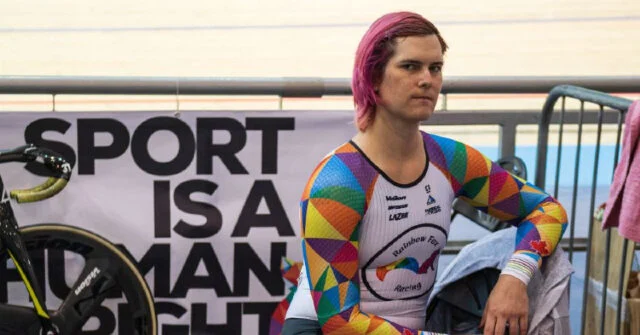
Veronica Ivy’s Dominance in Golf Follows Cycling Success, Igniting Broader Debate on Transgender Inclusion in Women’s Sports
Veronica Ivy, a transgender athlete who previously achieved significant success in professional cycling under the name Rachel McKinnon, has now emerged as a formidable competitor in women’s golf, securing multiple titles and reigniting international discussions about the participation of transgender women in female sports categories. Ivy’s recent victories in golf follow a pivotal policy shift by cycling’s global governing body that effectively barred her from further competition in the women’s category, underscoring the complex and evolving landscape of sports policy, fairness, and inclusion.
A New Chapter in Golf: Dominating the Greens
After a successful career in cycling, Veronica Ivy has swiftly transitioned to golf, demonstrating remarkable prowess on the links. Her recent achievements include winning the Inter-Provincial Team title at the Canadian Women’s Mid-Amateur Championship. This national-level success was preceded by a series of victories in June, where Ivy claimed both the women’s British Columbia Mid-Amateur and Mid-Master championships. These rapid ascensions in a new sport highlight her athletic capabilities and competitive drive.
Ivy’s performance metrics in golf have drawn particular attention, especially her driving distances. Reports indicate that she consistently achieves drives exceeding 280 yards. To put this into perspective, on the Ladies Professional Golf Association (LPGA) Tour, a highly elite professional circuit for women, only a handful of athletes consistently reach or surpass this distance. Historically, only three female professional golfers on the LPGA Tour have averaged 280 yards or more in a season, with the broader top tier averaging around 275 yards. Ivy’s immediate ability to "blast past the pros" in terms of driving distance, despite being relatively new to professional golf, has become a focal point in the ongoing debate about physiological advantages.
Following her victory at the BC Mid-Am women’s Championship, Ivy reflected on the demanding nature of her new sport. "I swear, golf has to be the hardest sport out there," she wrote on social media. "Cycling was so simple by comparison. Cycling is maybe 5 minutes of peak stress, but golf is just 5 hours of non-stop stress, for days on end." This statement offers a glimpse into her personal experience and the mental fortitude required for elite-level competition, regardless of the discipline.
A Distinguished Cycling Career and Policy Shifts
Before her pivot to golf, Veronica Ivy, competing as Rachel McKinnon, established herself as a pioneering figure in women’s cycling. Her career was marked by groundbreaking achievements, including becoming the first openly transgender cyclist to win a world cycling championship. This historic milestone occurred in 2018 when she secured a masters’ title, a feat she repeated in 2019. These victories brought her significant media attention and placed her at the forefront of discussions surrounding transgender athlete participation.
Ivy’s success in cycling, however, also ignited intense debate. Critics argued that her participation in women’s categories compromised fair competition due to retained biological advantages from male puberty. Supporters countered by emphasizing her right to compete in accordance with her gender identity and the importance of inclusion in sports.
The landscape of competitive cycling dramatically shifted in 2023 when the Union Cycliste Internationale (UCI), the sport’s international governing body, implemented a revised policy on transgender athlete participation. On July 14, 2023, the UCI officially announced a ban on male-born athletes who had transitioned after male puberty from competing in women’s categories on the UCI International Calendar across all disciplines and categories.
This landmark decision by the UCI followed an extensive review process. A seminar on June 21, 2023, brought together diverse stakeholders, including transgender and cisgender athletes, scientific experts, legal and human rights specialists, and representatives from various sporting institutions. The UCI’s statement emphasized that the policy change was a direct result of these consultations, aiming to balance fairness, integrity, and inclusion. The revised policy effectively meant that transgender women who underwent male puberty would no longer be eligible to compete in women’s elite cycling events. This ruling had a direct impact on athletes like Ivy, as very few transgender individuals undergo transition before puberty.
The Broader Context: Transgender Athletes in Sports
Veronica Ivy’s journey across two sports is emblematic of a global debate that has intensified in recent years regarding the eligibility of transgender women in women’s sports categories. This discussion often centers on the tension between the principles of inclusion, which advocate for athletes to compete in accordance with their gender identity, and fairness, which seeks to protect a level playing field for cisgender female athletes, acknowledging inherent biological differences between sexes.
Scientific consensus generally acknowledges that individuals who have undergone male puberty retain certain physiological advantages, even after hormone therapy. These advantages can include greater bone density, larger lung capacity, increased muscle mass, and stronger connective tissues. While hormone therapy reduces some of these advantages, studies suggest that some benefits, particularly those related to skeletal structure and fundamental strength, may persist. This scientific understanding forms the basis for many sports federations’ decisions to restrict or ban transgender women from women’s categories.
The International Olympic Committee (IOC) itself has navigated this complex issue, evolving its guidelines over time. Historically, the IOC required transgender athletes to undergo sex reassignment surgery and hormone therapy. More recently, in November 2021, the IOC released a new framework that moved away from universal eligibility rules based on testosterone levels, instead advocating for individual sports federations to determine their own policies based on specific sports and scientific evidence. This shift placed the onus on individual federations like the UCI to conduct their own research and formulate sport-specific regulations, leading to a patchwork of policies across different disciplines.
Several other major international sports federations have also adopted restrictive policies similar to the UCI’s. World Athletics, the global governing body for track and field, announced in March 2023 that transgender women who have gone through male puberty would be excluded from women’s competitions. Similarly, World Aquatics (formerly FINA), the international swimming federation, implemented a policy in June 2022 that restricts transgender women from competing in women’s events if they have experienced any part of male puberty. These decisions underscore a growing trend among international federations to prioritize biological sex in women’s categories, particularly in sports where strength, speed, and endurance are critical performance factors.
Arguments and Perspectives in the Debate
The debate surrounding transgender athletes in women’s sports involves a range of passionate and deeply held perspectives.
Advocates for Transgender Inclusion emphasize the importance of human rights, dignity, and the right to participate in sports. They argue that excluding transgender women is discriminatory and harmful, contributing to marginalization. Many point to the mental and physical health benefits of sports participation and contend that hormone therapy sufficiently mitigates any perceived advantage. They advocate for policies that allow transgender women to compete in categories aligning with their gender identity, often citing the lack of definitive scientific consensus on the extent of retained advantage in all sports and at all levels.
Advocates for Fair Competition in Women’s Sports, often referred to as "women’s rights advocates" or "gender-critical feminists," argue that women’s sports categories were created specifically to provide a protected space for biological females to compete fairly, free from the inherent biological advantages of male bodies. They assert that allowing individuals who have gone through male puberty to compete in women’s categories undermines the integrity of women’s sports, disproportionately impacts cisgender female athletes, and jeopardizes opportunities for women to win, achieve scholarships, and set records. They emphasize that while inclusion is important, it should not come at the expense of fairness and the fundamental purpose of women’s sports.
Sports Scientists and Medical Experts offer nuanced perspectives. While acknowledging the complexity, many concede that biological sex differences, particularly those developed during male puberty, confer significant and often irreversible athletic advantages. These advantages are not fully negated by hormone therapy alone, especially in power-based and endurance sports. Research continues to explore the exact extent of these advantages across different sports and individuals, but the consensus points towards a need for careful policy formulation that considers these biological realities.
Implications and Future Outlook
Veronica Ivy’s continued athletic career, marked by her transition from cycling to golf and her subsequent success, exemplifies the ongoing challenges and complexities faced by sports governing bodies worldwide. Her story highlights how individual athletic journeys can become flashpoints for broader societal and scientific debates.
The policy decisions made by organizations like the UCI are likely to set precedents and influence other sports federations. As more athletes like Ivy transition between sports or continue to challenge existing frameworks, the pressure on governing bodies to develop clear, evidence-based, and widely accepted policies will only intensify. The current trend suggests a move towards policies that prioritize biological sex in women’s categories, particularly at elite levels, while simultaneously exploring avenues for inclusive participation in other forms of sport.
The future of transgender athlete participation in women’s sports will likely involve a continuous evolution of policies, driven by emerging scientific research, legal challenges, and societal shifts. Striking a balance between inclusion, fairness, and the protection of women’s sports remains a formidable task, requiring ongoing dialogue, robust scientific inquiry, and a commitment to upholding the integrity of competition for all athletes. The narrative of Veronica Ivy, a talented athlete navigating these complex waters, serves as a prominent case study in this global discourse.

Related Posts

Democratic Candidates Must Moderate to Win General Elections, Says Rep. Greg Stanton

Lisa Demuth Secures Republican Gubernatorial Nomination in Minnesota, Defeating Trump-Endorsed Mike Lindell