Ugandan Authorities Weaponize Justice System Against Opposition Leader Muwanga Kivumbi Amid Growing Military Crackdown on Dissent
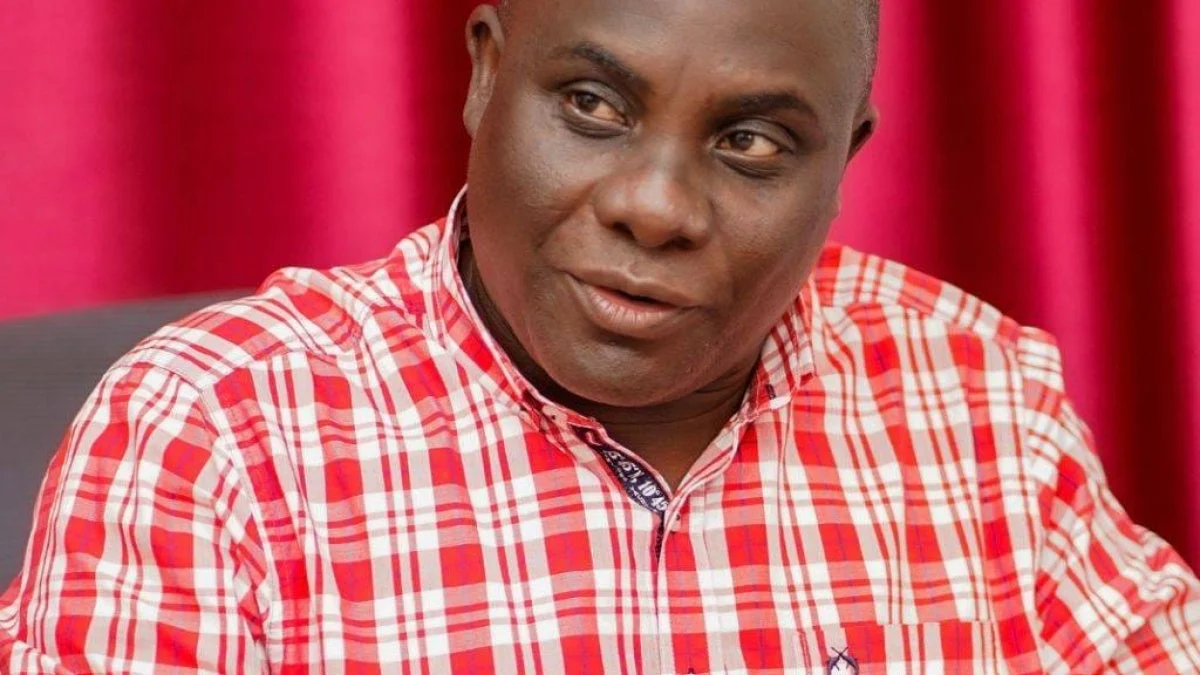
Ugandan authorities have escalated their campaign against political opposition by bringing what human rights observers describe as "abusive and politically motivated" criminal charges against Muwanga Kivumbi, a prominent leader within the country’s primary opposition party. Human Rights Watch (HRW) reported on July 30, 2026, that the charges—which include "inciting violence" and "managing an unlawful society"—appear to be a direct retaliation for Kivumbi’s public criticism of the President’s son, General Muhoozi Kainerugaba, who currently serves as the Chief of the Uganda Peoples’ Defence Forces (UPDF). The case has sparked international concern over the erosion of the rule of law and the increasing involvement of the military in civilian judicial processes.
Kivumbi, a Deputy President of the National Unity Platform (NUP), was formally charged in a magistrate’s court in Butambala on July 29, 2026. This legal action followed a 19-day period of "enforced disappearance," during which Kivumbi was held incommunicado at an undisclosed location. His detention began on July 10, just one day after he had been released on bail for separate, election-related charges. According to HRW, Kivumbi is merely the latest figure in a systemic pattern where the Ugandan military arbitrarily seizes government critics, subjects them to physical abuse, and eventually hands them over to the court system for prosecution under vague or fabricated charges.
The July 10 Abduction and Allegations of Torture
The circumstances surrounding Muwanga Kivumbi’s most recent detention highlight a troubling disregard for standard police procedure. On July 10, while traveling through a police roadblock, Kivumbi was intercepted by a group of armed men in a mix of plainclothes and military uniforms. Witnesses and media reports indicate that the soldiers forcibly dragged the politician from his vehicle and drove him away in an unmarked car. For nearly three weeks, his family, legal counsel, and party colleagues were denied information regarding his whereabouts or his physical well-being.
During his court appearance on July 29, Kivumbi provided a harrowing account of his time in secret detention. He testified that security officers blindfolded him immediately after his abduction and transported him to a small, isolated room. He alleged that during his 19 days of captivity, he was subjected to repeated physical assaults, including being kicked and beaten until he bled from the head. A witness who observed Kivumbi shortly after his transfer to police custody corroborated these claims, noting visible scarring on his head, arms, legs, and back.
Ashwanee Budoo-Scholtz, the deputy Africa director at Human Rights Watch, condemned the treatment of the opposition leader. "Ugandan authorities are weaponizing the justice system to harass and target its critics and opposition," Budoo-Scholtz stated. "The government needs to end these malicious prosecutions and instead ensure accountability for the numerous rights abuses and the scaling up of human rights violations in the country."
Political Criticism as a Catalyst for Prosecution
The specific catalyst for the new charges appears to be a speech Kivumbi delivered to his supporters in Butambala immediately following his initial bail release in early July. In a video of the gathering analyzed by Human Rights Watch, Kivumbi is seen criticizing General Muhoozi Kainerugaba. Specifically, Kivumbi questioned the legality and ethics of the General’s active involvement in national politics while serving as a high-ranking military officer.
Under the Ugandan Constitution and the UPDF Act, serving military officers are prohibited from engaging in partisan political activities. However, General Muhoozi has been increasingly vocal in the political sphere, leading many analysts to view him as the hand-picked successor to his father, President Yoweri Museveni, who has held power since 1986. Kivumbi’s public challenge to the "first son’s" political ambitions is believed to have prompted the swift and violent response from the security apparatus.
The charge of "managing an unlawful society" is frequently used by the Ugandan state to target the NUP and its affiliates. While the NUP is a legally registered political party, the authorities often use this specific legal provision to criminalize grassroots organizing and public gatherings, effectively stifling the opposition’s ability to mobilize.
A Detailed Chronology of the Kivumbi Case
The legal saga involving Muwanga Kivumbi is deeply intertwined with the broader political instability surrounding Uganda’s 2026 general elections. To understand the current charges, it is necessary to examine the timeline of his interactions with the state:
- January 15, 2026: Uganda holds contested general elections. Amidst reports of widespread irregularities, the National Unity Platform (NUP) challenges the results.
- January 22, 2026: Kivumbi is arrested alongside scores of NUP supporters. He is accused of orchestrating a violent attack on the Kibibi Police Station and the Butambala Electoral Commission Tally Centre. The state alleges his actions led to the deaths of seven people.
- January – June 2026: Kivumbi remains in detention, rejecting all allegations. He maintains that security forces actually raided his home on election day, killing several members of his campaign team who were seeking shelter.
- Early July 2026: After months of legal maneuvering, Kivumbi is granted bail by the High Court.
- July 9, 2026: Kivumbi addresses supporters in Butambala, criticizing General Muhoozi Kainerugaba’s role in politics.
- July 10, 2026: Armed soldiers abduct Kivumbi from a police roadblock, beginning a 19-day period of incommunicado detention.
- July 19, 2026: Soldiers drop Kivumbi off at a police station in Kampala. He is subsequently moved to Butambala for new charges.
- July 29, 2026: Kivumbi is formally charged with inciting violence and managing an unlawful society. He reports being tortured while in secret custody.
Broader Patterns of State Repression
The case of Muwanga Kivumbi is not an isolated incident but rather part of a documented trend of "catch-and-release" tactics and the use of treason charges to sideline political rivals. Several other high-profile figures have faced similar treatment in recent months:
The Case of Kizza Besigye
Dr. Kizza Besigye, a four-time presidential candidate and long-term critic of President Museveni, has been imprisoned since November 2024 on charges of treason. On July 29, 2026—the same day Kivumbi was charged—Besigye reportedly collapsed during a court hearing and was rushed to the hospital. Despite his deteriorating health and pleas from his family for private medical treatment, the courts have consistently denied him bail.
The Targeting of Legal Counsel
The Ugandan security apparatus has also extended its reach to the legal representatives of the opposition. On July 15, 2026, Elias Lukwago, a prominent lawyer representing Besigye, was seized by soldiers and detained on treason-related charges. Like Kivumbi, Lukwago sought bail on medical grounds, which was denied by the High Court on July 30. Furthermore, Martha Karua, a Kenyan lawyer also involved in Besigye’s defense, was summarily deported to Kenya on July 22, 2026, in a move seen as an attempt to strip opposition figures of their right to legal representation.
Supporting Data and Human Rights Context
Independent research corroborates the claims made by HRW regarding state-sponsored violence. The Agora Centre for Research, a Ugandan-based NGO, investigated the deaths associated with Kivumbi’s initial arrest in January. Their findings contradicted the government’s narrative, reporting that the seven individuals killed at Kivumbi’s home were election officials and campaign staff who had been gunned down by armed forces while seeking safety in a garage.
Uganda is a signatory to the International Covenant on Civil and Political Rights (ICCPR), which prohibits arbitrary arrest and torture. The UN Human Rights Committee has repeatedly emphasized that pretrial detention must not be used as a form of punishment. Domestically, the Prevention and Prohibition of Torture Act of 2012 and the Human Rights (Enforcement) Act of 2019 were designed to hold public officers personally liable for violations. However, critics argue these laws are rarely enforced against members of the military or the "Special Forces Command" (SFC), which is often implicated in the abduction of politicians.
Data from the 2025 Freedom in the World report classified Uganda as "Not Free," citing a sharp decline in political rights and civil liberties. The report highlighted that the use of military courts to try civilians—a practice condemned by the African Commission on Human and Peoples’ Rights—remains a standard tool for the Museveni administration.
Implications for the Future of Ugandan Democracy
The continued targeting of Muwanga Kivumbi and his colleagues signals a narrowing of the democratic space in Uganda. By using the military to bypass civilian police procedures and using the judiciary to rubber-stamp "incommunicado" detentions, the state has effectively created a climate of fear intended to silence dissent.
The focus on General Muhoozi Kainerugaba is particularly significant. As the "Muhoozi Project"—the alleged plan to transition power from father to son—gains momentum, the threshold for what constitutes "inciting violence" or "treason" appears to have lowered to include any criticism of the First Family.
Human rights organizations are calling for an immediate and impartial investigation into the killings at Kivumbi’s home in January, as well as the allegations of torture during his July detention. Without international pressure and a return to constitutional adherence, observers fear that the weaponization of the justice system will lead to further instability and the total criminalization of political opposition in Uganda.
As Ashwanee Budoo-Scholtz of HRW concluded, "The authorities should drop all criminal charges against Kivumbi and ensure that all security officials implicated in his ill-treatment and enforced disappearance are held to account." For now, Kivumbi remains in the system, a symbol of the high cost of political defiance in a nation where the line between the military and the law continues to blur.

Related Posts
Human Rights Watch Calls for Investigation into Death of Detainee Following Removal from Najaf Hospital by Iraqi Drug Police
Human Rights Watch Urges UN Security Council to Extend Lebanon Peacekeeping Mission Amid Escalating Conflict and Humanitarian Crisis