Thales Australia Showcases Guardian Angel UGV Following Rapid Six Week Development Cycle
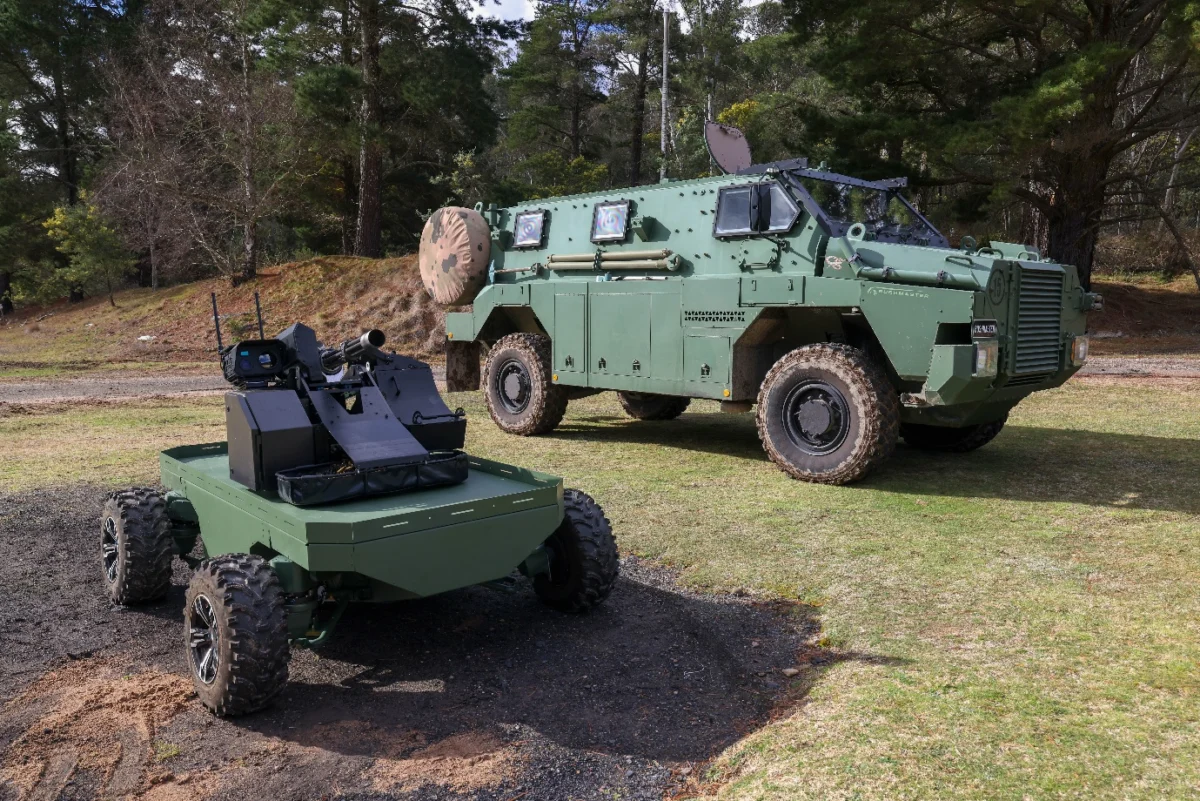
In a significant demonstration of modern defense manufacturing agility, Thales Australia has successfully transitioned a conceptual design into a fully functional, armed Unmanned Ground Vehicle (UGV) in a timeframe of just six weeks. Known as the "Guardian Angel," this four-wheeled autonomous platform represents a milestone in rapid prototyping, designed to meet the evolving demands of the Australian Defence Force (ADF) and the broader global shift toward robotic and autonomous systems (RAS). The project, which culminated in a successful live-fire demonstration, highlights a pivot in defense procurement where speed to capability is increasingly viewed as a critical strategic advantage.
The Guardian Angel project was not a solo endeavor; it was the result of a concentrated collaboration between Thales Australia and two specialized domestic firms, Chaos 1 and W&E Platt. This partnership underscores the growing importance of "sovereign industrial strength"—a policy priority for the Australian government aimed at ensuring the nation can develop and maintain its own critical defense technologies without total reliance on foreign supply chains. By integrating Thales’ systems expertise with the rapid prototyping capabilities of Chaos 1 and the specialized weapon mounting hardware of W&E Platt, the consortium proved that the traditional, multi-year defense development cycle can be compressed into weeks when necessary.
Technical Specifications and Weaponry
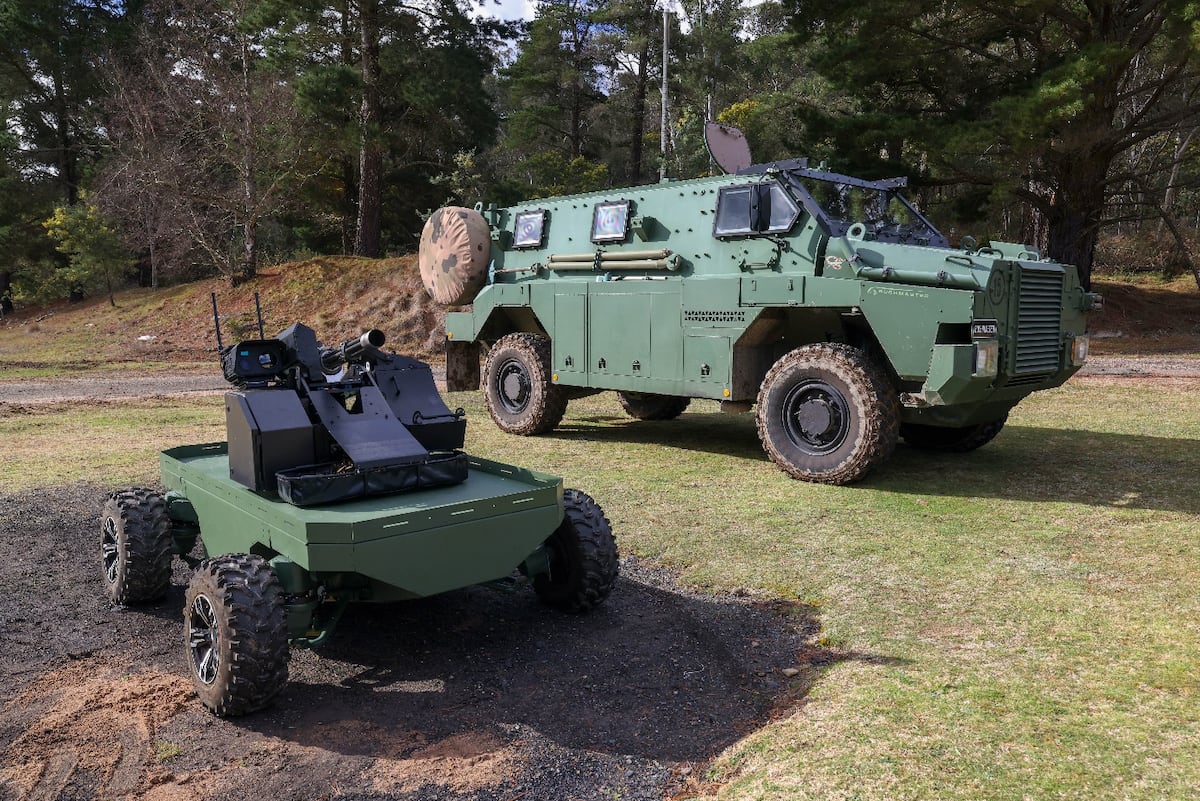
The Guardian Angel is a compact, four-wheeled UGV designed for versatility and high-risk operational environments. During its recent live-fire testing, the vehicle was equipped with a Remote Operated Weapon PLATTform (ROWP), manufactured by W&E Platt. The ROWP is designed as a low-cost, high-reliability mounting solution for various light and medium weapon systems. For the prototype demonstration, the ROWP was fitted with a Dillon M134D Minigun, a six-barrel rotary machine gun capable of firing up to 3,000 to 4,000 rounds per minute.
The choice of the M134D Minigun provides the Guardian Angel with significant suppressive fire capabilities, allowing it to engage targets with a high volume of fire while remaining controlled from a safe distance by a human operator. The integration of such a high-rate-of-fire weapon on a relatively small, autonomous chassis demonstrates the stability and recoil-management capabilities of the W&E Platt mount and the Thales-integrated chassis.
Beyond its current armament, the Guardian Angel is designed with modularity in mind. Thales Australia has indicated that the platform’s future iterations could feature a containerized mission system. This modular approach would allow the UGV to be reconfigured rapidly for various roles, including:
- Medical Evacuation (MEDEVAC): Transporting wounded personnel from high-threat zones to safety without risking additional human lives.
- Logistics and Cargo Transport: Moving ammunition, food, and water to forward-deployed troops.
- Troop Support: Acting as a "mechanical mule" to carry heavy equipment for infantry squads.
- Intelligence, Surveillance, and Reconnaissance (ISR): Equipped with advanced sensors to provide real-time battlefield data.
The Rapid Prototyping Process: A "Chaotic" Success
The development of the Guardian Angel was characterized by what Benny Johanson, Founder and CEO of Chaos 1, described as "rapid prototyping in true form." The project moved from a 2D concept drawing to a physical, firing prototype in 42 days—a feat that many industry observers considered impossible given the complexities of autonomous navigation and weapon system integration.
Chaos 1 specializes in rapid assessments and autonomous-system experimentation, and their role was pivotal in navigating the high-risk, high-speed nature of the build. "In just six weeks we moved from a concept graphic to live-fire demonstration, and many said it couldn’t be done," Johanson stated. He emphasized that the project "proved the sheer horsepower industry can generate for the warfighter at speed."
This "high-risk, high-reward" approach is becoming a hallmark of modern defense innovation, particularly in the UGV sector. By bypassing some of the more bureaucratic hurdles of traditional procurement and focusing on iterative testing, the team was able to identify and solve engineering challenges in real-time. This methodology is particularly relevant in the current global security climate, where threats evolve faster than traditional ten-year procurement programs can address.
Strategic Objectives: Sovereign Capability and Soldier Safety
Thales Australia has been clear that the primary driver behind the Guardian Angel is the preservation of human life. Andrew Downes, Vice President of Land at Thales Australia, noted that UGVs provide a "clear tactical advantage" by operating in high-risk environments that would otherwise require putting soldiers in harm’s way.
"UGVs can preserve soldiers by operating in high-risk environments while providing a clear tactical advantage, assisting operations on the battlefield," Downes commented. "They offer scalable, agile, cost-effective capability that can increase operational reach without increasing risk to personnel."
Furthermore, the project serves as a showcase for Thales Australia’s ability to lead a sovereign industrial ecosystem. By utilizing Australian SMEs (Small to Medium Enterprises) like Chaos 1 and W&E Platt, Thales is aligning itself with the Australian Department of Defence’s "Sovereign Industrial Capability Priorities." This focus is intended to ensure that Australia possesses the internal technical knowledge and manufacturing capacity to sustain its own defense forces during times of global supply chain disruption or conflict.
The Broader Landscape of Australian UGV Development
The Guardian Angel enters a crowded and highly active field of robotic experimentation within the Australian defense sector. The Australian Army has been aggressively trialing various UGV platforms to determine how they can best be integrated into the "Army of the Future."
Several other platforms are currently under evaluation or in prototype stages:
- BAE Systems Australia M113AS4: BAE has converted several decommissioned M113AS4 armored personnel carriers into modular robotic vehicles. These large, tracked UGVs are being used to test how autonomous armor can support manned formations.
- ATLAS 8×8: Also from BAE Systems Australia, the ATLAS is a massive 8×8 autonomous combat vehicle fitted with a 25mm Bushmaster cannon. It represents the "heavy" end of the UGV spectrum, designed for high-intensity direct combat.
- Warfighter UGV: Produced by Cyborg Dynamics Engineering, this tracked vehicle is designed for infantry support and has been tested for its ability to navigate complex terrain alongside soldiers.
- Ground Uncrewed System (GUS): Developed by Outlook Industries, GUS is currently utilized by the Australian Army for remote coastal surveillance, particularly in the northern regions of the country.
- Attritable Platforms: Small, "expendable" UGVs like GaardTech’s Jaegar-C and DefendTex’s Banshee are being tested for "kamikaze" or kinetic payload missions, where the vehicle is designed to be destroyed along with its target.
Brigadier Ben McLennan, commander of the Australian Army’s 3rd Brigade, recently highlighted the practical applications of these systems in upcoming exercises. "We’re about to bring into the next exercise UGVs. We can practice breaching minefields, for example, with sacrificial UGVs that might drag a tube full of explosives across a minefield—and we can detonate that," McLennan said. This application specifically addresses one of the most dangerous tasks in modern land warfare: the breaching of complex obstacles and minefields.
Implications for Future Warfare
The Guardian Angel project is more than just a single vehicle; it is a proof of concept for a new way of doing business in the defense sector. The ability to produce an armed, autonomous platform in six weeks suggests that in a future conflict, industry could potentially "surge" production of specialized robotic systems tailored to specific battlefield needs.
However, Thales has clarified that the Guardian Angel itself was not built for immediate market sale. A spokesperson for the company explained that the vehicle is a prototype intended to "test and strengthen our capability in autonomous systems and solutions." By building the Guardian Angel, Thales has created a baseline of data and engineering experience that will inform the next generation of Australian-made autonomous platforms.
The successful integration of the Dillon Minigun also raises important questions about the future of "Human-in-the-Loop" (HITL) systems. While the Guardian Angel is autonomous in its navigation and operation, the firing of the weapon remains under the strict control of a human operator via the remote weapon station. As these systems become more prevalent, the debate over autonomous lethality and the ethical frameworks governing robotic warfare will likely intensify.
Conclusion
The Guardian Angel UGV stands as a testament to what can be achieved through collaboration, rapid prototyping, and a clear focus on sovereign capability. While it remains a prototype for now, the lessons learned during its six-week development cycle will likely resonate through the Australian defense industry for years to come. As the Australian Army continues to experiment with a diverse range of UGVs—from the "sacrificial" mine-clearing bots to the heavily armed ATLAS 8×8—the Guardian Angel provides a mid-tier, highly mobile, and modular solution that could one day become a staple of the frontline.
For Thales Australia, the project confirms their position as a leader in the domestic defense landscape, capable of moving at the speed of modern technology to protect the warfighter. For the Australian defense industry as a whole, it serves as a powerful reminder that "sovereign strength" is not just about manufacturing, but about the agility to innovate and deliver in the face of rapidly changing global threats.

Related Posts
Pentagon Forges Landmark Seven-Year Agreements with Boeing and RTX to Accelerate Standard Missile-3 Production and Stabilize Defense Supply Chains
Boeing Unveils Ultra Low-Cost Seeker to Enhance Missile Inventory and Combat Cost Challenges in Modern Warfare