Morning recap
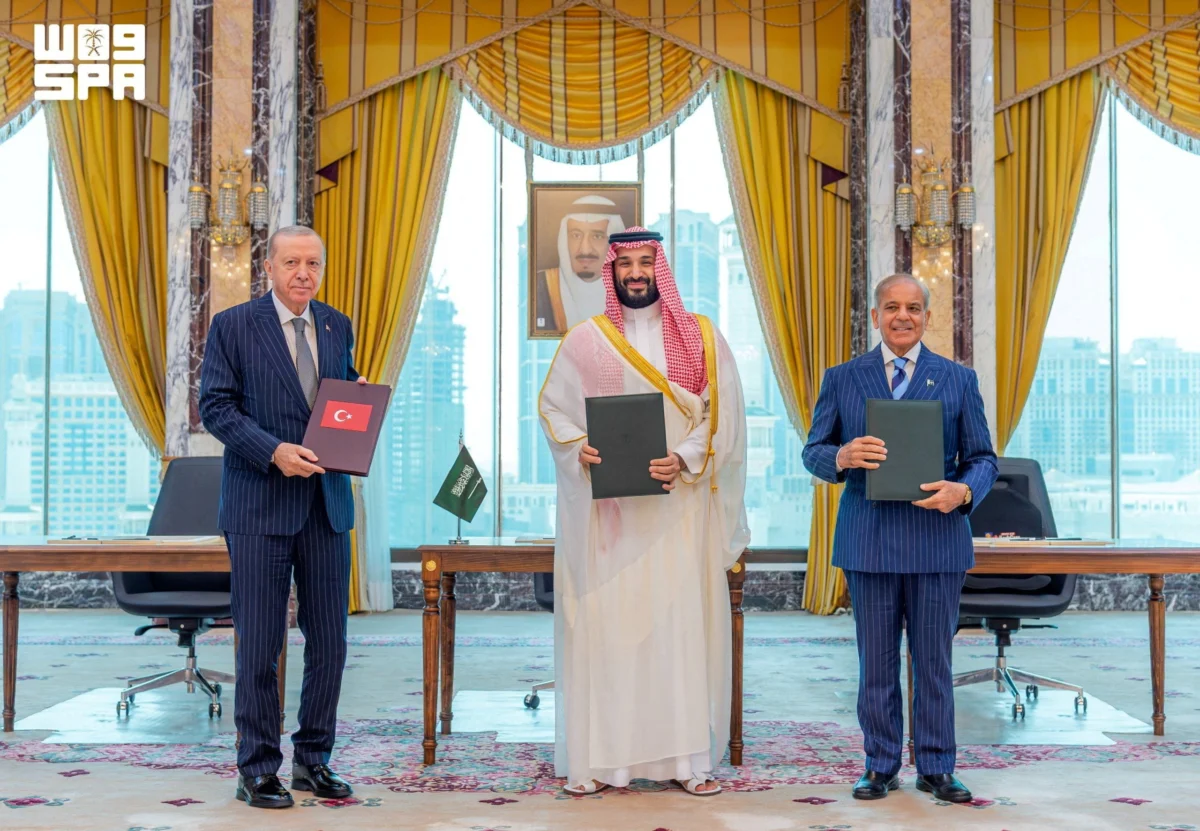
A significant geopolitical alignment emerged with the formalization of a joint defence agreement between Turkey, Saudi Arabia, and Pakistan on Friday, a pact swiftly welcomed by the 57-member Organisation of Islamic Cooperation (OIC) and other regional actors. This development unfolds against a backdrop of persistent regional instability, marked by continued Houthi aggressions in Yemen, escalating Israeli-Palestinian tensions in the West Bank and Gaza, and a precarious maritime standoff in the Strait of Hormuz involving Iran and the United States. The multifaceted challenges underscore a volatile period for the Middle East, with new alliances forming and long-standing conflicts intensifying, demanding a delicate balance of diplomacy and deterrence from all parties.
The Mecca Joint Defence Agreement: A New Regional Security Architecture?
The newly signed Mecca Joint Defence Agreement between Turkey, Saudi Arabia, and Pakistan has been hailed as a pivotal step towards bolstering collective security among key Islamic nations. Hissen Brahim Taha, the Secretary-General of the Organisation of Islamic Cooperation (OIC), articulated the body’s unequivocal support, emphasizing the agreement’s potential to foster greater stability and cooperation within the Islamic world. This endorsement from the OIC, representing a vast geopolitical and demographic bloc, lends significant weight to the initiative, positioning it as a potentially transformative force in regional security dynamics.
Further signalling broad regional acceptance, Bahrain, Yemen’s internationally recognised government, and a former Qatari prime minister also extended their welcomes to the pact. Turkish President Recep Tayyip Erdogan, a principal architect of the agreement, underscored its inclusive nature, stating that the accord was explicitly "open to the participation of other friendly nations." This open invitation suggests an ambition to expand the alliance, potentially drawing in other Muslim-majority states seeking enhanced defence capabilities and strategic partnerships outside existing frameworks.
Background and Context of the Alliance:
The formation of this trilateral defence pact comes at a critical juncture for the region. Saudi Arabia, historically reliant on Western security guarantees, has been actively diversifying its strategic partnerships in recent years, seeking to enhance its indigenous defence capabilities and project regional influence. Turkey, under President Erdogan, has pursued an increasingly assertive foreign policy, characterized by a desire to play a more prominent role in regional security and to deepen ties with Islamic nations. Pakistan, possessing a formidable military and a long history of contributing to international peacekeeping, offers significant military expertise and strategic depth.
While details of the agreement’s operational specifics remain to be fully disclosed, analysts suggest it could encompass joint military exercises, intelligence sharing, defence industrial collaboration, and coordinated responses to regional threats, including terrorism and conventional security challenges. The timing is particularly noteworthy, given ongoing regional rivalries and the complex security landscape. The OIC’s backing further solidifies the pact’s legitimacy within the broader Islamic world, potentially enabling a more unified approach to security issues.
Implications and Potential Trajectories:
The Mecca Joint Defence Agreement holds several significant implications. Firstly, it could reshape the security architecture of the Islamic world, potentially offering an alternative or supplementary framework to existing alliances. Secondly, it signals a growing trend towards self-reliance and intra-Islamic cooperation on defence matters, reducing dependence on external powers. Thirdly, the "open to other friendly nations" clause could lead to a broader coalition, creating a substantial force capable of addressing diverse security challenges. However, the agreement will also be scrutinized by other regional and international actors, particularly those with differing geopolitical interests. Its long-term effectiveness will depend on the political will of its members, their ability to overcome historical differences, and their capacity to integrate diverse military doctrines and capabilities.
Yemen’s Enduring Conflict: Houthi Strikes and Civilian Toll
Amidst the shifting alliances, Yemen remains mired in a devastating conflict, with civilian populations bearing the brunt of ongoing hostilities. On Friday, the oil-rich city of Marib once again became a focal point of violence, as Houthi forces launched strikes that tragically resulted in the deaths of two civilians. The following day, Yemeni armed forces confirmed they had responded to these attacks, indicating a continued cycle of violence in a region that has long been a flashpoint.
Context of the Marib Conflict:
Marib holds immense strategic and economic significance within Yemen. It is the last northern stronghold of the internationally recognized government, and its vast oil and gas reserves make it a crucial prize for all warring factions. The city has been under relentless assault by Houthi forces for years, with control of Marib seen as pivotal to determining the overall trajectory of the civil war. Its capture by the Houthis would deal a significant blow to the government’s territorial claims and provide the Houthis with substantial economic leverage.
The conflict in Yemen, which escalated significantly in 2014, has plunged the country into one of the world’s worst humanitarian crises. The Saudi-led coalition intervened in 2015 to support the internationally recognized government against the Houthis, who are backed by Iran. Despite numerous attempts at ceasefire and peace negotiations, including UN-brokered efforts, a lasting resolution has remained elusive.
Humanitarian Crisis and Civilian Impact:
The Houthi strikes on Marib are a stark reminder of the indiscriminate nature of the conflict and its devastating impact on civilians. Since the conflict began, tens of thousands of civilians have been killed, and millions have been displaced. The UN Office for the Coordination of Humanitarian Affairs (OCHA) estimates that over 21 million people, more than two-thirds of Yemen’s population, are in need of humanitarian assistance, with widespread food insecurity, cholera outbreaks, and a collapsing healthcare system. Attacks on civilian areas, including residential neighbourhoods and vital infrastructure, have been a recurring feature of the war, drawing condemnation from international human rights organizations. The latest casualties in Marib underscore the urgent need for a cessation of hostilities and a renewed push for a political settlement to end the protracted suffering of the Yemeni people.
Iran’s Strategic Calculus Amidst US Tensions and Maritime Blockade
Iran’s foreign policy is navigating a complex landscape of diplomatic overtures and assertive defence postures, particularly in its relations with the United States. Iranian President Masoud Pezeshkian articulated Tehran’s readiness to engage in dialogue to safeguard its national interests, while simultaneously drawing a firm line against any demands that would compromise its sovereignty or defensive capabilities. This nuanced stance comes as the US intensifies its pressure campaign, particularly concerning maritime activities in the Strait of Hormuz.
Strait of Hormuz: A Deal on the Horizon?
A US official indicated that "progress is being made" between Iran and Oman regarding the Strait of Hormuz, expressing expectations for "a deal soon." Oman has historically played a crucial mediating role between Iran and Western powers, leveraging its diplomatic neutrality to facilitate back-channel communications. Any agreement concerning the Strait of Hormuz would be significant, given its critical importance as a global chokepoint for oil and gas shipments. Approximately one-fifth of the world’s crude oil and petroleum products pass through this narrow waterway. De-escalation here could significantly reduce regional tensions and mitigate risks to global energy markets.
However, the optimistic diplomatic signals contrast sharply with the ongoing enforcement actions by the United States Central Command (CENTCOM). CENTCOM reported that since reinstating a naval blockade of Iran on July 14, it has redirected 51 commercial vessels, disabled two, and boarded two others. This aggressive maritime posture is part of the broader US "maximum pressure" campaign, aimed at curtailing Iran’s nuclear program, ballistic missile development, and regional influence. The blockade’s reinstatement has inevitably heightened tensions in the Gulf, raising concerns about potential miscalculations and unintended confrontations.
The "Off-Ramp" Debate in Washington:
The complexities of the US-Iran relationship are also reflected in internal American discussions. A top United States general voiced concerns about the Trump administration’s current military options against Iran, warning that they "could backfire" and emphasizing the country’s need for "an off-ramp" from the war. This statement highlights a division within US policy circles regarding the efficacy and risks of an overtly confrontational approach. The general’s comments suggest an apprehension about the potential for unintended escalation and the long-term consequences of military engagement, advocating instead for a strategy that includes diplomatic avenues for de-escalation.
Timeline of US-Iran Tensions:
The current heightened tensions are rooted in a long history, particularly the US withdrawal from the Joint Comprehensive Plan of Action (JCPOA), commonly known as the Iran nuclear deal, in 2018. This withdrawal, followed by the reinstatement and imposition of stringent sanctions, significantly exacerbated hostilities. Since then, there have been numerous incidents in the Gulf, including attacks on tankers, drone downings, and seizures of vessels, all contributing to a volatile security environment. The July 14 naval blockade represents a further tightening of economic and military pressure, designed to compel Iran back to the negotiating table on US terms.
Economic and Geopolitical Implications:
The disruption of traffic through the Strait of Hormuz, even if temporary, has significant global economic repercussions. Maritime traffic tracking firm Kpler reported that traffic remained subdued on August 7, with only eight confirmed crossings, a 33% decrease from the previous day. Such reductions can lead to spikes in oil prices, impacting global economies. Beyond economics, the standoff risks a broader regional conflict, drawing in other actors and destabilizing an already fragile Middle East. Pezeshkian’s emphasis on protecting sovereignty while being open to dialogue reflects Iran’s strategy to resist external pressure while leaving room for diplomatic solutions, particularly if they align with its core national interests.
Israeli-Palestinian Conflict: Escalating Violence and Humanitarian Crisis
The Israeli-Palestinian conflict continues its grim trajectory, marked by persistent violence across the West Bank and a deepening humanitarian crisis in Gaza. Reports indicate a series of attacks and raids carried out by Israeli forces and settlers across the West Bank, resulting in injuries to several Palestinians, including two ambulance officers. These incidents underscore the daily realities of occupation and the systemic challenges faced by Palestinian communities.
West Bank Raids and Settler Violence:
Israeli military raids in Palestinian towns and refugee camps in the West Bank are routine occurrences, often leading to confrontations, arrests, and casualties. These operations are frequently justified by Israel as necessary counter-terrorism measures. However, Palestinian and human rights organizations often criticize them as collective punishment and excessive use of force. Simultaneously, settler violence against Palestinians, including attacks on farmers, property destruction, and harassment, has been a growing concern. The UN Office for the Coordination of Humanitarian Affairs (OCHA) consistently reports a rise in settler-related incidents, often occurring with insufficient intervention from Israeli security forces. The targeting of ambulance officers is particularly alarming, as it directly impedes the provision of medical assistance to the injured, violating international humanitarian law. These actions contribute to an environment of fear and instability, further eroding prospects for a peaceful resolution.
Gaza: A Continuing Humanitarian Catastrophe:
The Gaza Strip remains under a severe Israeli and Egyptian blockade, leading to a protracted humanitarian crisis. Unicef has released a chilling statistic: at least 300 children, an average of one child every day, have been killed in Gaza in the 300 days since a ceasefire was announced in October 2024. This figure highlights the devastating toll of ongoing violence and the dire conditions faced by the youngest population segment in the besieged enclave. The 2024 ceasefire, while intended to bring relief, has evidently failed to prevent significant child casualties, pointing to persistent underlying conflicts and a lack of effective protection mechanisms.
The humanitarian situation in Gaza is characterized by high rates of poverty, unemployment, and food insecurity. The blockade severely restricts the movement of goods and people, hampering economic development and limiting access to essential services, including healthcare and education. The constant threat of renewed hostilities and the psychological impact of living in a conflict zone have profound long-term consequences for Gaza’s children, many of whom experience trauma, displacement, and chronic stress.
Lebanon Border Tensions:
Adding another layer of regional instability, Israeli artillery shelled the vicinity of the town of al-Mansouri early Saturday morning. Al-Mansouri is located in southern Lebanon, near the border with Israel. Such shelling incidents are often linked to tit-for-tat exchanges or preemptive strikes in response to perceived threats from groups like Hezbollah, which maintains a significant presence in southern Lebanon. The Israel-Lebanon border has remained a tense flashpoint for decades, with sporadic clashes and heightened rhetoric. These incidents risk broader escalation, potentially drawing in other regional actors and further destabilizing the Levant.
Broader Implications:
The escalating violence in the West Bank, the tragic child fatalities in Gaza, and the border skirmishes with Lebanon collectively underscore the multifaceted nature of the Israeli-Palestinian conflict and its wider regional ramifications. These events complicate efforts towards a two-state solution, reinforce cycles of violence, and exacerbate humanitarian suffering. International bodies and human rights organizations continue to call for greater protection of civilians, accountability for violations, and a renewed commitment to a political process that addresses the root causes of the conflict. The interconnectedness of these flashpoints demonstrates how local incidents can quickly ripple across the region, making comprehensive peace elusive.
Conclusion: A Region in Flux
The Middle East remains a crucible of geopolitical shifts and enduring conflicts. The formation of the Mecca Joint Defence Agreement signifies a potential recalibration of alliances among key Islamic nations, seeking to forge new pathways for collective security. Simultaneously, the persistent violence in Yemen, the escalating tensions between the US and Iran over the Strait of Hormuz, and the deepening humanitarian crisis in the Palestinian territories serve as stark reminders of the region’s inherent fragility. Each development, from new defence pacts to daily casualties, contributes to a complex tapestry of challenges that demand nuanced diplomatic engagement, adherence to international law, and a genuine commitment from all stakeholders to de-escalate tensions and prioritize human lives. The coming months will be critical in determining whether these shifts lead to greater stability or further entrench the region in protracted cycles of conflict.

Related Posts
Over 150 Israeli Settlers Storm Al-Aqsa Compound and Perform Prayers, Violating Status Quo Under Police Protection.
UN Report Highlights Over 900 Obstacles Hampering West Bank Aid Amid Escalating Humanitarian Crisis