Beyond Gross Domestic Product: The Global Imperative to Redefine Economic Success in the 21st Century
In 1934, as the United States struggled to emerge from the catastrophic depths of the Great Depression, an economist named Simon Kuznets presented a seminal report to the U.S. Congress. This document, titled "National Income, 1929–1932," was born out of a desperate need to quantify the scale of the economic collapse. At the time, policymakers were operating in a statistical vacuum, lacking a comprehensive metric to understand the total output of the nation. Kuznets, who would later be awarded the Nobel Prize in Economic Sciences, provided the blueprint for what would eventually become Gross Domestic Product (GDP).
While GDP proved to be a revolutionary tool for mobilizing industrial production during World War II and managing post-war reconstruction, Kuznets himself was acutely aware of its inherent flaws. In his 1934 paper, he issued a prophetic warning that remains at the heart of modern economic debate: "The welfare of a nation can scarcely be inferred from a measure of national income." Despite this caution, GDP became the undisputed king of economic indicators, serving as the primary benchmark for national success for nearly a century. Today, as the world faces an escalating climate crisis and widening social inequality, a growing coalition of economists, international organizations, and environmental leaders—including Steven Stone, acting director of the United Nations Environment Programme’s (UNEP) Office of Science—are calling for a fundamental shift "Beyond GDP."
The Historical Evolution of Economic Measurement
The journey of economic accounting is marked by moments of crisis and necessity. Before the 1930s, governments relied on fragmentary data such as tax receipts, freight car loadings, and stock market indices to gauge economic health. The inability to measure the total impact of the Great Depression necessitated a more robust system.
The timeline of GDP’s rise and the subsequent emergence of alternative frameworks illustrates the shifting priorities of the global community:
- 1934: Simon Kuznets submits his report to Congress, establishing the framework for national income accounting but warning against using it as a proxy for social welfare.
- 1944: The Bretton Woods Conference establishes GDP as the standard tool for measuring national economies, facilitating the management of the new global financial order through the IMF and World Bank.
- 1972: The King of Bhutan famously declares that "Gross National Happiness is more important than Gross Domestic Product," marking the first high-level state rejection of GDP as the sole metric of progress.
- 1990: The United Nations Development Programme (UNDP) introduces the Human Development Index (HDI), incorporating life expectancy and education alongside income.
- 2009: The Stiglitz-Sen-Fitoussi Commission, commissioned by the French government, publishes a landmark report identifying the limitations of GDP and advocating for a "well-being" approach to economic measurement.
- 2021: The United Nations adopts the System of Environmental-Economic Accounting (SEEA) Ecosystem Accounting, a framework to integrate natural capital into national accounts.
- 2023: UN Secretary-General António Guterres releases a policy brief titled "Valuing What Counts," urging member states to develop metrics that reflect environmental sustainability and social equity.
The Structural Limitations of GDP
The primary criticism of GDP is not that it is inaccurate in what it measures, but rather what it ignores. GDP calculates the market value of all final goods and services produced within a country in a specific period. This narrow focus creates several "blind spots" that distort the perception of a nation’s true health.
The Omission of Natural Capital
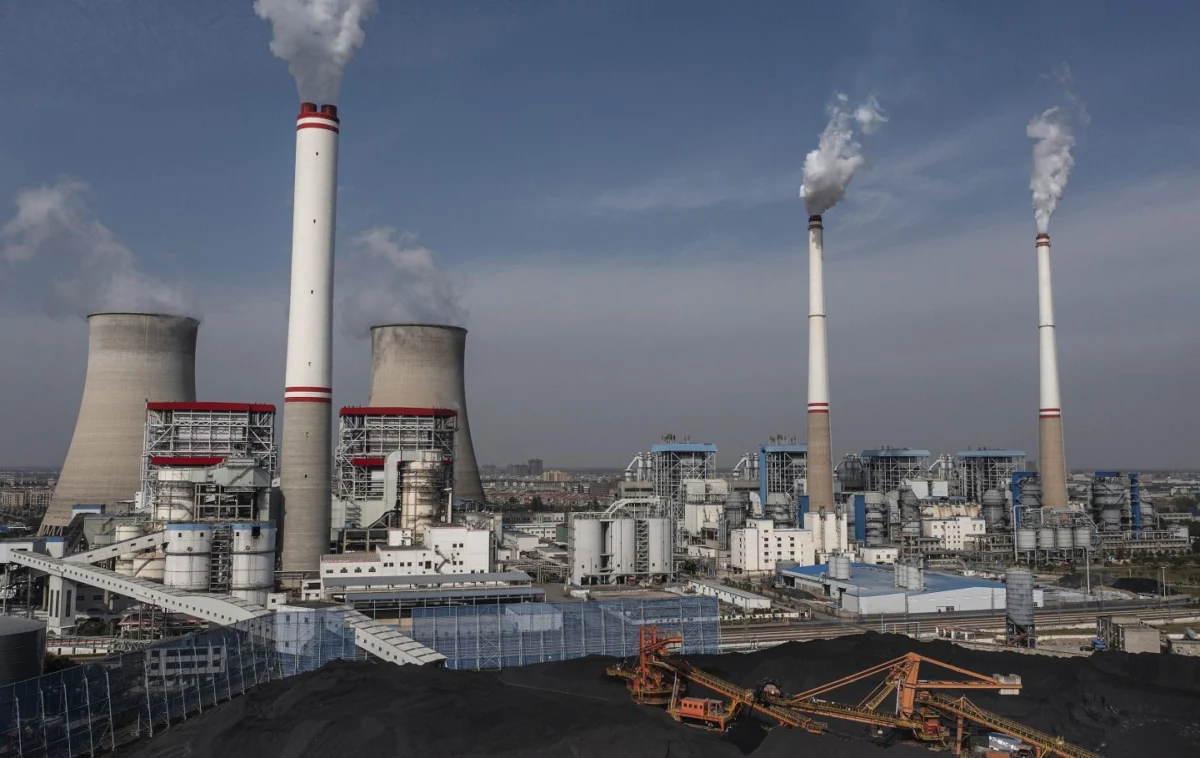
GDP treats the depletion of natural resources as income rather than the liquidation of an asset. When a forest is cleared for timber, GDP rises due to the sale of wood and the wages paid to loggers. However, the loss of carbon sequestration, biodiversity, and water filtration—services provided for free by the ecosystem—is nowhere to be found on the balance sheet. According to UNEP data, while global produced capital per person doubled between 1992 and 2014, the stock of natural capital per person declined by nearly 40%.
Defensive Expenditures
One of the most paradoxical aspects of GDP is that it often counts "bads" as "goods." Economic activity generated by cleaning up oil spills, rebuilding after hurricanes, or treating preventable lifestyle diseases all contribute to GDP growth. In this framework, a disaster is seen as an economic stimulant, even as it destroys lives and property.
The Care Economy and Unpaid Labor
GDP largely ignores non-market activities. This includes the massive volume of unpaid domestic work, childcare, and elder care, which is predominantly performed by women. Research by the International Labour Organization (ILO) suggests that if unpaid care work were assigned a monetary value based on minimum wage, it would constitute approximately 9% of global GDP, or roughly $11 trillion. By ignoring this sector, GDP provides an incomplete picture of the labor that actually sustains society.
Supporting Data: The Divergence of Growth and Well-being
Recent data suggests that the historical correlation between GDP growth and improvements in human well-being is decoupling in many developed nations. This phenomenon, often referred to as the "Threshold Hypothesis," suggests that while GDP growth improves quality of life in developing nations, it may reach a point of diminishing returns in affluent societies where it is accompanied by rising stress, pollution, and inequality.
The Genuine Progress Indicator (GPI), an alternative metric that adjusts for income distribution and subtracts environmental costs, provides a stark contrast to GDP. While global GDP has seen consistent growth since the mid-20th century, global GPI peaked in the late 1970s and has remained relatively stagnant or declined in many regions since then.
Furthermore, the World Bank’s "Changing Wealth of Nations" report highlights the importance of "Inclusive Wealth." This metric tracks three types of assets: produced capital (infrastructure), human capital (skills and health), and natural capital. Data indicates that in several resource-dependent nations, GDP growth is being "bought" at the expense of human and natural capital, leading to a net decrease in the country’s total wealth and long-term viability.
Global Responses and Institutional Shifts
The movement to look beyond GDP has gained significant traction within the highest levels of international governance. Steven Stone and his colleagues at UNEP have been instrumental in advocating for the "Inclusive Wealth Index" (IWI) as a more comprehensive successor to GDP. The IWI provides a holistic view of a country’s productive base, ensuring that current growth does not compromise the ability of future generations to meet their needs.
In Europe, the "Beyond GDP" initiative has led to the integration of social and environmental indicators into the European Semester, the framework for economic policy coordination. Countries like New Zealand have gone a step further, introducing "Well-being Budgets" that require government agencies to demonstrate how their spending requests will improve specific social and environmental outcomes, rather than just contributing to economic output.
Official statements from the United Nations emphasize that the transition is no longer optional. "GDP tells us the price of everything and the value of nothing," UN Secretary-General António Guterres stated during the presentation of the "Our Common Agenda" report. He argued that the current obsession with GDP creates a "suicidal" economic path that encourages the destruction of the planet for short-term gain.
Analysis of Implications: Redefining Value
The shift toward new economic metrics is not merely a statistical exercise; it has profound implications for global policy and investment. If a nation’s success is measured by the health of its citizens and the stability of its climate, rather than just the volume of its transactions, the following shifts are likely to occur:
- Reorientation of Subsidies: Currently, global governments provide hundreds of billions of dollars in subsidies to fossil fuels and industrial agriculture because these sectors drive GDP. Under a "Green Accounting" framework, these subsidies would be seen as detrimental to national wealth, leading to a reallocation of funds toward renewable energy and regenerative practices.
- Long-term Investment Strategies: Institutional investors and sovereign wealth funds are increasingly looking at Environmental, Social, and Governance (ESG) criteria. Standardized "Beyond GDP" metrics would provide these investors with the data needed to move capital away from extractive industries and toward sustainable development.
- Policy Prioritization: When social well-being is quantified, issues like mental health, education quality, and air purity become central to the political discourse. Governments would be held accountable for these metrics in the same way they are currently held accountable for quarterly GDP growth.
Conclusion: The Path Forward
The 1934 paper by Simon Kuznets was a masterwork of its time, providing a tool that helped manage the industrial age. However, the challenges of the 21st century—characterized by ecological limits and deep systemic inequality—require a more sophisticated dashboard.
As Steven Stone and the UNEP Office of Science continue to highlight, the goal is not to abandon GDP entirely, but to dethrone it as the sole arbiter of progress. By integrating natural and human capital into our national accounts, the global community can finally align its economic goals with the physical realities of a finite planet and the social needs of its population. The transition "Beyond GDP" represents the next evolution of economic science, moving from a narrow focus on the flow of money to a comprehensive understanding of the foundations of human prosperity.

Related Posts
Constitutional Court of South Africa Bars Shell Oil Exploration in Landmark Victory for Environmental and Community Rights

The Battle for Saldanha Bay: South Africa’s Ambitious Ocean Economy Strategy Faces Legal and Environmental Reckoning