North Korea Expands Military Support for Russia with Missile Units and Strategic Troop Deployments in Ukraine Conflict
The geopolitical landscape of the conflict in Ukraine has undergone a fundamental shift as North Korea escalates its involvement from the provision of munitions to the direct deployment of specialized military personnel. According to recent intelligence reports from Ukraine’s GUR military intelligence agency, Pyongyang has dispatched a dedicated missile unit to western Russia, marking the most significant foreign intervention in a European conflict by a non-neighboring state in decades. This move signifies a deepening of the "blood alliance" between Moscow and Pyongyang, transitioning from a transactional relationship based on hardware into a full-scale operational partnership that challenges the existing international security architecture.
Deployment of Specialized Missile Units and Strategic Hardware
The latest intelligence indicates that a North Korean missile unit, consisting of approximately 90 specialized personnel, has begun its deployment process in the Voronezh region of western Russia. This unit is not merely an advisory group; it is reportedly tasked with managing and operating a sophisticated arsenal intended for strikes against Ukrainian infrastructure and military positions. Ukrainian intelligence officials suggest the unit could be equipped with up to 120 ballistic missiles and six mobile launchers.
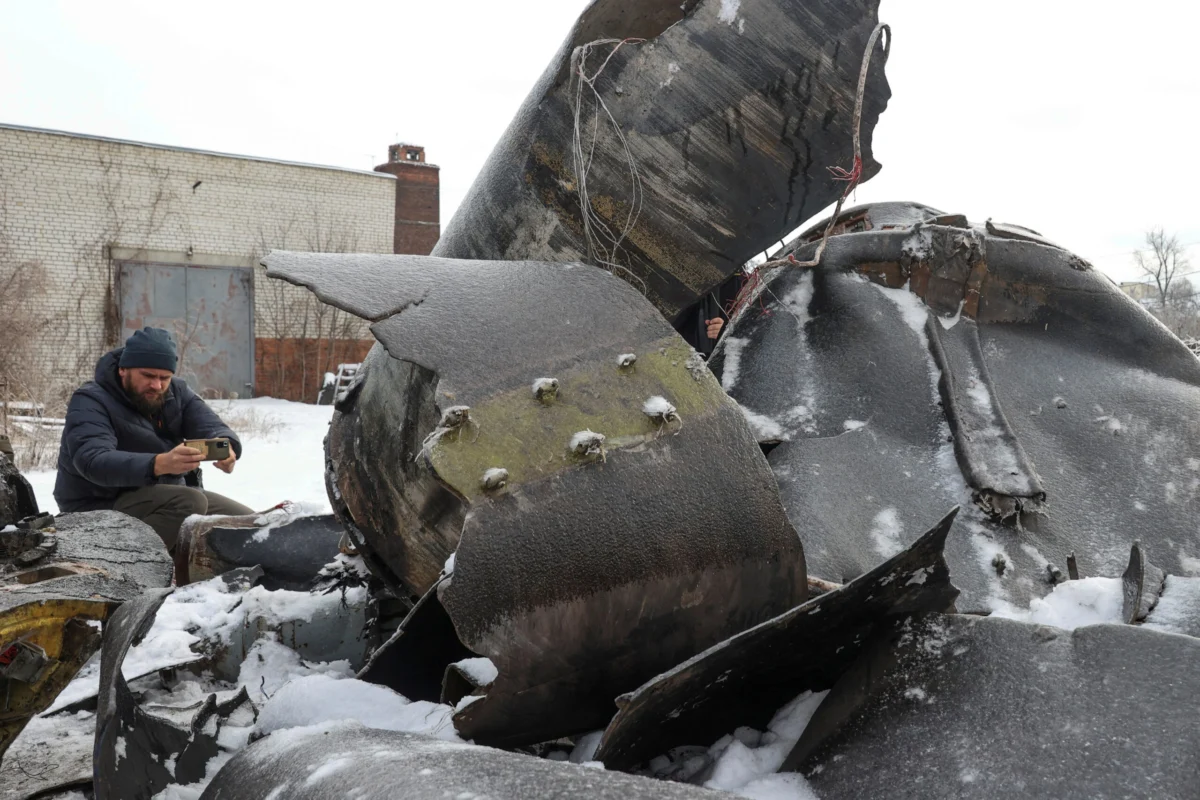
The missiles in question are believed to be part of the KN-23 and KN-24 families—short-range ballistic missiles (SRBMs) that bear a striking resemblance to the Russian Iskander-M system. These weapons are known for their quasi-ballistic trajectories, making them difficult for traditional air defense systems to intercept. The United States has confirmed it is monitoring these developments, with sources familiar with the matter indicating that the deployment represents a critical maturation of North Korea’s role in the war. To date, at least 40 North Korean missiles have already been delivered to Russian forces, with documented evidence of their use in deadly strikes against Ukrainian cities as recently as late 2024 and early 2025.
The Scale of Personnel: Combat Troops and Labor Corps
The involvement of North Korean personnel is multi-faceted, involving both front-line combatants and rear-area support units. Estimates from Ukrainian and South Korean intelligence agencies place the number of North Korean soldiers sent to Russia’s Kursk region at between 14,000 and 15,000. These troops were primarily utilized to assist Moscow in repelling the surprise Ukrainian ground incursion into Russian territory that began in August 2024.
By April 2025, both Moscow and Pyongyang effectively confirmed that North Korean troops had engaged in direct combat with Ukrainian forces in the Kursk sector. Russia’s top military command has publicly praised the discipline and effectiveness of these units, particularly in the efforts to retake territory seized during the Ukrainian summer offensive. While approximately 9,500 troops remain stationed in the region, their current role has shifted toward holding defensive lines, allowing Russian units to be redeployed to the Donbas front.
Beyond combat troops, the deployment includes a significant labor and engineering component. In mid-2025, Russian Security Council Secretary Sergei Shoigu announced that North Korea would provide 1,000 sappers and 5,000 military construction workers. These personnel are tasked with the hazardous work of clearing minefields and rebuilding critical infrastructure—such as bridges, roads, and rail lines—that has been destroyed during the fighting in the border regions. This allows Russia to preserve its own manpower for offensive operations while benefiting from the high-intensity labor capacity of the North Korean military.
Logistics of the "Shadow Fleet": Munitions and Containers
The backbone of the North Korean support remains the massive transfer of conventional munitions. A detailed analysis conducted by the Open Source Centre, in collaboration with international media, identified a "shadow fleet" of four Russian-flagged cargo ships—the Maia-1, Angara, Maria, and Lady R. Between September 2023 and March 2025, these vessels conducted 64 recorded voyages between North Korea’s Rajin port and various Russian military terminals.
These shipments have transported nearly 16,000 containers of ammunition. Ukrainian military intelligence estimates that since mid-2023, North Korea has supplied Russia with over 4 million artillery shells, excluding mortar rounds. This volume is staggering, representing approximately half of the total munitions Russia requires to maintain its current rate of fire on the front lines. Furthermore, the supply includes long-range artillery systems and multiple-launch rocket systems (MLRS), which have helped Russia offset its own industrial bottlenecks during the prolonged war of attrition.
A Chronology of Strategic Alignment (2023–2025)
The rapid acceleration of military ties follows a clear chronological path of diplomatic and strategic engagement:
- September 2023: Kim Jong Un travels to Russia’s Far East to meet Vladimir Putin at the Vostochny Cosmodrome, signaling the start of large-scale military cooperation.
- June 2024: President Putin visits Pyongyang, where the two leaders sign the "Comprehensive Strategic Partnership Treaty." This document includes a mutual defense clause, stating that if either country is attacked, the other must provide immediate military and other assistance.
- Late 2024: Reports emerge of North Korean "technical advisors" appearing in occupied Ukrainian territories to assist with the launch of KN-23 missiles.
- April 2025: Official confirmation is provided regarding North Korean combat participation in the Kursk region.
- July 2025: Intelligence reveals the preparation of specialized facilities in Voronezh to house an influx of up to 30,000 North Korean personnel, including the newly arrived missile units.
Motivations: What Pyongyang Gains from the Conflict
The partnership is highly transactional, providing North Korea with critical resources it has long been denied under international sanctions. Analysts and intelligence officials point to several key benefits for the Kim regime:
- Economic Support: Pyongyang is receiving substantial amounts of hard currency, food supplies, and crude oil, which are essential for stabilizing its domestic economy.
- Technological Exchange: In exchange for "dumb" munitions and "warm bodies," Russia is believed to be providing technical assistance for North Korea’s satellite program, nuclear delivery systems, and submarine technology.
- Battlefield Experience: The North Korean People’s Army (KPA) has not fought a major war since 1953. Participation in Ukraine provides KPA officers with invaluable experience in modern warfare, including drone operations, electronic warfare (EW), and the coordination of large-scale artillery strikes in a high-tech environment.
- Weaponry Validation: The use of North Korean missiles in Ukraine serves as a live-fire testing ground. Pyongyang can assess the accuracy and reliability of its missile systems against Western-made air defenses, such as the Patriot and IRIS-T systems, and make necessary engineering adjustments.
International Reactions and the Violation of Global Norms
The international community has responded with alarm to the deepening ties between the two nuclear-armed states. The United States, South Korea, and Japan have issued joint statements condemning the troop deployments and arms transfers as blatant violations of multiple United Nations Security Council (UNSC) resolutions. Since 2006, North Korea has been under strict sanctions that prohibit the hosting of North Korean military trainers or the trade of arms.
In response, Washington imposed a series of additional sanctions in late 2024 and early 2025, targeting the entities and individuals facilitating the logistics of the arms trade. South Korea has also blacklisted several Russian shipping companies and North Korean officials. Beyond sanctions, NATO leadership has warned that the Russia-North Korea-Iran-China axis represents a global threat. NATO Secretary General Mark Rutte recently noted that the security of Europe is now inextricably linked to the security of the Indo-Pacific, as North Korean involvement in Ukraine directly empowers Pyongyang to further destabilize the Korean Peninsula.
Strategic Implications for Global Security
The presence of North Korean missile units on European soil marks a crossing of a "red line" in the international order. For Ukraine, it means facing a more diversified and sustained threat to its power grid and civilian centers. For the West, it necessitates a recalibration of defense priorities.
The most concerning implication is the potential for a "feedback loop" of instability. As Russia provides North Korea with advanced military technology in payment for its support, Pyongyang’s ability to threaten South Korea and Japan grows. This could lead to an arms race in East Asia, further straining U.S. resources as Washington attempts to support allies in two theaters simultaneously.
Furthermore, the integration of North Korean troops into Russian military structures suggests that the conflict in Ukraine is no longer a localized European war but a central front in a broader ideological and military struggle between a new bloc of revisionist powers and the Western-led international system. As the North Korean missile unit settles into its base in Voronezh, the world watches a dangerous new chapter of the 21st century unfold, where the boundaries of regional conflicts have effectively ceased to exist.

Related Posts
Pentagon Forges Landmark Seven-Year Agreements with Boeing and RTX to Accelerate Standard Missile-3 Production and Stabilize Defense Supply Chains
Boeing Unveils Ultra Low-Cost Seeker to Enhance Missile Inventory and Combat Cost Challenges in Modern Warfare