
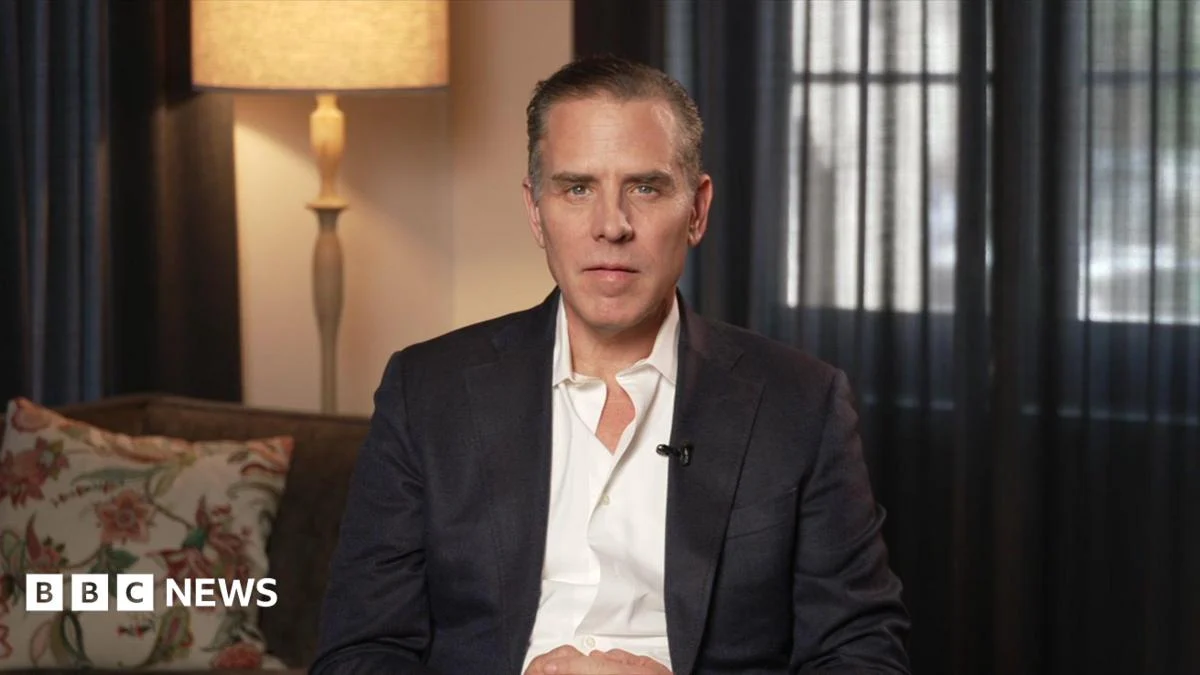
Hunter Biden Speaks Out on Controversial Pardon, Father’s Health, and Addiction Struggles in Candid BBC Interview
In a wide-ranging and emotionally charged interview with the BBC’s Newsnight, Hunter Biden has offered an unprecedented look into his tumultuous life, addressing the controversial presidential pardon he received from his father, former US President Joe Biden, his severe struggles with addiction, and the deeply personal battle his father is fighting against advanced cancer. Speaking candidly, Biden acknowledged the immense privilege inherent in his pardon, conceding it was "not good" for the American people, the Constitution, or his father’s legacy, yet defended his father’s actions as a protective measure against perceived political targeting.
The interview, which aired in late 2024, provided a rare public platform for Hunter Biden to directly address a myriad of controversies that have plagued his family and played a significant role in the intensely scrutinized political landscape surrounding his father’s presidency. His remarks offered insights into the personal toll of public scrutiny, the complexities of familial loyalty, and the devastating impact of substance abuse.
The Controversial Presidential Pardon: A Son’s Perspective
At the heart of Hunter Biden’s BBC interview was the December 2024 pardon granted by his father, then-President Joe Biden. Hunter Biden did not shy away from the criticism, stating directly, "I am the most privileged person there is" in acknowledging the unique circumstances of his pardon. He understood the public’s and media’s scrutiny, admitting, "It’s something that is easily criticised and for good reason." He further conceded that the pardon was "not fair" and "not good" for the American people, the Constitution, or his father’s standing.
However, he simultaneously defended his father’s decision, framing it as an act of profound paternal protection. "What would you have thought of my dad if he did not do that for me?" he posited, implying an inescapable moral dilemma for a father. Hunter Biden argued that his father’s ultimate motivation was a concern that he would become an unrelenting target under a potential incoming administration led by Donald Trump, transforming his legal battles into a political weapon. He emphasized the extraordinary nature of the act: "I was the only one in the world that could have gotten what I got from the only person in the world who could give it, my father."
Crucially, Hunter Biden insisted that the possibility of a pardon had never been discussed between him and his father prior to its issuance. "There is no way that you can have those kinds of discussions that would not become public," he asserted, implying the intense scrutiny surrounding their communications.
Chronology of Legal Challenges and the Presidential Intervention
The pardon itself was the culmination of a protracted and highly publicized series of legal battles for Hunter Biden. His legal troubles had been a persistent political headache for his father, drawing constant attacks from Republican opponents who accused the Biden family of corruption and influence peddling.
- 2018-2019: Federal investigations into Hunter Biden’s tax affairs and business dealings begin.
- October 2020: A laptop belonging to Hunter Biden surfaces, containing emails and other data that fuel Republican allegations of impropriety.
- December 2020: Hunter Biden publicly announces he is under federal investigation for his tax affairs.
- June 2023: Hunter Biden reaches a plea agreement with federal prosecutors on two misdemeanor tax charges and a felony gun charge. The deal, which included a diversion agreement for the gun charge, was widely criticized by Republicans as a "sweetheart deal."
- July 2023: The plea deal dramatically collapses during a court hearing after a federal judge raises questions about its scope and whether it protected Biden from future charges.
- September 2023: Hunter Biden is indicted on three federal gun charges, alleging he illegally possessed a firearm while addicted to drugs. He pleaded not guilty.
- December 2023: Hunter Biden is indicted on nine new federal tax charges, including three felony and six misdemeanor counts, alleging a four-year scheme to avoid paying at least $1.4 million in taxes. He pleaded not guilty.
- December 2024: President Joe Biden issues a full and unconditional pardon for his son, covering the federal gun conviction, the tax case he had pleaded guilty to, and any federal offenses committed between 2014 and 2024.
This decision came despite President Biden’s repeated public assurances during his presidency that he would not use his executive powers to intervene in his son’s legal cases, a stance he had maintained to demonstrate impartiality and uphold the rule of law. In announcing the pardon, the White House issued a statement from the former president, asserting that his son had been "selectively and unfairly prosecuted," a claim that ignited further partisan debate. The pardon effectively ended all federal criminal proceedings against Hunter Biden, a move that drew immediate and intense political fire.
The Historical Context of Presidential Pardons
Presidential pardons are a powerful executive prerogative enshrined in Article II, Section 2 of the U.S. Constitution, granting the president the "Power to grant Reprieves and Pardons for Offenses against the United States, except in Cases of Impeachment." This power is broad and generally not subject to judicial review. Throughout American history, presidents have exercised this power for various reasons, from acts of mercy to politically motivated decisions.
Notable examples include President Gerald Ford’s controversial pardon of Richard Nixon in 1974, which aimed to heal a divided nation but cost Ford significant political capital. President Bill Clinton’s last-minute pardons on his final day in office, including that of financier Marc Rich, also drew widespread condemnation and sparked investigations. More recently, President Donald Trump issued numerous pardons to political allies and associates, often late in his term.
The pardon of a president’s own child, however, adds a unique layer of ethical complexity and political sensitivity. While legally within the president’s authority, such an act invariably raises questions about the appearance of impropriety, the equitable application of justice, and the potential for a "two-tiered" legal system where the powerful operate under different rules. Hunter Biden’s acknowledgment of his "privilege" directly addresses this central criticism, yet his father’s stated rationale of protecting him from political weaponization introduces another dimension to the debate, highlighting the intersection of law, family, and high-stakes politics.
Political Fallout and Public Reaction
The pardon immediately reignited a fierce political firestorm. Republican lawmakers and conservative media outlets swiftly condemned President Biden’s action, labeling it an egregious abuse of power and a stark example of political corruption. Figures like House Speaker Kevin McCarthy (at the time) and other prominent Republicans accused the president of shielding his son from accountability and undermining the justice system, arguing that it proved their long-standing claims of a "weaponized" Department of Justice under the Biden administration. They pointed to President Biden’s prior pledges not to intervene as evidence of hypocrisy and a betrayal of public trust.
Conversely, Democratic allies largely remained silent or offered cautious support, emphasizing the constitutional authority of the president and the personal anguish of a father. Some legal experts acknowledged the legality of the pardon but questioned its ethical implications and the political wisdom of such a move, especially given the ongoing scrutiny of the Biden family’s business dealings. Public opinion polls conducted shortly after the pardon indicated a significant portion of the electorate viewed the decision negatively, further complicating President Biden’s already challenging political standing. The perception of unfairness had the potential to erode public trust in institutions and fuel narratives of elite impunity, factors that would undoubtedly weigh on Joe Biden’s legacy.
A Battle with Addiction: "Hell on Earth"
Beyond the political maelstrom of the pardon, Hunter Biden delved into the harrowing depths of his addiction, painting a stark and unvarnished picture of his struggles. He described a period where, at its worst, he was consuming "almost a gallon of vodka a day" while simultaneously smoking crack cocaine "almost every 15 minutes." The raw honesty of his account underscored the severity of his dependence.
"It was hell on earth," he recounted, emphasizing the brutal reality and utterly devoid glamour of his substance abuse. He rejected the often-speculated notion that his position as the son of a prominent politician led to a feeling of invincibility, or that he was somehow reaching for more. Instead, he described a profound search for escape: "I wasn’t reaching for anything except oblivion." He explained that his addiction was a desperate attempt to quell overwhelming feelings of anxiety and isolation, a common experience for many battling substance use disorders. What initially felt like a solution, a temporary reprieve from internal turmoil, inexorably morphed into "the thing that almost killed me."
Hunter Biden’s narrative aligns with the broader understanding of addiction as a complex disease rather than a moral failing. According to the National Institute on Drug Abuse (NIDA), addiction is a chronic, relapsing brain disease characterized by compulsive drug seeking and use despite harmful consequences. Millions of Americans struggle with substance abuse, often driven by underlying mental health issues, trauma, or environmental factors. His willingness to speak openly about his addiction contributes to destigmatizing the condition, offering a relatable perspective on a pervasive public health crisis. He also expressed a desire to leverage his own recovery journey to help others grappling with similar challenges, signaling a path towards advocacy and support for those in recovery.
Family’s Private Struggle: President Biden’s Health Battle
The interview took an even more poignant turn as Hunter Biden discussed his father’s health, revealing a somber and deeply personal struggle that had largely remained private. Becoming visibly emotional, clearing his throat before speaking, he shared the devastating news that his father’s cancer had not only spread but had "metastasised into his bones and further." He described the condition as "very painful" and "very debilitating," painting a picture of a man quietly enduring immense physical suffering.
This revelation offered a rare glimpse into the private anguish of the Biden family. While President Biden’s health has been a recurring topic of public discussion, particularly given his age and political responsibilities, the specifics of his cancer diagnosis and its progression had not been disclosed with such gravity. Hunter Biden’s words brought into sharp relief the human cost behind the public persona of a president, underscoring the universal vulnerability to illness that even the most powerful individuals face.
His deep affection for his father was palpable. "My dad is, to this day, the centre of our family," he affirmed, describing him as "the best father, the best husband, the best grandfather." In a tender and telling remark, he added, "The only thing that I say about my dad, about his health right now, is I wish he would complain more," highlighting his father’s stoicism and resilience in the face of profound personal adversity. This insight into President Biden’s health adds another layer of context to his political decisions and public appearances, potentially evoking sympathy but also raising further questions about his capacity for the demanding office, especially after his re-election campaign had ended.
The 2024 Debate and its Aftermath
Hunter Biden also reflected on a pivotal moment in American politics: the June 2024 presidential debate that ultimately led to the cessation of his father’s re-election campaign. Watching from his home in California, he recalled an immediate and visceral sense that something was amiss during his father’s performance. "I was shocked," he stated, "I knew something was wrong."
This personal testimony from a close family member offers a unique perspective on a widely scrutinized event. The debate performance had been broadly perceived as weak and faltering, triggering widespread concern among Democratic strategists and ultimately prompting President Biden to withdraw from the race, citing health and family reasons. Hunter Biden’s confirmation of this immediate, negative reaction from a deeply invested observer underscores the severity of the performance and its profound impact on the political trajectory of the nation. It highlights how personal observations can align with broader public and political assessments, solidifying the narrative around that critical juncture.
Looking Forward: No Political Ambitions
Amidst these profound revelations, Hunter Biden also addressed his future aspirations, unequivocally ruling out any pursuit of elected office. This declaration puts to rest speculation that his public profile, albeit controversial, might eventually lead him down a political path. Instead, he reiterated his commitment to leveraging his lived experience to help others navigate the treacherous waters of addiction and recovery. This focus on personal advocacy rather than political ambition suggests a desire to find purpose and meaning in his struggles, channeling them into a constructive public service role distinct from the political arena.
The BBC interview thus served as a comprehensive, albeit highly personal, account from a figure who has long been at the epicenter of political controversy. It offered a rare glimpse behind the headlines, revealing a narrative of privilege, legal battles, profound personal suffering, and unwavering familial loyalty, all set against the backdrop of high-stakes American politics. His candid admissions are likely to fuel continued debate, but they also provide a human dimension to the often-abstract world of political discourse.

Related Posts
Zambia on Edge: Opposition Leader Arrested Amid Allegations of Insurrection Plot and Election Tensions
Rescuers search for survivors of powerful Indonesia earthquake

