Houthis Claim Extensive Attack on Saudi-Backed Forces in Marib Amid Escalating Regional Tensions
Yemen’s Houthi movement announced on Friday, August 7, 2026, that its forces had carried out a significant military operation against Saudi-backed forces, targeting depots and military equipment near the strategically vital central city of Marib. The claim, articulated by Houthi spokesman Yahya Saree via a Telegram post, underscored the group’s unwavering commitment to counter what it described as a "siege" imposed on Yemen. Saree explicitly warned that the Houthis would continue to "strike forcefully any Saudi mobilisation or forces brought by the Saudi enemy to maintain the siege imposed on our country," signaling a renewed intensity in the long-running conflict.
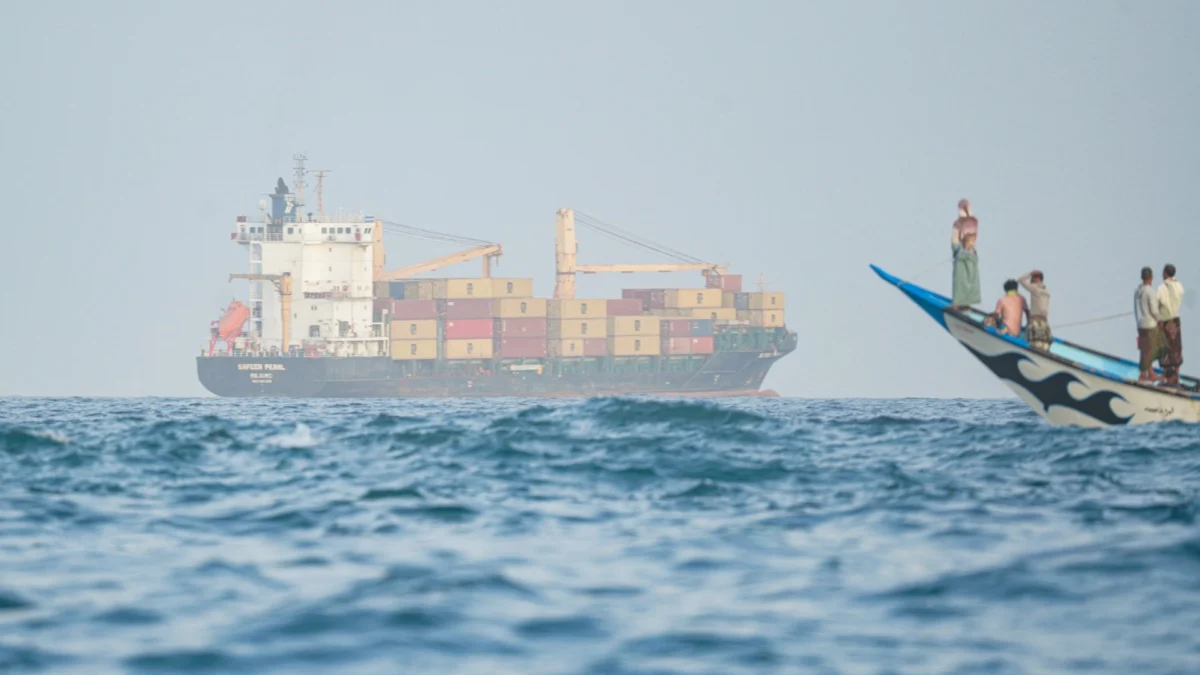
The asserted attack in Marib, a key battleground and the internationally recognized government’s last northern stronghold, comes amidst a backdrop of persistent regional instability and a broader "War on Iran" narrative that frames many of the Middle East’s geopolitical struggles. While the Houthi statement provided limited immediate details on the scale of damage or casualties, it highlighted the ongoing military pressure exerted by the group in a conflict that has devastated Yemen and drawn in regional and international powers. The timing of the claim, following reports and imagery from August 6, 2026, depicting maritime activity involving a "Yemen ship," suggests a potentially broader pattern of escalating engagements across various fronts, including naval operations, that precede or coincide with ground offensives.
Background: Yemen’s Protracted Conflict and Marib’s Strategic Imperative
The Yemeni conflict, now in its twelfth year, originated from the Houthi movement’s takeover of the capital Sanaa in late 2014, leading to the intervention of a Saudi-led coalition in March 2015. The coalition, which includes Saudi Arabia and the United Arab Emirates, aims to restore the internationally recognized government of President Abdrabbuh Mansur Hadi (or his successor) and counter what it perceives as Iranian influence in Yemen. The Houthis, officially known as Ansar Allah, maintain that their actions are a revolution against corruption and foreign intervention.
Marib, located approximately 120 kilometers east of Sanaa, holds immense strategic and economic importance. The province is rich in oil and gas reserves, including the Safer oil field and the Marib Gas Company, which are crucial for Yemen’s energy supply. It also serves as a vital transit point connecting the northern Houthi-controlled territories with the southern provinces. For the internationally recognized government, Marib represents a symbolic and practical bulwark against Houthi expansion, making it a focal point of intense fighting for years. The city has also become a refuge for an estimated two million internally displaced persons (IDPs) who fled violence elsewhere, further compounding the humanitarian stakes of any military offensive. Control over Marib would significantly alter the military balance, potentially opening the door for the Houthis to advance towards other key areas or consolidate their hold over the northern and central regions.
The Enduring Battle for Marib: A Critical Front
The battle for Marib has been one of the most brutal and protracted fronts of the Yemeni war. Since early 2020, the Houthis have launched multiple major offensives to seize the province, often leading to fierce resistance from government forces and tribal militias supported by Saudi-led coalition airstrikes. These offensives have repeatedly pushed Marib to the brink, triggering warnings from the United Nations and humanitarian organizations about the catastrophic consequences for the civilian population. Each Houthi surge towards Marib has been met with intensified coalition air campaigns and counter-offensives, creating a cycle of violence that has left the front lines largely stalemated but exceptionally volatile.
The Houthi objective in Marib is multifaceted: to gain control of its natural resources, to eliminate the last major stronghold of their opponents in the north, and to leverage its strategic position for future military or political gains. For the Saudi-backed forces, holding Marib is essential to preventing a complete Houthi domination of northern Yemen and maintaining a bargaining chip in any future peace negotiations. The city’s status as a haven for IDPs means that any significant shift in control inevitably raises profound humanitarian concerns, with fears of further mass displacement and exacerbation of an already dire crisis.
Chronology of Recent Escalations
The Houthi claim on August 7, 2026, appears to be part of a recent uptick in military activity, following a period of relative calm in some areas or specific diplomatic efforts.
- Early August 2026: Unconfirmed reports suggested increased Saudi-led coalition military movements and reinforcement efforts around the Marib front lines. These activities, if confirmed, would align with the Houthi spokesman Yahya Saree’s reference to "Saudi mobilisation or forces brought by the Saudi enemy." Such movements often precede or are a response to anticipated Houthi actions.
- August 6, 2026: Imagery circulated, depicting a "Yemen ship," though its specific context remains unclear. This could refer to an incident involving maritime security in the Red Sea or Gulf of Aden, potentially related to Houthi threats against shipping, attempts to break the naval blockade, or coalition interception efforts. The Houthi mention of a "siege" strongly suggests that maritime control and access to ports like Hodeidah are central to their grievances and military strategy, making naval engagements a recurring feature of the conflict.
- August 7, 2026 (Friday): Houthi spokesman Yahya Saree issued the statement on Telegram, claiming a successful attack on Saudi-backed forces, depots, and military equipment near Marib. He reiterated the Houthi’s resolve to continue such strikes as long as the "siege" persists. The lack of independent verification immediately after the claim is typical in the early hours following such announcements in the Yemeni conflict.
Supporting Data and Context
The Houthis have significantly developed their military capabilities throughout the conflict, transforming from an insurgent group into a formidable force capable of launching sophisticated drone and missile attacks. Their arsenal now reportedly includes various domestically produced or modified unmanned aerial vehicles (UAVs) like the Samad-3 and Qasef-2K, as well as ballistic missiles such as the Badr series and cruise missiles like the Quds-1 and Quds-2. These weapons have been used not only against targets within Yemen but also against strategic infrastructure in Saudi Arabia and, on occasion, the UAE, underscoring their reach and potential for regional destabilization. The Saudi-led coalition possesses advanced air defense systems, including Patriot missile batteries, which have intercepted numerous Houthi projectiles, but not all, indicating the persistent threat.
The "siege" mentioned by Saree refers to the ongoing blockade imposed by the Saudi-led coalition, which restricts the flow of goods, including essential humanitarian aid, fuel, and medical supplies, into Yemen. While the coalition asserts the blockade is necessary to prevent arms smuggling to the Houthis, humanitarian organizations widely condemn its devastating impact on civilians. Yemen imports over 90% of its food, and the blockade, coupled with internal conflict and economic collapse, has plunged the country into the world’s worst humanitarian crisis. Over 80% of the population relies on humanitarian assistance, with millions facing acute food insecurity and famine. Fuel shortages, a direct consequence of the blockade and internal fighting, paralyze essential services, including hospitals, water pumping stations, and food distribution networks.
Reactions and Official Responses
The Houthi statement, delivered by Yahya Saree, served as a clear declaration of their intent to escalate military actions in response to perceived threats and the ongoing blockade. It reaffirmed their long-held position that the conflict is a defensive struggle against foreign aggression and economic strangulation.

As of the immediate aftermath of the Houthi claim on August 7, 2026, there was no immediate official confirmation or denial from the Saudi-led coalition or the internationally recognized Yemeni government. Historically, the coalition has often either remained silent on specific Houthi claims or downplayed their effectiveness, while stressing its commitment to protecting Yemeni territory and civilians from Houthi aggression. When confronted with evidence of successful Houthi strikes, Saudi-led forces typically emphasize their interception rates and the defensive nature of their operations. The internationally recognized government, for its part, routinely condemns Houthi offensives as acts of aggression that undermine peace efforts and prolong the suffering of the Yemeni people.
The international community, including the United Nations and various global powers, has consistently called for an immediate cessation of hostilities and a political resolution to the conflict. UN Special Envoys for Yemen, such as Hans Grundberg (and his predecessors like Martin Griffiths), have tirelessly engaged with all parties to broker ceasefires and facilitate comprehensive peace talks. However, repeated military escalations, such as the claimed attack in Marib, frequently derail or complicate these delicate diplomatic initiatives, highlighting the profound disconnect between military realities on the ground and aspirations for peace.
Broader Regional Implications
The Houthi attack claim in Marib cannot be isolated from the broader regional context, often framed by the geopolitical rivalry between Saudi Arabia and Iran, which is alluded to in the "War on Iran" live blog heading. Yemen is widely seen as a proxy battleground where these two regional powers vie for influence. Escalations in Yemen, therefore, invariably reverberate across the Middle East, impacting stability, security, and economic interests.
An intensified battle for Marib or continued Houthi strikes on Saudi-backed forces would undermine any ongoing or prospective peace efforts. The Stockholm Agreement (2018) and subsequent attempts at de-escalation have shown how fragile ceasefires can be. Renewed fighting hardens positions, making political concessions more difficult and prolonging the humanitarian crisis.
Furthermore, the conflict in Yemen, particularly Houthi capabilities and threats, has significant implications for international shipping lanes. The Bab al-Mandab Strait, a narrow chokepoint connecting the Red Sea to the Gulf of Aden and the Indian Ocean, is one of the world’s most critical maritime routes for oil and commercial goods. Houthi threats to shipping, often linked to their grievances about the blockade, could disrupt global trade and potentially lead to spikes in energy prices, impacting the global economy. Any major naval incident, as suggested by the August 6 "Yemen ship" imagery, would immediately raise alarms in international shipping and insurance markets.
Analysis of Implications
The Houthis’ claim of a significant attack in Marib suggests several immediate and long-term implications. Firstly, it indicates a potential willingness to escalate military pressure on a critical front, possibly to gain leverage in future negotiations or to break the perceived stalemate. If the attack proves to be as effective as claimed, it could deal a blow to the morale and operational capacity of Saudi-backed forces in the region.
Secondly, the attack reinforces the cyclical nature of violence in Yemen. Each military action tends to provoke a reaction, creating a tit-for-tat dynamic that makes a sustainable ceasefire increasingly elusive. The Saudi-led coalition typically responds to Houthi aggressions with intensified airstrikes, which, while aimed at degrading Houthi capabilities, often carry the risk of civilian casualties, further fueling the conflict.
Thirdly, the focus on "Saudi mobilisation" and the "siege" underscores the Houthis’ central grievances and their justification for continued military action. For the conflict to move towards a resolution, these issues, particularly the humanitarian impact of the blockade, must be addressed comprehensively. However, the international community faces the challenge of balancing humanitarian concerns with security imperatives, particularly preventing the flow of illicit weapons.
Finally, the incident highlights the enduring humanitarian catastrophe. As long as fighting continues, particularly in densely populated areas or regions hosting large IDP populations like Marib, the suffering of ordinary Yemenis will only deepen. The conflict has already resulted in over 150,000 direct conflict-related deaths, with millions more succumbing to indirect causes like disease, starvation, and lack of healthcare.
In conclusion, the Houthi claim of a major attack in Marib on August 7, 2026, serves as a stark reminder that despite intermittent diplomatic efforts, the Yemeni conflict remains intensely active and highly volatile. The strategic importance of Marib, coupled with the Houthi’s stated determination to resist perceived sieges and Saudi military presence, ensures that the province will likely remain a flashpoint. This latest development not only complicates the already intricate path to peace in Yemen but also contributes to the broader currents of instability that characterize the Middle East, underscoring the urgent need for a durable political solution that addresses the root causes of the conflict and alleviates the immense humanitarian suffering.

Related Posts
Over 150 Israeli Settlers Storm Al-Aqsa Compound and Perform Prayers, Violating Status Quo Under Police Protection.
UN Report Highlights Over 900 Obstacles Hampering West Bank Aid Amid Escalating Humanitarian Crisis