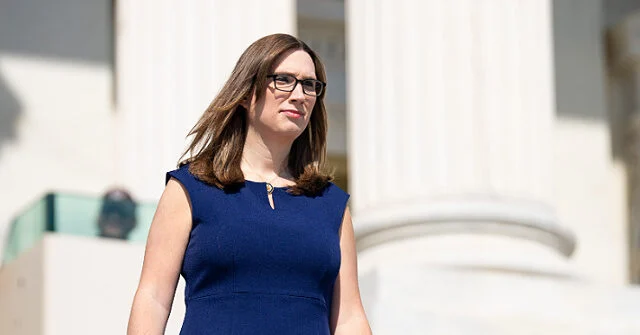
Colorado Congressional Candidate Ignites Debate: "Nothing More American Than Socialism"
Colorado congressional candidate Melat Kiros recently asserted that there is "nothing more American" than socialism, contending that this economic philosophy has historically proven capable of delivering the foundational promises of "life, liberty, and the pursuit of happiness." Kiros, a Democratic Socialist, made these declarations during an interview on PBS’s Firing Line with Margaret Hoover, sparking a broader discussion on the role and definition of economic systems within American political discourse. Her statements underscore a growing ideological divide within the political landscape, particularly regarding the efficacy of capitalism versus socialist-leaning policies in achieving societal prosperity and individual well-being.
During the televised interview, Kiros staunchly defended her position, stating, "I don’t think there’s anything more American than subscribing to an economic philosophy that, as the evidence shows, is the only one that’s actually capable of delivering things like life, liberty, and the pursuit of happiness." When pressed by Hoover on whether socialism has delivered on the values of the Declaration of Independence more effectively than capitalism, Kiros affirmed, "Yeah." She elaborated on her critique of capitalism, particularly its perceived role in alleviating poverty in the U.S. While acknowledging that proponents often credit capitalism for lifting people out of destitution, Kiros argued that this narrative "isn’t the entire story."
Instead, Kiros attributed significant advancements in poverty reduction to the concurrent establishment of "social safety programs" and the enactment of "fair labor laws." She highlighted the historical efforts of workers to secure rights, ensuring safer working conditions and fair wages. From her perspective, these achievements are distinct from "unfettered capitalism," which she characterized as a system where "the capitalists, the owners of the means of production, are the only ones that are calling the shots, and you are lucky to have the job, and you just have to deal with the conditions." Kiros advocated for socialism as a mechanism for "delivering democracy in the workplace," empowering workers with a say in their working conditions and in negotiating fair compensation for their contributions. She further expressed that her conception of capitalism does not evoke images of free markets and competition but rather "monopolies," suggesting a concern about market concentration and power imbalances.
Understanding the Economic Philosophies
To fully grasp the scope of Kiros’s assertions, it is essential to delineate the fundamental principles of socialism and capitalism. Capitalism, as an economic system, is characterized by private ownership of the means of production and distribution, with prices and production primarily determined by supply and demand in a free market. Its proponents argue that it fosters innovation, efficiency, and economic growth through competition and individual initiative, often leading to increased overall wealth and improved living standards. Historically, capitalist economies have been associated with significant technological advancements and expansions of global trade.
Socialism, conversely, advocates for social or collective ownership or control of the means of production and distribution. While there are various forms of socialism—ranging from democratic socialism that operates within a market economy with strong social safety nets, to more centrally planned economies—a common thread is the emphasis on equitable distribution of wealth, social welfare, and public services. Democratic socialists, like Kiros, often seek to achieve these goals through democratic political processes, advocating for policies such as universal healthcare, free higher education, robust worker protections, and progressive taxation, often within the framework of a mixed economy.
The debate often centers on whether "unfettered" capitalism naturally leads to the outcomes Kiros describes, or if the social safety nets and labor laws she champions are, in fact, necessary correctives or inherent components of a more evolved capitalist system, often referred to as a "mixed economy" or "welfare capitalism." Many modern industrialized nations operate under mixed economic models, combining elements of both private enterprise and government intervention to regulate markets and provide social services.
Historical Precedent: The Plymouth Colony Experiment
The discussion about the American roots of socialism often invokes historical narratives, particularly the early experiences of the Pilgrims in Plymouth Colony. This period is frequently cited by critics of socialist ideals as an early American experiment in communal living that allegedly demonstrated the inherent failures of such systems.
In 1620, the Pilgrims, seeking religious freedom, established Plymouth Colony. Their initial economic arrangement, as documented by Governor William Bradford in Of Plymouth Plantation, involved a communal system where all goods produced, including crops, were deposited into a "common store." Each member of the community was entitled to an equal share, regardless of their individual contribution to labor. The land was also held in common, with no individual or family ownership. This structure was mandated by the terms of their financial agreement with their merchant sponsors in London, who demanded that everything produced would go into a common stock for seven years, after which profits would be shared.
Bradford meticulously recorded the outcomes of this system, describing it as breeding "much confusion and discontent and retard much employment that would have been to their benefit and comfort." He observed that the communal approach disincentivized hard work; those who were stronger or more industrious resented working for others who contributed less, while younger, healthier men found it an "injustice" to provide for the wives and children of others without specific compensation. The absence of private ownership also diminished individual incentive, leading to reduced productivity, widespread poverty, and, tragically, starvation during the harsh winters. The first winter alone saw a devastating loss of life, with many succumbing to disease and malnutrition.
Recognizing the unsustainable nature of this collectivist model, Governor Bradford took decisive action in 1623. He decided to abandon the communal system, allocating individual plots of land to each family to cultivate for their own benefit. This shift marked a pivotal moment. Bradford noted the immediate and dramatic improvement: "This had very good success, for it made all hands very industrious, so as much more corn was planted than otherwise would have been by any means the Governor or any other could use." The transition to private land ownership and individual incentive unleashed a wave of productivity and creativity, transforming the struggling colony into a self-sufficient and eventually prosperous settlement. This historical account is frequently cited by proponents of capitalism as a foundational American lesson in the effectiveness of private property rights and individual initiative over communal ownership.
Modern Economic Discourse and Data
Kiros’s argument that social safety nets and labor laws, rather than capitalism, are responsible for poverty reduction reflects a contemporary debate within economic policy. Data on poverty rates in the United States, for instance, shows a significant decline over the 20th century, particularly after the implementation of New Deal programs in the 1930s and Great Society initiatives in the 1960s. These programs, including Social Security, Medicare, Medicaid, and various welfare programs, represent substantial government interventions designed to provide a safety net for vulnerable populations.
For example, the poverty rate in the U.S. peaked at over 22% in 1960 and steadily declined to around 11-15% in recent decades, with fluctuations based on economic cycles. While economic growth fueled by capitalist enterprise certainly contributed to overall wealth creation, studies by organizations like the U.S. Census Bureau and academic researchers often highlight the crucial role of government transfers and social programs in lifting millions out of poverty annually. Without these programs, the market-based poverty rate would be significantly higher. For instance, Supplemental Nutrition Assistance Program (SNAP) benefits, housing assistance, and unemployment insurance provide critical support.
Similarly, labor laws—such as minimum wage mandates, overtime pay regulations, workplace safety standards (OSHA), and the right to unionize—have been instrumental in improving working conditions and wages, thereby addressing some of the issues Kiros attributes to "unfettered capitalism." These regulations are often seen as necessary checks and balances within a capitalist system to prevent exploitation and ensure a more equitable distribution of the benefits of economic growth.
However, critics of Kiros’s framing argue that these social safety nets and labor protections are not mutually exclusive from capitalism but rather are often integrated components of modern capitalist societies. They contend that a robust capitalist economy is necessary to generate the wealth that funds these social programs. Many developed nations, including those in Western Europe with strong social democratic traditions, operate primarily as market economies but with extensive welfare states and strong labor protections. These "mixed economies" aim to combine the efficiency and innovation of capitalism with the social equity goals often associated with socialism.
Broader Political and Policy Implications
Melat Kiros’s candidacy and her outspoken embrace of socialism align with a growing progressive wing within the Democratic Party, particularly among younger voters. Her platform extends beyond economic policy to include other progressive tenets, such as advocating for a "Trans Bill of Rights," calling for an immediate pathway to citizenship for "every single" undocumented immigrant, and promoting abortion rights as a means to achieve "economic freedom." These positions reflect a comprehensive progressive agenda that seeks to fundamentally reshape various aspects of American society and governance.
The debate ignited by Kiros’s statements is indicative of a broader ideological struggle shaping contemporary American politics. On one side, proponents argue for increased government intervention, social welfare programs, and worker empowerment to address issues like income inequality, healthcare access, and climate change. They often point to Scandinavian countries or other European welfare states as models for achieving high standards of living and social equity. On the other side, conservatives and many centrists emphasize the importance of free markets, limited government, and individual responsibility, often cautioning against policies they perceive as hindering economic growth or infringing on individual liberties. They frequently highlight the historical failures of purely socialist or centrally planned economies.
The implications of this discourse are significant for upcoming elections and the future direction of policy. As candidates like Kiros gain prominence, the Democratic Party faces the challenge of unifying its diverse factions while appealing to a broad electorate. The perception of whether "socialism" is a viable or even desirable path for the United States will undoubtedly be a key battleground, influencing not only presidential races but also congressional and local elections across the country. The ongoing dialogue requires a nuanced understanding of both historical context and contemporary economic realities, moving beyond simplistic definitions to explore the complex interplay between different economic philosophies and their practical applications.

Related Posts

Democratic Candidates Must Moderate to Win General Elections, Says Rep. Greg Stanton

Lisa Demuth Secures Republican Gubernatorial Nomination in Minnesota, Defeating Trump-Endorsed Mike Lindell