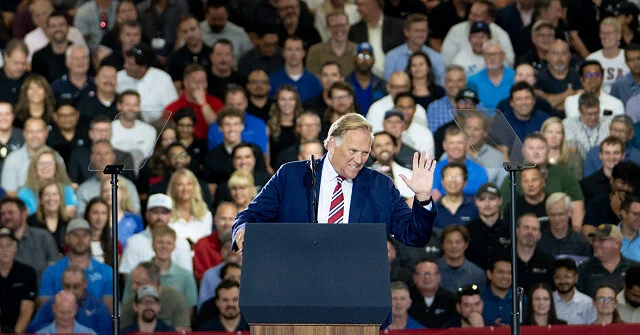
Mike Rogers Secures Republican Nomination for Michigan Senate
Rogers’ unchallenged path to the Republican nomination on Tuesday, May 2, 2026, immediately following the closure of polls in Michigan, underscores the party’s strategic consolidation behind a single candidate for a critical open seat. This development sets the stage for a high-stakes electoral battle in a state frequently characterized as a pivotal battleground. According to reports from the Washington Examiner, the Senate seat has become available following Democratic Senator Gary Peters’ decision not to seek a third term. This announcement has been widely interpreted as presenting one of the Republican Party’s most significant opportunities to expand its Senate majority in the next election cycle.
A Seasoned Candidate’s Second Bid for the Senate
Mike Rogers brings a formidable political and professional background to his current campaign. Born in Livingston County, Michigan, Rogers embarked on a distinguished career that began with military service. He served in the U.S. Army, where he specialized in explosive ordnance disposal. Following his military tenure, he joined the Federal Bureau of Investigation (FBI) as a special agent, focusing on organized crime and public corruption cases. This experience laid a foundation for his subsequent entry into public service.
Rogers’ political journey commenced in the Michigan State Senate, where he represented the 24th district from 1995 to 2000. During his time in the state legislature, he quickly established a reputation as a thoughtful and effective lawmaker, often focusing on issues of public safety and economic development. His success at the state level propelled him to a bid for the U.S. House of Representatives.
In 2001, Rogers was elected to represent Michigan’s 8th congressional district, a position he held for seven terms until his retirement from Congress in 2015. During his tenure in the House, he rose to national prominence, particularly through his leadership role as Chairman of the House Permanent Select Committee on Intelligence from 2011 to 2015. In this capacity, he played a crucial role in shaping national security policy, overseeing the nation’s intelligence agencies, and navigating complex issues related to cybersecurity, counterterrorism, and global threats. His bipartisan approach to national security matters earned him respect from across the political spectrum.
After leaving Congress, Rogers remained active in public discourse, serving as a national security commentator for various media outlets and advising on cybersecurity and intelligence matters. His deep expertise in these areas is expected to be a central theme of his campaign, particularly in an era marked by increasing global instability and technological challenges.
This current campaign marks Rogers’ second consecutive attempt to secure a U.S. Senate seat. He previously ran in 2024 for Michigan’s other Senate seat, which was being vacated by retiring Democratic Senator Debbie Stabenow. In that fiercely contested race, Rogers narrowly lost to then-Congresswoman Elissa Slotkin, who secured the victory by approximately 19,000 votes—a margin of roughly one-third of a percentage point. This extremely tight outcome, even in a year where former President Donald Trump carried Michigan at the top of the ticket, solidified Rogers’ standing as one of the Republican Party’s strongest statewide candidates. The narrow defeat also played a significant role in persuading national Republicans to rally behind his current bid for the 2026 cycle, particularly once the opportunity of another open seat arose with Senator Peters’ reported retirement.
The Significance of the Open Michigan Senate Seat in 2026
Michigan holds immense strategic importance in national elections. Historically, the state has been a bellwether, often reflecting broader national political sentiments. In recent election cycles, Michigan has solidified its status as a quintessential swing state, capable of voting for either party at the presidential and statewide levels. This inherent competitiveness ensures that any open Senate seat in Michigan becomes a national priority for both Republican and Democratic parties.
The 2026 Senate race is projected to be one of the most expensive and closely watched in the country. The control of the U.S. Senate frequently hinges on the outcomes in a handful of states like Michigan. With the current Senate balance often razor-thin, an open seat provides a direct pathway for either party to gain or defend its majority. For Republicans, securing this seat is vital to their strategy of expanding their legislative power and potentially enacting a more conservative agenda. For Democrats, defending it is paramount to maintaining their influence and preventing a shift in the legislative landscape.
Michigan’s electorate is diverse, encompassing a mix of urban centers, densely populated suburbs, and rural communities. Key demographic groups include a strong union presence, significant African American and Arab American populations, and a substantial number of independent voters who often decide close elections. Recent electoral trends show a high degree of volatility, with the state shifting between Democratic and Republican control in presidential and gubernatorial contests. For instance, while Trump won Michigan in 2016, President Biden reclaimed the state in 2020, and Democratic Governor Gretchen Whitmer secured comfortable re-election in 2022. This fluctuating political landscape means that candidates must appeal to a broad coalition of voters across various demographic and geographic lines.
The reported decision by Senator Gary Peters not to seek a third term creates a rare opportunity. Incumbents typically possess a significant advantage in fundraising, name recognition, and established campaign infrastructure. An open seat levels the playing field, making the race more unpredictable and often drawing a wider array of candidates. While Rogers has cleared the Republican primary unopposed, the Democratic primary is expected to be more contested, with several prominent figures likely to vie for their party’s nomination, further highlighting the significance of the upcoming general election.
Campaign Rhetoric and Policy Positions
As the Republican nominee, Mike Rogers has already begun to articulate a campaign message centered on economic concerns, healthcare policy, and a strong critique of what he perceives as progressive overreach. Speaking with Breitbart News in May, Rogers issued a stark warning regarding the potential impact of Democratic policies on Michigan, drawing a parallel to the political climate in New York City.
Rogers stated, "They’ve all got huge problems here," referring to the Democratic Party’s platform and its potential implications for Michigan. He elaborated on his concerns, asserting that some Democratic candidates are "very interested in owning grocery stores and owning every bit of your health care." This rhetoric positions Rogers as a staunch advocate for free-market principles and individual liberty, opposing government expansion into private sectors.
His most pointed criticism came with the assertion, "They want to Mamdani Michigan, according to their own words, some of the delegates’ conversations—that’s the direction they want to go." This reference to "Mamdani" likely alludes to Representative Zohran Mamdani, a prominent democratic socialist in the New York State Assembly representing parts of Queens. Mamdani is known for advocating for progressive policies such as universal healthcare, affordable housing initiatives, increased public ownership, and stringent regulations on various industries. By invoking Mamdani’s name, Rogers aims to frame the Michigan Senate race as a choice between a free-market, individual-centric approach and a more interventionist, socialist-leaning agenda, portraying the latter as detrimental to the state’s economic and social fabric.
This line of attack is designed to resonate with voters concerned about inflation, government spending, and perceived threats to individual economic freedom. It also seeks to tap into a broader national conservative narrative that often criticizes progressive policies as leading to economic stagnation and reduced personal choice. Rogers will likely emphasize his experience in national security and economic policy to argue that his approach offers a more stable and prosperous future for Michigan.
On the other side, Democrats are expected to counter these arguments by highlighting their commitment to strengthening social safety nets, expanding access to healthcare, protecting environmental regulations, and investing in infrastructure and education. They will likely characterize Rogers’ policy positions as potentially undermining critical public services and favoring corporate interests over the needs of working families. The Democratic nominee will also likely seek to connect Rogers to the national Republican Party, particularly its more conservative wing, and emphasize issues like reproductive rights and democratic institutions, which have galvanized their base in recent elections.
Broader Political Implications and National Strategy
The 2026 Michigan Senate race is not merely a contest for a single seat; it is a critical component of the national battle for control of the U.S. Senate. Both the Republican National Committee (RNC) and the Democratic National Committee (DNC), along with their respective senatorial campaign committees (NRSC and DSCC), are expected to pour significant financial resources and organizational support into Michigan. This will translate into extensive advertising campaigns, grassroots organizing efforts, and high-profile visits from national political figures.
For Republicans, an open seat in Michigan represents a strategic "pickup" opportunity that could solidify or expand a Senate majority, providing crucial leverage for legislative priorities, judicial appointments, and executive branch oversight. Rogers’ proven ability to run a competitive statewide race, despite his previous narrow loss, makes him an attractive candidate for national party investment. His background in national security also positions him to appeal to moderate and independent voters who may prioritize stability and experience in uncertain global times.
Democrats, conversely, will be fighting fiercely to retain this seat. Losing Michigan would be a significant blow to their hopes of maintaining or regaining a Senate majority. They will likely focus on mobilizing their base in urban areas and college towns, while also working to persuade suburban voters who have increasingly leaned Democratic in recent cycles. Issues such as abortion access, climate change, and economic fairness are likely to be central to their campaign messaging, aiming to contrast their vision with Rogers’ conservative platform.
The 2026 election cycle itself will be shaped by the prevailing national political climate, including the performance of the incumbent presidential administration, the state of the economy, and ongoing social and cultural debates. Midterm elections often serve as a referendum on the party in power, and the Michigan Senate race will be a key indicator of national sentiment.
Conclusion: A Looming Electoral Showdown
With Mike Rogers securing the Republican nomination unopposed, the stage is set for an intense and closely watched electoral showdown in Michigan in 2026. His formidable background as an FBI agent and a former Chairman of the House Intelligence Committee, combined with his demonstrated capacity to run a highly competitive statewide campaign, makes him a formidable contender. The open nature of the seat, following Senator Gary Peters’ reported decision to retire, elevates Michigan’s significance to a national political priority.
The race is expected to be a battle of contrasting visions for Michigan’s future, with Rogers advocating for conservative economic principles and a strong national security posture, while his eventual Democratic opponent will likely champion progressive social policies and government investment. As Michigan’s diverse electorate weighs these choices, the outcome of this Senate contest will not only determine who represents the state in Washington but could also play a decisive role in shaping the balance of power in the U.S. Senate for years to come. The financial investment, strategic campaigning, and public discourse surrounding this election will undoubtedly make it one of the most compelling political narratives of the upcoming midterm cycle.

Related Posts

Democratic Candidates Must Moderate to Win General Elections, Says Rep. Greg Stanton
Lisa Demuth Secures Republican Gubernatorial Nomination in Minnesota, Defeating Trump-Endorsed Mike Lindell