US Army Launches Next Generation C-sUAS Missile Program to Bridge Critical Capability Gaps in Short Range Air Defense
The United States Army has formally initiated a search for a specialized surface-to-air missile designed specifically to neutralize small-to-medium-sized unmanned aerial systems (UAS), marking a pivotal shift in the military’s approach to low-altitude air defense. Known as the Next Generation C-sUAS Missile (NGCM) project, the initiative seeks to address a burgeoning "capability gap" where traditional air defense assets are either too expensive, too scarce, or technically ill-suited to handle the proliferation of cheap, lethal drones currently dominating modern battlefields from Eastern Europe to the Middle East. According to a recently published Sources Sought notice, the Army is moving with urgency, setting an August 20 deadline for industry responses to meet an ambitious development and deployment schedule.
Technical Requirements and Performance Benchmarks
The NGCM is envisioned as an "extended-range, quick-response missile" tailored to defeat Group 2 and Group 3 UAS threats. Under the Department of Defense’s classification system, Group 2 drones include systems like the Boeing ScanEagle, weighing between 21 and 55 pounds and typically operating at altitudes below 3,500 feet. Group 3 drones, such as the Insitu RQ-21 Blackjack, are significantly larger, weighing up to 1,320 pounds and capable of flying at altitudes of 18,000 feet. These platforms represent a middle tier of aerial threats—larger than commercial "quadcopters" but smaller than traditional fighter jets or large-scale MALE (Medium-Altitude, Long-Endurance) drones like the MQ-9 Reaper.
The Army’s performance requirements for the NGCM are structured in two phases: threshold (initial) and objective (long-term) goals. Initially, the service requires a missile capable of intercepting a drone at an altitude of 6 kilometers (approximately 19,700 feet) at a slant range of more than 16 kilometers. The ultimate objective is a significant leap in performance, aiming for an intercept altitude of 8 kilometers (over 26,000 feet) and a range exceeding 25 kilometers.
To achieve these ranges and ensure high probability of kill (Pk) against maneuvering targets, the Army has specified that the missile must utilize a radar seeker for guidance. Unlike infrared (IR) seekers, which can be spoofed by flares or struggle in certain atmospheric conditions, radar-guided seekers allow for "all-weather" engagement and are generally more effective against drones that may have low thermal signatures. Furthermore, the missile must be extremely responsive; the Army demands a "time-to-launch" of less than five seconds from the moment a fire command is issued by the operator.
Integration and Platform Compatibility
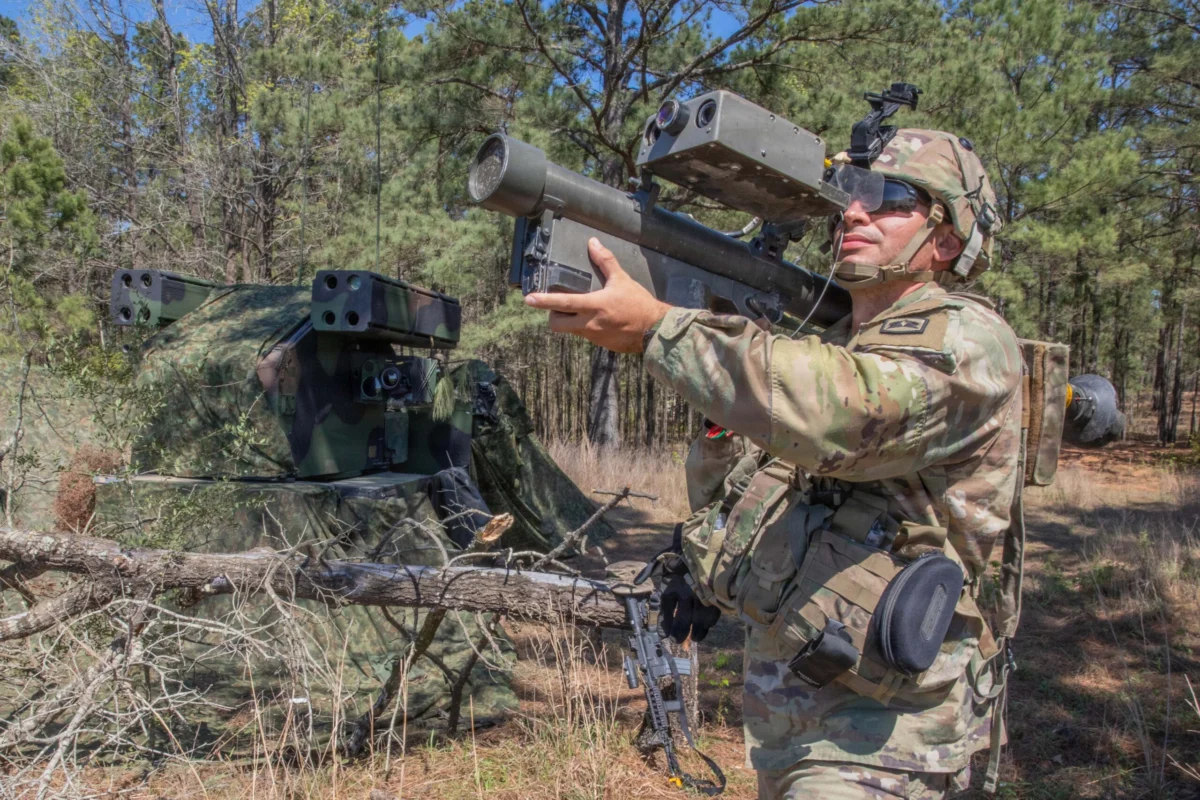
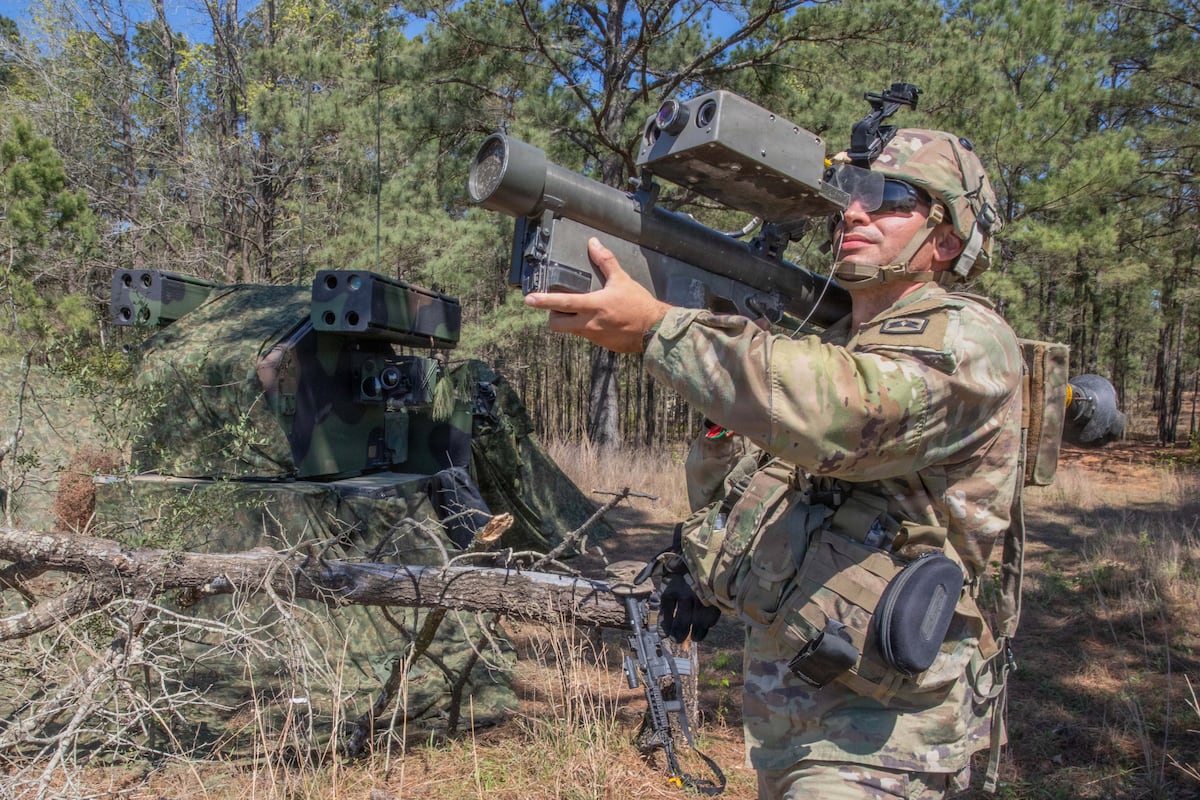
A cornerstone of the NGCM program is its requirement for seamless integration with existing Army infrastructure. The Army is not looking for a standalone "boutique" weapon system; rather, it wants a missile that can be plugged into the current ecosystem of sensors and launchers. Specifically, the NGCM must be compatible with the Coyote Launch System with "minimal to no modifications."
The Raytheon-made Coyote is already a staple of the Army’s counter-drone arsenal, particularly in its Block 2 and Block 3 iterations. By utilizing the existing Coyote launcher, the Army can bypass the lengthy and expensive process of designing new transport and firing platforms. Additionally, the NGCM must integrate with the Army’s Integrated Battle Command System (IBCS) and a suite of existing radars, including:
- Sentinel A3/A4: The Army’s primary air defense radar for detecting low-altitude threats.
- LTAMDS (Lower Tier Air and Missile Defense Sensor): The next-generation radar designed to replace the Patriot radar, offering 360-degree coverage.
- TPQ-53: A counter-fire target acquisition radar that has been increasingly adapted for air surveillance roles.
The Army envisions the NGCM being deployed in two distinct configurations. A fixed-site version would protect static installations, such as forward operating bases or critical infrastructure. A mobile version would be integrated into tactical vehicles, allowing for "on-the-move" protection of maneuvering ground forces—a critical requirement for modern high-intensity conflict where units are constantly under observation from the air.
The Economic Challenge: The Cost-Exchange Ratio
Perhaps the most significant aspect of the NGCM program is its aggressive cost target. The Army is aiming for a unit cost of less than $150,000 per missile based on a bulk procurement of 5,000 units. While $150,000 may seem substantial, it is a fraction of the cost of current air defense interceptors. For comparison, a single Patriot Advanced Capability-3 (PAC-3) MSE missile costs roughly $4 million, and even the smaller AIM-9X Sidewinder costs nearly $500,000.
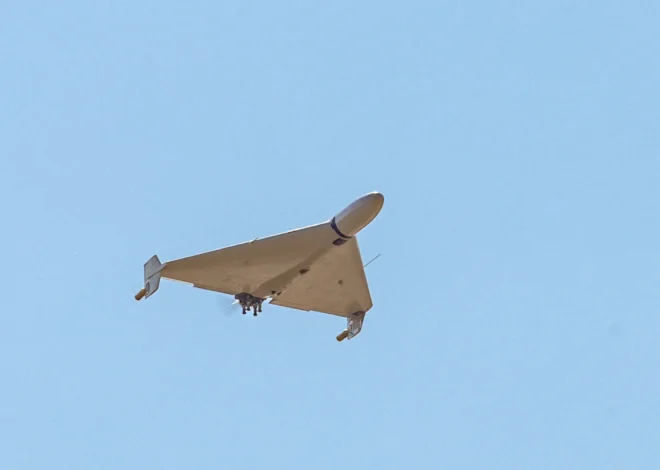
The drive for a cheaper missile is born of economic necessity. In recent conflicts, such as the defense of the Red Sea against Houthi rebels or the defense of Ukrainian cities, Western militaries have frequently been forced to use million-dollar missiles to down "one-way attack" drones costing as little as $20,000 to $35,000 (such as the Iranian-designed Shahed-136). This "negative cost exchange" is unsustainable in a prolonged conflict, as an adversary can effectively bankrupt a defender or deplete their missile stocks using inexpensive, mass-produced drones.
While the $150,000 NGCM does not fully close the cost gap with a $35,000 drone, it moves the needle closer to a sustainable ratio. Military analysts argue that the cost of the interceptor must be weighed against the value of the target being protected. If a $150,000 missile saves a $100 million radar system or a platoon of soldiers, the investment is viewed as highly efficient.
Chronology and Program Timeline
The NGCM project follows years of experimental efforts and "urgent operational needs" requests from commanders in the field. The timeline for the program is accelerated, reflecting the rapid pace of technological evolution in drone warfare:
- August 20, 2024: Deadline for industry "Sources Sought" responses.
- Fiscal Year 2025–2026: Competitive prototyping and initial design reviews.
- Late Fiscal Year 2027: Goal for Technology Readiness Level 7 (TRL 7). This stage involves a prototype being tested in an operational environment (e.g., a field exercise with realistic conditions).
- Early 2028: Requirement for 50 missiles to be delivered for formal operational assessment.
- 2028–2030: Full-rate production and widespread fielding across the force.
This timeline is notably fast for a traditional Army Program of Record, suggesting that the service may utilize "Middle Tier of Acquisition" authorities to bypass some of the more bureaucratic hurdles of the standard procurement process.
Strategic Context and Broader Implications
The NGCM program is a direct response to the changing character of war. For two decades, the U.S. Army operated in environments with total air superiority, where the primary threats were improvised explosive devices (IEDs) and small arms. The return of "Great Power Competition" and the lessons from the war in Ukraine have shattered that paradigm. Today, even non-state actors can deploy "poor man’s cruise missiles" in the form of Group 2 and 3 UAS.
The Army’s pursuit of the NGCM also highlights the current limitations of Directed Energy (DE) weapons, such as lasers and high-powered microwaves. While the Pentagon has invested heavily in "pennies per shot" laser technology, these systems are not yet a panacea. Lasers suffer from "dwell time" issues (the need to stay on a target for several seconds to burn through it) and are hampered by smoke, fog, and rain. Kinetic missiles, while more expensive, provide a "fire-and-forget" capability that works regardless of the weather.
The NGCM is intended to work alongside these other systems as part of a "layered defense." In a future engagement, a laser might handle smaller Group 1 quadcopters at short range, while the NGCM intercepts larger Group 2/3 drones at 20 kilometers, and the Patriot system remains reserved for high-end threats like ballistic missiles or manned aircraft.
Industry Outlook and Official Perspectives
While the Army has not officially commented on specific bidders, major defense contractors including Raytheon (the incumbent for Coyote), Lockheed Martin, and Northrop Grumman are expected to show interest. Newer, "attritable" tech companies like Anduril Industries may also compete, given their focus on low-cost, rapidly iterable defense hardware.
Army officials have frequently stressed that the goal is "capacity at scale." Major General Sean Gainey, Director of the Joint C-sUAS Office (JCO), has noted in recent symposiums that the military needs a "mixed bag" of interceptors to deal with the sheer volume of drones seen in modern conflict. The NGCM represents the "middle-tier" of that mixed bag—more capable than a heavy machine gun or a small jammer, but more affordable and numerous than a traditional anti-aircraft missile.
As the August 20 deadline approaches, the defense industry faces the challenge of proving it can produce high-performance radar-guided missiles at a price point that has historically been difficult to achieve. If successful, the NGCM could become the standard-bearer for a new generation of "cost-informed" weaponry, designed not just for technical superiority, but for the grueling economic attrition of 21st-century warfare.

Related Posts
Pentagon Forges Landmark Seven-Year Agreements with Boeing and RTX to Accelerate Standard Missile-3 Production and Stabilize Defense Supply Chains
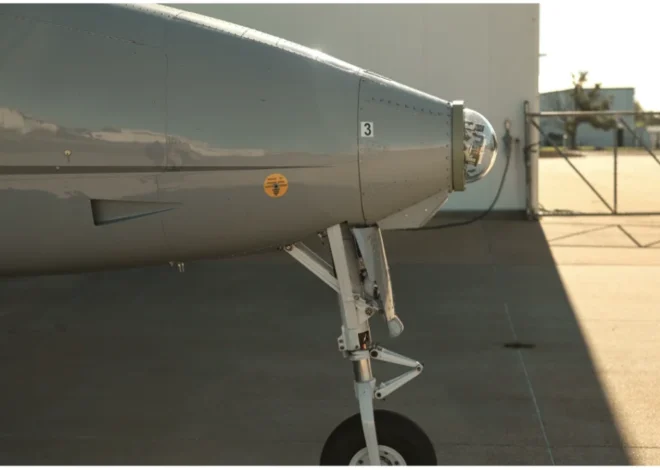
Boeing Unveils Ultra Low-Cost Seeker to Enhance Missile Inventory and Combat Cost Challenges in Modern Warfare