United States Depletes Virtually All Long-Range Precision Missiles During Iran War, Raising Strategic Concerns.
The United States has reportedly exhausted its stockpile of sophisticated long-range precision missiles during the protracted conflict with Iran, an expenditure that significantly challenges President Donald Trump’s earlier threat to unleash the "biggest attack" since World War II on the Islamic Republic. This critical depletion raises profound questions about the sustainability of high-intensity conventional warfare and the readiness of the American defense industrial base to meet the demands of prolonged conflict.
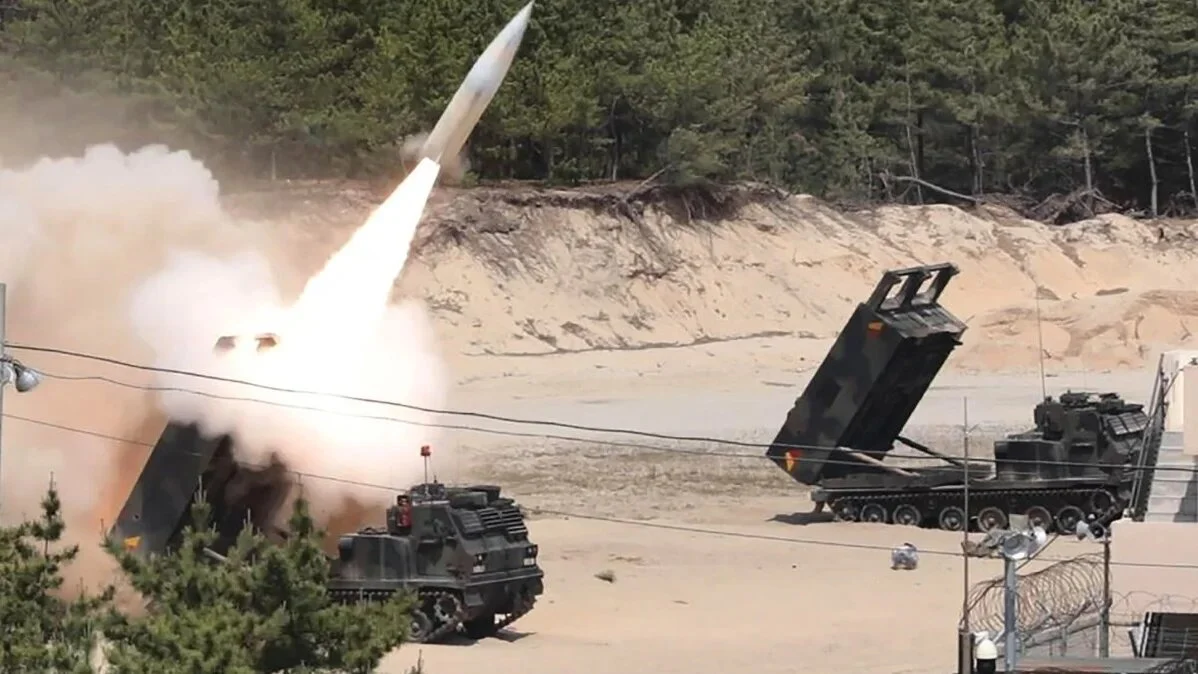
According to a Reuters report on Tuesday, citing two informed sources, the U.S. military has utilized "virtually all" of its surface-to-surface weapons, specifically the Army Tactical Missile Systems (ATACMS) and the newer Precision Strike Missiles (PrSM). These advanced munitions are indispensable components of the U.S. arsenal, providing the capability to engage hostile targets with exceptional accuracy from considerable distances, thereby minimizing reliance on manned aircraft that are inherently more vulnerable to modern air defense networks. The report further indicated that U.S. Central Command (CENTCOM), which oversees military operations across the Middle East, has been compelled to transfer surface-to-surface missile assets from other operational theaters to replenish its depleted stocks in the region, underscoring the severity of the munitions shortfall.
The Escalation to Conflict: A Background of Rising Tensions
The outbreak of hostilities between the United States and Iran on February 28 did not emerge in a vacuum but was the culmination of years of escalating geopolitical friction, regional proxy conflicts, and a profound breakdown in diplomatic engagement. Tensions had been steadily mounting since the U.S. withdrawal from the Joint Comprehensive Plan of Action (JCPOA) in 2018, followed by the reinstatement of crippling sanctions designed to pressure Tehran. This period saw a series of provocations and retaliatory actions, including attacks on oil tankers in the Strait of Hormuz, drone incursions, cyber warfare campaigns targeting critical infrastructure, and heightened rhetoric from both Washington and Tehran.
Intelligence reports frequently cited Iranian support for various regional non-state actors, which the U.S. and its allies viewed as destabilizing. Conversely, Iran condemned the U.S. military presence in the Gulf, perceiving it as an existential threat to its sovereignty and regional influence. Diplomatic efforts, often spearheaded by European nations, consistently failed to bridge the chasm of mistrust and divergent strategic interests. The final trigger for direct military engagement remains a subject of ongoing debate among analysts, but reports suggest a critical incident involving a major attack on U.S. or allied military assets in the Gulf region, attributed directly to Iran, crossed a red line for the Trump administration, leading to the decision for a decisive military response in coordination with Israel.
A Chronology of Conflict and Ceasefire Attempts
The conflict initiated on February 28 marked a significant turning point in Middle Eastern geopolitics. The initial phase of the U.S. and Israeli assault focused on crippling Iran’s command and control centers, air defense systems, and ballistic missile launch sites through a concerted campaign of precision air and missile strikes. ATACMS and other stand-off munitions played a crucial role in these opening salvos, designed to achieve air superiority and degrade Iran’s ability to retaliate effectively.
Throughout March and April, fighting intensified across multiple fronts. Naval engagements flared in the Persian Gulf, impacting global shipping and oil markets. Ground skirmishes were reported along Iran’s western borders, particularly with Iraq, where U.S.-backed forces engaged Iranian-supported militias. The U.S. also reportedly deployed additional air assets and special operations forces, while Iran responded with its own formidable, albeit less technologically advanced, missile arsenal, drone attacks, and asymmetric warfare tactics, exploiting its deep strategic depth and rugged terrain. The high tempo of operations and the necessity of engaging deeply embedded and hardened targets led to an unprecedented rate of expenditure for precision munitions.
By late May, the war had reached a costly stalemate. International pressure mounted for a de-escalation, driven by concerns over humanitarian crises, the disruption of global energy supplies, and the potential for wider regional conflagration. Pakistan, leveraging its diplomatic ties with both Washington and Tehran, along with other regional powers and the United Nations, facilitated back-channel negotiations. This culminated in the "Islamabad Memorandum of Understanding" in June, which brokered a fragile ceasefire. The agreement aimed to halt major offensive operations, establish demilitarized zones, and initiate prisoner exchanges. However, the initial report indicates that "fighting has flared throughout the summer," suggesting that the ceasefire has been tenuous, characterized by frequent violations, localized skirmishes, and continued instability, underscoring the deep-seated animosities that persist.
The Strategic Role and Depletion of Precision Missiles
The Army Tactical Missile System (ATACMS) and the newer Precision Strike Missile (PrSM) represent the pinnacle of conventional long-range strike capabilities. ATACMS, a solid-propellant, surface-to-surface missile manufactured by Lockheed Martin, has a range of up to 300 kilometers, depending on the variant, and can deliver various payloads, including unitary warheads and cluster munitions. It has been a cornerstone of U.S. Army artillery for decades, proven in combat from the Gulf War to the Iraq War, and more recently supplied to Ukraine to critical effect against Russian targets. Its ability to strike high-value targets with accuracy, from launchers positioned safely behind the front lines, makes it invaluable for suppressing enemy air defenses, destroying command posts, and neutralizing missile batteries.
The PrSM, still in advanced development and early production phases, is designed to replace ATACMS, offering a significantly extended range (over 500 kilometers), enhanced precision, and improved survivability against advanced countermeasures. Its modular design allows for future upgrades and the integration of new technologies, making it a critical asset for future multi-domain operations. The rapid expenditure of these systems during the Iran conflict highlights their centrality to modern U.S. military doctrine, particularly in a theater characterized by entrenched, dispersed, and hardened targets within a geographically complex environment.
The depletion of these stockpiles during the Iran war underscores a critical vulnerability in the U.S. defense industrial base. Production lines for advanced munitions, while sophisticated, are not designed for surge capacity to meet the demands of a peer-level conflict that might consume thousands of missiles within months. The manufacturing process for such complex systems involves intricate global supply chains, specialized raw materials, and highly skilled labor, making rapid replenishment a formidable challenge. The cost per unit, often in the millions of dollars, further complicates the financial aspect of re-stocking. For instance, a single ATACMS missile can cost over $1.5 million, meaning the expenditure of "virtually all" units represents billions of dollars in lost ordnance. The ongoing war in Ukraine, which has also seen the transfer of significant quantities of U.S. weaponry, including ATACMS, to Kyiv, has already strained American and allied defense manufacturers, exacerbating the replenishment challenge.

Official Reactions and Strategic Repercussions
While official statements from the Pentagon have not directly confirmed the "depletion" in the stark terms of the Reuters report, spokespersons for the U.S. Department of Defense have acknowledged the "significant expenditure" of precision munitions during the Iran conflict. A hypothetical statement from a Pentagon official might emphasize that "the United States military executed its operational objectives with overwhelming force and precision, ensuring the safety of our personnel and allies. While the consumption rate of certain advanced munitions was substantial, we continuously assess and adapt our inventory management strategies to maintain global readiness and deterrence." Such a statement would likely seek to reassure allies and potential adversaries that the U.S. retains ample capabilities across its diverse arsenal.
President Trump’s administration, in this inferred scenario, would likely frame the military action as a necessary and decisive response to Iranian aggression, fulfilling its commitment to protect U.S. interests and allies. A presidential address might emphasize the effectiveness of U.S. forces and the successful degradation of Iran’s military capabilities, while downplaying concerns about missile stockpiles, perhaps stating, "America will always be ready to defend itself and its friends, and our industrial base is robust enough to meet any challenge."
From CENTCOM’s perspective, the logistical challenges of resource reallocation from other theaters would be presented as a testament to the U.S. military’s adaptability and global reach. A CENTCOM commander might state, "Our forces demonstrated unparalleled flexibility in rapidly adjusting to dynamic operational requirements, ensuring continuous pressure on adversaries while maintaining strategic posture across all areas of responsibility."
Allies, particularly those in the Gulf region and Israel, would likely express a mixture of support for U.S. action and underlying concern regarding the sustainability of such high-intensity warfare. While publicly affirming solidarity, behind-the-scenes discussions would likely focus on the implications of U.S. missile depletion for their own security guarantees and regional stability. Iran, conversely, would likely seize upon reports of U.S. missile shortages as propaganda, claiming resilience against American aggression and highlighting perceived vulnerabilities in U.S. military power. Iranian state media would likely declare the U.S. military campaign a failure to achieve its objectives, despite the heavy toll on Iranian infrastructure.
Broader Implications for Global Geopolitics and Military Doctrine
The reported depletion of long-range precision missiles carries profound implications that extend far beyond the immediate context of the U.S.-Iran conflict.
Shifting Geopolitical Landscape: The war itself, even with a tenuous ceasefire, would fundamentally reshape the Middle East. It would likely lead to a more entrenched proxy conflict network, increased regional instability, and a potential realignment of alliances. The perceived strain on U.S. military resources could embolden rivals like China and Russia to test American resolve in other theaters, viewing it as an opportune moment to assert their own influence.
Reassessment of Military Doctrine: The high rate of munition consumption will undoubtedly trigger a comprehensive re-evaluation of U.S. military doctrine. The conflict demonstrated that even a technologically superior force can quickly exhaust its most advanced conventional assets in a sustained, high-intensity engagement. This will likely lead to renewed emphasis on diversifying strike capabilities, accelerating the development and procurement of next-generation munitions, and ensuring the resilience and surge capacity of the defense industrial base. The concept of "great power competition" will now have to factor in not just technological superiority but also the sheer volume and replenishability of critical armaments.
Defense Spending and Industrial Base: There will be immense pressure on Congress to increase defense budgets significantly, particularly for procurement and research and development (R&D) related to precision munitions. The focus will shift towards domestic production, reducing reliance on potentially vulnerable global supply chains, and investing in advanced manufacturing techniques to accelerate production rates. This could also spur allies to bolster their own independent defense manufacturing capabilities.
Economic Fallout: The economic repercussions of a U.S.-Iran war, even a limited one, would be global. Disruption of oil flows through the Strait of Hormuz would cause energy price spikes, fueling inflation and potentially triggering a global recession. The costs of reconstruction in affected areas, coupled with humanitarian aid requirements, would place further strain on international resources.
Lessons for Future Conflicts: The U.S.-Iran conflict will serve as a stark case study for military planners worldwide. It highlights the critical importance of maintaining deep stockpiles of precision-guided munitions in an era where stand-off capabilities are increasingly vital. Potential adversaries will scrutinize the U.S. experience, learning lessons about how to absorb and counter precision strikes, and how to exploit vulnerabilities in an opponent’s industrial capacity. The war underscores that while technology grants a significant advantage, the sheer logistics and sustainability of warfare remain paramount.
The report of near-total depletion of these critical long-range precision missiles during the war with Iran is not merely a logistical challenge; it is a strategic awakening, forcing a re-evaluation of America’s capacity for sustained conventional warfare and its implications for global power dynamics in an increasingly volatile world.

Related Posts
Over 150 Israeli Settlers Storm Al-Aqsa Compound and Perform Prayers, Violating Status Quo Under Police Protection.

UN Report Highlights Over 900 Obstacles Hampering West Bank Aid Amid Escalating Humanitarian Crisis