Outgoing Colombian President Gustavo Petro’s Unfounded Claims of Electoral Fraud and Warnings of Civil War Threaten Peaceful Transition of Power.
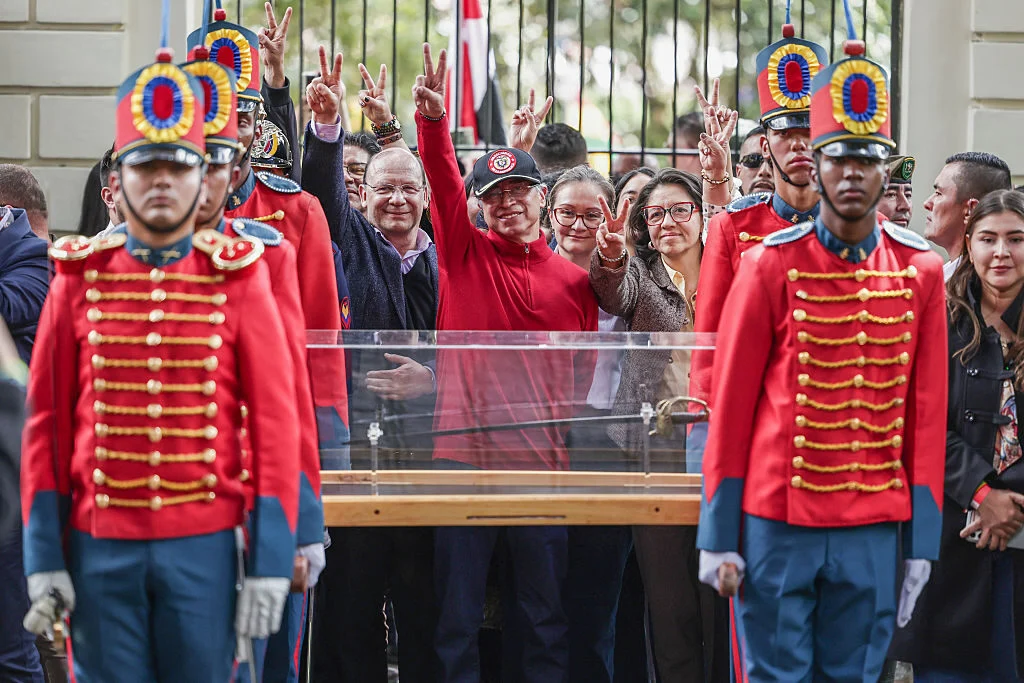
Bogotá, Colombia – In a dramatic and deeply concerning development just days before the scheduled presidential inauguration, outgoing Colombian President Gustavo Petro held a press conference on Monday, reiterating his baseless claims that the recent presidential election was "stolen" from his preferred candidate, Senator Iván Cepeda, by President-elect Abelardo de la Espriella. Petro, Colombia’s first-ever leftist president, escalated his rhetoric by warning that "civil war" could erupt across the nation if the normal inauguration process proceeds as planned this Friday, August 7. These pronouncements have sent shockwaves through Colombia’s political landscape and drawn sharp criticism from the incoming administration, which views them as a direct assault on the country’s democratic institutions and a dangerous incitement to unrest.
Petro’s Persistent Accusations and Escalating Rhetoric
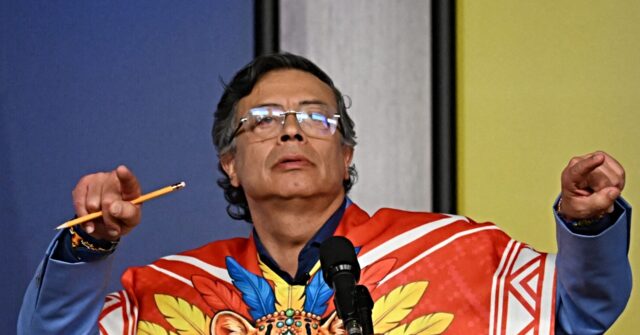
During his Monday address, delivered amidst a highly charged political atmosphere, President Petro insisted that Senator Iván Cepeda, his hand-picked successor, was the legitimate winner of the June runoff election. Petro declared, "We are before a fraud and an institutional problem that is undoubtedly profound, and that is the possession of an illegitimate president because he who won is named Iván Cepeda." He further elaborated on his long-standing conspiracy theory, alleging, "Foreigners committed with foreign money the electoral fraud that imposes a president who did not win the election. Goodbye national sovereignty. And what is a nation good for without national sovereignty? It’s not a republic, it’s not sovereign, the entire constitution of Colombia falls apart, and we are a colony, then, beginning at 3 p.m. on Friday. Colony. We lost 250 years of independent history; we returned to the beginning."
Adding a deeply troubling dimension to his claims, Petro again spuriously accused the Israeli government and "moneyed Israeli" individuals of orchestrating the electoral theft. He alleged, "The first certainty the people should have is that Iván Cepeda won the presidency, that the elections were robbed by moneyed Israelis directed by a genocidist and they did it from abroad modifying the vote in 1,665 electoral posts already detected." These accusations, which echo antisemitic tropes, are particularly inflammatory given President-elect de la Espriella’s stated intention to restore diplomatic relations with Jerusalem, a stance that marks a significant departure from Petro’s recent foreign policy. Petro’s administration had previously ruptured Colombia’s historically friendly ties with Israel, which had largely been maintained for the vast majority of the country’s independent history.
Beyond alleging fraud, Petro issued dire warnings of impending violence, stating, "The electoral regime in Colombia must change substantially if we don’t want more violence." He further claimed, "We are in a struggle against a truly murderous narcofascism. We know of the existence of dozens of tons of explosives in Cali. Drug trafficking groups want to act in a terrorist way to give the excuse of internal commotion and the opportunity for Abelardo to overturn by decree the social reform laws by surprise." The outgoing president concluded his threats with the chilling declaration that "It is very clear that what can happen is a civil war in Colombia." In a move widely interpreted as an attempt to undermine the authority of the incoming government, Petro also insisted that, while he remains president, he would order the police "not to attack the people," potentially signaling a directive to prevent law enforcement from responding to instances of mob violence during the transition period. He argued that the new administration’s "policies of sweeping away social reforms of the people will only augment the people’s resistance that can reach unimaginable levels."
The Verified Election Outcome and International Consensus
Petro’s assertions stand in stark contrast to all available public evidence and the unanimous consensus of national and international observers. President-elect Abelardo de la Espriella, an outsider lawyer who campaigned on a platform promising a return to conservative policies and a renewed alignment with the United States after four years of Petro’s radical leftist rule, decisively won the June runoff election. His victory over Senator Cepeda was clear and widely recognized.
Significantly, Senator Cepeda, Petro’s own chosen candidate, rapidly conceded defeat following the election results. Furthermore, the election itself was lauded by international observers as exemplary, with many describing it as one of the world’s cleanest and most transparent. American Senator Bernie Moreno (R-OH), who was present in Colombia to observe the electoral process, specifically highlighted the efficiency and integrity of the Colombian system. He told reporters that electoral systems in other nations, including the United States, could learn valuable lessons from Colombia’s smooth vote-counting procedures, robust voter identification requirements, absence of mail-in votes, and the implementation of biometric checks, all of which contributed to a high degree of transparency and confidence in the results. The National Electoral Council (CNE) of Colombia officially certified de la Espriella’s victory, upholding the democratic process.
A Tumultuous Post-Election Chronology
The period following the June runoff election has been marked by a series of contentious events, driven largely by President Petro’s refusal to accept the legitimate outcome.
- June 22, 2026: Abelardo de la Espriella wins the presidential runoff election against Iván Cepeda. Senator Cepeda quickly concedes.
- June 23, 2026: Despite the clear results and concession, pockets of radical leftists in Colombia engage in violent riots in various cities, protesting de la Espriella’s election. Simultaneously, President Petro begins to publicly claim fraud, using his official position to disseminate unsubstantiated allegations.
- Late June 2026: Petro initially, albeit briefly, concedes de la Espriella’s victory and announces the initiation of a transition process. This gesture offered a glimmer of hope for a peaceful transfer of power.
- Early July 2026 onwards: Petro reneges on his promise to aid in the presidential transition, instead reverting to and intensifying his conspiracy theories. He begins to share what he describes as "dubious proof documents" in lengthy statements on social media platforms, primarily Twitter, alleging an Israeli role in "stealing" the election.
- August 3, 2026: Petro undertakes a controversial trip to Cuba, where he participates in celebrations commemorating the repressive Castro dynasty. This trip, his last international engagement as president, further solidified his ideological alignment and sparked criticism regarding his priorities just days before his term’s end.
- August 5, 2026 (Monday): Petro holds the aforementioned press conference, making his most aggressive and explicit claims of fraud, directly challenging de la Espriella’s legitimacy, and issuing warnings of potential civil war.
- August 6, 2026 (Tuesday): The political tension continues to mount as both sides dig in.
- August 7, 2026 (Friday): Scheduled Inauguration Day, when Abelardo de la Espriella is constitutionally mandated to take office.
Background to Colombia’s Political Climate
Gustavo Petro’s presidency, which began in 2022, marked a significant departure from Colombia’s historically conservative political landscape. As the country’s first-ever leftist president, Petro initiated a series of ambitious social and economic reforms, aiming to address deep-seated inequalities, redistribute wealth, and challenge traditional power structures. His policies often drew strong reactions, polarizing the nation between those who supported his vision for a more equitable society and those who viewed his reforms as radical, economically destabilizing, and a threat to national security. His foreign policy, particularly his often-critical stance towards the United States and his cultivation of ties with other leftist regimes in Latin America, further underscored his break from past Colombian administrations. The rupture of diplomatic relations with Israel was another hallmark of his presidency’s ideological leanings.
Abelardo de la Espriella, on the other hand, emerged as an "outsider" candidate, capitalizing on a growing desire among a significant portion of the electorate for a return to more traditional, conservative governance. His campaign emphasized law and order, a strong stance against crime and drug trafficking, and a re-establishment of close ties with the United States. His promise to restore diplomatic relations with Israel resonated with those who sought to reverse Petro’s more ideologically driven foreign policy. De la Espriella’s victory can be seen as a strong mandate from the Colombian people to pivot away from the direction taken by Petro and towards a more centrist or right-leaning path.
President-elect De la Espriella’s Firm Response
In response to Petro’s escalating rhetoric and calls for "civil disobedience," President-elect Abelardo de la Espriella delivered his own online address on Sunday, firmly condemning the outgoing president’s actions and reiterating his commitment to upholding democratic principles and the rule of law.
De la Espriella stated, "For the first time, an outgoing president and his losing candidate, defeated, the wing of the outgoing president in Congress, which is pretty big… have opted, for no reason, not to recognize the triumph of democracy in the ballot booth and declare a so-called ‘civil disobedience.’" He unequivocally labeled these actions as an "affront to the sovereign decision of the Colombian people."
Accusing Petro of "preparing the destabilization of the country," de la Espriella reassured his voters, "I am the president of all Colombians and I will make [them] respect, with the strength of the constitution and the law, what Colombians chose, which is to elect me." He emphasized the gravity of the situation, asserting, "Let’s stop normalizing the incorrect, the illegal, the twisted, let’s call things by their name and let’s face them for what they are: so-called ‘civil disobedience’ is a euphemism to try to destabilize democracy, and I will not allow it." The President-elect has consistently vowed a heavy-handed approach against public disorder and crime, a cornerstone of his campaign platform, indicating a firm stance against any attempts to disrupt the peaceful transition or undermine his authority.
Broader Impact and Implications
The current political standoff in Colombia carries profound implications for the country’s democratic stability, its international standing, and the daily lives of its citizens.
- Threat to Democratic Institutions: Petro’s refusal to accept election results and his calls for resistance directly threaten the peaceful transfer of power, a fundamental pillar of any functioning democracy. Such actions, particularly from a sitting head of state, risk normalizing the rejection of electoral outcomes, potentially setting a dangerous precedent for future elections.
- Potential for Civil Unrest and Violence: Colombia has a complex and often violent history of internal conflict, including decades of civil war involving various armed groups. Petro’s warnings of "civil war" and his directive to police not to intervene in "people’s resistance" are highly inflammatory and could indeed incite further unrest. The mention of "dozens of tons of explosives in Cali" and the alleged intentions of "drug trafficking groups" adds another layer of serious concern regarding potential destabilization.
- Undermining International Trust: Colombia has worked diligently to establish itself as a stable democracy in Latin America. Petro’s unsubstantiated claims and rhetoric risk eroding international confidence in the country’s electoral processes and its commitment to democratic norms. This could have adverse effects on foreign investment, diplomatic relations, and regional leadership.
- Challenges for the Incoming Administration: President-elect de la Espriella faces the immediate challenge of not only assuming office but also asserting his authority and unifying a deeply polarized nation. He must navigate the lingering accusations of fraud, the potential for social unrest, and the need to deliver on his campaign promises while defending the integrity of the electoral system.
- Economic and Social Implications: Political instability can deter investment, disrupt economic activity, and exacerbate social tensions. If Petro’s calls for resistance lead to widespread protests or violence, it could derail efforts to address pressing economic and social issues facing Colombia.
- Antisemitism and Diplomatic Relations: Petro’s repeated use of antisemitic tropes in his accusations against Israel is a serious concern, both domestically and internationally. Beyond the immediate political context, such rhetoric can foster prejudice and undermine diplomatic efforts, particularly as the incoming administration seeks to mend ties with Israel.
As Friday’s inauguration approaches, Colombia stands at a critical juncture. The world watches closely to see if the nation will uphold its democratic traditions and ensure a peaceful, constitutional transfer of power, or if the incendiary rhetoric of its outgoing leader will plunge it into a period of unprecedented instability and conflict. The integrity of Colombia’s democracy, hard-won over decades, is now being tested in a profound and unprecedented manner.

Related Posts
Democratic Candidates Must Moderate to Win General Elections, Says Rep. Greg Stanton
Lisa Demuth Secures Republican Gubernatorial Nomination in Minnesota, Defeating Trump-Endorsed Mike Lindell