Revised Philippine Guidelines on Indigenous Consent Spark Outcry Over Human Rights Violations and Corporate Encroachment
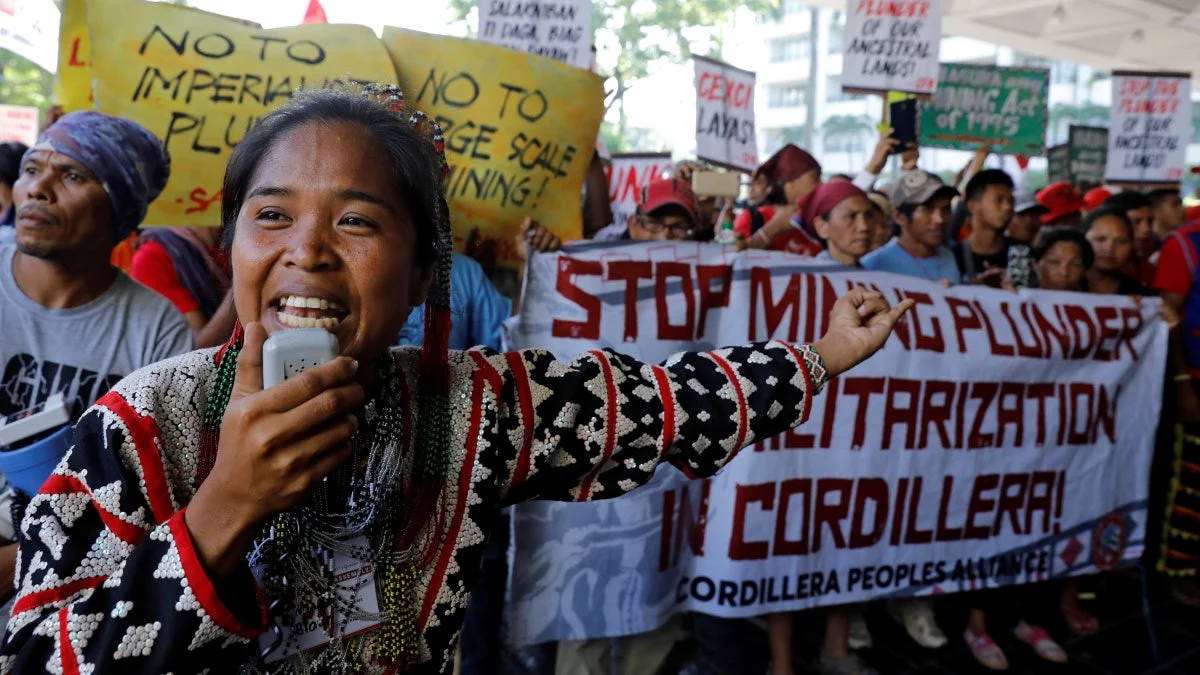
The Philippine government’s recently unveiled revisions to the national guidelines governing free, prior, and informed consent (FPIC) have ignited a fierce debate over the future of Indigenous rights and the integrity of ancestral domains. Human Rights Watch (HRW) issued a stern warning this week, asserting that the new regulations significantly weaken the ability of Indigenous communities to protect their lands from large-scale corporate interests. The international watchdog called on Manila to immediately align these administrative changes with international human rights standards to prevent what it describes as the potential "bulldozing" of Indigenous autonomy.
The controversy centers on the National Commission on Indigenous Peoples (NCIP), the primary government body tasked with upholding the 1997 Indigenous Peoples Rights Act (IPRA). On May 1, 2026, the NCIP announced the approval of a revised set of guidelines for projects affecting Indigenous territories, effectively replacing the established framework that had been in place since 2012. While the government maintains these changes are intended to streamline administrative processes and encourage economic development, human rights advocates and Indigenous leaders argue they represent a dangerous regression in the protection of vulnerable minorities.
A Comparative Shift: From Deliberation to Expediency
The 2012 FPIC guidelines were designed to provide a robust framework through which Indigenous communities could exercise their right to self-determination. Under the previous rules, there were no stringent, high-pressure deadlines for holding community assemblies. This lack of a rigid timeframe allowed traditional elders and community members to engage in consensus-building according to their own customary laws and traditions—a process that often requires extensive dialogue, ritual, and collective reflection.
Furthermore, once a community assembly was held, the 2012 rules allowed up to two months for the community to formulate its conditions for assent. There was also no fixed timeframe for the negotiation of the Memorandum of Agreement (MOA), the critical document that outlines benefit-sharing, environmental safeguards, and redress mechanisms between the community and a private corporation.
In contrast, the 2026 revised guidelines introduce aggressive new timelines that critics say are designed to favor project proponents rather than the affected people. Under the new rules, Indigenous communities are required to hold an assembly within just 10 days of notification for large-scale projects. The period for consensus-building has been slashed to 30 days. For small-scale projects, the window is even narrower: only four days are allocated to convene an assembly, with a mere seven days allowed for reaching a final decision.
Lian Buan, a Southeast Asia researcher at Human Rights Watch, highlighted the gravity of these shifts. "The National Commission on Indigenous Peoples’ revised guidelines would severely undermine the ability of Indigenous communities to provide free, prior, and informed consent for company projects in the Philippines," Buan stated. "The Philippine government has a duty to ensure that private corporations cannot bypass the rights of Indigenous people for the sake of corporate profit."
The Erosion of Field-Based Investigations
One of the most alarming changes in the 2026 guidelines concerns the "Certificate of Non-Overlap" (CNO). In the previous 2012 framework, the NCIP was mandated to conduct a field-based investigation (FBI) before issuing such a certificate. This investigation was a physical, on-the-ground verification process to ensure that a proposed project area did not "patently and publicly" fall within an ancestral domain. This was a crucial safeguard because it applied regardless of whether the Indigenous community had already secured a formal title to their land.
The 2026 revisions effectively dismantle this protection. The Commission may now issue a Certificate of Non-Overlap based solely on existing property documents and "vested rights" that predate the 1997 IPRA law, without ever visiting the site. This shift allows the government to grant permits to mining, logging, or infrastructure companies based on paper claims that may conflict with the actual, historical presence of Indigenous groups on the land.
The Legal Rights and Natural Resources Center (LRC), a prominent Philippine non-governmental organization, pointed out the practical dangers of this administrative shortcut. According to the LRC, a mining permit holder could assert private ownership of a tract of land, obtain a CNO based on that claim, and begin operations before a community even realizes their ancestral rights are being violated. By the time an Indigenous group can legally establish their claim, the environmental and cultural damage may already be irreversible.
Legal and International Context
The Philippines was once considered a regional leader in Indigenous rights legislation following the passage of the Indigenous Peoples Rights Act of 1997. The IPRA was designed to rectify centuries of marginalization by recognizing the "time immemorial" rights of Indigenous peoples to their ancestral domains. However, the 2026 revisions appear to prioritize the interests of the extractive industries over the spirit of the 1997 law.
Internationally, the Philippine government’s actions are being viewed as a breach of the United Nations Declaration on the Rights of Indigenous Peoples (UNDRIP), which the Philippines supported upon its adoption in 2007. UNDRIP explicitly states that Indigenous peoples have the right to participate in decision-making in matters that affect their rights and that states must obtain their free, prior, and informed consent before adopting measures that may affect them.
Moreover, a 2018 study by the UN Expert Mechanism on the Rights of Indigenous Peoples emphasized that consultation must happen during the conceptualization and design phases of a project. The expert mechanism warned that launching consultations at a late stage—after crucial details have been decided—renders the process meaningless. Critics argue that the NCIP’s new, shortened timelines force communities into a reactive position, effectively making "consent" a mere formality in a project’s late-stage development.
Stakeholder Reactions and the Call for Redress
The reaction from the Indigenous community has been one of deep concern and betrayal. Raymond Marvic Baguilat, head of the Indigenous Peoples Law and Policy Program at the University of the Philippines Institute of Human Rights, questioned the very legitimacy of the new standards. "Did the government really give us our right to self-determination if the government set the standards and timelines?" Baguilat asked, pointing out the inherent contradiction of a state agency dictating the pace of customary decision-making.
Indigenous activists also noted a lack of transparency during the revision process. Giovanni Reyes, president of the Philippine branch of the Indigenous Peoples Community/Conserved Areas (ICCA) consortium, argued that "meaningful consultation" was entirely absent. Reyes suggested that true consultation would have required facilitated discussions in every ethnographic region, conducted in languages that the local communities understand. Instead, many groups felt sidelined as the NCIP moved forward with the 2026 approval.
Furthermore, the 2026 guidelines have removed several avenues for redress. Previously, Indigenous communities had more robust mechanisms to dispute permits and certificates that they believed were issued in error or through fraudulent means. The new framework limits these options, making it significantly more difficult for communities to challenge corporate encroachment once a permit has been issued.
A Timeline of Indigenous Rights Policy in the Philippines
The current crisis is the latest chapter in a long history of struggle for land rights in the Philippine archipelago:
- 1997: The Indigenous Peoples Rights Act (IPRA) is signed into law, establishing the NCIP and recognizing ancestral domain rights.
- 2007: The Philippines votes in favor of the UN Declaration on the Rights of Indigenous Peoples (UNDRIP).
- 2012: The NCIP issues Administrative Order No. 3, establishing the original FPIC guidelines which prioritized customary processes and field investigations.
- 2018: The UN Expert Mechanism publishes a global study on FPIC, setting high bars for "meaningful participation" and early-stage consultation.
- May 1, 2026: The NCIP announces the approval of revised FPIC guidelines, introducing shortened timelines and reducing field-based oversight.
- Present: Human rights organizations and members of the Philippine Congress call for a suspension of the guidelines pending a full legislative review.
Broader Implications and Analysis
The implications of these revised guidelines extend beyond the immediate loss of land. Indigenous territories in the Philippines often contain the country’s most significant remaining biodiversity and primary forests. By weakening the "gatekeeper" role of Indigenous communities, the government may inadvertently accelerate environmental degradation. Indigenous-led conservation has been proven globally to be one of the most effective ways to mitigate climate change and protect ecosystems; undermining their land tenure risks destabilizing these natural defenses.
From an economic perspective, while the government argues that faster permitting will attract foreign investment, the lack of genuine community consent often leads to long-term social conflict. In many parts of the Philippines, mining projects that bypass Indigenous consent have faced years of protests, legal challenges, and security issues, which ultimately harm the investment climate and create "stranded assets."
Human Rights Watch and other civil society groups are now urging the Philippine Congress to exercise its oversight function. The NCIP is legally required to consult with Congress before publishing and enforcing new rules. Advocates are demanding that the Commission return to the "drawing board" and engage in a transparent, inclusive process that respects the dignity and traditions of the more than 100 Indigenous groups across the country.
"The government needs to amend the rules so that Indigenous peoples have a genuine voice in decision-making," Buan concluded. As the debate continues, the fundamental question remains whether the Philippines will honor its landmark 1997 legislation or if the rights of its first peoples will be sacrificed at the altar of expedited industrial expansion.

Related Posts

Human Rights Watch Calls for Investigation into Death of Detainee Following Removal from Najaf Hospital by Iraqi Drug Police
Human Rights Watch Urges UN Security Council to Extend Lebanon Peacekeeping Mission Amid Escalating Conflict and Humanitarian Crisis