Tragedy and Crisis at the Ceuta Border: Analyzing the Unprecedented Influx of July 2026 and the Growing Human Rights Concerns in North Africa
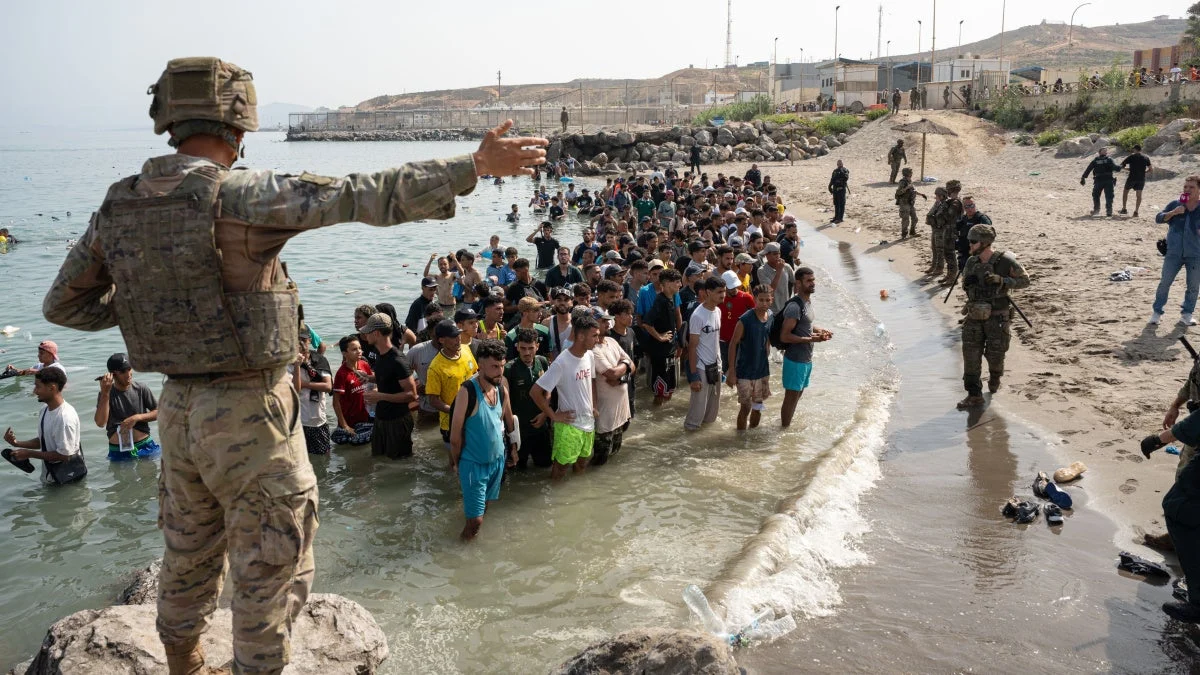
The Spanish enclave of Ceuta, a tiny peninsula on the North African coast, became the epicenter of a profound humanitarian catastrophe during the final days of July 2026, as an estimated 50,000 to 60,000 individuals attempted to cross the border from Morocco in less than 48 hours. This unprecedented surge in migration has resulted in the deaths of at least 72 people, according to official Spanish health and security reports, marking one of the deadliest episodes in the history of the Mediterranean’s land borders. The scale of the event has overwhelmed local infrastructure, reignited fierce debates regarding European Union migration policy, and drawn sharp criticism from international human rights organizations over the methods used to manage the crowd and the subsequent return of thousands to Moroccan territory.
The crisis began in the early hours of July 30, when massive groups of people started appearing at the Tarajal border crossing and the breakwaters that separate Moroccan waters from the Spanish city. By the following day, the numbers had swelled beyond any historical precedent for the region. While some migrants attempted to scale the double-layered, six-meter-high fences equipped with advanced surveillance technology, thousands of others took to the sea, attempting to swim around the maritime piers. The tragedy unfolded rapidly as the sheer volume of people led to fatal crushing incidents at the border barriers and dozens of drownings in the turbulent waters of the Alboran Sea.
A Chronology of the 48-Hour Influx
The timeline of the crisis reveals a rapid escalation that caught both Spanish and Moroccan authorities off guard, despite the high level of militarization typically present at the border. On the morning of July 30, approximately 15,000 people gathered in the Moroccan town of Fnideq, moving toward the Ceuta border. By midday, the first major breaches were reported at the maritime borders, with hundreds of young men and families swimming toward the Spanish shore.
Throughout the night of July 30 and into the morning of July 31, the situation reached a breaking point. Spanish authorities reported that the influx grew to nearly 50,000 people, a figure that nearly equals the entire permanent population of Ceuta. The Moroccan Association for Human Rights (AMDH) noted that the crowds were composed primarily of Moroccan nationals, but also included significant numbers of individuals from Sudan, Yemen, and various West African nations. By the evening of July 31, the death toll began to rise as emergency services recovered bodies from the surf and responded to reports of suffocation and trauma at the fence lines.
By August 1, the Spanish government had deployed additional military units to assist the Guardia Civil and National Police. A massive operation to process and, in many cases, immediately return the arrivals began. By August 2, the majority of those who had successfully entered the enclave had been moved back across the border into Morocco. While the Spanish Ministry of the Interior characterized these returns as "voluntary" or conducted through established bilateral agreements, eyewitness accounts and human rights monitors tell a more complex story of summary expulsions.
The Human Toll and Demographic Profile
The loss of 72 lives underscores the extreme risks taken by those seeking entry into Europe. Of the deceased, the majority were young men, though reports indicate that women and minors were also among the casualties. The causes of death were primarily divided between drowning and physical trauma sustained during the attempt to bypass the border fortifications.
The demographic makeup of the group highlights the diverse drivers of modern migration. While a significant portion of the Moroccan contingent cited economic desperation and a lack of domestic opportunities, the presence of Sudanese and Yemeni nationals points to the ongoing role of conflict as a primary catalyst. Sudan, in particular, has been embroiled in a devastating civil war that has displaced millions, many of whom traverse the "Trans-Saharan" route toward the Maghreb in hopes of reaching European soil. For these individuals, the crossing is not merely an economic gamble but a search for international protection and asylum—a right that human rights groups argue was largely ignored during the chaos of the July influx.
Historical Context of the Ceuta and Melilla Enclaves
To understand the magnitude of the July 2026 event, one must look at the unique status of Ceuta and Melilla. As the only land borders between the European Union and Africa, these two Spanish enclaves have been transformed into "Fortress Europe’s" most fortified outposts. Over the last two decades, Spain and the EU have invested hundreds of millions of euros in physical barriers, thermal cameras, motion sensors, and increased personnel to deter irregular migration.
However, these fortifications have frequently been the site of violence. In 2014, the "Tarajal tragedy" saw at least 15 migrants drown while trying to swim to Ceuta after the Spanish Guardia Civil fired rubber bullets and tear gas into the water to deter them. More recently, in June 2022, at least 23 men died during a mass attempt to cross into Melilla, with footage showing Moroccan and Spanish forces using heavy-handed tactics in a narrow "no-man’s-land" corridor. The July 2026 incident, with its 72 confirmed deaths, now stands as the most lethal event in this ongoing border conflict, suggesting that increased fortification has not stopped migration but has instead made it significantly more dangerous.
Allegations of Human Rights Violations and Pushbacks
The aftermath of the July influx has been marked by serious allegations regarding the conduct of security forces on both sides of the border. The Moroccan Association for Human Rights (AMDH) has been vocal in its condemnation of "mass pushbacks," a practice where migrants are returned to the country they crossed from without an individual assessment of their protection needs or the opportunity to claim asylum.
Under both Spanish and international law, specifically the European Convention on Human Rights, collective expulsions are prohibited. Every individual who reaches sovereign territory has the right to a legal process to determine if they face persecution in their home country. AMDH reported that many of the thousands returned between July 31 and August 2 were not given access to legal counsel or translators. Furthermore, the group alleged that Spanish and Moroccan security forces used "unnecessary and excessive force" to manage the crowds, including the use of riot control gear in confined spaces.
Adding to the tension, reports emerged of some Ceuta residents taking matters into their own hands. Allegations of vigilante violence against newly arrived migrants have surfaced, creating an atmosphere of fear for those who managed to remain in the city. Human rights monitors have called for a full investigation into these reports, emphasizing that the state has a duty to protect all individuals within its jurisdiction, regardless of their legal status.
Official Responses and Geopolitical Implications
The Spanish government, led by the Ministry of the Interior, has defended its actions as a necessary response to a "national security crisis." Officials emphasized the need to maintain territorial integrity and praised the cooperation of Moroccan authorities in stabilizing the border. From Madrid’s perspective, the rapid return of migrants was a logistical necessity to prevent the complete collapse of Ceuta’s social and medical services.
In Brussels, the European Commission expressed "solidarity with Spain," echoing the sentiment that the EU’s external borders must be protected. However, the incident has put the EU’s New Pact on Migration and Asylum under the microscope. Critics argue that the pact’s focus on externalization—paying third-party countries like Morocco to act as border guards—leads to the very human rights abuses witnessed in Ceuta.
The relationship between Spain and Morocco is also a critical factor. Historically, Morocco has been accused of using migration as a diplomatic lever, occasionally relaxing border controls to pressure Spain or the EU on issues such as the status of Western Sahara. While there is no direct evidence that the July 2026 surge was state-sanctioned, the sheer scale of the gathering in Fnideq suggests a significant lapse in Moroccan border surveillance in the days leading up to the crisis.
Supporting Data and Comparative Analysis
The 2026 influx represents a staggering increase in migration volume. To put the 50,000–60,000 figure into perspective:
- Annual Averages: In previous years, total land arrivals in Ceuta and Melilla typically fluctuated between 2,000 and 6,000 for an entire year.
- Comparison to 2021: In May 2021, a major diplomatic row led to approximately 8,000 to 10,000 people crossing into Ceuta over several days. The 2026 event is five to six times larger in scale and occurred in half the time.
- Casualty Rates: With 72 deaths, the fatality rate for this single event exceeds the total reported border deaths in the enclaves for the previous three years combined.
This data suggests a "perfect storm" of factors: extreme regional instability, economic contraction in North Africa, and a potential shift in the effectiveness of bilateral border management strategies.
The Path Forward: Accountability and Reform
In the wake of the tragedy, international bodies including the United Nations High Commissioner for Refugees (UNHCR) and the Council of Europe have called for independent and impartial investigations. The primary focus of these inquiries will be to determine whether the use of force was proportionate and whether the "voluntary" returns were, in fact, forced expulsions that violated the principle of non-refoulement.
For the survivors remaining in Ceuta, the priority shifts to humanitarian assistance. Many are in need of medical care for injuries sustained at the fence or from prolonged exposure in the water. Legal advocates are pushing for the Spanish government to uphold its obligations by individually assessing each person’s protection needs, particularly for those fleeing the conflict in Sudan.
The events of July 30-31, 2026, serve as a grim reminder of the human cost of current border policies. As long as the drivers of migration—conflict, economic disparity, and climate change—remain unaddressed, the fortifications of Ceuta and Melilla will likely continue to be sites of both human desperation and systemic violence. The international community now faces the challenge of balancing border security with the fundamental human rights that form the bedrock of international law. Only through a transparent accounting of what occurred during those 48 hours can any measure of justice be sought for the 72 lives lost at the edge of Europe.

Related Posts

Human Rights Watch Calls for Investigation into Death of Detainee Following Removal from Najaf Hospital by Iraqi Drug Police
Human Rights Watch Urges UN Security Council to Extend Lebanon Peacekeeping Mission Amid Escalating Conflict and Humanitarian Crisis