
Deadly Drone Strike Rocks Southern Russian Beach, Killing Seven Including Children Amid Escalating Cross-Border Conflict
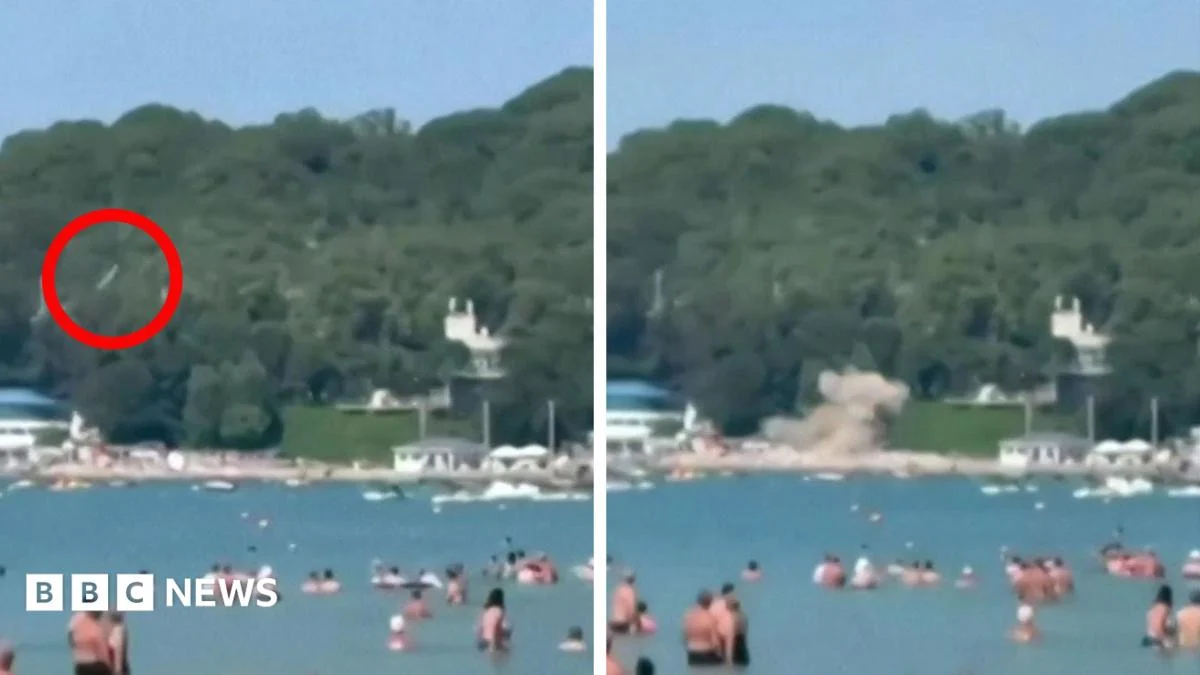
A drone strike has unleashed devastation upon a bustling beach in southern Russia, claiming the lives of seven individuals, among them three children, and injuring dozens more, according to local authorities. The incident, which unfolded on a popular Black Sea resort coastline, has ignited fresh accusations of deliberate targeting of civilians in the ongoing conflict between Russia and Ukraine, further intensifying the grim toll on civilian populations.
The tragic event occurred near the village of Arkhipo-Osipovka in the Krasnodar region, a picturesque locale renowned for its warm climate, extensive beaches, and well-developed tourist infrastructure. This area has long served as a cherished holiday destination for Russians, a role that has only grown in significance since international travel restrictions, stemming from sanctions, curtailed many citizens’ access to foreign resorts. The attack on a seemingly ordinary day of leisure has sent shockwaves through the community and underscored the expanding geographical reach and escalating human cost of the protracted conflict.
A Day of Leisure Turned Tragedy: Eyewitness Accounts
Social media footage, independently verified by international news agencies, captured the terrifying moments preceding the explosion. The video depicts a drone hurtling rapidly towards a cliffside, before erupting into a fiery inferno upon impact with the beach below. Tourists, both on the shore and in the water, were seen reacting with shock and panic as the scene unfolded before their eyes. The aftermath was one of chaos and despair, with emergency services quickly mobilising to attend to the wounded and recover the deceased.
Veniamin Kondratyev, the governor of the Krasnodar region, confirmed the casualty figures, stating that the total number of injured individuals reached 40, with 17 requiring hospitalisation for varying degrees of injuries. His immediate reaction was to accuse Ukraine of perpetrating "a deliberate strike on civilians," a grave charge that, if proven, would constitute a serious violation of international humanitarian law. Kyiv has yet to issue a formal comment on the incident, maintaining a consistent policy of neither confirming nor denying responsibility for specific strikes on Russian territory. Both belligerent nations, however, routinely deny deliberately targeting civilian populations, despite extensive evidence and accusations from international bodies and human rights organizations detailing such occurrences on both sides since the full-scale invasion commenced in February 2022.
Eyewitnesses described a scene of sudden terror, largely devoid of any prior warning. Residents and holidaymakers in Arkhipo-Osipovka told local media outlets that no air raid sirens or other alert systems sounded before the drone’s impact. This absence of warning amplified the shock and vulnerability felt by those present. One holidaymaker recounted, "We covered ourselves with sun loungers, and didn’t see where it exploded." Another individual reported hearing "gunfire, like a machine gun," immediately preceding the explosion, suggesting that air defense systems may have engaged the drone in an attempt to intercept it. The psychological toll was immediate and severe, with one distressed parent lamenting, "This all happened in front of my children. My child is having a nervous breakdown." These accounts paint a vivid picture of the indiscriminate nature of the attack and its profound psychological impact on survivors, particularly children exposed to such violence.
Conflicting Narratives: The Drone’s Fate
The precise circumstances surrounding the drone’s trajectory and its eventual crash remain subject to conflicting interpretations. While Russian authorities swiftly pointed to a deliberate Ukrainian attack, the intended target of the drone remains unclear. Several Ukrainian Telegram channels, often serving as unofficial conduits for information from the Ukrainian side, put forth an alternative theory. They suggested that the drone may have crashed onto the beach as a result of electronic warfare measures, which could have jammed its signal and caused it to deviate from its intended course or malfunction. This narrative implies an accidental civilian casualty rather than a deliberate targeting.
Conversely, the eyewitness reports of preceding gunfire, indicating attempts by air defenses to shoot the drone down, lend credence to the possibility of an interception gone awry. If air defenses were indeed engaged, the drone’s descent onto a populated beach could be an unintended consequence of defensive actions. This ambiguity highlights the inherent complexities and dangers of modern warfare, where advanced technologies like drones operate in contested airspace, often with unpredictable outcomes, especially in close proximity to civilian areas. The lack of definitive, independently verified information regarding the drone’s origin, intended target, and the precise cause of its crash contributes to the fog of war that invariably surrounds such incidents.
Krasnodar Region: A Strategic and Recreational Hub
The Krasnodar region, where Arkhipo-Osipovka is located, holds significant strategic and economic importance for Russia. Situated along the Black Sea coast, it hosts major ports, military installations, and critical infrastructure, making it a potential target in a broader conflict. However, it is equally vital as Russia’s premier domestic tourist destination. Its resorts, including Sochi, Gelendzhik, and Anapa, attract millions of visitors annually, especially during the summer months.
Since the imposition of Western sanctions following the 2022 invasion, which significantly restricted international travel options for many Russians, domestic tourism in areas like Krasnodar has experienced a surge. This has made these regions not only economic lifelines but also symbols of normalcy and escape for a populace living under wartime conditions. An attack on such a highly visible and frequented civilian area, particularly during peak tourist season, carries substantial psychological and propaganda implications, regardless of the attacker’s intent. It directly challenges the perception of security within Russia’s borders and exposes the civilian population to the immediate dangers of a conflict that previously felt distant for many.
Official Responses and Accusations of War Crimes
The immediate and forceful condemnation from Governor Kondratyev aligns with Russia’s broader strategy of portraying Ukraine as a perpetrator of war crimes, particularly when civilian casualties occur on Russian soil. Such accusations are consistently leveraged within Russia’s domestic media landscape to bolster public support for the war and demonize the Ukrainian government. The narrative of "deliberate strikes on civilians" is a powerful rhetorical tool, even as Russia itself faces widespread international condemnation and ongoing investigations by the International Criminal Court for alleged war crimes, including the indiscriminate targeting of Ukrainian cities and infrastructure.
The absence of an immediate official Ukrainian comment is also consistent with their communication strategy regarding cross-border strikes. While Ukrainian officials often allude to the legitimacy of striking targets within Russia that support the war effort, they rarely claim direct responsibility for specific incidents, particularly those involving civilian casualties. This strategic ambiguity allows Ukraine to maintain pressure on Russia while avoiding explicit responsibility for potentially controversial outcomes.
The Broader Landscape of Drone Warfare
The attack on the Arkhipo-Osipovka beach is but one manifestation of the rapidly evolving and increasingly pervasive role of drone warfare in the Russia-Ukraine conflict. From the outset, both sides have extensively deployed unmanned aerial vehicles (UAVs) for reconnaissance, surveillance, and target acquisition. However, the conflict has seen a dramatic escalation in the use of drones for direct strike missions, including long-range attacks deep within enemy territory.
Ukraine, in particular, has demonstrated increasing sophistication and capability in developing and deploying long-range strike drones. These systems, often modified commercial drones or indigenously developed kamikaze variants, have been used to target a range of objectives far beyond the front lines, including energy infrastructure, military depots, industrial facilities, and administrative buildings in cities such as Moscow, St. Petersburg, and various regional capitals. The frequency and reach of these strikes have steadily increased over the past year, representing a significant shift in the conflict’s dynamics and Russia’s domestic security challenges. These attacks serve multiple purposes: to disrupt Russian logistics and military production, to impose economic costs, and to bring the reality of the war directly to the Russian populace.
Escalating Long-Range Strikes on Russian Territory
The incident in Krasnodar follows a series of successful long-range strikes carried out by Ukraine deep into Russian territory. These operations have targeted critical energy infrastructure, such as oil refineries and fuel depots, as well as commercial warehouses that Kyiv alleges are being used for military purposes. While Ukraine generally frames these strikes as legitimate responses to Russia’s aggression and attempts to degrade its war-making capabilities, these operations have, on several occasions, resulted in civilian casualties. For instance, just days prior to the beach incident, eight people were reported killed in different Russian cities as a result of such strikes.
These long-range capabilities have forced Russia to divert air defense assets to protect internal targets, potentially weakening its defenses closer to the front lines. The psychological impact on the Russian public is also a key objective, aiming to demonstrate that Russia is not immune from the consequences of the war it initiated.
The Shadow of Civilian Casualties Across the Conflict
The tragedy at Arkhipo-Osipovka underscores a grim reality that has defined the conflict since its inception: the pervasive and devastating impact on civilians. While both sides deny deliberately targeting non-combatants, the United Nations, human rights organizations, and independent observers have extensively documented widespread civilian casualties and damage to civilian infrastructure resulting from military operations on both sides.
Russia, from the very beginning of its full-scale invasion in February 2022, has launched extensive attacks on residential areas and cities across Ukraine. These attacks, often involving ballistic missiles, cruise missiles, and artillery, have killed and injured thousands of civilians. Recent examples include a strike on Kyiv just days prior to the beach incident, where at least nine people were killed and dozens injured in Russian ballistic missile attacks, with a residential building in the Shevchenkivskyi district partially destroyed. Similarly, a strike in Ukraine’s Kryvyi Rih area last week reportedly killed a family of 10. These incidents highlight a pattern of widespread civilian harm, irrespective of the alleged intent of the attacking force.
The Dual-Use Dilemma: Civilian Infrastructure and Military Supply Chains
In recent weeks, Ukrainian strikes have notably targeted warehouses belonging to Wildberries, a massive online retailer often dubbed the "Russian Amazon." Multiple Wildberries depots, many located thousands of kilometers from the Ukrainian border, have been hit, including a recent strike in the Vladimir region, east of Moscow. Kyiv’s justification for targeting these seemingly civilian commercial facilities is that Wildberries depots are allegedly used to supply the Russian military. Moscow vehemently denies these claims.
However, the concept of "dual-use" goods and infrastructure complicates this denial. Items that have both civilian and military applications, such as certain electronics, vehicles, or even logistics facilities, can become legitimate military targets under international humanitarian law if they are demonstrably being used to support military operations. Until recently, Wildberries platform reportedly sold a variety of military-related goods, including body armour, alongside items with both civilian and drone-production applications. This raises questions about the platform’s role in the military supply chain and the legitimacy of its facilities as targets, even if civilian personnel are present. The line between civilian and military infrastructure blurs in modern warfare, creating difficult ethical and legal dilemmas.
Implications for Civilian Security and Regional Tourism
The attack on the Arkhipo-Osipovka beach carries significant implications for civilian security within Russia and the future of its domestic tourism industry. For ordinary Russian citizens, an attack on a popular holiday spot shatters any remaining illusion of being insulated from the conflict. It brings the war’s destructive potential directly into their leisure spaces, fostering anxiety and eroding public confidence in the state’s ability to protect its own territory and people.
Economically, such incidents threaten to undermine the vital tourism sector in the Krasnodar region. While domestic tourism has thrived in the absence of international alternatives, repeated attacks or even the persistent threat of them could deter visitors, leading to financial losses for local businesses and a broader economic downturn in the region. The perception of safety is paramount for tourism, and incidents like this severely damage that perception.
International Law and the Fog of War
From the perspective of international humanitarian law (IHL), the principles of distinction and proportionality are central to evaluating such incidents. The principle of distinction requires parties to a conflict to distinguish between combatants and civilians, and between military objectives and civilian objects, and to direct attacks only against military objectives. The principle of proportionality dictates that even if a target is a legitimate military objective, an attack is unlawful if the expected civilian casualties or damage to civilian objects would be excessive in relation to the anticipated military advantage.
In the chaos and "fog of war," determining intent and adherence to these principles can be exceedingly difficult. Accusations of "deliberate targeting" are serious and carry the weight of potential war crimes. However, proving deliberate intent is often challenging, especially when factors like electronic warfare, air defense interceptions, or technical malfunctions could lead to unintended outcomes. International bodies, such as the United Nations and the International Committee of the Red Cross, consistently call on all parties to armed conflicts to uphold IHL and protect civilians, regardless of the circumstances of any given attack.
Looking Ahead: The Evolving Dynamics of the Conflict
The deadly drone strike on a Russian beach serves as a stark reminder of the conflict’s expanding geographical scope and its increasingly indiscriminate nature. As both sides continue to develop and deploy advanced weaponry, including long-range drones, the risk of civilian casualties and collateral damage is likely to intensify. The incident further complicates the already fraught information war, with each side using such tragedies to bolster their narratives and condemn their adversaries. As the conflict grinds on, the human cost, both on the front lines and in seemingly safe civilian areas, continues to mount, with little prospect of an immediate de-escalation. The future will likely see further innovations in drone warfare, more sophisticated defensive measures, and, tragically, more incidents where civilians bear the brunt of the violence.

Related Posts

Zambia on Edge: Opposition Leader Arrested Amid Allegations of Insurrection Plot and Election Tensions
Rescuers search for survivors of powerful Indonesia earthquake

