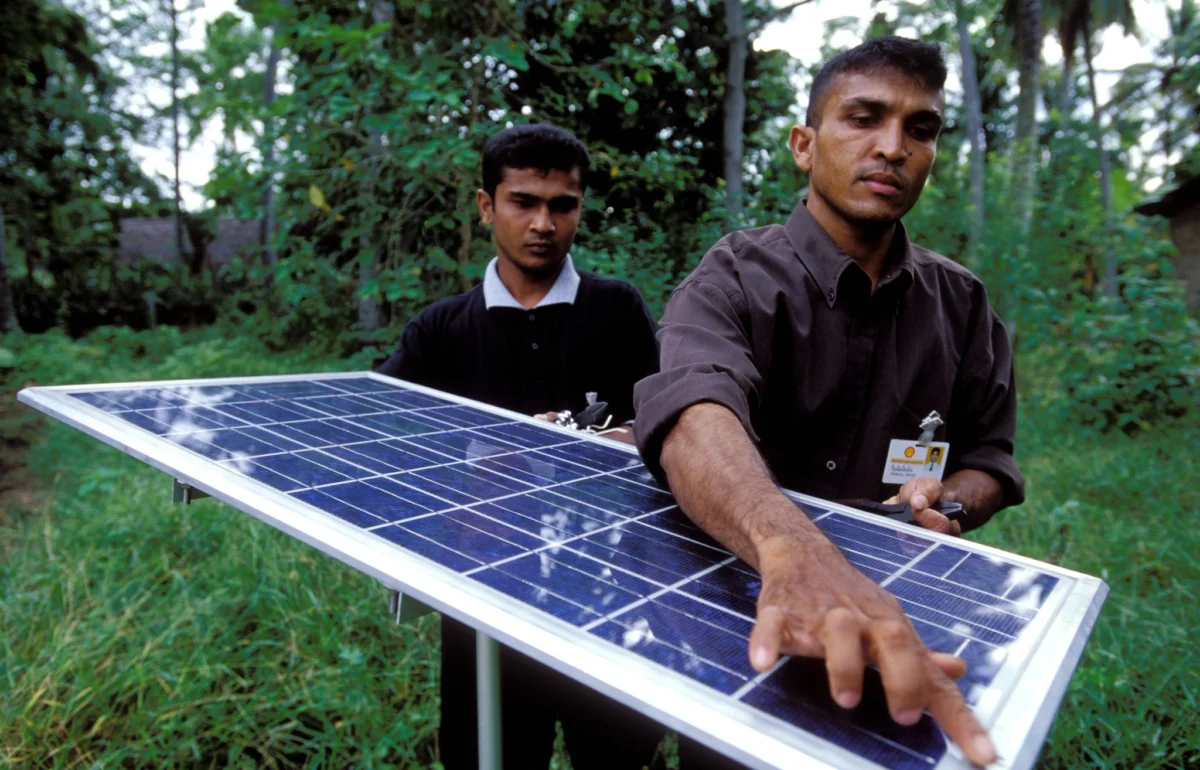
Egypt Accelerates Renewable Energy Transition to Forty-Five Percent by 2026 to Bolster Energy Security and Regional Export Ambitions
The Egyptian government has dramatically shifted its national energy strategy, announcing an accelerated timeline to integrate renewable energy into the country’s power grid following a period of intense regional volatility and economic pressure. Driven by the ripple effects of geopolitical tensions in the Middle East—specifically the impact of US-Iran frictions on global energy markets—Cairo is moving to insulate its economy from the soaring costs of fossil fuel imports. The administration has officially committed to a target where 45% of the nation’s electricity will be generated from renewable sources by 2026, a significant advancement from the previous goal of 42% by 2030. This strategic pivot aims not only to secure domestic energy stability but also to transform Egypt into a primary clean energy export hub for the Mediterranean, Africa, and Europe.
Geopolitical Catalysts and the Economic Mandate for Change
The urgency behind Egypt’s energy transition is rooted in a confluence of external shocks and internal economic requirements. Recent escalations in the Middle East have historically led to spikes in global oil and liquefied natural gas (LNG) prices. For Egypt, a country that has transitioned from being a net exporter to periodically needing imports to meet peak summer demand, these price fluctuations represent a significant drain on foreign currency reserves. The "ballooning energy import bill," as noted by government officials, has become a primary driver for seeking indigenous, price-stable alternatives.
Historically, Egypt relied heavily on its natural gas discoveries, most notably the massive Zohr field in the Mediterranean. However, as domestic consumption has risen and production levels at older fields have naturally declined, the government has recognized that natural gas alone cannot sustain the country’s long-term development goals. By diversifying into solar and wind, Egypt seeks to free up more of its natural gas for high-value exports or industrial use, while simultaneously lowering the carbon footprint of its second-largest economy in Africa.
A New Timeline: Accelerating the 2030 Vision to 2026
The revision of the Integrated Sustainable Energy Strategy (ISES) marks one of the most ambitious policy shifts in the region. According to data from the energy think-tank Ember, Egypt’s renewable energy share stood at approximately 13% as of early 2025. Jumping to 45% within two years requires an unprecedented mobilization of capital and infrastructure.
President Abdel Fattah el-Sisi’s recent directives emphasize that this is no longer a long-term aspiration but a short-term necessity. In June, the President convened a high-level meeting with the Prime Minister and the Minister of Electricity and Renewable Energy to finalize the "accelerated delivery" of 105 specific renewable energy projects. These projects are designed to be integrated into the national grid with immediate effect, focusing on rapid-deployment solar arrays and the expansion of existing wind farm capacities.
A Chronology of Egypt’s Energy Evolution
To understand the scale of the current acceleration, it is essential to view Egypt’s energy journey over the last decade:
- 2014–2015: Egypt faced chronic electricity shortages and rolling blackouts. The government launched a massive emergency power plan, largely based on Siemens-built gas-fired power plants.
- 2016: The launch of the Feed-in Tariff (FiT) program, which paved the way for the Benban Solar Park.
- 2019: Completion of the Benban Solar Park in Aswan, one of the largest solar installations in the world, with a capacity of 1.8 GW.
- 2021: Egypt began positioning itself as a green hydrogen leader, signing several Memoranda of Understanding (MoUs) with international developers in the Suez Canal Economic Zone (SCZONE).
- 2022: Egypt hosted COP27 in Sharm El-Sheikh, using the platform to launch the "Nexus of Water, Food, and Energy" (NWFE) program, attracting billions in climate finance.
- 2023–2024: Regional instability and currency fluctuations increased the cost of fuel imports, leading the government to reconsider its 2030 targets.
- Mid-2024: The official announcement of the 45% target by 2026 and the approval of 105 new renewable energy projects.
Harnessing Natural Advantages: Solar, Wind, and Desert Land
Egypt’s geography provides a competitive advantage that few nations can match. The country sits within the "Global Sun Belt," receiving high levels of direct solar radiation. Furthermore, the Gulf of Suez is home to some of the world’s most consistent and high-speed wind corridors, ideal for large-scale wind power generation.
The government has allocated approximately 7,600 square kilometers of unused desert land for renewable energy projects. This vast land bank allows for the construction of "mega-parks" that benefit from economies of scale. Current data suggests that the wind potential in the Gulf of Suez and the Nile banks alone could exceed 30 GW. By leveraging these natural assets, Egypt aims to produce electricity at some of the lowest costs globally, a prerequisite for its green hydrogen and export ambitions.
Infrastructure Upgrades and Grid Stability
One of the primary challenges of reaching a 45% renewable mix is the intermittent nature of solar and wind energy. To address this, the Egyptian government is focusing on two critical areas: energy storage and grid modernization.
The 105 projects mentioned by the Presidency include significant investments in Battery Energy Storage Systems (BESS). These systems are essential for "smoothing" the supply of electricity, ensuring that solar power collected during the day can be used during peak evening hours. Furthermore, the government is working with international partners to upgrade the national transmission grid to a "smart grid" capable of managing bi-directional flows and fluctuating inputs from various geographical locations.
Modernizing the grid is not just a technical requirement but a strategic one. A stable and flexible grid is necessary for Egypt to fulfill its agreements to link its power system with neighboring countries. Projects are already underway to connect Egypt’s grid with Saudi Arabia, Jordan, Sudan, and potentially Greece and Cyprus via subsea cables.
The Green Hydrogen Frontier and Export Strategy
Egypt’s renewable energy surge is inextricably linked to its goal of becoming a global hub for green hydrogen. Green hydrogen, produced by using renewable electricity to split water into hydrogen and oxygen, is seen as the fuel of the future for heavy industry and shipping.
The Suez Canal Economic Zone (SCZONE) has become a magnet for foreign direct investment (FDI) in this sector. Major global players, including Maersk, Scatec, and Fertiglobe, have signed agreements to develop green ammonia and green hydrogen facilities. By achieving a 45% renewable mix in the general grid, Egypt can provide the "green" credentials required for these fuels to be sold at a premium in European markets, which are increasingly mandating the use of carbon-neutral fuels.
Official Responses and International Cooperation
The international community has reacted positively to Egypt’s accelerated targets. The European Bank for Reconstruction and Development (EBRD) and the International Finance Corporation (IFC) have been long-term partners in Egypt’s energy sector. Following the announcement, representatives from several development banks noted that Egypt’s clear policy direction provides the "regulatory certainty" needed to attract further private sector investment.
In a statement following the June ministerial meeting, the Egyptian Presidency emphasized that "the transition to clean energy is a pillar of national security and a driver of sustainable economic growth." The Ministry of Electricity added that the 105 new projects would be fast-tracked through a "One-Stop Shop" system to eliminate bureaucratic hurdles for international investors.
Industry analysts suggest that this move is also a strategic response to the International Monetary Fund (IMF) recommendations, which have encouraged Egypt to reduce energy subsidies and move toward a more market-driven, efficient energy sector.
Economic Analysis: Implications for the Future
The shift to a 45% renewable mix by 2026 carries profound economic implications. First, it reduces the "fiscal volatility" associated with global commodity prices. Every megawatt of solar power generated in the Western Desert is a megawatt of gas that does not need to be purchased or can be sold on the international market.
Second, the plan acts as a catalyst for industrial localization. The government is encouraging the domestic manufacturing of solar panels, wind turbine components, and electrical transformers. This "green industrialization" is expected to create tens of thousands of high-skilled jobs, addressing unemployment and fostering a new generation of Egyptian engineers.
However, the transition is not without risks. The capital-intensive nature of renewable energy requires significant upfront investment at a time when global interest rates remain high. Egypt will need to continue its path of fiscal reform to maintain the investor confidence necessary to fund these multibillion-dollar projects.
Conclusion: A Regional Leader in the Green Transition
Egypt’s decision to compress a decade’s worth of energy transition into two years is a bold response to a volatile global landscape. By leveraging its unique geography and aligning its economic goals with the global shift toward decarbonization, Cairo is positioning itself as a central pillar of the Mediterranean energy map.
The move from 13% to 45% renewables is a gargantuan task that will test the country’s infrastructure and administrative capabilities. Yet, the strategic rationale is clear: in an era of geopolitical instability, energy independence is the ultimate form of sovereignty. As the 105 projects move from the drawing board to the desert sands, Egypt’s success will likely serve as a blueprint for other emerging economies looking to balance development with climate responsibility.

Related Posts
Constitutional Court of South Africa Bars Shell Oil Exploration in Landmark Victory for Environmental and Community Rights
The Battle for Saldanha Bay: South Africa’s Ambitious Ocean Economy Strategy Faces Legal and Environmental Reckoning