Ursula von der Leyen seeks to stabilize EU relations as Spain faces backlash over Ceuta migration crisis
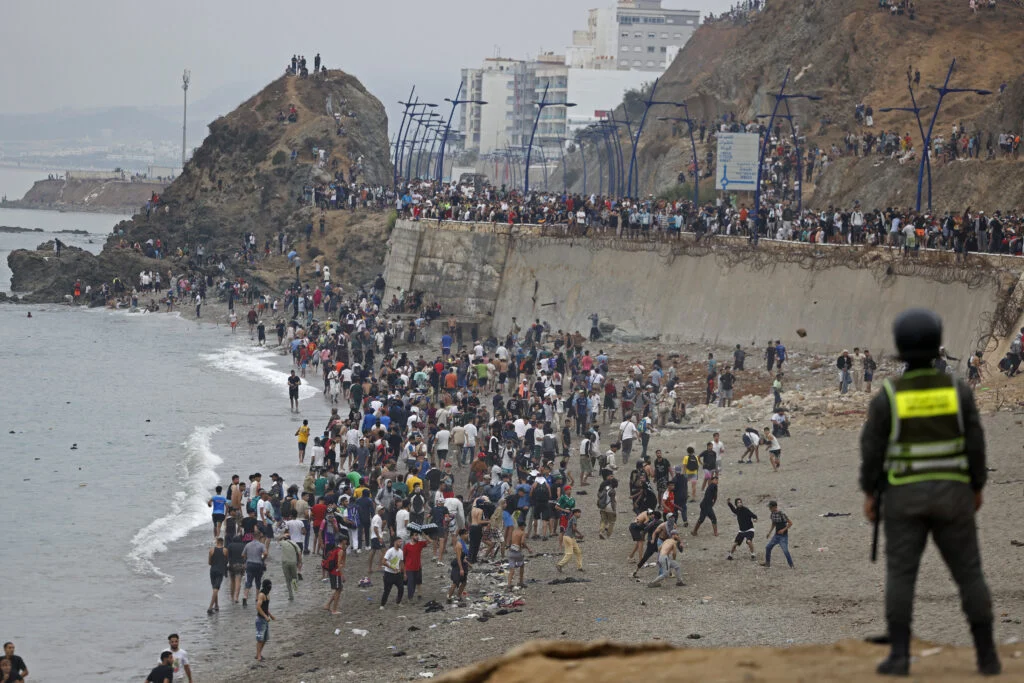
The European Union finds itself navigating a profound internal rift following a volatile week at the border of Ceuta, where a surge of approximately 50,000 migrants attempting to cross from Morocco into the Spanish North African enclave triggered a diplomatic firestorm. European Commission President Ursula von der Leyen intervened on Monday, attempting to bridge a widening divide between Spanish Prime Minister Pedro Sánchez and several EU heads of state who have vocally criticized Madrid’s handling of the situation.
The tension erupted over the weekend after Prime Minister Sánchez addressed a pointed letter to Brussels, decrying what he termed the "selfish" and "polarizing" rhetoric of fellow European leaders. Sánchez argued that instead of receiving the institutional solidarity expected from EU partners, his government had been subjected to political attacks, with some leaders even advocating for the temporary suspension of Spain from the Schengen Area. The prospect of such a drastic move, first floated by Italian Prime Minister Giorgia Meloni, highlights the precarious state of unity within the bloc as member states struggle to reconcile national sovereignty with the principles of the border-free zone.
Chronology of the Crisis
The current instability follows a rapid escalation of events in late July 2026.

- July 28-29, 2026: A massive influx of migrants arrives at the perimeter of the Ceuta exclave. The intensity of the surge leads to chaotic scenes at the border, resulting in dozens of fatalities as individuals attempt to traverse the physical barriers and the surrounding waters.
- July 30, 2026: Spanish authorities, in coordination with Moroccan counterparts, initiate emergency containment protocols. The majority of those who successfully entered the territory are processed and repatriated to Morocco within 48 hours.
- July 31, 2026: Italian Prime Minister Giorgia Meloni publicly calls for the suspension of Spain from the Schengen Area, citing security concerns. France and Italy move to implement temporary, stringent border controls, effectively signaling a fracture in the EU’s free-movement architecture.
- August 1, 2026: A coalition of 22 EU leaders formally requests an emergency meeting of the Council of Justice and Home Affairs Ministers to address the lack of coordination and the perceived failures in Spanish border management.
- August 3, 2026: President von der Leyen issues a formal response to Prime Minister Sánchez, offering institutional support while acknowledging the necessity of a broader, more rigorous EU migration policy.
The Pull Factor Debate
At the heart of the diplomatic friction is a fundamental disagreement regarding domestic policy. The Spanish government has recently championed a legislative agenda aimed at the regularization of over one million undocumented migrants already residing in the country. This policy, which Madrid frames as an economic and humanitarian necessity, has been interpreted by several member states—most notably those with populist-leaning governments—as a "pull factor."
Critics within the European Council contend that by creating a legal pathway for residency, Spain is inadvertently incentivizing irregular migration, placing undue pressure on the EU’s external frontiers. Sánchez has categorically rejected this characterization, labeling the accusations as an attempt to leverage a humanitarian tragedy for narrow political gain. According to observers in Brussels, this domestic policy dispute has become a proxy war for the broader ideological divide in Europe regarding how to balance labor shortages and demographic challenges with the political demand for strict border control.
Institutional Responses and Strategic Support
In her correspondence with Prime Minister Sánchez, von der Leyen sought to de-escalate the situation by reaffirming the Commission’s support for Spain’s logistical management of the crisis. "Migration is a European challenge that requires a European response," von der Leyen wrote, emphasizing that the Commission is prepared to provide comprehensive operational assistance.
This assistance includes the deployment of additional personnel from Frontex, the EU’s border and coast guard agency, as well as support from Europol to combat human smuggling networks. However, the offer of increased Frontex presence creates a sensitive political dynamic. Madrid has historically been hesitant to invite a more expansive Frontex presence, viewing it as a potential infringement on national jurisdictional sovereignty. Following the 2021 surge in Ceuta and the 2024 pressure on the Canary Islands, the Spanish Interior Ministry consistently maintained that its national resources were sufficient to manage the border, a stance that has faced increasing skepticism from Brussels and other EU capitals.

The Five-Point Strategy for Border Security
Moving beyond the immediate diplomatic fallout, the European Commission is utilizing the Ceuta incident as a catalyst for a structural shift in EU border management. Von der Leyen has proposed a five-point strategy intended to modernize the bloc’s defensive posture:
- Enhanced External Cooperation: Strengthening ties with transit countries, particularly Morocco, to improve early-warning systems and prevent departures before they reach European soil.
- Reinforced Border Infrastructure: Moving toward a more uniform application of physical and technological barriers at critical transit points, acknowledging that current systems have shown vulnerability.
- Unified Early-Warning Systems: Developing an integrated, real-time data-sharing network among all member states to allow for a swifter response to sudden migration surges.
- Dismantling Smuggling Networks: Increasing the role of Europol in criminal intelligence sharing to disrupt the organized networks that capitalize on migrant desperation.
- Accelerated Returns: Streamlining the legal and logistical processes for the return of individuals who do not meet the criteria for asylum, ensuring that migration systems remain credible and manageable.
Broader Implications for the European Project
The events of the past week have served as a stark reminder of the vulnerability of the Schengen Area in the face of localized migration crises. For the EU, the challenge is twofold: providing immediate, tangible aid to frontline states like Spain while preventing the proliferation of unilateral border restrictions that undermine the single market.
The emergency meeting of EU interior ministers, scheduled for Tuesday, will be a critical test of this balance. Ministers are expected to debate not only the specific situation in Ceuta but the wider implications of the "pull factor" narrative. If the EU fails to find a unified position, the trend toward national border closures—currently seen in France and Italy—could set a precedent that threatens the long-term viability of the Schengen system.
As the political dust settles, the Commission’s focus remains on maintaining the "enduring support" promised by von der Leyen. Whether that support will be enough to satisfy skeptical member states or whether it will force a significant shift in Spain’s migration policy remains to be seen. For now, the focus in Brussels remains on the Tuesday ministerial meeting, which is widely expected to set the tone for the next European Council session, where the future of the bloc’s migration policy will be debated at the highest level.