Israeli Forces Launch Missile and Phosphorus Attacks Across Southern Lebanon Amid Escalating Regional Tensions
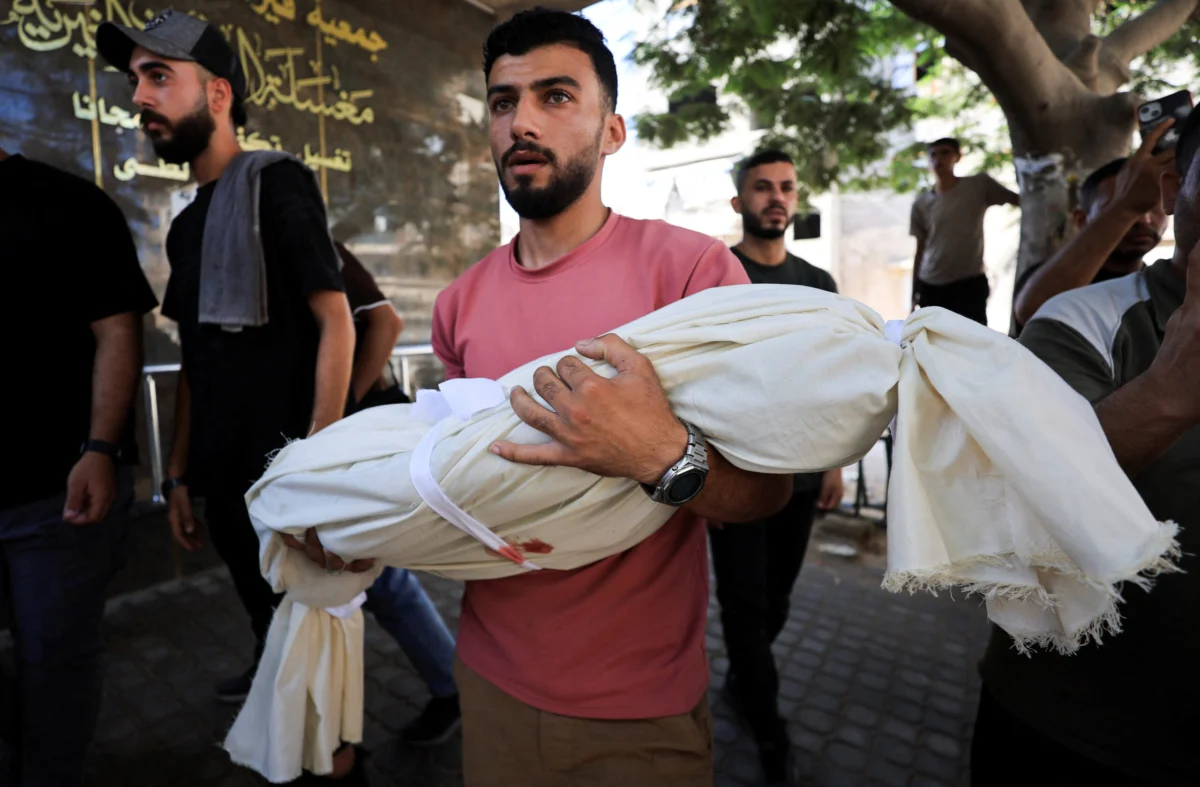
Southern Lebanon endured a night of intense Israeli military operations in the early hours of August 3, 2026, with reports from Lebanon’s National News Agency (NNA) detailing missile strikes, the deployment of controversial phosphorus bombs, and subsequent machine-gun fire. These actions unfolded against a backdrop of deeply entrenched regional instability, explicitly referenced in wider media as a "War on Iran," and concurrent humanitarian crises, including a funeral in Gaza City for a Palestinian killed in recent Israeli strikes, underscoring the multi-front nature of the ongoing conflict.
Intense Night of Strikes Across Border Region
The Lebanese National News Agency provided a granular account of the overnight and morning aggressions. The initial major incident occurred around 1:00 AM local time (10:00 PM GMT on August 2nd), when Israeli warplanes executed a series of missile attacks targeting the outskirts of Nabatieh al-Fawqa. Residents in Nabatieh and surrounding towns reported hearing loud, reverberating explosions that shattered the pre-dawn quiet, indicative of significant ordnance being deployed. While immediate details on specific targets or damage were scarce, the intensity of the blasts suggested precision targeting or area saturation. Nabatieh, a prominent city in southern Lebanon, has historically been a focal point of conflict due to its strategic location and proximity to the Israeli border.
Following the missile barrages, the NNA reported a more alarming development: the dropping of phosphorus bombs on several towns. Yaroun, Haroun, and Bint Jbeil, all situated in the highly sensitive border region, were subjected to these incendiary attacks. The deployment of phosphorus munitions immediately ignited large fires that rapidly spread through the areas’ extensive olive and pine groves. Eyewitness accounts and preliminary reports suggested widespread environmental damage, with agricultural lands, which form a crucial part of the local economy and livelihood, being particularly affected. The smoke plumes from these fires were reportedly visible from considerable distances, adding to the atmosphere of fear and destruction. Bint Jbeil, in particular, holds significant symbolic weight in the history of Israeli-Lebanese conflicts, having been the site of fierce battles in previous escalations.
The Israeli military activities did not cease with the aerial assaults. Later in the day, Israeli ground troops opened fire with machine guns towards Wadi Hamoul, an area near Naqoura. Naqoura is a coastal town known for hosting the headquarters of the United Nations Interim Force in Lebanon (UNIFIL), making the machine-gun fire in its vicinity a direct challenge to the fragile stability monitored by international peacekeepers. The nature of the targets for the machine-gun fire, whether infrastructure, suspected militant positions, or unspecific deterrence, remained unclear in the initial reports. This ground-level engagement suggested a sustained and multifaceted military strategy by Israeli forces, encompassing air-to-ground strikes and direct fire operations.
Background: A Region on the Brink – The "War on Iran" Context
The reported Israeli actions in southern Lebanon are not isolated incidents but rather unfold within a dramatically escalated regional geopolitical landscape, ominously framed by global media as a "War on Iran." While the specific triggers for this widespread conflict remain complex and multifaceted, analysts point to a confluence of factors including Iran’s nuclear program, its extensive network of regional proxies, maritime tensions in the Persian Gulf, and long-standing ideological antagonisms with Israel and its allies.
In this broader conflict, Lebanon, particularly its southern regions, serves as a critical front due to the entrenched presence and influence of Hezbollah, a powerful Shiite political party and militant group heavily backed by Iran. Hezbollah views itself as a defender of Lebanon against Israeli aggression and has a history of cross-border confrontations with Israel. Israeli forces, conversely, consider Hezbollah a primary threat to their northern border and a direct extension of Iranian power, often citing the group’s arsenal of rockets and missiles capable of reaching deep into Israeli territory. The "War on Iran" likely implies that Israel is actively engaging Iranian assets and proxies across the region, with Lebanon representing a key operational theater.
The situation in Gaza, as evidenced by the funeral on August 2nd for a Palestinian killed in Israeli strikes, further complicates this already volatile environment. The ongoing Israeli-Palestinian conflict frequently ignites broader regional tensions, often leading to solidarity actions or retaliatory measures from groups like Hezbollah. The simultaneity of events in Gaza and southern Lebanon suggests a concerted Israeli military strategy spanning multiple fronts, potentially aimed at deterring or dismantling what it perceives as a unified "Axis of Resistance" orchestrated by Tehran.
The Controversy of Phosphorus Munitions
The use of phosphorus bombs in Yaroun, Haroun, and Bint Jbeil immediately drew international scrutiny and condemnation. White phosphorus is a chemical substance that ignites upon contact with oxygen, burning intensely at extremely high temperatures (up to 815°C or 1,500°F). It produces a dense white smoke screen, making it useful for obscuring troop movements, but its primary danger lies in its incendiary properties. When used as a weapon, white phosphorus causes horrific burns that can be third-degree, deep, and slow to heal, often reigniting even after initial treatment. These burns are not only physically devastating but also psychologically traumatic, leading to lifelong disfigurement and suffering.

Under international humanitarian law, specifically the Convention on Certain Conventional Weapons (CCW) Protocol III, the use of white phosphorus munitions is restricted. While not outright banned, the protocol prohibits the use of incendiary weapons against civilian populations or in areas containing a concentration of civilians. However, a significant loophole exists: if white phosphorus is classified as a "smoke screen" or "illumination" munition rather than an incendiary weapon, its use against military targets is generally permissible. Human rights organizations and many international legal experts argue that given its indiscriminate and devastating effects, particularly in populated areas or near agricultural lands, its use should be treated as a war crime when it causes unnecessary suffering or disproportionate civilian harm. The fires ignited in the olive and pine groves by the phosphorus bombs raise serious questions about the targeting and the potential for long-term environmental and economic damage, directly impacting civilian livelihoods.
Reactions and Official Statements
In the immediate aftermath, official reactions began to emerge, albeit with the expected diplomatic posturing inherent in such conflicts. The Lebanese government, through its Foreign Ministry, swiftly condemned the Israeli actions as a "blatant violation of Lebanese sovereignty and international law." A spokesperson for the ministry called for an emergency session of the UN Security Council, urging the international community to take decisive action to halt Israeli aggression and prevent further escalation. The Lebanese Army initiated investigations into the damage caused, particularly by the phosphorus bombs, and began coordinating with UNIFIL to document the violations.
Hezbollah, through its media channels, issued a strong warning of retaliation, stating that Israel’s "escalatory tactics will not go unanswered." While not immediately claiming specific actions, the group’s rhetoric indicated a readiness to engage, potentially leading to a dangerous cycle of tit-for-tat attacks. Such statements are standard in the ongoing shadow war between Israel and Hezbollah, yet in the context of a "War on Iran," they carry amplified weight, suggesting a potential for broader and more destructive responses.
The Israeli Defense Forces (IDF), in a terse statement, confirmed "defensive operations" in southern Lebanon, asserting that the strikes targeted "Hezbollah terrorist infrastructure and elements threatening Israeli security." The IDF statement did not specifically address the use of phosphorus munitions but reiterated Israel’s right to self-defense against what it described as Iranian-backed aggression. This framing is consistent with Israel’s long-standing policy of preemptive or responsive strikes against perceived threats emanating from Lebanese territory.
Internationally, the United Nations Interim Force in Lebanon (UNIFIL) issued a statement expressing "grave concern" over the escalation. UNIFIL urged all parties to "exercise maximum restraint" and adhere to UN Security Council Resolution 1701, which governs the cessation of hostilities along the Blue Line. Humanitarian organizations, including the International Committee of the Red Cross (ICRC), expressed alarm over reports of phosphorus bomb usage, reiterating calls for strict adherence to international humanitarian law and the protection of civilians from indiscriminate weapons. Calls for de-escalation also emanated from several European capitals and Washington D.C., though the degree of influence these appeals would have on the warring parties remained uncertain amidst the broader "War on Iran."
Humanitarian and Environmental Impact
The humanitarian consequences of the strikes are multifaceted and immediate. The loud explosions and the subsequent fires undoubtedly caused widespread fear and distress among the civilian populations of Nabatieh al-Fawqa, Yaroun, Haroun, and Bint Jbeil. While initial reports did not detail civilian casualties from the Lebanon strikes, the proximity of the attacks to residential areas always carries an inherent risk. Displacement of residents from fire-affected zones or those fearing further military action is a significant concern. Local emergency services were reportedly overwhelmed, battling the extensive fires and assessing damage to homes and infrastructure.
The environmental impact of the phosphorus bombs is particularly severe. The destruction of olive and pine groves represents not just an ecological loss but a direct blow to the agricultural economy of southern Lebanon. Olive trees, in particular, are deeply rooted in Lebanese culture and provide a vital source of income for many families. The long-term effects of phosphorus residue on soil and water sources also pose a potential health hazard to both humans and livestock, further exacerbating an already fragile situation. Replanting and ecological recovery efforts would be a monumental and costly undertaking, likely spanning years or even decades.
Implications for Regional Stability
The latest Israeli military actions in southern Lebanon, within the larger framework of a "War on Iran," signify a dangerous intensification of regional conflict. The deliberate targeting of Lebanese territory, coupled with the use of controversial munitions, risks pushing an already volatile situation into a full-scale regional conflagration. The involvement of Hezbollah, as a key Iranian proxy, means that any Israeli-Lebanese escalation has the potential to draw in Iran more directly, widening the scope of the "War on Iran" beyond its current parameters.
The international community faces an immense challenge in de-escalating these tensions. The erosion of respect for international law, particularly concerning the use of incendiary weapons, sets a dangerous precedent. The ongoing conflict also diverts attention and resources from other critical humanitarian crises and diplomatic efforts in the Middle East. Without concerted and effective diplomatic intervention, the cycle of violence between Israel and its adversaries, particularly Hezbollah and Iran, appears poised to continue, with devastating consequences for the civilian populations caught in the crossfire and profound implications for the future stability of the entire region. The early morning strikes in southern Lebanon serve as a stark reminder of the fragile peace and the ever-present threat of wider conflict that looms over the Middle East in 2026.

Related Posts
Over 150 Israeli Settlers Storm Al-Aqsa Compound and Perform Prayers, Violating Status Quo Under Police Protection.
UN Report Highlights Over 900 Obstacles Hampering West Bank Aid Amid Escalating Humanitarian Crisis