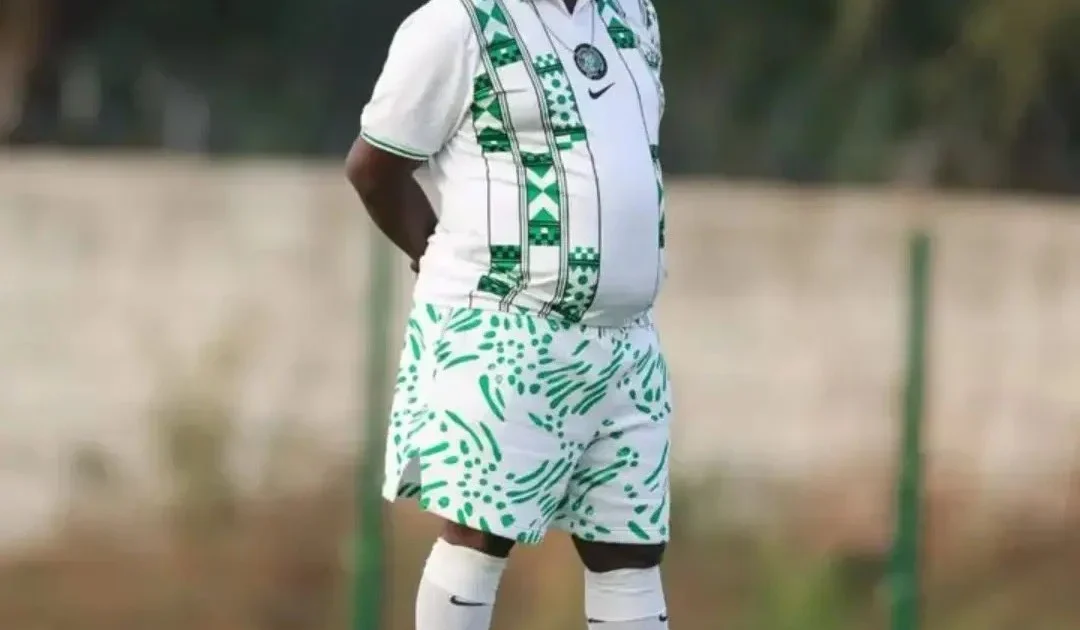
Madugu replies critics after Zambia win
The Super Falcons, long considered the titans of African women’s football, found themselves in unfamiliar territory following a shock 3-2 defeat to tournament debutants Malawi. The result sent shockwaves through the continent, immediately putting head coach Justin Madugu under the microscope. Critics were quick to lambast the tactical setup, the unusual deployment of key players in makeshift positions, and the perceived lack of cohesion that allowed an underdog to dismantle a continental powerhouse. However, the resilient response from the team—culminating in a gritty 1-0 victory over Zambia—has provided a tactical reprieve for the embattled manager as the tournament progresses.
A Tactical Rebound in Morocco
The path to the 2026 WAFCON title has been anything but smooth for Nigeria. Following the stinging loss to Malawi, which exposed defensive vulnerabilities and a lack of clinical precision in the final third, Madugu faced mounting pressure from fans and pundits alike. The criticism was not merely limited to the scoreline; it extended to the fundamental selection choices that left several established stars on the bench.
In the subsequent encounter against Zambia, a fixture that carried the weight of a must-win scenario for the Falcons, Madugu opted for a complete overhaul of his approach. The return of heavyweights Asisat Oshoala, Deborah Abiodun, and Christy Ucheibe to the starting XI injected the necessary composure and tactical discipline that had been conspicuously absent in the opening match. The impact was immediate, with Oshoala finding the back of the net just eight minutes into the contest.
The defensive reshuffle was equally noteworthy. Rofiat Imuran was promoted to the starting lineup, and the introduction of Shukurat Oladipo from the bench proved pivotal. Even when Tosin Demehin was sent off in the 40th minute for a straight red card, the team’s structural integrity held firm, a testament to the tactical adjustments made during the week of preparation.
The Anatomy of the Criticism
The scrutiny surrounding Madugu is perhaps a byproduct of the sky-high expectations placed upon the Super Falcons. As the most decorated team in WAFCON history, the Nigerian side is often treated with an "all-or-nothing" mentality. The loss to Malawi served as a lightning rod for broader concerns regarding team management.
Analysts pointed to the "out-of-position" experiments as a significant factor in the Malawi defeat. In modern football, the fluidity of player roles is a common tactical tool, but when executed without the necessary synchronization, it often leaves gaps in transition. Madugu, however, views these setbacks as part of the developmental lifecycle of a tournament-bound team.
"Sometimes you have bad days and things don’t work," Madugu noted during his post-match press conference. "We made so many mistakes in the previous game, and we had a better game plan in the next game, and we have the result."
Addressing the public outcry directly, he maintained a philosophical stance. "For criticism, it is something we must learn to deal with as a coach because you cannot please everybody, and everybody sees football from a different perspective. It’s just for you to believe in what you do. You must be ready to take the blame for anything that happens."
Chronology of the 2026 WAFCON Campaign
The current campaign follows a period of stability for the Nigeria Football Federation (NFF), which handed Madugu a contract extension in October of the previous year. This decision was based on his instrumental role in securing Nigeria’s 10th WAFCON title, a feat that underscored his status as one of the continent’s premier tacticians.
- October 2025: Justin Madugu signs a contract extension with the NFF following the successful 10th WAFCON title defense.
- Early 2026: Preparations for the 2026 tournament intensify, with the team focusing on integrating younger talent with the established core of Oshoala and Ucheibe.
- Matchday 1 (vs. Malawi): A surprise 3-2 defeat leaves the Falcons in a precarious position, sparking nationwide debate regarding Madugu’s leadership.
- Matchday 2 (vs. Zambia): A 1-0 victory restores confidence. Despite playing a man down for over 50 minutes, the team displays defensive resilience to keep the title defense alive.
Data-Driven Performance Analysis
The statistical variance between the two matches highlights the volatility of tournament football. Against Malawi, the Falcons’ possession was high, but their defensive transition speed was significantly slower than the Malawian counter-attack. The high defensive line, intended to exert pressure, was repeatedly bypassed by long balls—a tactical error that Madugu acknowledged in his post-game reviews.
In contrast, the game against Zambia showcased a more pragmatic approach. By reintroducing Deborah Abiodun and Christy Ucheibe in the midfield, Nigeria was able to control the tempo, even when numerical parity was lost. The possession stats against Zambia were more concentrated in the middle third, limiting the opposition’s ability to build momentum.
Implications for the 2027 FIFA Women’s World Cup
While the immediate goal is the 11th continental crown, the long-term objective for the NFF is qualification for the 2027 FIFA Women’s World Cup in Brazil. The current WAFCON tournament serves as the primary qualification pathway. Any slip-up at this stage does not merely impact the current trophy count but threatens the nation’s participation on the global stage.
The NFF’s continued support of Madugu, who was nominated for the Ballon d’Or as one of the world’s best coaches last year, suggests that the federation is betting on institutional memory and continuity. The leadership believes that the ability to adapt during a tournament—as demonstrated by the tactical pivot against Zambia—is a hallmark of a championship-caliber manager.
The Psychological Aspect of High-Stakes Management
The pressure of managing the Super Falcons is unique. In the Nigerian sporting landscape, the national team represents a source of immense cultural pride. When the team underperforms, the criticism is often disproportionately personal. For a coach who has reached the pinnacle of his profession, balancing the tactical requirements of a squad with the psychological management of players who are under intense public scrutiny is a delicate act.
Madugu’s admission that one must "believe in what you do" speaks to the internal confidence required to navigate the high-stakes environment of international football. His track record of success is what keeps him insulated from the calls for his resignation, but the margin for error remains razor-thin.
Looking Ahead
As the tournament enters its knockout phase, the pressure on Madugu will only intensify. The victory over Zambia was a necessary correction, but the Super Falcons will need to demonstrate sustained tactical evolution if they are to retain their crown.
Key areas for improvement remain:
- Defensive Discipline: The red card against Zambia highlighted a tendency toward rash challenges when under pressure.
- Clinical Finishing: Despite Oshoala’s early goal, the team missed several opportunities to put the game beyond reach.
- Rotation Efficiency: Finding the balance between starting the best XI and ensuring squad depth for the later stages of the tournament.
Ultimately, Justin Madugu’s tenure will be defined by how he handles the remainder of this tournament. If he can guide the team to an 11th title, the early loss to Malawi will be relegated to a footnote in a successful campaign. If not, the current criticism will likely serve as the foundation for a wider discussion on the future direction of the Super Falcons.
For now, the team remains in the hunt, their resilience tested and their tactical resolve renewed. In a tournament characterized by parity and the emergence of new powers, the Super Falcons’ ability to weather the storm and emerge from the group stage will be the defining story of their 2026 campaign. The coaching staff, players, and the Nigerian footballing public now turn their eyes to the next fixture, knowing that in the unforgiving world of international football, the only narrative that matters is the one written on the scoreboard at the final whistle.