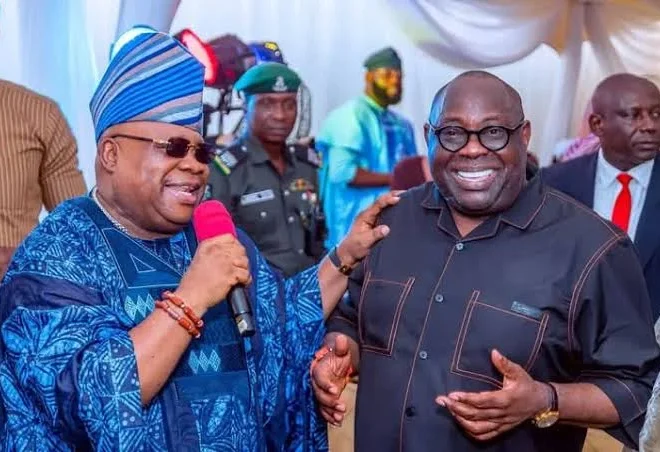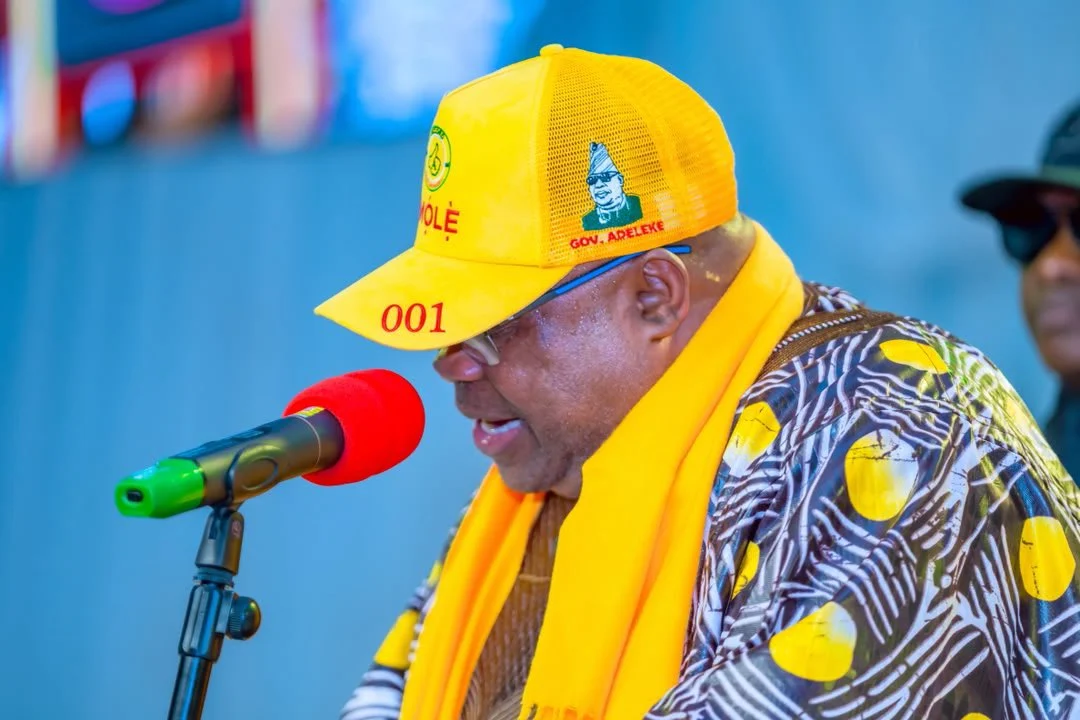
Tension rises in Osun State as Imole Campaign Council alleges police hit list ahead of August 15 governorship election
The political atmosphere in Osun State has grown increasingly volatile as the state approaches its highly anticipated governorship election scheduled for August 15. The Imole Campaign Council, representing the re-election bid of the incumbent Governor, Ademola Adeleke, has leveled serious accusations against the state police command, alleging the existence of a clandestine "hit list" containing the names of 46 individuals marked for arbitrary arrest and political neutralization.
This development has plunged the state into a state of heightened anxiety, raising concerns about the neutrality of security agencies during the electoral process. The allegations, which include claims of collusion between security operatives and opposition factions, have prompted immediate denials from law enforcement, setting the stage for a high-stakes standoff between the state government and federal security apparatuses in the days leading up to the polls.
The Allegations: A Coordinated Plot or Routine Policing?
During a press briefing held in Osogbo, the Deputy Director-General of the Imole Campaign Council, Kolapo Alimi, articulated the concerns of the ruling administration. Alimi, who also serves as the Commissioner for Information and Public Enlightenment, claimed that the list, which allegedly targets key supporters of the incumbent and members of the Accord Party, was designed to systematically remove influential figures from the political arena before the election date.
At the center of these allegations is the claim that the list includes high-ranking government officials, most notably the Commissioner for Energy, Ademola Adeyemo. According to the campaign council, the intent behind these targeted detentions—often involving threats of forcible transfer to Abuja—is to "keep them out of circulation" during the critical final days of the campaign.
"These are not mere rumors; we are acting on credible intelligence reports regarding a coordinated effort to suppress the democratic process," Alimi stated. He emphasized that the focus of these alleged arrests is heavily concentrated in Ikire, the headquarters of Irewole Local Government Area, a region considered a strategic stronghold in the electoral map.
The council also highlighted the specific case of Taofeek Akinyemi, an Accord Party chieftain in Ikire. According to reports, Akinyemi was allegedly attacked by hoodlums and subsequently detained by police upon reporting the assault. This sequence of events, the council argues, suggests a pattern of victimization rather than law enforcement.
Chronology of Escalating Hostilities
The buildup to this standoff did not occur in a vacuum. Over the past month, reports of political intimidation and inter-party violence have periodically surfaced across Osun State.
- Late July: Initial reports of skirmishes between supporters of different political factions began to emerge from the Irewole and Ife-North axes.
- Early August: The frequency of arrests of party members began to rise, prompting accusations from various political camps regarding the abuse of state power.
- August 10: The Imole Campaign Council formally addressed the press, unveiling the alleged list of 46 individuals and demanding an immediate cessation of what they termed "targeted harassment."
- August 11: The Osun State Police Command issued a formal rebuttal, characterizing their actions as part of a routine "sanitization" of criminal hotspots.
The rapid escalation of these events highlights the fragility of the peace agreements typically signed by political candidates ahead of major elections. The involvement of various security agencies, including the Nigeria Security and Civil Defence Corps (NSCDC), has further complicated the narrative, with accusations of inter-agency cooperation against specific political interests.
Data and Electoral Context
The Osun governorship election serves as a bellwether for political stability in the South-West region. Historically, elections in the state have been characterized by high voter turnout and intense competition. According to data from the Independent National Electoral Commission (INEC), Osun has consistently seen a significant number of registered voters, with the last election cycles recording participation rates often exceeding 60%.
The significance of the Ikire area, where the alleged hit list is primarily focused, cannot be overstated. With a dense population and a history of competitive voting patterns, it remains a critical battleground for both the ruling party and the opposition. The perceived disenfranchisement of 46 key figures in this specific region could, in theory, alter the electoral math for the local government area, providing a tangible motive for the alleged political sabotage cited by the Imole Campaign Council.

Official Responses and Law Enforcement Stance
The Osun State Police Command has categorically denied the existence of any politically motivated lists. Police Public Relations Officer, Abiodun Ojelabi, addressed the allegations by reframing the police’s actions as part of a broader mandate to maintain public order.
"We are raiding black spots and criminal hideouts every day to sanitize the environment for the forthcoming election," Ojelabi stated. He maintained that the police do not formulate lists based on political affiliation but rather on intelligence regarding criminal records and suspicious activities.
Ojelabi further addressed the criticism regarding the potential for bias, suggesting that the police had previously advocated for a joint task force involving other security agencies to ensure transparency and accountability. He noted, "The government has promised to set up a joint task force… but since then, we have not seen anything from them. Maybe it will come up tomorrow, so it won’t appear that the police are acting alone."
This statement suggests a growing rift between the state government and the police command, with both sides trading blame over the lack of a unified security strategy for the election.
Broader Implications for Democracy and Security
The conflict in Osun reflects a recurring challenge in Nigeria’s democratic process: the thin line between legitimate law enforcement and the politicization of security agencies. When ruling parties and opposition groups alike accuse the police of bias, it undermines public confidence in the electoral outcome.
Political analysts note that if security agencies are perceived as partisan, the risk of civil unrest increases significantly. The demand by the Imole Campaign Council for the Inspector-General of Police, Olatunji Disu, to review the deployment of personnel to the state is a direct appeal to higher authority to restore the perception of impartiality.
The implications of this standoff are threefold:
- Voter Suppression: If political leaders and community influencers are detained or forced into hiding, voter turnout in those specific areas may drop, as citizens may feel unprotected or discouraged from participating in the democratic process.
- Institutional Distrust: The public debate over the "hit list" erodes the credibility of the Nigeria Police Force as a neutral arbiter of peace.
- Potential for Post-Election Litigation: The current allegations are likely to form the basis of legal challenges should the election results be contested. Documenting these grievances now allows political parties to build cases for potential election petition tribunals.
The Path Forward
As August 15 approaches, the eyes of the nation remain fixed on Osun State. The primary concern among civil society organizations and election observers is the preservation of the rule of law. For the election to be viewed as free, fair, and credible, the security apparatus must operate with a level of transparency that transcends partisan affiliations.
The Imole Campaign Council’s demand for the immediate release or arraignment of detained party members remains a focal point for the legal community. Simultaneously, the police’s commitment to raiding "black spots" necessitates clear communication to the public about who is being arrested and why, to prevent the perception of a witch hunt.
In the final days before the vote, the responsibility lies with the leadership of the police and the political stakeholders to de-escalate the rhetoric. Without a coordinated effort to build trust, the Osun governorship election risks being defined not by the choice of the electorate, but by the shadow of the security measures surrounding it. Whether the list of 46 is a genuine tactical security move or a political weapon remains the central mystery of this electoral cycle, and one that the people of Osun are eager to resolve at the ballot box.