
Five dead, 41 missing, after Indonesia ferry catches fire
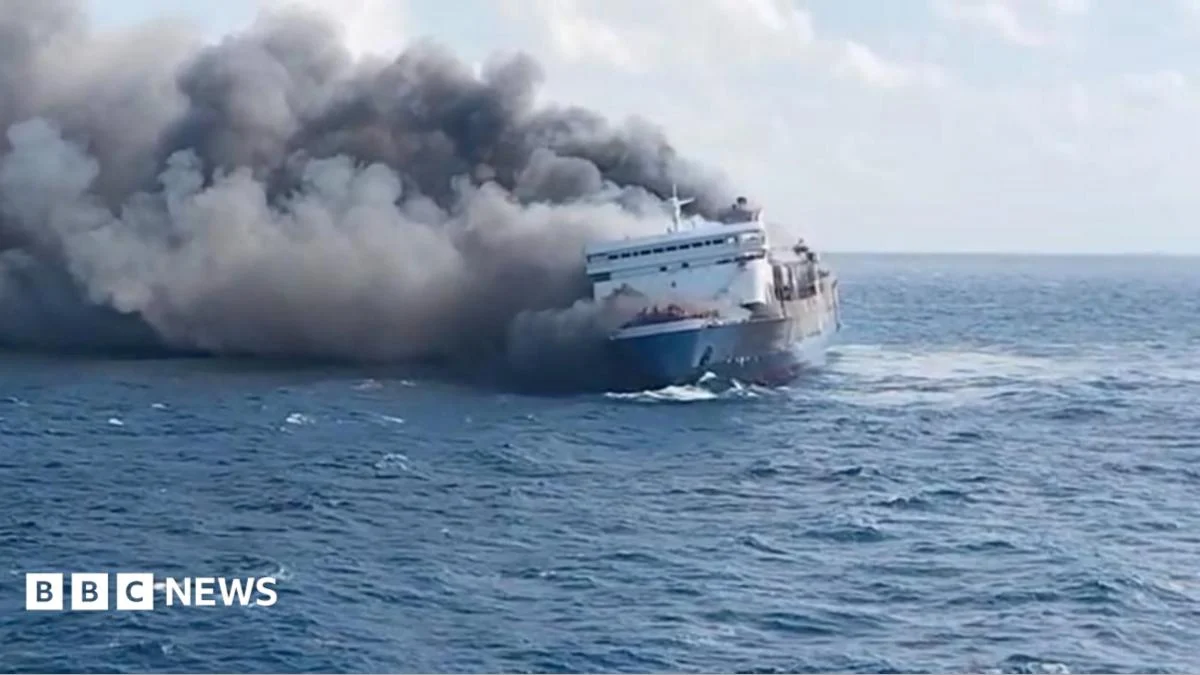
Five individuals have been confirmed dead, and a significant number, 41, remain unaccounted for after an Indonesian passenger ferry, the KMP Mutiara Sentosa 2, carrying at least 250 people, caught fire while navigating the waters off Madura island. The catastrophic incident, which unfolded as the vessel traveled from Surabaya in East Java to Makassar in South Sulawesi, has triggered a large-scale search and rescue operation and cast a stark spotlight on maritime safety protocols in the archipelago nation.
Initial Report and Immediate Aftermath
The tragic event began with a report from the ship’s captain detailing a fire onboard the KMP Mutiara Sentosa 2. The alert was issued from a position off Madura island, a critical junction in Indonesia’s vast maritime network. According to Basarnas, the National Search and Rescue Agency, their Surabaya office was formally notified of the fire at approximately 08:24 local time (02:24 GMT). This notification followed earlier reports from the shipping company, which indicated the fire had likely commenced between 06:00 and 07:00 local time (00:00-01:00 GMT), suggesting a critical delay between the initial outbreak and the full-scale distress call reaching authorities.
Visual evidence emerging from the scene painted a harrowing picture. Local Indonesian news outlets, including iNews, broadcast footage depicting large groups of passengers clad in life jackets, congregating on what appeared to be a lifeboat, desperately seeking safety. Other clips showed individuals descending from the burning ferry, which was visibly engulfed in flames and emitting dense plumes of smoke from its upper decks. The dire situation was further underscored by Basarnas’s own video post on TikTok, which confirmed the passenger ship was "almost entirely engulfed in flames," forcing "passengers to hold on in the ship’s bridge and bow while awaiting rescue." The cause of the fire remains undetermined, adding to the complexity of the ongoing investigation. Further distressing footage captured individuals taking the desperate measure of jumping into the sea, while crowds of people in life jackets gathered, and lifebuoys were deployed to assist those in the water before they could be transferred to rescue vessels.
A Detailed Chronology of the Disaster
The timeline of the disaster, pieced together from official statements, reveals a rapidly deteriorating situation that demanded immediate and coordinated intervention.
- 06:00 – 07:00 Local Time (00:00 – 01:00 GMT): The fire is believed to have originated during this window, according to information provided by the shipping company. The precise location and initial cause within the vessel are yet to be established. This early hour suggests many passengers may have been asleep or just beginning their day, potentially complicating evacuation efforts.
- Prior to 08:24 Local Time: The captain of the KMP Mutiara Sentosa 2 transmits a distress signal or report regarding the fire to relevant authorities, indicating the vessel’s position off Madura island. The gap between the estimated start of the fire and the captain’s report is a point of interest for investigators, though the immediate priorities were rescue and containment.
- 08:24 Local Time (02:24 GMT): Basarnas’s Surabaya Search and Rescue office receives the formal notification about the fire aboard the KMP Mutiara Sentosa 2. This marks the official activation of the national search and rescue protocols for this incident.
- Shortly After Notification: Basarnas rapidly mobilizes assets. Initial reports from rescue teams confirm the severity, stating the ferry was "almost entirely engulfed in flames." This corroborates the distressing video evidence that soon began to circulate.
- Ongoing Rescue Operations: Throughout the day and into the night, rescue teams comprising multiple agencies and private vessels converge on the scene. Footage depicts the harrowing reality for passengers: some successfully deployed lifeboats, others clustered on remaining stable parts of the ship, and many resorting to jumping into the sea, relying on life jackets and thrown lifebuoys to stay afloat until rescue vessels could reach them. The immediate focus shifts from fire suppression, which becomes increasingly challenging on a fully engulfed vessel at sea, to the evacuation and recovery of passengers.
The Extensive Search and Rescue Operation
The scale of the disaster necessitated an extensive and multi-agency search and rescue (SAR) operation. Basarnas immediately deployed its resources, coordinating efforts with the Indonesian Navy, the Water Police (Polairud), the local port authority (KSOP), and other maritime assets. Multiple rescue ships, patrol boats, and even local fishing vessels were reportedly mobilized to the area where the KMP Mutiara Sentosa 2 was burning.
The primary objectives of the SAR mission were two-fold: to rescue survivors from the burning vessel or the surrounding waters and to locate the 41 individuals reported missing. The challenging marine environment, including currents and the vastness of the open sea, complicated the search for those who may have been carried away from the immediate vicinity of the ferry. Rescue workers faced the grim task of recovering bodies, while simultaneously offering aid and psychological support to survivors, many of whom were in shock and suffering from exposure or minor injuries. The operation continued relentlessly, with teams working through the night, utilizing searchlights and other equipment to scour the dark waters. The sheer number of people onboard, coupled with the rapid progression of the fire, made the rescue effort particularly complex and demanding.
The Vessel and Its Vital Route
The KMP Mutiara Sentosa 2 is a roll-on/roll-off (Ro-Ro) ferry, a common type of vessel in Indonesia designed to carry both passengers and vehicles. While specific details about its age, capacity, and maintenance history will be central to the investigation, such ferries are the backbone of inter-island transport in the archipelago. The route from Surabaya, the second-largest city in Indonesia and a major economic hub in East Java, to Makassar, the provincial capital of South Sulawesi, is one of the nation’s most critical maritime arteries. It connects two significant economic and population centers, facilitating trade, commerce, and the movement of millions of people annually.
This particular route traverses busy shipping lanes and can experience varying sea conditions. The waters off Madura island, where the incident occurred, are frequently transited by numerous vessels. The fact that the fire occurred mid-journey, rather than during docking or departure, raises questions about onboard safety protocols, emergency response mechanisms, and the condition of the vessel’s systems while at sea. The KMP Mutiara Sentosa 2, like many ferries in the region, would have been expected to carry a diverse mix of passengers, from daily commuters to families traveling between islands, further underscoring the tragic impact of such an incident on a wide spectrum of the populace.
Indonesia’s Maritime Landscape: A Context of Reliance and Challenge
Indonesia, an archipelago nation comprising over 17,500 islands, relies heavily on maritime transport for connectivity. Ferries are not merely a convenience but an essential lifeline, moving people, goods, and vehicles across vast stretches of water. This reliance, however, comes with inherent challenges. The sheer volume of traffic, combined with varying standards of vessel maintenance, operational oversight, and sometimes challenging weather conditions, has historically contributed to a concerning record of maritime accidents.
Past incidents, though not directly comparable in every detail, serve as a somber reminder of the risks. Issues such as overcrowding, aging fleets, inadequate safety equipment, insufficient crew training, and lax enforcement of regulations have been identified as contributing factors in previous maritime disasters in the country. While significant efforts have been made by the Indonesian government and maritime authorities to improve safety standards, including stricter inspections and the implementation of international maritime conventions, the vastness of the maritime domain and the continuous demand for transport mean that challenges persist. The KMP Mutiara Sentosa 2 incident will undoubtedly renew calls for a thorough review of existing safety measures and their effective implementation across the entire ferry fleet. The National Transportation Safety Committee (KNKT) typically plays a pivotal role in investigating such incidents, aiming to determine the root causes and issue recommendations to prevent future occurrences.
Official Responses and The Impending Investigation
In the immediate aftermath, officials from Basarnas provided regular updates on the rescue operation, focusing on the number of survivors, fatalities, and missing persons. Their statements emphasized the coordinated effort of multiple agencies and the ongoing commitment to finding all missing individuals. The shipping company operating the KMP Mutiara Sentosa 2 is expected to issue formal statements, likely expressing condolences to the victims’ families and pledging full cooperation with the official investigation.
The primary focus of the investigation will be to ascertain the precise cause of the fire. Potential areas of inquiry include:
- Mechanical Failure: Issues with the engine room, electrical systems, or fuel lines are common causes of fires at sea.
- Cargo-Related Incidents: The nature of the cargo being transported on the vehicle deck, particularly if it includes flammable materials, will be closely scrutinized.
- Human Error: The actions or inactions of the crew, including emergency response procedures and fire suppression efforts, will be examined.
- Vessel Maintenance: The overall condition and recent maintenance history of the KMP Mutiara Sentosa 2 will be a critical component of the investigation.
The National Transportation Safety Committee (KNKT), an independent body responsible for investigating transportation accidents in Indonesia, will likely lead this inquiry. Their findings will be crucial for understanding the sequence of events and formulating preventative measures.
Broader Implications for Maritime Safety and Public Trust
The tragic loss of life and the significant number of missing persons from the KMP Mutiara Sentosa 2 fire will have profound implications, both immediate and long-term.
- Humanitarian Crisis: The immediate aftermath is a humanitarian crisis, with families of the deceased grieving and families of the missing enduring agonizing uncertainty. Psychological support for survivors and affected families will be essential.
- Economic Impact: The disruption to the Surabaya-Makassar route, even temporarily, can have minor economic repercussions, affecting the movement of goods and people essential for regional economies.
- Regulatory Scrutiny: The incident will undoubtedly prompt renewed scrutiny from maritime authorities and the government. There will be increased pressure to review and potentially tighten safety regulations, inspection protocols, and enforcement mechanisms for all passenger ferries operating in Indonesian waters. This might include re-evaluating fire safety systems, crew training for emergencies, and evacuation procedures.
- Public Confidence: Such high-profile disasters inevitably erode public confidence in maritime transport. For a nation so reliant on ferries, this can lead to hesitancy among travelers and potentially impact the livelihoods of those in the shipping industry. Rebuilding trust will require transparent investigations, clear accountability, and demonstrable improvements in safety standards.
- Technological Adoption: The incident may also accelerate discussions around adopting more advanced technologies for real-time vessel monitoring, fire detection, and communication systems to enhance emergency response capabilities.
As the search for the missing continues and the investigation into the KMP Mutiara Sentosa 2 fire commences, the nation grapples with yet another reminder of the inherent risks of maritime travel and the continuous imperative to prioritize safety in its vital shipping lanes. The hope remains that the lessons learned from this tragedy will contribute to a safer future for all who travel by sea in Indonesia.

Related Posts
Zambia on Edge: Opposition Leader Arrested Amid Allegations of Insurrection Plot and Election Tensions
Rescuers search for survivors of powerful Indonesia earthquake

