Rosalía’s "Lux" Tour Captivates Buenos Aires with a Spectacle of Faith, Fire, and Unapologetic Artistry
The highly anticipated "Lux" tour by global music phenomenon Rosalía landed in Buenos Aires, offering a multifaceted performance that transcended a typical concert, delving into themes of spirituality, sensuality, and the artist’s evolving persona. The Catalan artist, known for her chameleon-like ability to reinvent herself and her sound, presented a show at the Movistar Arena that was both a deeply personal exploration and a grand public spectacle, leaving an indelible mark on the approximately 15,000 attendees present. This engagement, part of a broader international tour that commenced in March in Lyon, France, underscores Rosalía’s significant global reach and her ability to connect with diverse audiences.
A Multilayered Artist Takes the Stage
Rosalía is a figure of remarkable complexity, described in the original report as a dancer, nun, sinner, skilled orator, melancholic, singer, lamenter, sad, happy, pop star, queen of "tigueraje" (a term loosely translating to street smarts or hustler mentality), and, above all, a sensitive soul attuned to the zeitgeist. This multifaceted identity was on full display throughout the Buenos Aires performance. From the introspective flamenco-infused narratives of "El Mal Querer" to the global pop dominance of "Motomami," Rosalía has consistently pushed artistic boundaries. The "Lux" tour, however, marks a new chapter, one that provocatively engages with religious iconography. Unlike previous artists who may have used religious imagery for shock value, Rosalía’s approach appears to be an architectural endeavor, constructing a grand edifice of meaning and personal interpretation. Her stage presence oscillates between a delicate vulnerability, appearing diminutive and elusive, and an overwhelming power, amplified not just by stagecraft but by her vocal prowess, a "voice of ice and fire" as aptly described by critics in her homeland.
The Unfolding Spectacle: "Overture" to "Reliquia"
The Buenos Aires engagement, one of four scheduled performances at the Movistar Arena from August 2nd to August 6th, commenced with the atmospheric "Overture," setting a tone of anticipation and reverence. This was swiftly followed by the exquisite "Sexo, Violencia y Llantas," a track that immediately established the show’s thematic richness. The concert’s narrative began with Rosalía emerging from a wooden crate labeled "frágil" (fragile), a symbolic introduction to the delicate yet resilient artistry she was about to unveil. Her rendition of the lyrics, "Quisiera vivir entre los dos. Primero amaré el mundo. Y luego amaré a Dios" ("I wish I could live between the two. First I will love the world. And then I will love God"), from "Sexo, Violencia y Llantas," segued seamlessly into "Reliquia." As she performed, a meticulously crafted stage set was assembled in real-time behind her, a testament to the production’s intricate design. The audience, initially held in a state of captivated silence, yearned to erupt in applause but was instead enveloped by a profound sense of awe.
The "Lux" Experience: A Fusion of Sound and Symbolism
The "Lux" tour is presented not merely as a collection of songs but as a cohesive artistic work, interspersed with fan favorites from her previous albums. Accompanied by the esteemed Heritage Orchestra, Rosalía navigated this ambitious program with precision. Tracks like "Mio Cristo Piange Diamanti" and "Berghain," featuring the celebrated collaboration with Björk, showcased the tour’s ability to blend contemporary sounds with a unique artistic vision. The Björk feature, in particular, stands out as a masterclass in modern collaborations, a rare instance where a guest appearance feels organically integrated rather than a mere marketing strategy.
Addressing the Controversy: A Public Apology and a Nostalgic Embrace
A pivotal moment in the concert arrived before the musical selections truly intensified. Rosalía addressed the recent controversy surrounding her comments about Argentina, a situation that had garnered significant attention on social media. With palpable sincerity, she offered a public apology. "Madre mía, qué lío el otro día. Ahí [estaba] scrolleando, y rápido le di un reposteo. Tremenda cagada, tío. Nunca fue mi intención," she began, admitting to a hasty social media action. She then pivoted to a deeply personal and nostalgic recollection: "Por eso, hoy más que nunca quiero compartir un recuerdo. En 2019, que vine a actuar, en los inicios de mi carrera, en el Lollapalooza y recuerdo que canté ‘Pienso en tu mirá’. Y me acuerdo de vivir toda esa multitud cantando esa canción." This powerful evocation of her past connection with the Argentine audience was met with an overwhelming ovation from the 15,000 attendees filling the Movistar Arena. Seizing the moment, she continued, "[Este] Es el lugar que me ha erigido donde estoy hoy. No tengo más que agradecimiento por este lugar y por este público. Siempre lo he dicho, es el mejor público que hay en la Tierra. Siempre cantáis todas las canciones… Mi amor por la Argentina sigue intacto igual que mi primer día. Las ganas inmensas de entregar todo. Quiero agradecerles por estar aquí esta noche. Les quiero muchísimo." This heartfelt address, punctuated by a spontaneous a cappella rendition of a classic hit, diffused any lingering tension and reaffirmed her bond with her Argentine fans.
A Visual and Thematic Transformation
The visual narrative of the concert mirrored Rosalía’s thematic shifts. Initially, her movements and attire evoked the elegance of a classical ballerina. However, as the performance progressed into songs like "Mio Cristo Piange Diamanti," her persona evolved into a modern muse embracing the allure of the night. The pristine white of her opening look gave way to a striking black outfit complemented by vibrant red boots, a sartorial choice that visually underscored the theme of temptation and the embrace of the "sinful" pleasures of life. This transformation was not merely aesthetic; it signaled a deeper dive into the complex interplay between the sacred and the profane that permeates her latest work.
An Immersive Artistic Journey: Beyond the Spectacle
The "Lux" concert is an experience designed to overwhelm the senses, a baroque and richly layered production that demands surrender rather than analytical dissection. The advice for attendees, if a manual existed, would undoubtedly be: "Let yourself be carried away. Don’t strive to retain everything you see; rather, let your senses feel." This approach is crucial for fully appreciating the depth and breadth of Rosalía’s artistic vision, which masterfully blends diverse musical styles, visual artistry, and thematic explorations.
Shifting Gears: From Sacred to Sensual
Following the more introspective and spiritually charged segment of the performance, Rosalía provocatively declared, "Yo sé que no has venido aquí solo para llorar, has venido también para rebotar ese culo" ("I know you haven’t come here just to cry, you’ve also come to shake that ass"). This sharp pivot signaled the beginning of a more energetic and overtly sensual phase of the concert. The track "Saoko" set a new rhythm, leading into the brilliant "La Fama," with its poignant lyrics about the fickle nature of fame ("Es mala amante la fama y no va a quererte de verdad. Es demasiao traicionera, y como ella viene, se te va. Sabe que será celosa, yo nunca le confiaré. Si quieres duerme con ella, pero nunca la vayas a casar" – "Fame is a bad lover and won’t truly love you. It’s too treacherous, and as it comes, it leaves. It knows it will be jealous, I will never trust it. If you want, sleep with her, but never marry her"). This was followed by the celebratory "La Combi Versace," during which Rosalía engaged the entire stadium, asking, "¿Cuántas motomamis hay aquí en la noche de hoy? ¿Cuántos motopapis hay aquí en la noche de hoy?" ("How many motomamis are here tonight? How many motopapis are here tonight?"). This playful interaction reinforced the inclusive and celebratory atmosphere of the "Motomami" era, bridging it seamlessly with the new explorations of "Lux."
Digital Resonance: The "Reel" of a Live Performance
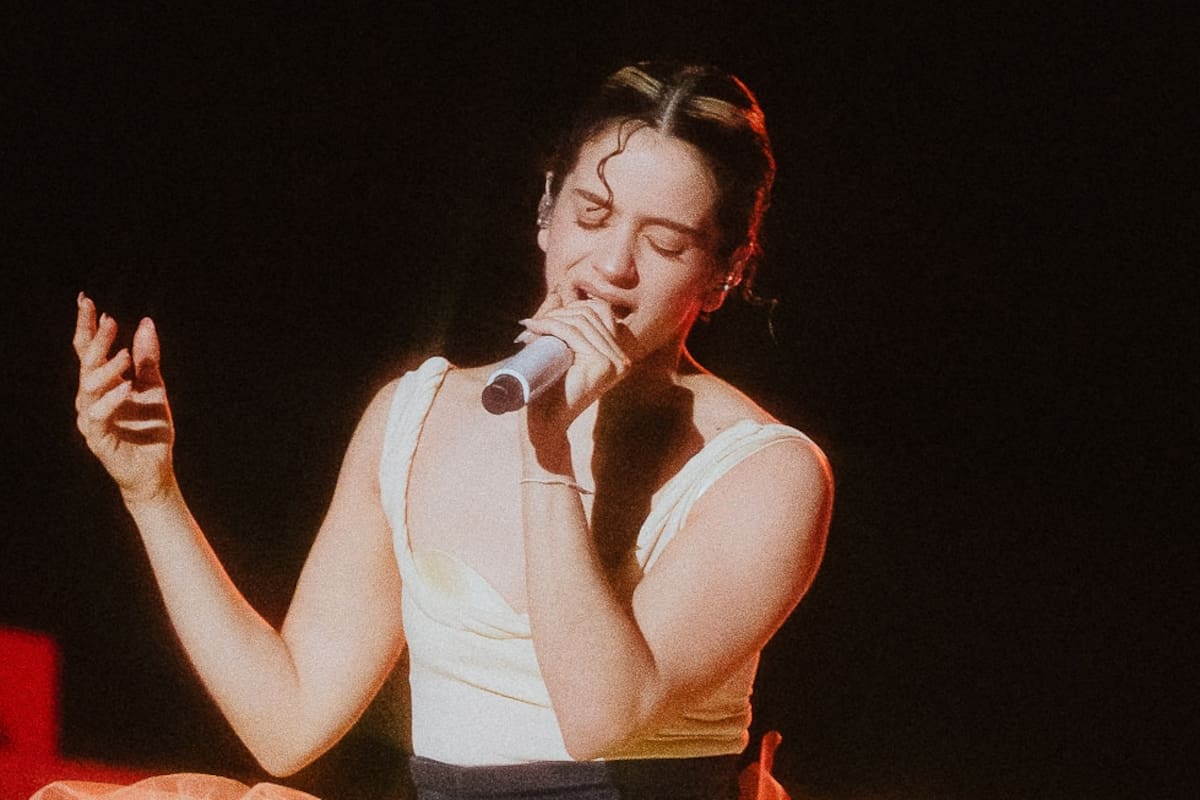
The setlist continued with "De Madrugá" and the older, resonant "El Redentor." In an era dominated by "instagrameable" and "tiktokeable" content, Rosalía’s concert functions as a constantly evolving digital reel. Moments ripe for virality are born within the confines of the Movistar Arena, only to find their true habitat and amplification in the vast expanse of social media. This symbiotic relationship between live performance and digital dissemination is a defining characteristic of contemporary entertainment.
A Living Mona Lisa and a Moment of Intimacy
A particularly striking visual occurred when Rosalía descended a long white staircase, settling midway. A team of assistants attended to her, drying her perspiration, styling her hair, and reapplying her lipstick. This meticulously staged moment transformed her into a living Mona Lisa, poised before a framed backdrop. She then captivated the audience by performing Frankie Valli’s classic, "Can’t Take My Eyes Off You," in close proximity to a select group of fans invited onto the stage. This segment highlighted her ability to create intimate moments amidst the grandeur of a stadium show.
The Confessional: A Stage for Personal Narratives
The concert also featured a segment that has become a hallmark of the "Lux" tour: the confessional. A guest, not to perform musically but to share a personal anecdote, engages in a dialogue with Rosalía. This element, present since the tour’s inception in Lyon, adds a unique layer of audience interaction and narrative depth. In Buenos Aires, the guest was Argentine singer Ángela Torres. Her confession revolved around a past relationship where an ex-boyfriend was possessive and did not integrate her into his social circle, despite having access to her favorite band, Cindy Cats. The story concluded happily for Torres, as she broke up with the controlling boyfriend and was subsequently invited to perform with Cindy Cats. Rosalía aptly summarized the situation: "Que vivan los finales felices. Esta perla en cuestión tenía un diamante y no se enteró el muy pelotudo. Gracias por venir a confesarte esta noche" ("Long live the happy endings. This pearl in question had a diamond and the stupid guy didn’t realize it. Thank you for coming to confess tonight"). This segment underscored Rosalía’s role as a confidante and storyteller, transforming personal experiences into shared narratives.
"La Perla": Choreographic Mastery and Lyrical Depth
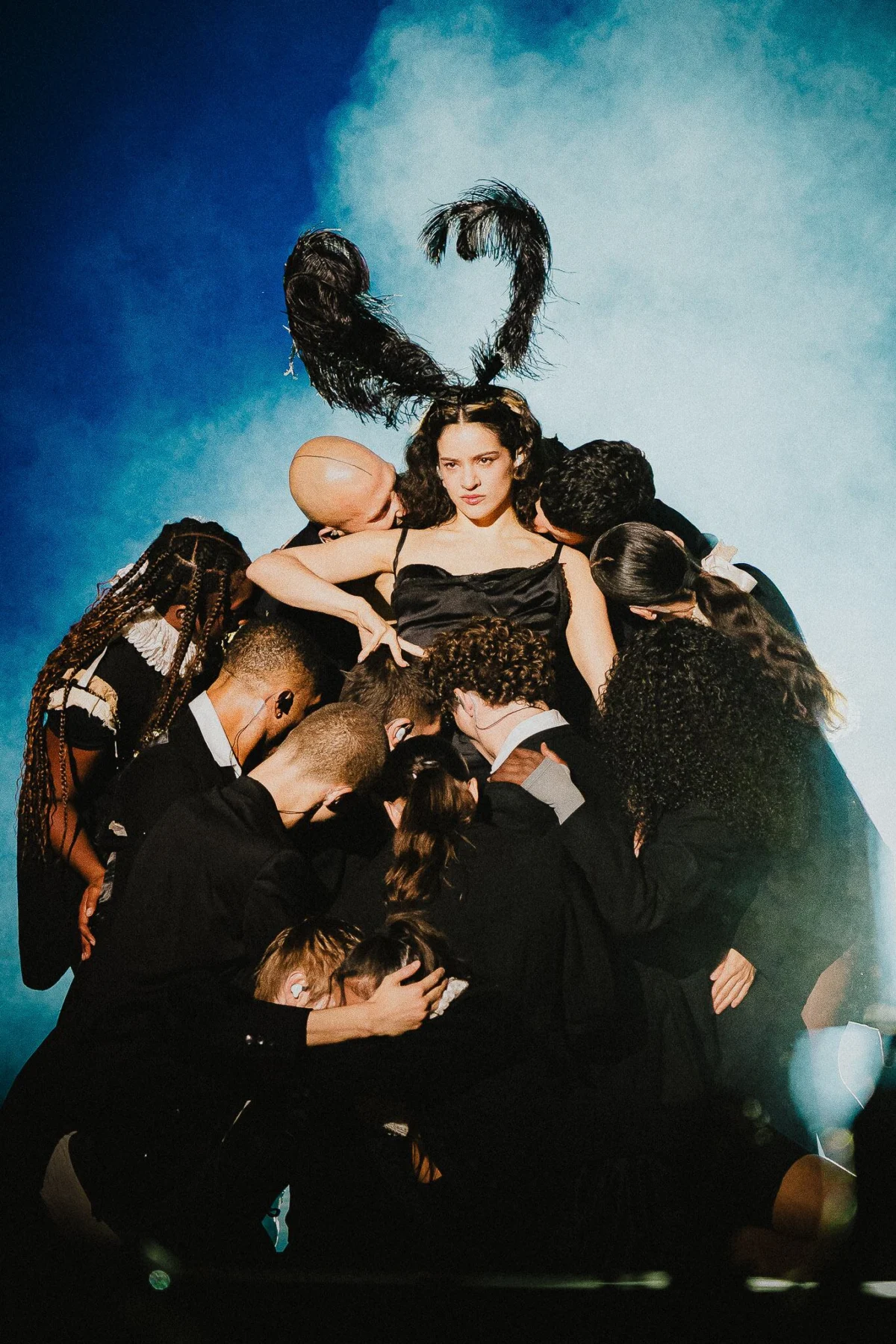
Following the confessional, the performance of "La Perla" offered one of the evening’s most exquisite choreographic moments. A cluster of white-gloved hands emerged, covering Rosalía as she disrobed, cradling and rocking her, forming intricate shapes as she delivered the song’s poignant lyrics: "Por fin vas a terapia, vas al psicólogo y también psiquiatra. Pero de qué te sirve si siempre mientes más que hablas. Te harán un monumento a la deshonestidad" ("Finally, you’re going to therapy, you see a psychologist and also a psychiatrist. But what good is it if you always lie more than you speak. They’ll erect a monument to your dishonesty"). This visual metaphor powerfully illustrated the song’s themes of self-deception and the consequences of dishonesty.
Audience Connection: A Shared Language and Spontaneous Moments
The long white staircase reappeared, now adorned with a white piano and two glasses at its summit. Rosalía ascended, sitting and eventually standing on the piano. This elevated platform became a space for genuine interaction with her audience. She read numerous fan signs, a particularly touching moment occurring when she encountered one written in Catalan. The fan’s response revealed she had learned Catalan specifically to communicate with Rosalía, using a language app and completing the course – a testament to the profound impact the artist has on her admirers. Another fan surprised Rosalía with a quote from "Alfonsina y el mar," prompting Rosalía to spontaneously sing the beloved song. "Tú sabías que es una de mis canciones favoritas," she told the fan, creating a feeling of intimate connection, as if the 15,000-strong crowd had momentarily dissolved.
"Sauvignon Blanc" and the Album’s Live Revelation
The intimate "contact" with the audience segued into the performance of "Sauvignon Blanc." Accompanied by a pianist, Rosalía and her musician shared a drink, a visual cue for the song’s narrative. The track, like much of the "Lux" album, which initially proved challenging for some listeners to fully grasp upon first hearing, revealed its true brilliance in the live setting. The songs, designed for moments of intense emotional and sensory experience, resonated powerfully within the concert’s immersive environment.
A Celebration of Rumba Catalana and Unbridled Energy
The setlist continued with "La Yugular" and "Dios es un Stalker," the latter featuring the provocative line, "Me encanta hacer carreras con el tiempo, a ver cuál de los dos llega antes a ti. No soy una zorra de un momento, soy el laberinto del que no puedes salir" ("I love racing against time, to see which of us reaches you first. I’m not a one-night stand, I’m the labyrinth you can’t escape"). Rosalía then descended into the crowd for "La Rumba del Perdón," taking a moment to acknowledge the "sacred" genre of rumba catalana, noting its integral place within the flamenco canon. The energy surged as she commanded from the center of the arena, "– ¿Tú sabes qué hora es? – La hora de hacer quilombo" ("– Do you know what time it is? – Time to make a mess"), before launching into a ferocious rendition of "CUUUUuuuuuute," accompanied by a giant censer swaying overhead.
The Grand Finale: "Magnolias" and Lasting Impressions
The penultimate section of the concert featured the now-classic hits "Bizcochito" and "Despechá," solidifying the concert’s arc from introspective to celebratory. The set concluded with "Focu ‘ranni" from "Lux," followed by a seemingly deceptive farewell. The audience, sensing a final encore, remained rooted. Rosalía returned to the stage, closing the show with "Magnolias." The choice of this song for the epilogue was profoundly fitting, its lyrics resonating with themes of legacy and cosmic return: "Promete que me protegerás a mí y a mi nombre en mi ausencia. Yo que vengo de las estrellas hoy me convierto en polvo pa’ volver con ellas" ("Promise you will protect me and my name in my absence. I who come from the stars today turn to dust to return to them"). The performance served as a powerful affirmation of Rosalía’s artistic journey, her ability to transform, and her enduring connection with her global fanbase. The "Lux" tour in Buenos Aires was not just a concert; it was a profound artistic statement, a testament to Rosalía’s status as one of the most compelling and innovative artists of her generation.

Related Posts

The Electric Vehicle Battery Health Debate Emerges as Argentina’s EV Market Accelerates

President Donald Trump Confirms Secret Departure from Turkey Amidst Assassination Threat