UN Maritime Tribunal Rejects Bid to Halt Investigation into Deep Sea Mining Firms Amid Conflict Over US Extraction Permits
In a landmark ruling that reinforces the regulatory authority of the United Nations over international waters, the world’s premier maritime court has rejected a legal challenge by deep-sea mining interests seeking to stifle a high-stakes investigation. The International Tribunal for the Law of the Sea (ITLOS), based in Hamburg, issued two critical orders on Saturday declining to suspend an inquiry by the International Seabed Authority (ISA). This inquiry is centered on whether major permit holders have violated their contractual obligations under UN exploration agreements by seeking to bypass international oversight in favor of domestic United States mining pathways.
The ruling marks a pivotal moment in the burgeoning industry of deep-sea mineral extraction, a sector currently caught between the urgent global demand for battery metals and the legal frameworks established to protect the "common heritage of mankind." The companies at the center of the dispute, Tonga Offshore Mining Ltd (TOML) and Nauru Ocean Resources Inc (NORI), are subsidiaries of the Vancouver-based The Metals Company (TMC). The dispute was ignited earlier this year when TMC signaled its intent to seek commercial mining permits from the United States government for areas already covered by its UN exploration licenses, a move viewed by international regulators as a potential breach of the United Nations Convention on the Law of the Sea (UNCLOS).
The Core of the Legal Dispute: Sovereignty vs. International Regulation
The legal friction began when the ISA, the UN-mandated body headquartered in Kingston, Jamaica, launched an investigation into the conduct of TOML and NORI. The regulator sought to determine if the companies’ engagement with U.S. authorities constituted a breach of the "good faith" clauses inherent in their exploration contracts. Under UNCLOS, the ISA is the sole body authorized to organize, carry out, and control activities in the "Area"—the seabed beyond national jurisdiction.
In June, the subsidiaries filed a lawsuit against the ISA at ITLOS, alleging that the regulator’s inquiry was an overreach of its mandate, conducted without due process, and designed to target the companies unfairly. They requested "provisional measures" to halt the investigation while the broader legal merits of the case were debated.
However, the ITLOS judges determined that the ISA’s inquiry is a legitimate exercise of its administrative functions. While the court did not dismiss the companies’ concerns regarding procedural fairness, it ruled that there was no immediate justification to stop the investigation. Instead, the tribunal ordered the ISA to provide more clarity on the factual and legal basis of its probe, ensuring that the companies have a "meaningful opportunity" to defend their actions. This decision effectively allows the UN investigation to proceed while placing the ISA under a microscope regarding its adherence to administrative transparency.
Background: The Metals Company and the Push for Strategic Minerals
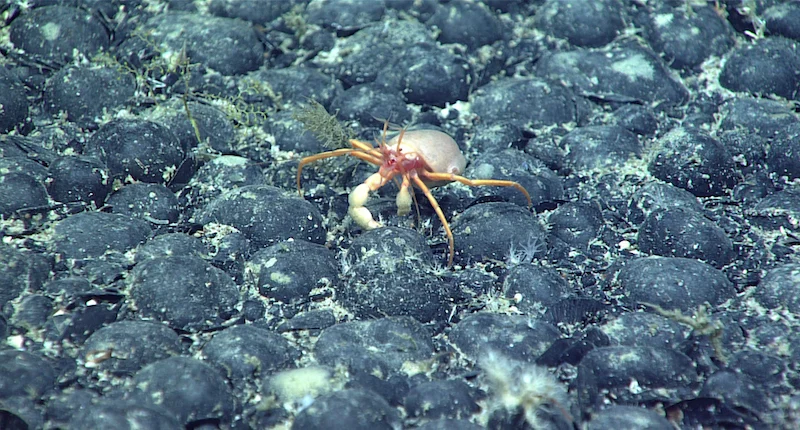
The Metals Company has emerged as one of the most aggressive proponents of deep-sea mining, arguing that the polymetallic nodules found on the ocean floor are essential for the global transition to renewable energy. These potato-sized rocks, located primarily in the Clarion-Clipperton Zone (CCZ) of the Pacific Ocean at depths of 4,000 to 6,000 meters, are rich in cobalt, nickel, copper, and manganese—minerals critical for the production of electric vehicle (EV) batteries.
TMC’s strategy shifted significantly this year when it began lobbying the United States to provide a domestic regulatory pathway for its operations. This move is particularly controversial because the United States is not a signatory to UNCLOS. By seeking U.S. backing, TMC appeared to be attempting a "regulatory hedge," potentially allowing it to bypass the slow-moving ISA "Mining Code," which has been under negotiation for years and faces stiff opposition from environmental groups and several UN member states.
The ISA’s investigation is focused on whether a company can hold a UN-granted exploration license while simultaneously pursuing extraction rights through a non-signatory state. This raises profound questions about the integrity of the international legal order governing the world’s oceans.
A Chronology of the Deep-Sea Mining Conflict
To understand the weight of the ITLOS ruling, one must look at the timeline of events that led to this legal standoff:
- 1982: The UN Convention on the Law of the Sea (UNCLOS) is adopted, establishing the seabed as the "common heritage of mankind."
- 1994: The International Seabed Authority (ISA) is established to regulate the "Area."
- 2011-2020: TOML and NORI secure exploration contracts for the Clarion-Clipperton Zone under the sponsorship of Tonga and Nauru, respectively.
- June 2021: The Republic of Nauru triggers the "two-year rule," a provision in UNCLOS that mandates the ISA to finalize mining regulations within 24 months.
- July 2023: The two-year deadline passes without a finalized Mining Code, leaving the industry in a legal limbo where companies can technically submit applications for commercial mining despite the lack of a finished regulatory framework.
- Early 2024: The Metals Company engages with U.S. lawmakers and the Department of Defense, advocating for the U.S. to support deep-sea mining as a matter of national security and supply chain independence from China.
- June 2024: The ISA opens an inquiry into TMC’s subsidiaries regarding potential contract breaches. TOML and NORI respond by suing the ISA at ITLOS.
- Late 2024: ITLOS issues its orders, allowing the ISA inquiry to continue but mandating procedural safeguards.
Supporting Data: The Stakes of the Clarion-Clipperton Zone
The scale of the resources at stake is staggering. The Clarion-Clipperton Zone, where TMC’s subsidiaries hold rights, spans roughly 4.5 million square kilometers between Hawaii and Mexico. According to data from the ISA and industry analysts:
- Mineral Density: The CCZ is estimated to contain more nickel and cobalt than all known terrestrial deposits combined.
- Economic Potential: The Metals Company estimates that its NORI project alone could produce enough minerals to power 280 million electric vehicles over its lifespan.
- Environmental Concerns: Scientists have warned that mining could impact up to 11,000 square kilometers of the seafloor per year, potentially destroying habitats for thousands of species, many of which are yet to be discovered.
- Global Moratorium: As of late 2024, more than 27 countries—including France, Germany, and Chile—have called for a moratorium or "precautionary pause" on deep-sea mining, citing insufficient scientific data on environmental impacts.
Official Responses and Stakeholder Perspectives
The ITLOS ruling has drawn varied reactions from the parties involved and the broader international community.
A spokesperson for The Metals Company stated that while the company was disappointed the inquiry was not suspended, it welcomed the court’s insistence on due process. "We have always acted in accordance with international law," the statement read. "Our engagement with the United States is about ensuring the West has a secure supply of critical minerals, which is complementary to, not in conflict with, our commitments to the ISA."
Conversely, ISA Secretary-General Michael Lodge has previously emphasized that the authority is the only legal body capable of managing these resources. In statements following the tribunal’s order, the ISA indicated it would comply with the court’s requirements for transparency while continuing its investigation into the "legal consistency" of the subsidiaries’ actions.
Environmental organizations, such as the Deep Sea Conservation Coalition (DSCC), viewed the ruling as a victory for international oversight. "This sends a clear message that private companies cannot treat the international seabed as a lawless frontier," said a representative for the DSCC. "The ISA has a mandate to protect the marine environment, and that includes investigating companies that try to skirt the rules."
Broader Implications: Geopolitics and the Future of the Mining Code
The ITLOS ruling is more than a procedural victory for the UN; it is a signal to the global mining industry that the international legal framework remains the primary authority for the deep sea. However, the conflict highlights a growing geopolitical divide.
The United States, though not a party to UNCLOS, is increasingly concerned about China’s dominance in the processing of critical minerals. China currently controls over 80% of the world’s rare earth element processing and a significant portion of the lithium and cobalt supply chains. By backing firms like TMC, the U.S. is signaling that it may seek to create its own rules for the deep sea if the UN process remains stalled.
Furthermore, the ITLOS decision puts pressure on the ISA to finalize its "Mining Code" by the new informal deadline of 2025. Without a finalized code, the risk of "wildcat mining" or companies seeking protection from individual nations increases, potentially undermining the 40-year-old consensus of UNCLOS.
The investigation into TOML and NORI will now proceed with heightened scrutiny. If the ISA finds that the companies breached their contracts, it could lead to the revocation of exploration licenses, a move that would be a catastrophic blow to The Metals Company’s valuation and the broader industry’s confidence.
As the inquiry continues, the global community remains divided. The tension between the need for minerals to facilitate a green transition and the necessity of protecting the planet’s last untouched wilderness has moved from the laboratory and the protest line into the world’s most powerful courtrooms. The outcome of the ISA investigation will likely set the precedent for how—and if—humanity will ever begin to extract the riches of the deep.

Related Posts
Constitutional Court of South Africa Bars Shell Oil Exploration in Landmark Victory for Environmental and Community Rights

The Battle for Saldanha Bay: South Africa’s Ambitious Ocean Economy Strategy Faces Legal and Environmental Reckoning