
Deadly Explosion at Moscow Restaurant Kills Three, Injures Twenty-One Amid Heightened Security Concerns
A devastating explosion at an Italian restaurant in central Moscow on Thursday evening resulted in the deaths of at least three individuals and left 21 others injured, according to Russian state media, which cited security officials. The incident, occurring around 20:00 local time (17:00 GMT) on Kudrinskaya Square, near the heart of the Russian capital, has intensified concerns regarding internal security and follows a series of high-profile attacks and incidents in and around Moscow since the full-scale invasion of Ukraine.
The National Anti-Terrorist Committee (NAK) provided initial details, stating that a woman attempting to enter the establishment, located in one of Moscow’s iconic Stalin-era skyscrapers, was carrying an explosive device. Her attempt was reportedly thwarted by a security guard. The device subsequently detonated, claiming the lives of the woman herself, the security guard who intercepted her, and a visitor who was inside the restaurant at the time. The immediate aftermath plunged the vibrant square into chaos, with emergency services rapidly deploying to the scene.
Chronology of a Catastrophic Evening
The events unfolded rapidly on Kudrinskaya Square, a bustling area known for its architectural grandeur and proximity to significant city landmarks.
- Approximately 19:30 – 19:50 Local Time: The Italian restaurant, which was hosting a private function, was likely in full swing, with guests enjoying the evening. Details about the nature of the private event or its attendees remained undisclosed by authorities, leading to immediate speculation about the potential target.
- Around 20:00 Local Time (17:00 GMT): A woman, later identified by NAK as the perpetrator, approached the entrance of the restaurant. She was reportedly carrying a homemade explosive device. The specific design and yield of the device were not immediately detailed, but its destructive power was evident in the resulting casualties and damage.
- Moment of Interception and Detonation: A security guard, whose quick actions potentially prevented a greater catastrophe inside the crowded venue, confronted the woman. In the ensuing confrontation, the explosive device was triggered. The blast radius and fragmentation caused immediate fatalities and injuries.
- Immediate Aftermath: Witnesses in the vicinity reported hearing a loud explosion, followed by screams and the sight of people emerging from the restaurant covered in blood. Emergency sirens quickly pierced the evening air as first responders, including paramedics, fire brigades, and law enforcement, converged on Kudrinskaya Square.
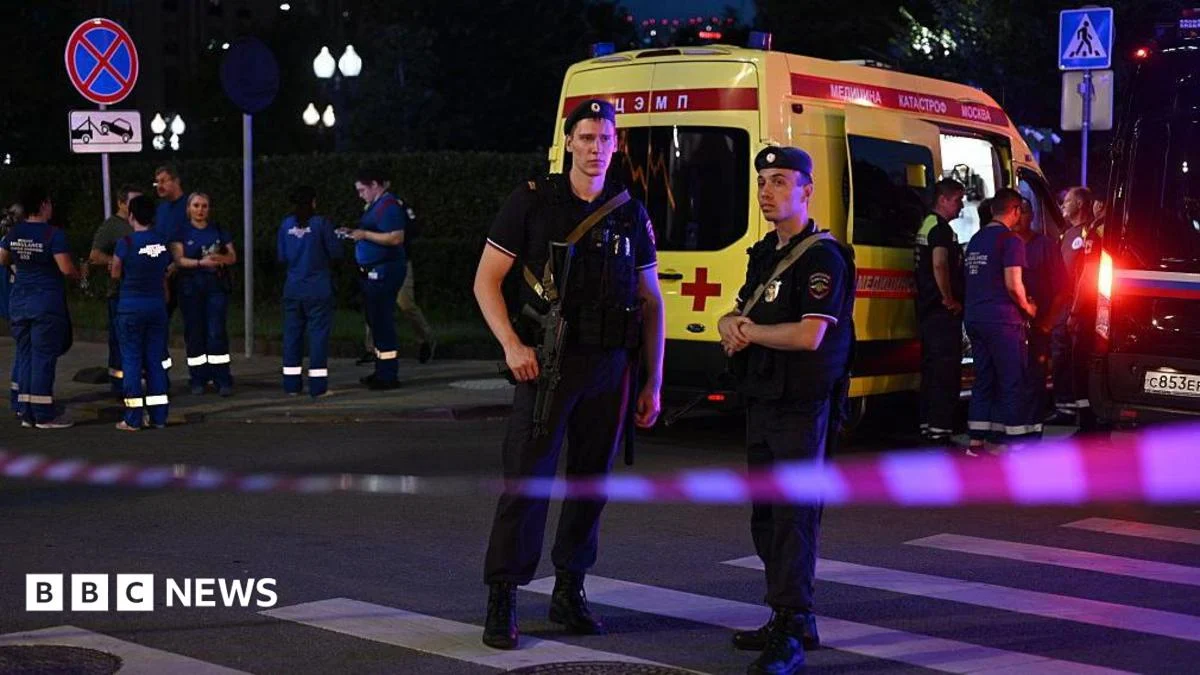
- Emergency Response and Area Lockdown: Within minutes, dozens of emergency vehicles, including ambulances, fire engines, and police cars, had established a perimeter around the restaurant. Roads surrounding Kudrinskaya Square were swiftly closed to traffic, diverting the usual evening flow and causing significant disruption. Heavily armed law enforcement officers, including units from the OMON (Special Purpose Mobile Unit) and SOBR (Special Rapid Response Unit), secured the scene, preventing public access and ensuring the safety of rescue operations.
- Casualty Management: Paramedics triaged the injured on-site before transporting them to various Moscow hospitals. The sheer number of casualties, 21 injured in addition to the three fatalities, stretched emergency medical services.
- Cancelled Public Event: A large group of cyclists, estimated to be dozens, had been gathering nearby on Kudrinskaya Square for a scheduled evening ride through the city. The event was immediately cancelled, and participants were dispersed as the area became a secure zone. This cancellation highlighted the immediate disruption to public life caused by the attack.
- Ongoing Investigation: The National Anti-Terrorist Committee, alongside other federal security agencies, initiated a comprehensive investigation into the incident. Forensic teams began sifting through the debris for clues, while investigators worked to identify the perpetrator, establish her motives, and determine if she acted alone or as part of a larger network.
Victims and the Human Toll
The attack claimed the lives of three individuals: the perpetrator herself, the security guard, and a restaurant patron. While their identities were not immediately released to the public, their deaths underscore the indiscriminate nature of such violence. The 21 injured individuals sustained a range of injuries, from cuts and abrasions caused by flying debris to more severe trauma requiring extensive medical care. Hospitals across Moscow were placed on alert to receive the casualties, highlighting the strain on medical resources following such an incident. The emotional and psychological toll on the survivors, witnesses, and the wider Moscow populace is profound, adding to the pervasive sense of unease that has characterized the city in recent years.
The Scene: A Stalin-Era Landmark Targeted
The restaurant is situated within one of Moscow’s iconic "Seven Sisters" – the grand Stalin-era skyscrapers that dominate the city’s skyline. These buildings, constructed in the post-war era, are symbols of Soviet architectural ambition and often house luxury apartments, government offices, and high-end establishments. The specific location of the restaurant within such a prominent and historically significant structure raises questions about the symbolic nature of the target, if indeed it was deliberately chosen for its visibility or status. Kudrinskaya Square itself is a bustling commercial and residential hub, making any attack there particularly disruptive and shocking to the urban fabric. The restaurant’s statement, released shortly after the blast, clarified that "there was a problem outside," countering initial reports that the explosion occurred within the establishment’s kitchen. This detail aligns with the NAK’s account of the perpetrator being intercepted at the entrance.
Broader Geopolitical Backdrop: A Pattern of Attacks and Accusations
This attack does not occur in a vacuum but against a backdrop of escalating tensions and a series of high-profile security incidents within Russia, many of which Moscow has explicitly attributed to Kyiv. The most prominent examples include:
- Darya Dugina Assassination (August 2022): The daughter of prominent ultranationalist ideologue Alexander Dugin was killed when her car exploded outside Moscow. Russia’s Federal Security Service (FSB) swiftly blamed Ukrainian special services, an accusation Kyiv vehemently denied. The incident sent shockwaves through the Russian elite and public, demonstrating the potential reach of hostile actors within the capital’s periphery.
- Vladlen Tatarsky Assassination (April 2023): Maxim Fomin, known by his military blogger pseudonym Vladlen Tatarsky, was killed by a bomb blast at a café in St. Petersburg. A woman, Darya Trepova, was arrested and subsequently convicted for delivering the explosive device, which was disguised as a statuette. Russian authorities again pointed fingers at Ukrainian special services and associates of Alexei Navalny, a claim Kyiv dismissed. This attack, occurring in Russia’s second-largest city, underscored the vulnerability of public spaces to such acts.
- Frequent Drone Attacks on Moscow: In recent months, Moscow has experienced an increasing number of drone attacks, with some striking buildings in the city center, including the Moscow City business district and areas near the Kremlin. While most have caused minor damage and no fatalities, they represent a significant breach of Russian airspace and serve as a constant reminder of the ongoing conflict’s proximity to the capital. Russian officials consistently blame Ukraine for these incursions, describing them as acts of terrorism.
- Cross-Border Incursions: Regions bordering Ukraine, such as Belgorod and Bryansk, have faced repeated shelling, drone attacks, and even limited ground incursions by groups claiming to be Russian volunteers fighting for Ukraine. These incidents, while geographically distant from Moscow, contribute to the overall sense of insecurity and the narrative of an active external threat.
The Kudrinskaya Square bombing, involving a homemade explosive device and an apparent suicide attempt or a failed infiltration, aligns with the characteristics of some of these previous incidents. The NAK’s immediate involvement signifies the gravity with which Russian authorities view such attacks, categorizing them as acts of terrorism or extremist violence. The attribution of blame, whether explicit or implied, will undoubtedly feed into Russia’s broader narrative regarding the conflict and the perceived threats to its national security.
Official Responses and Investigative Efforts
Immediately following the incident, the National Anti-Terrorist Committee took charge of the investigation, coordinating efforts across multiple security agencies. NAK’s mandate is to prevent, detect, and suppress terrorist acts, and its rapid deployment underscores the official classification of the event as a potential act of terrorism.
- Criminal Proceedings: Russian investigative authorities have undoubtedly initiated criminal proceedings under articles related to terrorism, murder, and illegal trafficking of explosive devices. Such investigations are typically exhaustive, involving forensic analysis, witness interviews, and extensive data collection from surveillance systems.
- Focus on Identification and Motive: A primary objective of the investigation will be to definitively identify the female perpetrator, trace her movements, and uncover her affiliations, if any. Authorities will seek to determine whether she was part of an organized group, acted under duress, or was a lone actor motivated by extremist ideologies. The lack of immediate disclosure regarding the private function’s guest list suggests a potential sensitivity around the identity of the target, or perhaps an ongoing effort to protect the privacy of those involved while the investigation progresses.
- Enhanced Security Measures: In the wake of such an attack, it is customary for Russian authorities to implement enhanced security measures across public spaces, transport hubs, and critical infrastructure in Moscow and other major cities. This could include increased police patrols, more stringent checks at entrances to public venues, and heightened intelligence gathering.
Broader Impact and Implications
The bombing at Kudrinskaya Square carries significant implications for Russia, both domestically and in its international posture.
- Domestic Security Concerns: The incident unequivocally highlights the persistent and evolving internal security challenges facing Russia, particularly in its capital. Despite stringent security measures and a robust anti-terrorism apparatus, the ability of individuals or groups to carry out such attacks underscores vulnerabilities. This could lead to increased public anxiety and demands for greater state protection.
- Impact on Public Confidence: For Moscow residents, the attack is a stark reminder that the conflict, which often feels distant from the capital’s daily life, can manifest violently within its borders. While the city has experienced previous acts of terrorism, the current geopolitical climate adds a layer of tension and uncertainty, eroding public confidence in the complete safety of urban environments.
- Reinforcement of Official Narratives: Russian state media and officials are likely to leverage this incident to reinforce existing narratives about external threats and the necessity of the ongoing military operation. The attack will be framed as further evidence of hostile intentions against Russia, justifying the government’s security policies and potentially galvanizing public support for the national defense.
- Investigative Challenges and Attribution: While NAK has provided initial details, the full attribution of responsibility and motive can be complex. If external actors are implicated, it will further inflame geopolitical tensions. If internal extremist elements are found to be responsible, it will highlight different dimensions of Russia’s security challenges.
- Economic and Social Repercussions: Even localized attacks can have broader economic and social repercussions. Heightened security can deter tourism and impact local businesses. The psychological impact on a populace living under the shadow of such threats is also a significant consideration.
- International Scrutiny: The international community will be closely watching the investigation and Russia’s official statements. While expressions of condemnation for the violence are standard, the context of the Ukraine conflict means any attribution of blame will be met with intense scrutiny and potential counter-accusations. The incident adds another layer of complexity to an already volatile geopolitical landscape.
This attack serves as a grim reminder of the enduring threat of terrorism and the volatile security environment in Russia, particularly as the conflict in Ukraine continues to reverberate across the region. The comprehensive investigation now underway will be crucial in shedding light on the full circumstances of this deadly event and its wider implications.

Related Posts
Zambia on Edge: Opposition Leader Arrested Amid Allegations of Insurrection Plot and Election Tensions
Rescuers search for survivors of powerful Indonesia earthquake

