
An Unprecedented Migrant Influx Overwhelms Ceuta, Sparking Humanitarian Crisis and Diplomatic Tensions
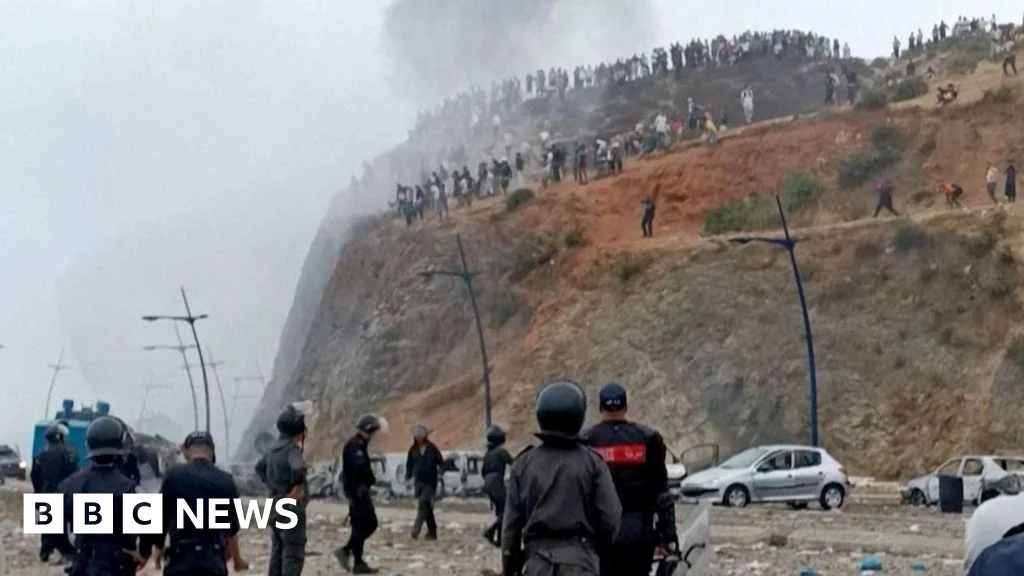
On 30 July, Spain’s North African enclave of Ceuta witnessed an unprecedented and overwhelming influx of approximately 60,000 migrants from Morocco, marking one of the most significant mass border breaches in recent European history. The vast majority of individuals, comprising men, women, and a significant number of unaccompanied minors, resorted to perilous methods to reach European soil, with many navigating the Mediterranean Sea by swimming or utilizing makeshift inflatables. Concurrently, other groups managed to breach the land border, running through a gate in the formidable border fence that separates Ceuta from Morocco. This sudden and massive surge placed immense strain on Ceuta’s resources, ignited a profound humanitarian crisis, and triggered immediate, high-level diplomatic repercussions between Madrid and Rabat, drawing swift attention and concern from the wider European Union.
The Unprecedented Influx: A Detailed Account of the Mass Breach
The events of 30 July unfolded with staggering speed and scale. Early morning hours saw the initial trickle of individuals quickly transform into a relentless torrent as thousands began converging on the Ceuta coastline and its land border crossings. Eyewitness accounts and early reports described scenes of chaos and desperation, with individuals driven by the hope of reaching Europe. The sheer volume of people attempting to cross simultaneously, estimated at around 60,000 over a single day, far exceeded any previous migratory event in the region. This unprecedented number strongly suggested a deliberate and abrupt relaxation of border controls on the Moroccan side, allowing such a massive movement of people towards the Spanish enclave.
Migrants employed a variety of methods to bypass the existing security infrastructure. Along the coastal perimeter, thousands entered the water, braving strong currents and the inherent dangers of open-sea swimming. Many used rudimentary inflatable devices, such as rubber rings and small boats, to aid their passage. For those attempting the land route, the strategy involved overwhelming specific points along the border fence. While Ceuta is protected by a sophisticated border barrier system, including multiple fences, razor wire, and surveillance technology, the sheer number of people attempting to breach it simultaneously proved too much for the immediate defensive capabilities at certain points. Reports indicated that some gates were either opened or forced, allowing large crowds to surge through.
The immediate aftermath saw Spanish security forces, including the Guardia Civil and National Police, rapidly deployed to the border. Their efforts focused on managing the immense crowds, preventing further entries where possible, and initiating the process of returning individuals to Morocco. However, the scale of the influx meant that many thousands successfully reached Ceuta’s urban areas, overwhelming local services and humanitarian aid agencies.
The Humanitarian Toll and Rescue Efforts
The perilous nature of the crossings inevitably led to tragic consequences. Spain’s Interior Minister Fernando Grande-Marlaska confirmed on a subsequent Saturday that the death toll associated with the influx had tragically risen to at least 67. These fatalities were primarily attributed to drownings and other incidents during the hazardous sea crossings. Rescue services, including the Spanish maritime rescue agency Salvamento Marítimo and the Spanish Red Cross, worked tirelessly under immense pressure. Their teams were deployed to pull exhausted and often hypothermic individuals from the water, providing immediate medical attention and humanitarian aid.
The Red Cross, in particular, played a crucial role, establishing emergency reception centers to provide basic necessities such such as food, water, blankets, and medical care to the thousands who arrived. The humanitarian organization faced immense challenges in accommodating and assisting such a large number of people, many of whom arrived in a state of extreme physical and psychological distress. Among the arrivals were thousands of unaccompanied minors, a particularly vulnerable group requiring specialized care and legal protection under international law. Their presence posed significant ethical and logistical challenges for Spanish authorities, who are bound by international conventions to ensure the welfare and appropriate processing of children. The sheer volume of minors complicated the identification process, age verification, and subsequent care arrangements.
Geopolitical Undercurrents: Spain-Morocco Relations at a Crossroads
The mass influx into Ceuta on 30 July did not occur in a vacuum but was widely interpreted as a direct consequence of escalating diplomatic tensions between Spain and Morocco. The primary catalyst for this deterioration in relations had been Spain’s decision to provide medical treatment to Brahim Ghali, the leader of the Polisario Front, an organization fighting for the independence of Western Sahara. Morocco views the Polisario Front as a separatist terrorist group and considers Western Sahara an integral part of its territory. Spain’s humanitarian gesture, providing Ghali with hospital care for a serious COVID-19 infection, was seen by Rabat as a hostile act and a breach of its territorial integrity and diplomatic norms.
Following Ghali’s admission to a Spanish hospital in April, Morocco had recalled its ambassador to Madrid and issued strong condemnations, demanding explanations and expressing profound dissatisfaction. While Spain maintained that its actions were purely humanitarian, Morocco perceived it as a significant shift in Spain’s traditionally neutral stance on the Western Sahara conflict. The unprecedented easing of border controls leading to the Ceuta influx was widely interpreted by political analysts and European officials as a retaliatory measure by Morocco, leveraging its control over migration flows as a political pressure tactic against Spain. This strategy, sometimes referred to as "weaponizing migration," is a recurring theme in relations between countries at the EU’s external borders and their North African neighbors. The events underscored the fragile nature of bilateral relations and the potential for geopolitical disputes to manifest in humanitarian crises at shared borders.
Ceuta: A Longstanding Migration Hotspot
Ceuta, along with its sister enclave Melilla, holds a unique and often precarious position on Morocco’s northern coast. These two Spanish cities represent the only land borders between Africa and the European Union, making them perennial focal points for migrants attempting to reach Europe. For decades, individuals from sub-Saharan Africa, North Africa, and increasingly, other regions, have sought to cross into these enclaves, viewing them as gateways to a better life.
The history of migration attempts into Ceuta is long and varied, characterized by periods of intense pressure interspersed with stricter border controls. Previous years have seen smaller, though still significant, surges involving hundreds or occasionally a few thousand individuals attempting to scale the border fences, often resulting in injuries and fatalities. The Spanish government, with significant financial and technical support from the European Union, has invested heavily in fortifying the border with Morocco. This includes multiple layers of fencing, concertina wire, surveillance cameras, thermal imaging, and rapid response units. Despite these extensive measures, the events of 30 July demonstrated the vulnerability of even the most sophisticated border defenses when faced with a coordinated and massive human wave, especially if the neighboring country’s border forces do not actively deter crossings.
A Chronology of Events and Official Responses
- Pre-July 30th: Months of simmering diplomatic tensions between Spain and Morocco following Spain’s humanitarian reception of Brahim Ghali. Morocco expresses strong disapproval and recalls its ambassador.
- July 30th: The primary date of the massive influx. An estimated 60,000 migrants converge on Ceuta from Morocco, overwhelming land and sea borders. Spanish security forces are rapidly deployed, struggling to contain the unprecedented numbers. Humanitarian agencies, notably the Red Cross, mobilize emergency aid.
- Immediate Aftermath (Days following July 30th): Spanish authorities intensify efforts to return migrants to Morocco. The government activates emergency protocols, deploying additional security personnel from the mainland. Focus shifts to identifying unaccompanied minors and providing humanitarian assistance.
- Subsequent Saturday (Date not specified but after July 30th): Spain’s Interior Minister Fernando Grande-Marlaska announces the grim news that the death toll has risen to at least 67. On the same day, police are observed installing a 500-meter (1,640ft) floating barrier along parts of the Ceuta coastline, aimed at deterring future sea entries. Groups of migrants who had successfully entered are systematically escorted back to the border for repatriation.
- Diplomatic Fallout: Spain issues strong condemnations of Morocco’s perceived inaction, accusing Rabat of violating international agreements on border control. The Spanish Prime Minister, Pedro Sánchez, makes an emergency visit to Ceuta, reaffirming Spain’s commitment to protecting its borders and providing support to the enclave. The European Union expresses solidarity with Spain and calls on Morocco to uphold its border management responsibilities. Morocco initially maintains a public silence but later offers nuanced statements, often linking the border events to its broader grievances with Spain.
The European Dimension: Calls for Solidarity and Policy Debate
The crisis in Ceuta reverberated across Europe, triggering immediate reactions from Brussels and various member states. The European Commission and the European Council expressed strong solidarity with Spain, recognizing the gravity of the situation at one of the EU’s external borders. European leaders condemned the use of migration as a political tool and called for Morocco to respect its commitments under the EU-Morocco partnership, which includes cooperation on migration management.
Calls for a more robust and unified European migration policy intensified in the wake of the Ceuta events. The incident underscored the ongoing challenges faced by frontline EU member states and highlighted the need for greater burden-sharing and common strategies. While Frontex, the European Border and Coast Guard Agency, offered support, the crisis primarily unfolded on Spanish national territory, emphasizing the sovereign responsibility of member states for their borders. The events also reignited debates about the ethical implications of externalizing border control to third countries and the need for comprehensive approaches that balance security concerns with humanitarian principles. The EU reiterated its commitment to supporting Spain with resources and diplomatic backing to manage the situation and address the underlying causes of irregular migration.
Challenges of Repatriation and Integration
The return of nearly all those who reached Ceuta, as reported by officials, presented a complex logistical and legal challenge. Under international law, the principle of non-refoulement prohibits returning individuals to countries where they face persecution or grave harm. Furthermore, the presence of unaccompanied minors necessitated specific legal procedures, often involving age assessments and the safeguarding of their best interests, before any return could be considered. Spanish law dictates that unaccompanied minors cannot be immediately returned to their country of origin without a thorough assessment and guarantee of their safety and well-being. This often meant that many minors remained in Spanish care for extended periods, straining local reception capacities.
For adult migrants, the process of mass repatriation, while swift, raised questions about due process and individual circumstances. While Spain maintains bilateral agreements with Morocco for the rapid return of irregular migrants, the sheer scale of the 30 July influx meant that processes were undoubtedly streamlined under emergency conditions. The long-term implications for those returned, often without having their asylum claims individually assessed, remain a concern for human rights organizations.
Border Fortification and Future Strategies
In response to the massive breach, Spain moved quickly to enhance its border defenses. The installation of a 500-meter (1,640ft) floating barrier was a tangible step taken shortly after the influx. This barrier, designed to extend into the sea, aims to create an additional physical impediment for those attempting to swim around the land border fences. This initiative reflects a broader strategy of continuous adaptation and reinforcement of Spain’s external borders, often involving significant investment in physical infrastructure and advanced surveillance technologies.
Beyond physical barriers, the events of July 30th are expected to prompt a re-evaluation of border management strategies, emphasizing greater coordination with Morocco, a more robust EU response, and potentially exploring new technological solutions. The incident highlighted the limitations of existing deterrence measures against a determined and overwhelming human wave, especially when political factors influence the actions of neighboring countries. Future strategies will likely focus on strengthening diplomatic channels to ensure effective bilateral cooperation on migration, enhancing intelligence sharing, and building more resilient humanitarian response mechanisms.
Implications and Outlook
The unprecedented migrant influx into Ceuta on 30 July carries significant implications across humanitarian, political, and security dimensions. From a humanitarian perspective, it served as a stark reminder of the immense human cost associated with irregular migration, underscored by the tragic death toll. It also highlighted the vulnerabilities of those seeking a better life and the critical role of humanitarian aid organizations.
Politically, the crisis severely tested the already strained relationship between Spain and Morocco, revealing the fragility of regional stability when migration is leveraged as a political instrument. It forced the European Union to reaffirm its solidarity with Spain and underscored the urgency of developing a more coherent and effective common migration and asylum policy that addresses both border security and humanitarian responsibilities. The events have undoubtedly left a lasting impact on Ceuta itself, a city that found its resources and social fabric tested to their limits.
In the long term, the Ceuta crisis is likely to influence future border management strategies at the EU’s southern flank. It will necessitate continued diplomatic engagement with North African partners, a reassessment of existing border infrastructure and protocols, and an ongoing debate within the EU about equitable burden-sharing and the fundamental principles governing migration policy. The events of 30 July will stand as a potent symbol of the complex interplay between geopolitics, human desperation, and the enduring challenges of managing migration in the 21st century.

Related Posts
Zambia on Edge: Opposition Leader Arrested Amid Allegations of Insurrection Plot and Election Tensions
Rescuers search for survivors of powerful Indonesia earthquake

