UN Secretary-General Warns of Escalating Climate Crisis as Wildfires Ravage Europe and El Niño Intensifies
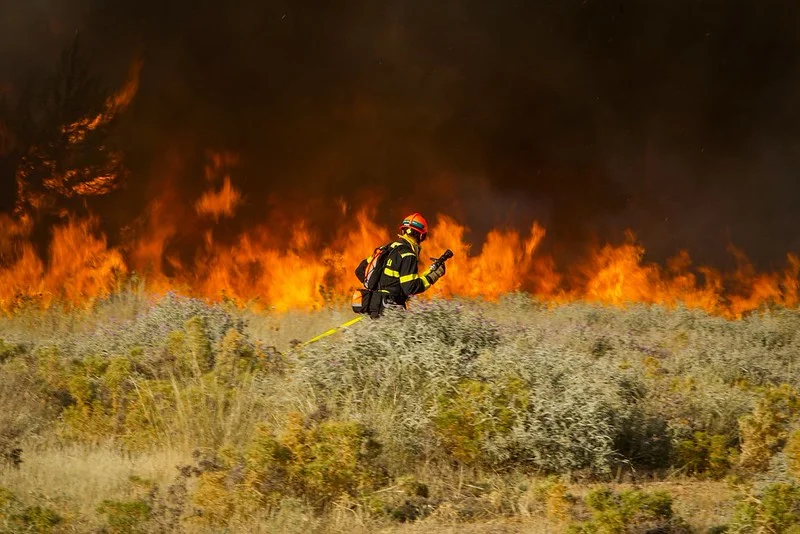
The United Nations Secretary-General, alongside senior diplomatic figures from the United Kingdom, France, and Spain, has issued a stark warning regarding the catastrophic wildfires currently sweeping across the European continent, attributing the intensity of these disasters directly to anthropogenic climate change. In a series of high-level briefings held on Friday, United Nations Secretary-General António Guterres described the current state of the global environment as a "climate crisis in overdrive," cautioning that the record-breaking temperatures observed during the current summer season may merely be a "warm-up act" for a more severe period of global heating. This assessment comes as the World Meteorological Organization (WMO) confirms the intensification of El Niño, a natural climate pattern that is now superimposing itself onto a planet already significantly warmed by the burning of fossil fuels.
The rhetoric from the United Nations’ highest office reflects a growing sense of urgency within the international community. Guterres emphasized that the convergence of long-term global warming and the emerging El Niño cycle is "adding fuel to a planet already on fire." This sentiment was echoed by foreign ministers across Europe, who are facing the dual challenge of managing immediate humanitarian crises caused by the fires and navigating the complex political landscape of transitioning their economies away from carbon-intensive energy sources. The call for faster, deeper cuts to greenhouse gas emissions has moved from the periphery of environmental advocacy to the center of European foreign policy and national security concerns.
The Mediterranean Inferno: Context and Current Scale
Throughout the current summer season, the Mediterranean basin has become the epicenter of a terrestrial heating event that has defied historical precedents. Wildfires have devastated vast tracts of land in Greece, Italy, Spain, and Algeria, forcing the evacuation of tens of thousands of residents and tourists. In Greece, the island of Rhodes witnessed one of the largest evacuation efforts in the nation’s history, while the mainland faced simultaneous blazes near Athens and in the Peloponnese region.
The fires are not isolated incidents but are the result of a prolonged "heat dome" that has settled over Southern Europe. This meteorological phenomenon occurs when a ridge of high pressure traps hot ocean air like a lid, leading to skyrocketing temperatures and bone-dry conditions that turn forests and shrublands into tinderboxes. Spain, which has already faced several years of severe drought, has seen its water reservoirs drop to critical levels, further complicating firefighting efforts and threatening the agricultural sector. The French government has similarly deployed thousands of firefighters to contain blazes in its southern departments, citing "unprecedented" dryness in the soil.
The WMO Report: El Niño as a Force Multiplier
Central to the current alarm is a new technical report published by the World Meteorological Organization on Friday. The report predicts that the current El Niño Southern Oscillation (ENSO) pattern will grow into a "strong event" between now and October. El Niño is characterized by the warming of surface waters in the central and eastern Pacific Ocean, which has a cascading effect on global weather patterns. While El Niño is a naturally occurring cycle, its manifestation in 2023 is occurring within the context of a global atmosphere that contains more carbon dioxide than at any point in human history.
According to the WMO, there is a 90% probability of the El Niño event continuing through the second half of the year. This transition increases the risk of higher-than-normal temperatures across much of the globe and is expected to significantly disrupt rainfall patterns. Secretary-General Guterres warned that this "strong event" risks shattering every seasonal record on the books. A WMO scientist, speaking to journalists on the condition of anonymity, clarified that the heatwaves and climate impacts observed in early 2023 occurred even before the full effects of El Niño had kicked in at a global scale. This suggests that the thermal peak of this cycle likely lies ahead in 2024.
Chronology of a Record-Breaking Year
The escalation of the current crisis can be traced through a series of alarming milestones recorded since the beginning of the year:
- January – March 2023: Global sea surface temperatures reached record highs for the time of year, signaling an unusually warm start to the annual cycle.
- April 2023: Spain and parts of North Africa experienced a "monster" heatwave, with temperatures exceeding 38°C (100°F), a level typically reserved for the peak of July.
- June 2023: The WMO officially declared the onset of El Niño conditions. Simultaneously, June was confirmed as the hottest June ever recorded globally, with sea ice levels in the Antarctic reaching record lows.
- July 2023: Several days in early July saw the highest global average temperature ever recorded by instruments. This period coincided with the peak of the wildfires in the Mediterranean and the arrival of the "Cerberus" and "Charon" heatwaves across Europe.
- August 2023: The UN and WMO issued the current warnings as data indicated that July was likely the hottest month in 120,000 years, pushing the "climate crisis into overdrive."
Diplomatic and Official Responses
The diplomatic response to the wildfires has been characterized by a shift from sympathy to a demand for structural policy change. The foreign ministers of the UK, France, and Spain have utilized the crisis to reinforce their commitments to the Paris Agreement and to pressure other G20 nations to accelerate their decarbonization timelines.
In the United Kingdom, the Foreign, Commonwealth & Development Office emphasized the need for international cooperation on climate resilience. British officials noted that the wildfires in Europe are a reminder that no nation is immune to the effects of a warming planet, regardless of its latitude. France’s Ministry for Europe and Foreign Affairs echoed this, stating that the "ecological transition is no longer an option but a vital necessity for the stability of the European continent."
Spanish officials have been particularly vocal, given the country’s position on the front lines of desertification. The Spanish government has called for a "radical" rethink of water management and land use, while simultaneously pushing for the European Union to maintain its "Fit for 55" legislative package, which aims to reduce the bloc’s emissions by 55% by 2030.
Supporting Data and Scientific Analysis
The link between the burning of fossil fuels and the increasing frequency of extreme weather is supported by an overwhelming body of data. According to the Intergovernmental Panel on Climate Change (IPCC), every 0.5°C of global warming causes clearly discernible increases in the intensity and frequency of hot extremes, including heatwaves and heavy precipitation.
Key data points currently informing the UN’s position include:
- Atmospheric CO2 Levels: Carbon dioxide concentrations at the Mauna Loa Observatory reached a peak of 424 parts per million (ppm) in May 2023, continuing a steady climb from pre-industrial levels of approximately 280 ppm.
- Global Temperature Anomaly: Current data shows that the world is roughly 1.2°C warmer than the late 19th-century average. The UN warns that the 1.5°C threshold—established to avoid the most "tipping point" style catastrophes—is increasingly at risk.
- Wildfire Burn Area: In the European Union, the area burned by wildfires in early 2023 was significantly above the 2003–2022 average, reflecting a trend of longer and more intense fire seasons.
Economic and Humanitarian Implications
The implications of the "climate crisis in overdrive" extend far beyond environmental degradation. The economic toll of the European wildfires is multifaceted. The tourism industry, a cornerstone of the Mediterranean economy, faces long-term threats as traditional summer destinations become seasonally uninhabitable due to extreme heat. In Greece, the evacuation of thousands of tourists has led to immediate revenue losses and potential long-term brand damage for the travel sector.
Furthermore, the agricultural impact is severe. Heat stress and drought are reducing crop yields for olives, grapes, and grains across Southern Europe, which is likely to contribute to food price inflation across the Eurozone. From a public health perspective, the heatwaves are "silent killers." Statistical models from previous European heatwaves suggest that the death toll from heat-related illnesses in 2023 could reach into the tens of thousands, particularly among the elderly and vulnerable populations.
Future Outlook and the Path to COP28
As the world looks toward the upcoming COP28 climate summit in Dubai, the statements from Guterres and European ministers serve as a tactical precursor to what is expected to be a contentious round of negotiations. The focus is shifting toward the "Global Stocktake," the first official assessment of progress since the Paris Agreement.
The intensification of El Niño serves as a biological and physical reminder that the window for mitigation is closing. Analysts suggest that the current disasters in Europe may provide the necessary political capital for leaders to push through more aggressive phase-outs of coal and gas, despite the economic headwinds caused by global inflation and energy insecurity.
In conclusion, the convergence of the El Niño phenomenon and long-term climate change has created a period of unprecedented environmental volatility. The warnings issued by the United Nations and European foreign ministers underscore a pivotal moment in global governance. As the "warm-up act" of 2023 continues to unfold, the international community faces the challenge of translating these warnings into a cohesive, accelerated strategy to stabilize the global climate before the "strong event" of El Niño reaches its full, record-shattering potential.

Related Posts
Constitutional Court of South Africa Bars Shell Oil Exploration in Landmark Victory for Environmental and Community Rights

The Battle for Saldanha Bay: South Africa’s Ambitious Ocean Economy Strategy Faces Legal and Environmental Reckoning