
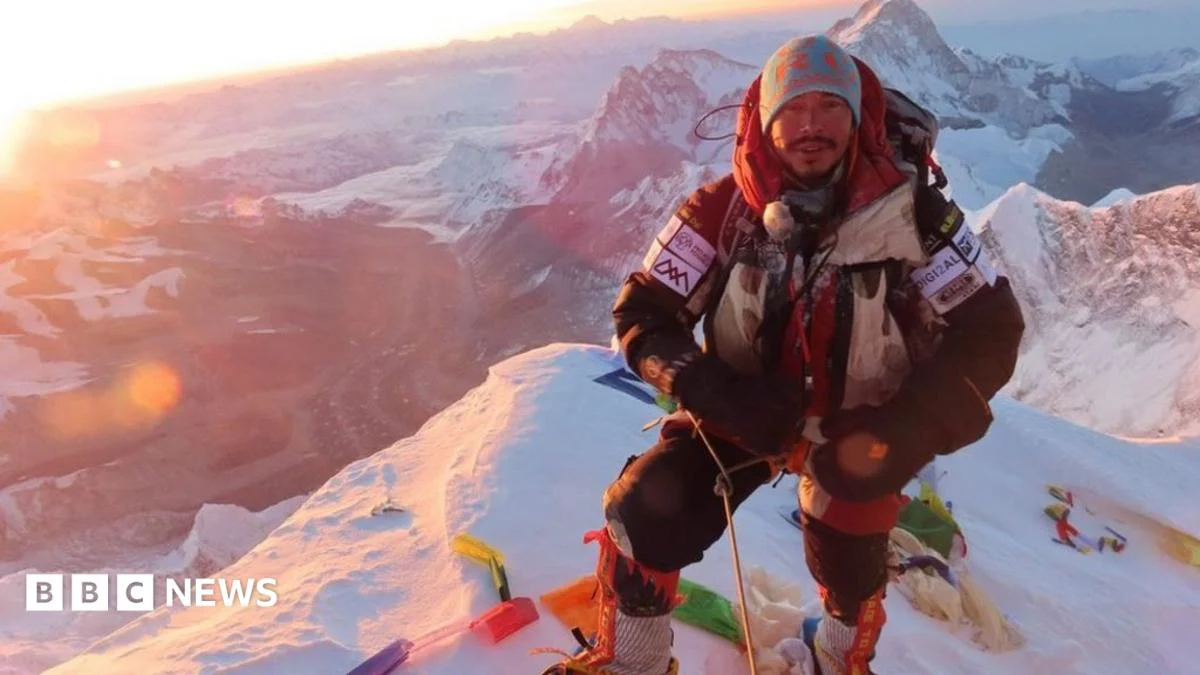
Nirmal Purja: Two bodies located and search ongoing after avalanche hits climbing team
The unforgiving slopes of Broad Peak, one of the world’s most formidable mountains, have claimed the lives of two climbers following a massive avalanche that struck a 10-person international expedition. Authorities confirmed the recovery of the bodies of Nadhira Ahmed Abdullah Al Harthy from Oman and Pur Bahadur Gurung from Nepal, as a desperate search and rescue operation continues for the remaining eight members, including the renowned expedition leader Nirmal Purja. The incident, which unfolded on Thursday on the 8,047-metre (26,400ft) peak in Pakistan’s treacherous Karakoram range, has sent shockwaves through the global mountaineering community, highlighting the inherent dangers of high-altitude climbing even for the most experienced individuals.
The Fateful Expedition: A Renowned Leader and Diverse Team
The multinational climbing group, a beacon of ambition and international cooperation, was under the leadership of Nirmal Purja, a figure synonymous with audacious mountaineering achievements. Purja, a Nepal-born British citizen, rose to global fame for his ‘Project Possible’ in 2019, where he summited all 14 of the world’s 8,000-metre-plus mountains in a record-breaking six months and six days. His subsequent success in leading the first winter ascent of K2 in 2021 further cemented his reputation as one of the most capable and resourceful high-altitude climbers of his generation. The expedition aimed to conquer Broad Peak, the 12th highest mountain globally, a challenging ascent often undertaken by climbers looking to test their mettle in the Himalayas and Karakoram. The team comprised a diverse group of climbers from various nations, each bringing their unique experience and aspirations to the formidable peak. This mix of seasoned veterans and ambitious newcomers underscored the universal allure of these giants of the earth, even in the face of their profound dangers.
Chronology of a Crisis: From Avalanche to Suspended Search
The crisis began on Thursday with reports of a significant avalanche on Broad Peak. The precise time and location of the avalanche’s impact on the expedition remain under investigation, but its devastating force quickly became apparent. The Alpine Club of Pakistan (ACP), a pivotal organization in coordinating high-altitude rescue efforts in the region, immediately launched a search and rescue operation.
-
Initial Reports and Clarifications: Early on Friday, the situation was fraught with confusion and conflicting information. The Alpine Club of Pakistan initially reported that four bodies had been located. However, this statement was later clarified to reflect the grim reality: two bodies and a body part had been found. This miscommunication, attributed to the chaos and immense pressure of a rapidly unfolding disaster, underscored the difficulties inherent in relaying accurate information from such remote and hostile environments. The identified deceased climbers, Nadhira Ahmed Abdullah Al Harthy and Pur Bahadur Gurung, were officially named, bringing a sobering clarity to the tragic events.
-
The Role of Technology: GPS and Drones: In the initial hours of the search, hopes flickered as GPS trackers belonging to three members of the expedition, including Purja, indicated movement. This suggested potential survival or at least a shift in location, offering a glimmer of hope to rescuers. However, when a Pakistan Army helicopter was dispatched to these coordinates, it was unable to visually confirm any activity or locate the climbers. The subsequent discovery of one of the trackers, belonging to Pakistani national Sohail Sakhi, found smashed, cast a pall over these initial hopes. Rescuers now believe the earlier GPS movements may have been a "glitch," a common occurrence in extreme cold and high-altitude conditions where electronic devices can malfunction. Later on Friday, aerial drones, deployed to cover vast and inaccessible areas, managed to spot seven other members of the expedition. While this offered a degree of certainty regarding their location, their condition could not be ascertained from the air, leaving families and the mountaineering community in agonizing suspense.
-
Weather’s Unforgiving Hand: As Friday progressed, the already challenging conditions deteriorated further. Poor weather, characterized by high winds, extreme cold, and reduced visibility, forced the suspension of the search operation. Rescue efforts were called off until sunrise on Saturday, a decision made out of necessity for the safety of the rescue personnel, but one that drastically reduced the already slim chances of survival for those still stranded on the mountain. The Alpine Club of Pakistan emphasized that the true condition of the climbers spotted by drones would only become clear once a ground search group could reach the area, an arduous task that could take several hours, even with improved weather.
Profiles of the Expedition Members: Experience Meets Ambition
The expedition comprised a fascinating blend of veteran climbers and enthusiastic adventurers, each with their own story and connection to the mountains.
-
The Visionary Leader: Nirmal Purja (Nimsdai): Beyond his record-breaking feats, Purja is celebrated for his unparalleled leadership and resilience. His background in the British Army, where he served with the Gurkhas and later the elite Special Boat Service (SBS) – the special forces unit of the Royal Navy – instilled in him a discipline, tactical acumen, and mental fortitude that few possess. His journey into high-altitude mountaineering began in 2012 when, after visiting Everest Base Camp, he impulsively summitted the 6,119m Lobuche East mountain in Nepal, marking his first peak. His ‘Project Possible’ was not just about speed but also about showcasing human potential and inspiring others. His presence as expedition leader typically inspires immense confidence, making the current situation all the more concerning for his followers and the wider climbing world.
-
Honoring the Deceased: Nadhira Al Harthy and Pur Bahadur Gurung: The loss of Nadhira Ahmed Abdullah Al Harthy is particularly poignant. She was the first Omani woman to summit Mount Everest in 2019, a trailblazer who inspired many in her home country and beyond. Her pursuit of Broad Peak was another testament to her unwavering spirit and dedication to pushing boundaries. Pur Bahadur Gurung, also known as Yukta, from Nepal, was a highly respected figure in the climbing community. Certified by the International Federation of Mountain Guides Associations (IFMGA), a prestigious accreditation signifying the highest standards of professional guiding, Yukta was tantalizingly close to completing the coveted 14 peaks challenge himself. His extensive experience and skill made him an invaluable member of any high-altitude team, and his death represents a significant loss to the Sherpa community and the mountaineering world.
-
The Missing: Mallory Geis, Kili Pemba Sherpa, Sohail Sakhi, and Others: Among the eight still missing are several other notable individuals. American Mallory Geis had eagerly documented her preparations for what she termed "her first big kid climbing expedition in Pakistan" on social media in mid-June. Her posts, tagged with the travel company Moving Mountains, indicated her partnership with Pakistani national Sohail Sakhi. It was Sakhi’s tracker that was found smashed, and he remains the only team member whose location has not been partially identified by drones, raising heightened concerns for his fate. Also missing is Kili Pemba Sherpa, a legend in his own right, having summited Mount Everest an astonishing 15 times. Pemba was also a crucial member of the historic K2 winter expedition in 2021, alongside Purja, and notably guided double amputee Chinese climber Xia Boyu to the Everest summit in 2018. His unparalleled experience underscores the indiscriminate nature of high-altitude hazards. The identities of the remaining missing climbers have not yet been fully released, but each represents a family’s hope and a community’s concern.
Broad Peak: A Formidable Giant of the Karakoram
Broad Peak, or Falchan Kangri in Balti, is the 12th highest mountain in the world, standing majestically at 8,047 meters (26,400 feet) within the Karakoram mountain range on the border of Pakistan and China. Its name, "Broad Peak," is a direct translation of "Falchan Kangri," referring to its mile-long summit ridge.
-
A Perilous Ascent: Challenges and Risks: Regarded as one of the more challenging 8,000-meter mountains, Broad Peak presents a unique set of difficulties for climbers. Its position in the Karakoram range, known for its more extreme and unpredictable weather patterns compared to the Himalayas, contributes significantly to its reputation. Climbers face sustained periods of high winds, sudden blizzards, and temperatures that plummet far below freezing. The mountain’s topography includes steep icefalls, challenging rock sections, and long, exposed ridges, all contributing to a high level of technical difficulty. Above 8,000 meters, climbers enter the "death zone," where the atmospheric pressure is insufficient to sustain human life for extended periods. The severe lack of oxygen leads to rapid physiological deterioration, impaired judgment, and increased susceptibility to frostbite, high-altitude cerebral edema (HACE), and high-altitude pulmonary edema (HAPE). Avalanche risk is a constant and significant threat on Broad Peak, particularly during periods of heavy snowfall or rapid temperature fluctuations, which can destabilize large snowfields and ice formations.
-
A History Etched in Ice and Tragedy: The first successful ascent of Broad Peak was achieved in 1957 by a four-member Austrian expedition led by Marcus Schmuck. Since then, hundreds of climbers have reached its summit, but dozens have also lost their lives attempting to conquer its formidable slopes. The mountain has a grim history of fatalities, with one of its deadliest years being 2013, when at least six climbers perished. These incidents serve as stark reminders of the mountain’s raw power and the fine line between triumph and tragedy that defines high-altitude mountaineering.
The Perils of High-Altitude Mountaineering
The incident on Broad Peak serves as a somber reminder of the profound risks inherent in high-altitude mountaineering, even for the most seasoned professionals. Climbing an 8,000-meter peak is an endeavor that pushes the limits of human endurance, skill, and resilience.
-
The Death Zone and Avalanche Threat: The "death zone" above 8,000 meters is aptly named. Here, the human body cannot acclimatize, and every moment spent without supplemental oxygen leads to a progressive decline. Decision-making is impaired, coordination falters, and the body slowly begins to shut down. Avalanches, such as the one that struck Purja’s expedition, are one of the most unpredictable and devastating hazards. They can be triggered by weather changes, seismic activity, or even the climbers themselves, sweeping away tents, equipment, and human lives in an instant. The sheer force of an avalanche can cause immediate death from trauma or suffocation, while burial under snow can lead to hypothermia and oxygen deprivation within minutes.
-
Rescue Realities in Extreme Environments: Rescue operations at these extreme altitudes are among the most challenging in the world. The thin air reduces helicopter efficiency, limiting their operational ceiling and payload capacity. Poor weather conditions, including high winds and blizzards, can ground aircraft for days, leaving stranded climbers exposed to the elements. Ground rescues are excruciatingly slow and dangerous, requiring highly specialized teams, often Sherpas or local high-altitude porters, who risk their own lives to save others. The window for successful rescue diminishes rapidly with each passing hour, making time a critical and often unforgiving factor.
Official Response and Community Solidarity
In the wake of the disaster, the Alpine Club of Pakistan has been at the forefront of the rescue efforts and communication.
-
The Alpine Club’s Dire Assessment and Continued Hope: Naila Kiani, the communications lead for the Alpine Club of Pakistan, articulated the grim reality facing the missing climbers. She stated that the chances of survival in such harsh conditions after more than 24 hours were "very slim." However, she also added a note of profound human hope, acknowledging that "miracles do happen." The club had confirmed earlier on Friday that two rescue helicopters, dispatched by the Pakistan Army, were carrying crucial rescue personnel and additional specialized equipment to bolster the operation. Their statements have consistently emphasized the club’s prayers for the safety and successful rescue of all climbers and its solidarity with their families and the international mountaineering community during this profoundly difficult time.
-
Awaiting Miracles: The Global Mountaineering Community Responds: The news has resonated deeply across the global mountaineering community. Expressions of shock, concern, and solidarity have poured in from fellow climbers, expedition companies, and enthusiasts worldwide. The tight-knit nature of this community means that many know or have climbed with the individuals involved, amplifying the sense of loss and anxiety. Families of the missing climbers are enduring an agonizing wait, clinging to any shred of hope while preparing for the worst. This incident is a stark reminder to the climbing world that even the most accomplished and prepared expeditions can be undone by the raw, untamed power of nature.
Implications and Future Outlook
The Broad Peak tragedy carries significant implications, not only for the immediate individuals and their families but also for the broader practices and perceptions of high-altitude mountaineering.
-
Reassessing Safety Protocols and Expedition Planning: This incident will undoubtedly prompt a renewed focus on safety protocols, risk assessment, and expedition planning for 8,000-meter peaks. While Purja is known for meticulous planning and an emphasis on safety, the unpredictable nature of avalanches at extreme altitudes highlights the inherent limitations of even the best preparations. Discussions may arise regarding the ideal team size, the use of advanced tracking technologies, and the capacity of rescue services in such remote locations. The efficacy of drones in spotting, but not assessing, climbers also brings into question the next steps in rescue technology.
-
The Enduring Allure and Inherent Risks of the World’s Highest Peaks: Despite the tragedies, the allure of the world’s highest peaks remains undiminished for many. The challenge, the beauty, and the profound sense of accomplishment continue to draw adventurers from all corners of the globe. However, this incident serves as a potent reminder of the inherent risks that accompany these pursuits. It underscores that while human skill and technology can mitigate some dangers, they can never fully tame the formidable forces of nature that govern these majestic, yet perilous, environments. The memory of Nadhira Al Harthy, Pur Bahadur Gurung, and all those lost on Broad Peak will be etched into the mountain’s storied history, serving as a permanent testament to the profound sacrifices made in the pursuit of the world’s highest summits.
As dawn approaches on Saturday, the world watches with bated breath, hoping against hope for a miracle on Broad Peak. The resumption of rescue operations will bring critical answers, but the profound impact of this tragedy on the lives affected and the mountaineering community as a whole will resonate for years to come.

Related Posts

Zambia on Edge: Opposition Leader Arrested Amid Allegations of Insurrection Plot and Election Tensions
Rescuers search for survivors of powerful Indonesia earthquake

