Global Energy Giants Record Historic Profits Amid Escalating Climate Crisis and Calls for Financial Accountability
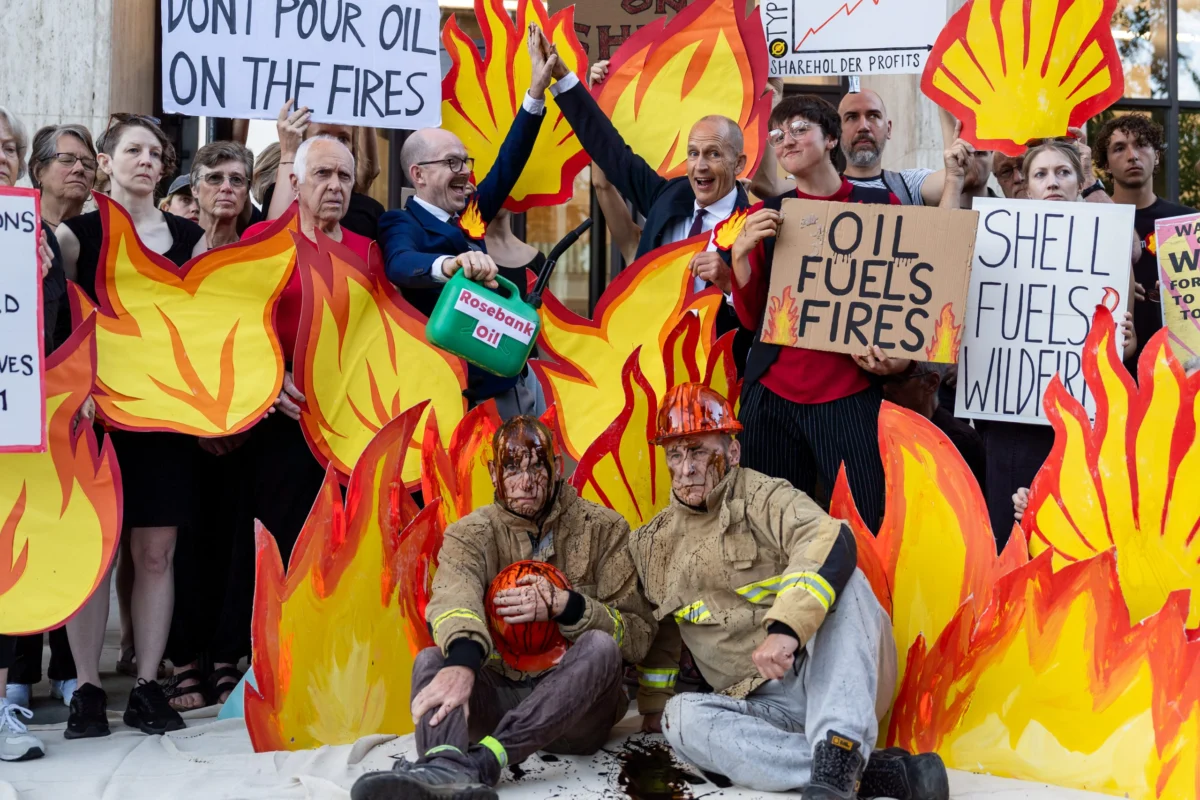
The global energy landscape is currently defined by a profound and widening gap between the financial fortunes of the world’s largest fossil fuel corporations and the worsening environmental realities faced by communities across the globe. As record-breaking heatwaves transition into devastating wildfires, the world’s leading oil and gas entities are preparing to report second-quarter earnings that are expected to show profits doubling, or in some cases quadrupling, compared to the previous year. This surge in revenue comes at a time when the human and economic costs of climate change are reaching unprecedented levels, prompting a renewed and intensified debate over corporate responsibility, windfall taxes, and the "polluter pays" principle.
According to a comprehensive analysis released by Oxfam as the second-quarter earnings season commences, the "Big Six" fossil fuel corporations—BP, Chevron, Eni, ExxonMobil, Shell, and TotalEnergies—are projected to nearly double their combined net income relative to the first quarter of the year. The data suggests an escalation from an already substantial $23 billion in the first quarter to approximately $45 billion in the second. If these projections hold, the full-year profits for these six firms could reach a staggering $147 billion, a figure that exceeds their total combined earnings from the previous 21 months.
Unprecedented Earnings in a Volatile Market
The financial metrics reported by these corporations illustrate a period of extraordinary capital accumulation. Chevron, for instance, is expected to see its profits quadruple, reaching a rate of approximately $1,200 every second over the last three months. ExxonMobil’s performance is even more pronounced, with profits roughly tripling to an estimated $1,800 per second. These figures are not merely abstract statistics; they represent a massive transfer of wealth facilitated by a combination of geopolitical instability, supply chain constraints, and high global demand for energy.
The primary driver behind these record-breaking figures has been the sharp increase in global oil and gas prices. Following the recovery from the COVID-19 pandemic and the subsequent geopolitical tensions arising from the conflict in Ukraine, energy prices surged to levels not seen in over a decade. While consumers have faced soaring utility bills and increased costs at the pump, integrated oil companies have benefited from high margins in both their upstream extraction and downstream refining operations.
A Stark Contrast: Environmental Devastation and Corporate Windfalls
The timing of these financial disclosures coincides with a summer of extreme weather events that have highlighted the immediate dangers of a warming planet. Throughout the northern hemisphere, record-breaking heatwaves have crippled infrastructure, strained power grids, and led to a surge in heat-related mortalities. In regions such as the Mediterranean and North America, these heatwaves have acted as a catalyst for catastrophic wildfires, displacing thousands and causing billions of dollars in property damage.
For many observers and policy analysts, the juxtaposition of these two realities—multi-billion dollar profits for fossil fuel producers and multi-billion dollar damages for climate-impacted communities—is becoming impossible to ignore. The ethical and economic tension is further exacerbated by the fact that many of the communities most affected by climate-driven disasters are also those struggling most acutely with the rising cost of energy. This "double burden" has fueled a global movement calling for a fundamental restructuring of how climate damages are funded and who bears the financial responsibility.
Timeline of a Global Energy and Climate Crisis
To understand the current state of affairs, it is necessary to examine the chronology of events that led to this intersection of high profits and high environmental costs:
- 2020–2021: The Pandemic Slump and Recovery: Following a period of negative oil prices and historic losses during the height of the COVID-19 pandemic, fossil fuel companies began aggressive cost-cutting measures and reduced capital expenditure on new exploration.
- Early 2022: Geopolitical Instability: The invasion of Ukraine by Russia in February 2022 sent shockwaves through global energy markets. As Western nations moved to sanction Russian energy exports, the resulting supply uncertainty drove crude oil prices above $100 per barrel.
- Spring 2022: The Inception of the Profit Surge: By the end of the first quarter, major energy firms began reporting significant upticks in revenue, though many companies initially focused on debt reduction and shareholder buybacks.
- Summer 2022: Record Temperatures and Wildfires: Simultaneously, the northern hemisphere experienced one of its hottest summers on record. Wildfires ravaged parts of Europe, while prolonged droughts impacted agriculture and hydroelectric power generation.
- Mid-2022: The Q2 Earnings Explosion: The current reporting period marks the peak of this financial trajectory, where the full impact of high commodity prices is reflected in corporate balance sheets.
The Evolution of the "Polluter Pays" Principle
For decades, the concept that fossil fuel companies should be held financially liable for climate-related damages was largely confined to activist circles and academic debate. However, the sheer scale of recent profits coupled with the visible destruction of climate change has moved this idea into the mainstream of policy discussion and legislative action.
Governments around the world are increasingly exploring "windfall taxes"—one-time levies on the extraordinary profits of energy companies—to fund relief for households struggling with energy bills and to invest in green infrastructure. In the United Kingdom and the European Union, such measures have already been debated or implemented in various forms.
Beyond temporary taxes, there is a growing movement toward "Loss and Damage" funding on an international scale. This framework, a major point of contention at recent United Nations climate summits (COPs), suggests that wealthy nations and the industries most responsible for historic emissions should provide financial assistance to developing nations facing the brunt of climate disasters. The argument is that since the fossil fuel industry has historically contributed the lion’s share of greenhouse gas emissions, a portion of their current profits should be earmarked for climate adaptation and recovery.
Corporate Responses and the Argument for Energy Security
In response to the mounting criticism, executives from major oil and gas firms have defended their earnings by pointing to the necessity of reinvestment and the importance of energy security. The industry argues that high profits allow them to maintain the infrastructure needed to provide reliable energy during a volatile transition period. Furthermore, companies like Shell and BP have highlighted their increasing investments in renewable energy sectors, such as offshore wind, hydrogen, and electric vehicle charging networks.
However, critics point out that despite the rhetoric of transition, a significant portion of the record profits is being directed toward dividends and share buybacks rather than the rapid scaling of green energy technology. Analysis of capital expenditure reveals that for most of the "Big Six," investment in fossil fuel production still vastly outweighs investment in low-carbon alternatives. This has led to accusations of "greenwashing," where corporate marketing emphasizes environmental responsibility while the core business model remains firmly rooted in hydrocarbon extraction.
Legal and Regulatory Pressures
The financial success of fossil fuel companies is also being challenged in the courtroom. A wave of climate litigation is sweeping across various jurisdictions, with cities, states, and individuals suing energy giants for their role in climate change. These lawsuits often allege that companies misled the public about the dangers of fossil fuels for decades, thereby delaying the transition to a low-carbon economy.
In the United States, several states and municipalities have filed suits seeking damages for the costs of building sea walls, repairing fire damage, and managing heat-related public health crises. In Europe, landmark rulings, such as the Dutch court’s decision requiring Shell to align its emissions reductions with the Paris Agreement, have set a precedent for judicial intervention in corporate environmental policy.
Broader Impact and Future Implications
The current situation represents a critical juncture for the global economy. The massive accumulation of capital within the fossil fuel sector provides a unique, albeit controversial, opportunity. If even a fraction of these profits were redirected toward the global energy transition, the pace of decarbonization could be significantly accelerated.
The implications of these earnings extend beyond the energy sector:
- Economic Inequality: The concentration of wealth in the energy sector while global poverty rates are pressured by inflation raises concerns about social stability and equitable growth.
- Political Influence: The financial might of these corporations continues to provide them with significant lobbying power, potentially slowing legislative efforts to phase out fossil fuels.
- Market Volatility: The reliance on a volatile commodity market for essential energy needs underscores the economic argument for a more diversified and localized renewable energy grid.
As the second-quarter reports continue to be released, the pressure on policymakers to take decisive action is expected to grow. The narrative has shifted from whether fossil fuel companies are profitable to whether those profits are compatible with global climate goals. With the costs of climate-induced disasters projected to rise exponentially in the coming decades, the debate over who pays for the damage is no longer a theoretical exercise but a matter of urgent economic and social policy.
The "obscenity of the contradiction," as described by advocates like Anne Jellema of 350.org and David Hillman of Stamp Out Poverty, lies in the fact that the very activities generating these record profits are the ones driving the climate events that necessitate massive public spending for recovery and adaptation. As the world watches these financial figures climb, the demand for a "just transition"—one where the architects of the carbon economy contribute to the repair of its consequences—has never been louder.

Related Posts
Constitutional Court of South Africa Bars Shell Oil Exploration in Landmark Victory for Environmental and Community Rights

The Battle for Saldanha Bay: South Africa’s Ambitious Ocean Economy Strategy Faces Legal and Environmental Reckoning