How Arteta transformed Arsenal into Premier League champions after 22 years
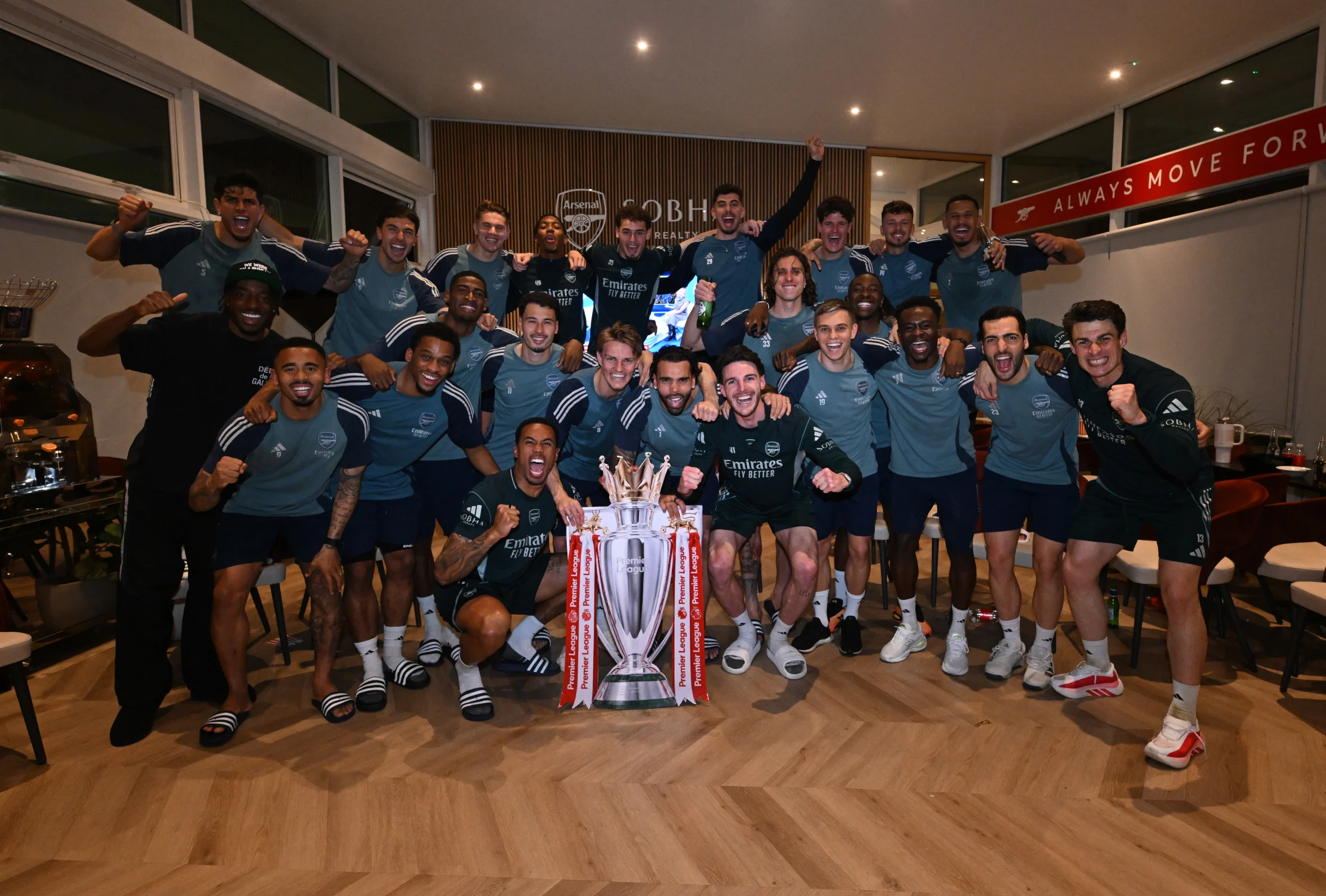
The confirmation of the title came not on the pitch at the Emirates, but via a dramatic sequence of events that saw Manchester City drop points away to Bournemouth. This result served as the final piece of a complex puzzle that Mikel Arteta and his leadership team had been assembling since the Spaniard’s arrival in December 2019. The club’s official behind-the-scenes documentary, released this Friday, provides a granular look at the architecture behind this success, framing the achievement as a triumph of institutional patience over short-term expediency.
The Architect of a New Era
When Mikel Arteta was appointed manager, Arsenal was a club in a state of flux, drifting away from the Champions League places and suffering from a fragmented identity. The club’s ownership, represented by Stan and Josh Kroenke, faced intense scrutiny regarding their level of investment and engagement. However, the subsequent years revealed a shift in strategy.

Josh Kroenke, co-chair of the club, noted that the initial interviews with Arteta were rarely about formations or tactical set-pieces. Instead, the discourse focused on "human" parameters—rebuilding the soul of the institution. "When the time came to hire Mikel, the entire conversation was about culture and reinventing that," Kroenke stated. "He had done his homework, and he understood the scale of the task ahead."
This sentiment was echoed by sporting director Andrea Berta. Berta, who has been instrumental in the club’s recent recruitment, emphasized that the objective was to improve the squad’s technical baseline while ensuring that every new signing passed a rigorous character assessment. "We wanted to improve it humanly," Berta explained. "The group’s integrity and maturity were the most important aspects."
Chronology of the Rebuild
The road to the 2026 title was marked by several distinct phases:

- 2019–2021: The Foundation. Arteta’s first priority was the defensive structure and the removal of players whose commitment to the new "non-negotiables" was questionable. This period saw the departure of high-earning veterans and the promotion of academy prospects like Bukayo Saka and Emile Smith Rowe.
- 2021–2023: Developing the Spine. The focus shifted to building a core capable of sustaining a title challenge. The signings of Aaron Ramsdale, Ben White, and Martin Ødegaard provided the leadership qualities required to shift the dressing room’s mentality.
- 2023–2025: The Near-Misses. Consecutive seasons of mounting title challenges against Manchester City served as a crucible. These near-misses, while painful, provided the squad with the "scar tissue" and experience needed to handle the pressure of a title race.
- 2025–2026: The Clinch. The final season was defined by a ruthless consistency. Despite injuries and periods of intense scrutiny, the squad remained steadfast. The mental shift was perhaps best encapsulated by Declan Rice following a mid-season defeat to Manchester City, when he famously told his teammates, "It’s not done." That mantra became the defining characteristic of their campaign.
Data-Driven Dominance and Tactical Flexibility
Arsenal’s title success was underpinned by statistically superior defensive and offensive metrics. Under the guidance of data analysts and the coaching staff, the team moved away from being a "possession-for-possession’s-sake" side to becoming a dynamic, high-pressing unit.
The defensive partnership of William Saliba and Gabriel Magalhães proved to be the most resilient in the league, conceding the fewest goals per 90 minutes across the campaign. Furthermore, the tactical versatility provided by players like Declan Rice allowed Arteta to control the tempo of games in ways that were previously impossible. The integration of David Raya in goal provided the team with the ability to build from the back under extreme pressure, effectively neutralizing high-pressing opponents.
A Global Phenomenon: The Fan Perspective
The impact of this title victory has reverberated far beyond North London. The club’s documentary highlights the global scale of the celebration, with fan events taking place in cities ranging from Lagos and Nairobi to Mumbai and Melbourne.

In London, approximately one million supporters participated in the victory parade, turning the streets of Islington into a sea of red and white. This, however, was mirrored by anecdotal evidence of the club’s reach. In Lagos, Nigeria, a church bishop was captured leading his congregation in celebrations, a testament to the deep-seated emotional connection that fans have with the club’s history and current resurgence.
Eberechi Eze, a standout performer who joined the project during the title-winning season, provided perhaps the most poignant summary of the achievement. "This isn’t just about winning the title as a group of players," Eze noted. "This is about something that represents an area, represents values, represents people’s dreams. Arsenal is the culture club."
Analyzing the Implications
The long-term implications of this victory for English football are significant. Firstly, it validates the "long-term project" model, proving that patience with a manager—even through seasons without silverware—can yield the highest rewards. In an era where managerial turnover is high, the Arsenal board’s decision to back Arteta during the 2020 and 2021 campaigns is now seen as a masterstroke.

Secondly, the success serves as a blueprint for other clubs looking to bridge the gap to the traditional powerhouses. By focusing on a "cultural reset" before tactical expansion, Arsenal managed to build a squad that not only performs when the conditions are perfect but has the resilience to win during "grind-out" games—the hallmark of any champion.
Finally, the victory restores Arsenal to the top tier of European football, providing the club with the financial and competitive leverage to sustain their success. With Champions League revenue and a stable, high-value squad, the club is now positioned to remain a title contender for the foreseeable future.
Official Reactions and Looking Ahead
As the dust settles on the season, the mood at the club is one of reflection mixed with a clear focus on the future. Mikel Arteta, in his reflections, noted that seeing his captain, Martin Ødegaard, lift the trophy was a moment that transcended his own professional ambitions.

"I was just looking at the players’ faces, how much it means to them," Arteta remarked. "It was much better [than I imagined]. To see them gathering together and lifting it, it was incredible."
The consensus among the leadership is that this title is not a destination but a foundation. The club’s statement on the matter emphasizes that they won "by unity, with everyone playing their part to the best of their ability." As the club looks toward the next season, the challenge will be to maintain this hunger and ensure that the "culture" they have cultivated remains the primary engine of their success.
For the supporters, the 22-year wait is over. For the club, the work of building a dynasty has only just begun. The 2026 title will be remembered not merely for the trophy itself, but for the fundamental shift in how the club perceived itself—a transformation from a fractured entity into a unified, winning machine.