Anduril Rolls Off First Ohio-Made YFQ-44A Autonomous Fighter as Air Force Accelerates Collaborative Combat Aircraft Program
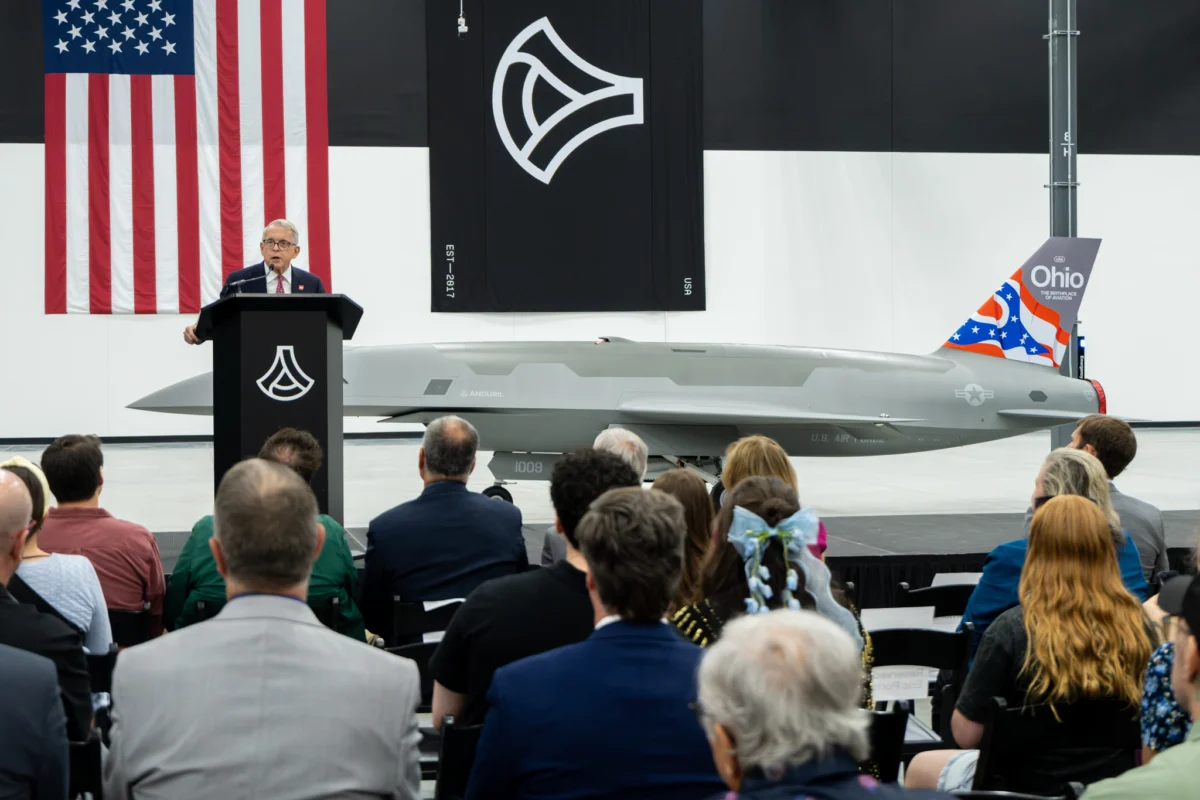
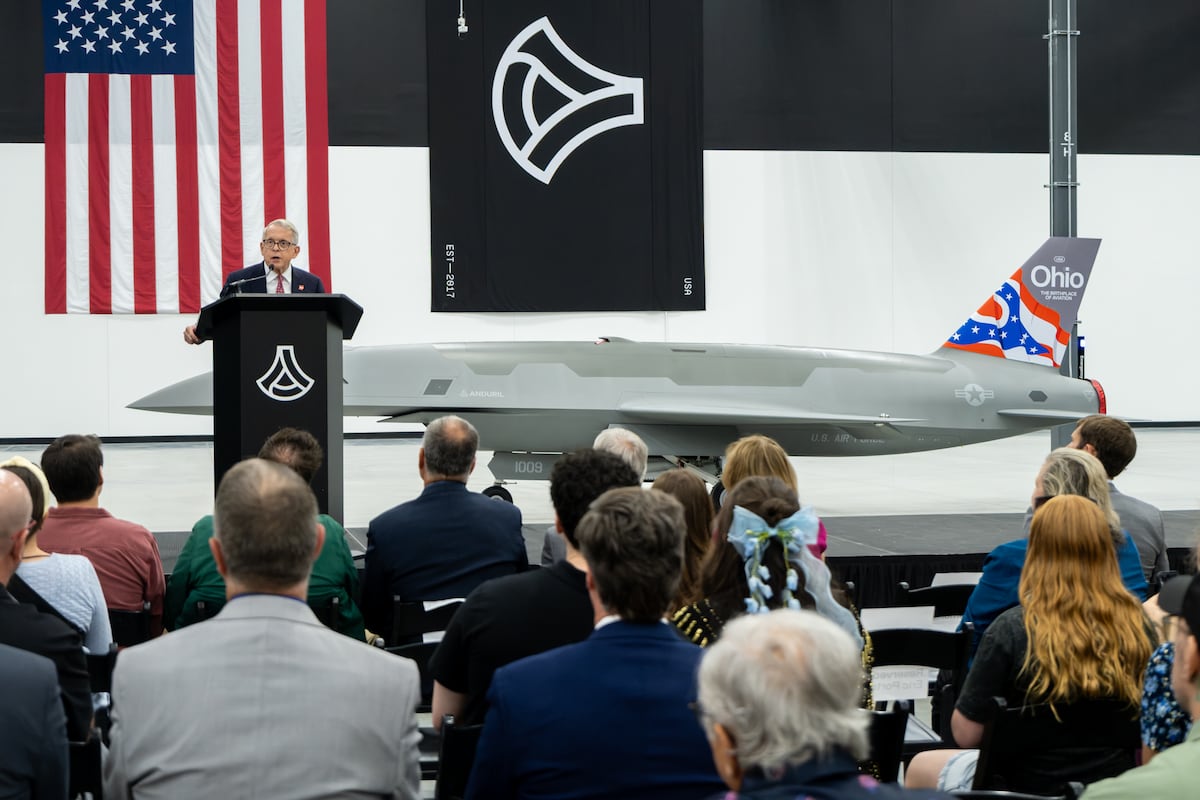
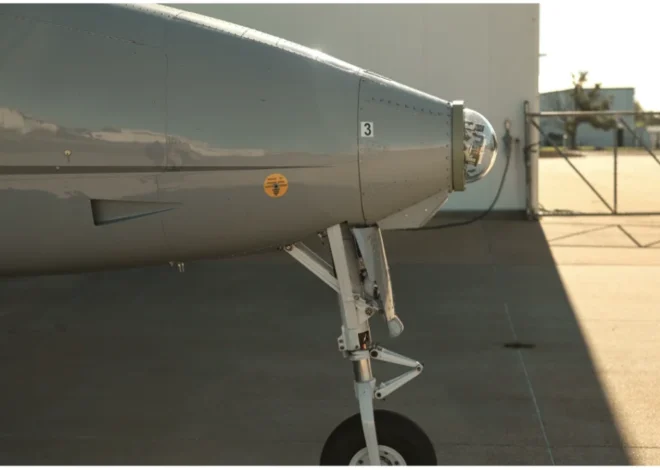
The future of American air superiority took a tangible form in Pickaway County, Ohio, this Monday as Anduril Industries celebrated the rollout of its first YFQ-44A unmanned, semi-autonomous aircraft. This milestone, achieved just four months after the commencement of production operations at the company’s massive "Arsenal-1" facility, signals a paradigm shift in how the United States Department of Defense approaches the manufacturing and deployment of high-end combat systems. The YFQ-44A, a missionized variant of Anduril’s "Fury" autonomous fighter jet, is a cornerstone of the U.S. Air Force’s Collaborative Combat Aircraft (CCA) program, an initiative designed to pair manned fighter jets with sophisticated, lower-cost robotic wingmen.
The rapid progression from facility groundbreaking to the first completed airframe underscores the "software-first" and "hyperscale" manufacturing philosophy championed by Anduril’s leadership. With the Air Force aiming to field a fleet of at least 1,000 CCAs to counter evolving threats in contested environments, the delivery of the first Ohio-made YFQ-44A marks the beginning of a new era in industrial mobilization.
Arsenal-1 and the New Industrial Base
The production of the YFQ-44A takes place within Arsenal-1, a $1 billion, 5 million-square-foot manufacturing complex located near Columbus, Ohio. The facility’s strategic location near Rickenbacker International Airport provides the company with a logistics hub capable of supporting rapid distribution and testing. When fully operational, the plant is expected to employ approximately 4,000 people, drawing from the region’s growing pool of technical and engineering talent.
Arsenal-1 represents a departure from traditional defense aerospace manufacturing, which has historically relied on low-volume, high-touch production lines. Instead, Anduril has designed the facility to function more like a modern consumer electronics or automotive gigafactory. By utilizing advanced robotics, modular assembly techniques, and a unified software backbone, the company intends to achieve a production capacity of up to 150 YFQ-44A units per year.
The Ohio facility’s rapid activation has been a point of pride for both the company and state officials. Announced in January 2025, the facility was initially slated to begin manufacturing its first products by July 2026. However, the urgency of the Air Force’s requirements and the efficiency of Anduril’s "Lattice" software-driven production management allowed the company to meet its targets ahead of the original aggressive schedule.
The YFQ-44A Fury: Capabilities and Design
The YFQ-44A is the "missionized" version of the Fury, an autonomous platform Anduril acquired through its purchase of Blue Force Technologies. The aircraft is designed to perform as a high-performance adversary or a lethal wingman, capable of executing complex maneuvers and making real-time tactical decisions under the supervision of a human operator.
Measuring as a medium-sized jet, the YFQ-44A features a low-observable design intended to survive in high-threat environments. Its primary purpose within the CCA program is to act as a force multiplier for fifth- and sixth-generation fighters like the F-35 Lightning II and the Next Generation Air Dominance (NGAD) platform. By carrying additional sensors, electronic warfare suites, or munitions, the YFQ-44A allows human pilots to stay out of the most dangerous engagement zones while extending their tactical reach.
A defining characteristic of the YFQ-44A is its reliance on the Lattice OS, Anduril’s proprietary artificial intelligence backbone. Lattice enables the aircraft to operate with high degrees of autonomy, managing flight paths, sensor fusion, and target identification without requiring constant "joystick" control from the ground or a nearby cockpit. This reduces the cognitive load on human pilots and ensures the system can function even in environments where communications are jammed or degraded.
Testing and Integration: A Summer of Milestones
The rollout of the first production unit follows a series of successful technical demonstrations that have validated the YFQ-44A’s combat potential. Just two weeks prior to the Monday announcement, the U.S. Air Force conducted its first-ever live-fire test involving a CCA platform. During the exercise, a YFQ-44A executed an end-to-end, beyond-line-of-sight strike against a simulated aerial target.
In that test, the aircraft successfully launched an inert AIM-120 Advanced Medium-Range Air-to-Air Missile (AMRAAM), proving that the autonomous system could integrate seamlessly with existing weapon stocks. The test demonstrated the aircraft’s ability to receive targeting data, position itself for an optimal shot, and execute the firing sequence—all while maintaining a secure data link with human commanders.
Parallel to the hardware tests, the Air Force has been refining the operational doctrine for these systems. On the same day as the rollout, the Air Force revealed the conclusion of a multi-day Agile Combat Employment (ACE) exercise at Creech Air Force Base in Nevada. Conducted by the CCA Experimental Operations Unit (EOU), the exercise focused on building foundational tactics, techniques, and procedures (TTPs) for integrating unmanned systems into standard wing operations.
"Air superiority in today’s increasingly contested environments requires the rapid fielding of affordable mass," said Air Force Chief of Staff Gen. Ken Wilsbach. "CCA are essential to this effort. By integrating uncrewed systems to fly alongside our Airmen, we extend reach and increase lethality."
The exercise at Creech involved multiple sorties where CCAs were integrated with manned platforms in local airspace, simulating high-intensity conflict scenarios. These "warfighter-run" exercises provide critical data that helps the Air Force make informed fielding decisions, bypassing the decade-long acquisition cycles that have characterized previous stealth programs.
The Strategy of "Affordable Mass"
The CCA program is the Air Force’s answer to a growing numerical disadvantage in the Pacific theater and other contested regions. As modern stealth fighters have become increasingly expensive—often exceeding $100 million per unit—the Air Force can no longer afford to sustain the levels of attrition that might occur in a peer-to-peer conflict.
The concept of "affordable mass" involves producing large numbers of highly capable but relatively inexpensive autonomous aircraft. The Air Force has set a target price point for CCAs at approximately one-third to one-fourth the cost of an F-35. At this price, the aircraft can be used more aggressively in combat, accepting higher risks to protect human pilots and high-value assets.
In June 2026, the Air Force narrowed its field of providers for Increment 1 of the CCA program, awarding contracts to Anduril for the YFQ-44A and General Atomics for their YFQ-42A. While the initial increment aims for 100 to 150 aircraft, the long-term objective is a fleet of at least 1,000 units. The success of Anduril’s Ohio facility is critical to meeting these volume requirements. If Arsenal-1 can maintain its projected capacity of 150 units per year, Anduril alone could supply a significant portion of the Air Force’s desired fleet within a decade.
The Human-Machine Partnership
Despite the "autonomous" label, Air Force leadership has remained steadfast in the assertion that humans will remain the ultimate decision-makers in the use of lethal force. The YFQ-44A is described as "semi-autonomous," meaning that while it can fly and find targets on its own, the decision to deploy a munition requires a command from a human operator.
Building the necessary trust between pilots and their robotic wingmen is currently a major focus of the Air Force’s training pipeline. Former Air Force Secretary Frank Kendall recently emphasized that this trust is not built overnight but through rigorous, repetitive simulations and live exercises.
"Trust between operators and CCAs starts with computerized, man-in-the-loop simulations and training exercises," Kendall noted during a recent industry roundtable. He pointed to large-scale exercises like Red Flag at Nellis Air Force Base as the primary venue for proving that AI can behave predictably and effectively in the chaos of a simulated "dogfight."
Brig. Gen. Jesse Friedel, commander of the Air Force Operational Test and Evaluation Center, echoed these sentiments following the Creech AFB exercise. He noted that the goal is to deliver combat capability when it is needed most, ensuring that the software and hardware are ready for the stresses of real-world deployment long before they reach the frontline.
Economic and Geopolitical Implications
The establishment of Arsenal-1 in Ohio is part of a broader trend of "re-shoring" critical defense manufacturing to the American Midwest. Often referred to as the "Silicon Heartland," the region is seeing a surge in high-tech investment, ranging from semiconductor fabrication to advanced aerospace. The 4,000 jobs created by Anduril represent a significant boost to the local economy and provide a stable base for specialized manufacturing skills.
From a geopolitical standpoint, the rapid rollout of the YFQ-44A serves as a signal to global competitors. By demonstrating the ability to move from a "clean sheet" facility to a production aircraft in under two years, the U.S. is signaling that its industrial base is evolving to meet the speed of modern technological change.
As Anduril prepares to ramp up production at Arsenal-1, the focus will shift to the integration of more advanced sensors and modular payloads. The "open architecture" of the YFQ-44A ensures that as new technologies emerge—such as improved electronic warfare suites or new missile variants—the aircraft can be updated with minimal downtime.
The rollout of the first Ohio-made YFQ-44A is more than just a corporate milestone; it is a validation of a new strategy for national defense. In an era where the speed of innovation often determines the outcome of a conflict, the ability to produce "affordable mass" through hyperscale manufacturing may prove to be the most critical weapon in the U.S. Air Force’s arsenal. For now, the eyes of the defense world remain on Pickaway County, where the next generation of airpower is officially coming off the line.

Related Posts
Pentagon Forges Landmark Seven-Year Agreements with Boeing and RTX to Accelerate Standard Missile-3 Production and Stabilize Defense Supply Chains
Boeing Unveils Ultra Low-Cost Seeker to Enhance Missile Inventory and Combat Cost Challenges in Modern Warfare