The Humanitarian Paradox: United States Prepares for Mass Deportations to Haiti Amid Escalating Gang Violence and Diplomatic Warnings
The United States government is currently navigating a profound internal policy contradiction as it moves toward the mass deportation of Haitian nationals while simultaneously characterizing the nation’s capital as a lawless "kill zone." Following a recent high-level diplomatic visit to Port-au-Prince, U.S. Ambassador to the United Nations Mike Waltz provided the UN Security Council on July 20 with a harrowing assessment of the security vacuum gripping Haiti. In a briefing marked by unusually graphic detail, Waltz recounted incidents of extreme brutality, including a report where several Haitian National Police (PNH) officers were flayed alive in public thoroughfares and pinned to the exterior of their own burning armored vehicles. This testimony underscores a precipitous decline in regional stability that has seen gang coalitions seize control of nearly 80 percent of the capital city.
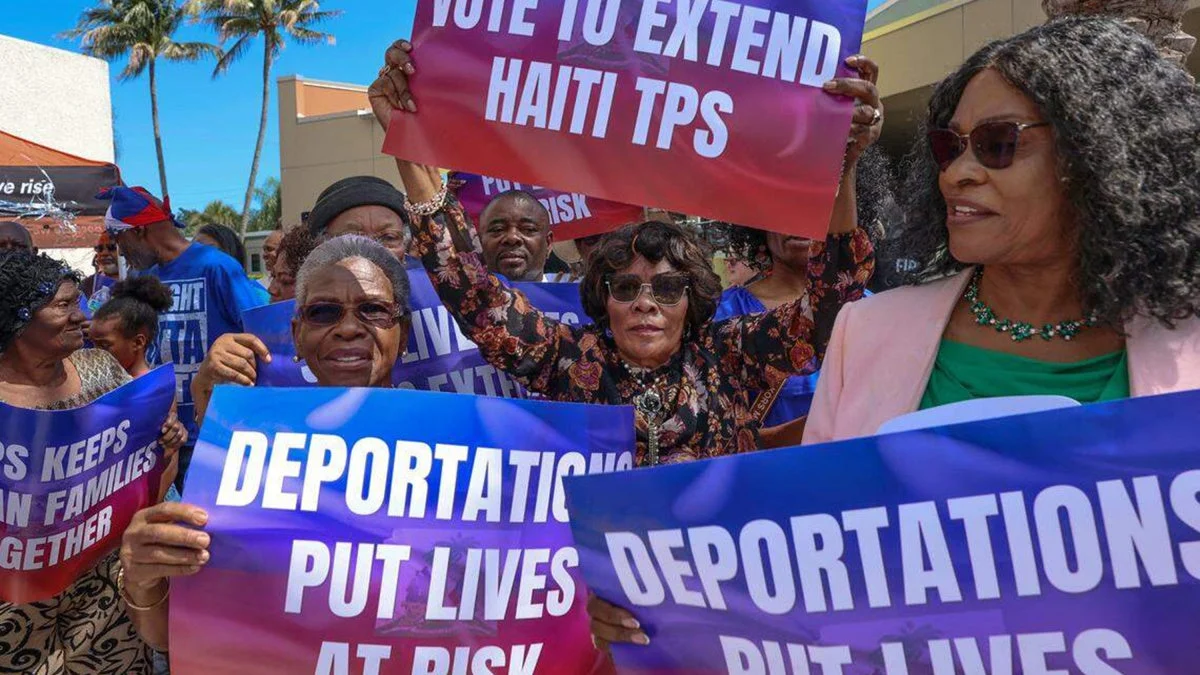
Despite these grim assessments, the U.S. executive and judicial branches are proceeding with plans that would see approximately 350,000 Haitians currently residing in the United States under Temporary Protected Status (TPS) returned to their home country. This follows a pivotal U.S. Supreme Court decision that declined to intervene in the termination of these protections. The impending enforcement of these deportations has ignited a fierce debate among policymakers, human rights advocates, and national security experts regarding the ethical and logistical feasibility of returning thousands of individuals to a state that the U.S. State Department officially classifies as a "Level 4: Do Not Travel" zone.
The Escalating Security Crisis in Port-au-Prince
The descriptions provided by Ambassador Waltz to the Security Council reflect a reality in which the Haitian state has largely lost its monopoly on the use of force. The "kill zone" mentioned in the briefing refers to the contested territories within Port-au-Prince where rival gang alliances, most notably the "Viv Ansanm" coalition, engage in daily skirmishes for territorial control. These gangs have transitioned from localized criminal enterprises into heavily armed paramilitary groups capable of overwhelming police outposts and seizing critical infrastructure, such as the Toussaint Louverture International Airport and the country’s primary maritime ports.
Supporting the Ambassador’s testimony, a July 10 State Department travel advisory remains in its most restrictive tier. The advisory warns of frequent armed robberies, carjackings, and sexual assaults, noting that even bystanders are at high risk of being struck by stray bullets. This environment is further complicated by the use of kidnapping as a primary revenue stream for gangs. Between January and June of 2024 alone, the United Nations Integrated Office in Haiti (BINUH) reported over 3,000 homicides and nearly 1,500 kidnappings, representing a significant increase over the previous year’s statistics.
A Chronology of Haiti’s Destabilization
The current humanitarian catastrophe is the culmination of years of political and social erosion. To understand the gravity of the present situation, it is necessary to examine the timeline of Haiti’s recent collapse:
- July 2021: The assassination of President Jovenel Moïse at his private residence creates a massive power vacuum, leading to a protracted struggle for political legitimacy and the postponement of national elections.
- 2022–2023: Gang violence surges as armed groups fill the void left by a weakened central government. The "G9 an Fanmi e Alye" and "G-Pep" alliances begin large-scale turf wars that displace hundreds of thousands of civilians.
- February 2024: Gangs launch a coordinated offensive against government institutions while then-Prime Minister Ariel Henry is abroad. This leads to the storming of Haiti’s two largest prisons, resulting in the escape of over 4,000 inmates.
- March 2024: Under intense domestic and international pressure, Prime Minister Ariel Henry announces his resignation, paving the way for a Transitional Presidential Council (TPC).
- June 2024: The first contingent of a UN-authorized Multinational Security Support (MSS) mission, led by Kenyan police officers, arrives in Port-au-Prince. While intended to bolster the PNH, the mission faces significant funding shortfalls and skepticism from local populations.
- July 2024: Ambassador Waltz delivers his "kill zone" briefing to the UN, even as the U.S. Supreme Court clears the path for the termination of TPS for Haitian nationals.
The Legal Landscape: The Termination of Temporary Protected Status
Temporary Protected Status (TPS) is a humanitarian program designed to provide a legal haven for foreign nationals whose home countries are suffering from ongoing armed conflict, environmental disasters, or other extraordinary and temporary conditions. Haiti was first designated for TPS following the catastrophic 2010 earthquake. While the designation has been extended and redesignated several times, recent judicial rulings have removed the legal barriers preventing the executive branch from ending these protections.
The U.S. Supreme Court’s decision to "stand aside" effectively permits the Department of Homeland Security (DHS) to execute a wind-down of the program for the 350,000 Haitians currently covered. For many of these individuals, the United States has been their home for over a decade. The looming deadline for their departure has created a sense of panic within Haitian-American communities in Florida, New York, and Massachusetts, where the bulk of the TPS population is concentrated.
Policy Directives and Economic Incentives for Return
In the wake of the Supreme Court’s ruling, newly appointed Homeland Security Secretary Markwayne Mullin has signaled a firm stance on the enforcement of immigration laws. In a public address, Secretary Mullin called upon Haitian nationals to "self-deport" before the formal termination of their status. To facilitate this, the administration has offered a financial incentive of $2,100 per individual to assist with "reintegration" costs in Haiti.
However, critics argue that such incentives are negligible when compared to the risks returnees face. Human rights organizations, including Human Rights Watch, have pointed out that Haitians returning from the United States are often perceived as wealthy by local gangs. This perception makes them primary targets for extortion and "express kidnappings," where victims are held until their families in the U.S. can wire ransom money. Furthermore, the $2,100 stipend is unlikely to provide long-term security in an economy where inflation has surpassed 25% and basic necessities like clean water and fuel are controlled by criminal cartels.
Logistical Contradictions and the FAA Flight Ban
The push for deportations faces a significant logistical hurdle: the very instability cited by the State Department has rendered air travel to Haiti nearly impossible for U.S.-based carriers. The Federal Aviation Administration (FAA) currently maintains a prohibition on U.S. air carrier flights to Port-au-Prince. This "Notice to Air Missions" (NOTAM) was issued following several incidents where aircraft were struck by small-arms fire originating from gang-controlled neighborhoods surrounding the airport.
This creates a stark policy paradox. One arm of the U.S. government (the FAA) deems the airspace too dangerous for commercial pilots and passengers, while another arm (DHS) is preparing to transport hundreds of thousands of people into that same environment. If commercial flights remain grounded, the government may be forced to rely on charter flights or military transport to execute deportations, a move that would likely draw further legal challenges and international condemnation.
Humanitarian and Regional Implications
The mass return of 350,000 people to Haiti would likely exacerbate an already dire humanitarian crisis. According to the Integrated Food Security Phase Classification (IPC), nearly 5 million Haitians are currently experiencing acute food insecurity. The influx of a large population with no immediate access to housing, employment, or protection would place an unsustainable burden on the few remaining functional NGOs and international aid agencies.
The regional implications are equally concerning. A further collapse of order in Haiti could trigger a mass migration event across the Caribbean, placing immense pressure on the Dominican Republic, the Bahamas, and the Turks and Caicos Islands. The Dominican Republic has already significantly tightened its border security and increased its own deportation rates, leading to rising tensions on the Hispaniola land border.
Analysis of Policy Inconsistency
The current situation highlights a tension between domestic immigration enforcement goals and international humanitarian commitments. By acknowledging the "kill zone" reality through Ambassador Waltz, the U.S. government has documented a factual basis for the "extraordinary and temporary conditions" that typically justify the extension of TPS.
The decision to move forward with deportations suggests a shift in priority toward border security and the reduction of long-term humanitarian parole populations. However, the legal and moral arguments for protection remain strong. Secretary Mullin maintains the authority to reverse course and issue a new TPS designation based on the most recent security data. Such a move would align DHS policy with the State Department’s warnings and the Ambassador’s testimony.
As the Supreme Court’s ruling is set to go into effect later this month, the window for administrative intervention is closing. The coming weeks will determine whether the United States heeds its own warnings about the dangers of Haiti or proceeds with a mass repatriation effort that many observers fear will lead to a predictable and preventable loss of life. For the 350,000 Haitians caught in this policy vacuum, the choice between an uncertain legal future in the U.S. and a documented "kill zone" in their homeland remains a harrowing reality.

Related Posts
Human Rights Watch Calls for Investigation into Death of Detainee Following Removal from Najaf Hospital by Iraqi Drug Police
Human Rights Watch Urges UN Security Council to Extend Lebanon Peacekeeping Mission Amid Escalating Conflict and Humanitarian Crisis