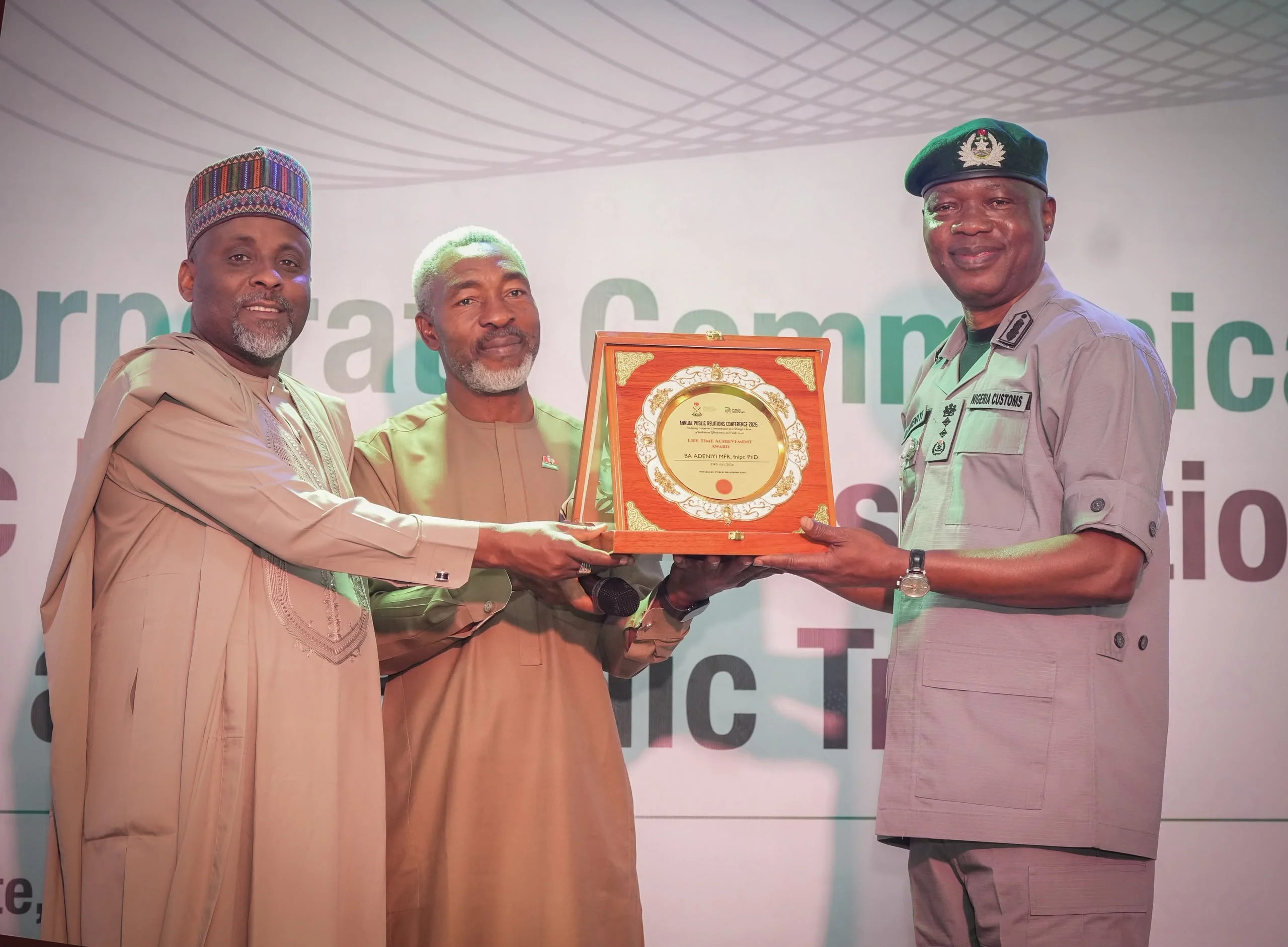
Customs Boss Adeniyi Charges Public Relations Officers to Leverage Strategic Communication for Institutional Trust and Reform Success
The Nigeria Customs Service has officially concluded its 2026 Public Relations Conference in Port Harcourt, Rivers State, setting a new trajectory for how the paramilitary agency engages with the Nigerian public. At the heart of the four-day gathering was a clarion call from the Comptroller-General of Customs, Adewale Adeniyi, who emphasized that in the modern era of digital transparency and economic volatility, the role of a Public Relations Officer (PRO) must transcend mere information dissemination to become a cornerstone of strategic management and institutional credibility.
The conference, which drew participants from various commands across the federation, was anchored on the theme, Realigning Corporate Communication as a Strategic Driver of Institutional Effectiveness and Public Trust. This event represents a significant shift in the operational philosophy of the Nigeria Customs Service, moving away from traditional reactive messaging toward a more proactive, research-driven, and intelligence-led communication framework.
The Strategic Imperative of Institutional Reform
For any public institution, particularly one tasked with the sensitive mandates of border security, revenue collection, and trade facilitation, the gap between policy implementation and public perception is often a primary cause of operational friction. Comptroller-General Adeniyi, in his keynote address, noted that the success of the service’s ongoing modernization efforts is inextricably linked to public buy-in.
"Around the world, communication has evolved from a support service into a strategic management function," Adeniyi stated. "Reforms cannot succeed unless they are understood, accepted, and trusted by the people they are designed to serve."
This perspective highlights the challenges the Customs Service has faced in recent years, where public misunderstanding of trade policies or border enforcement actions has frequently led to friction with stakeholders. By prioritizing strategic communication, the leadership of the Service is attempting to minimize this friction, ensuring that stakeholders—from clearing agents and importers to the general public—understand the "why" behind every policy change, seizure, or trade facilitation initiative.
Chronology and Evolution of the Communication Strategy
The 2026 Port Harcourt conference is the latest iteration in a series of deliberate efforts by the current Customs leadership to professionalize its public-facing operations. The journey toward this strategic realignment can be traced back to a sequence of regional engagements:
- Lagos Summit: Initial efforts focused on identifying the gaps in legacy communication methods and the need for a digital-first approach.
- Gwagwalada Session: This stage emphasized the importance of crisis communication and the need for a unified voice across all regional commands.
- Kano Workshop: The focus shifted toward grassroots engagement and understanding the unique communication needs of border communities and northern trade corridors.
- Port Harcourt 2026: The current summit served as a culmination, focusing on advanced technical integration, the use of Artificial Intelligence (AI) in sentiment analysis, and the institutionalization of PR as a core business driver.
Deputy Comptroller Abdullahi Maiwada, the National Public Relations Officer, noted that these regional engagements have been essential in building a cohesive communication culture. "This conference was designed not merely to exchange ideas but to develop practical solutions, strengthen professional networks, and reposition Public Relations as a strategic corporate communication function within the Nigeria Customs Service," Maiwada explained.
Data-Driven Communication and Technological Integration
A critical component of the 2026 conference was the focus on emerging communication technologies. As the Nigeria Customs Service modernizes its technical infrastructure—incorporating e-customs and automated clearance systems—the communication strategy must keep pace.
Technical sessions during the four-day event delved into media intelligence, digital innovation, and the use of big data to monitor public sentiment. In a digital landscape where misinformation can spread rapidly, the Service is training its PROs to utilize data-driven insights to counter false narratives. By leveraging AI-driven analytics, the Customs Service aims to anticipate public concerns before they escalate into crises, allowing for more proactive and transparent reporting on its activities.

Official Responses and Professional Endorsements
The significance of the event was underscored by the presence of leadership from key national media and public relations bodies. The Nigeria Institute of Public Relations (NIPR), led by President Ike Neliaku, praised the initiative, noting that the Customs Service is setting a benchmark for other government agencies in Nigeria.
"Institutionalizing communication at this level ensures that the Service is not just seen as an enforcer of laws, but as an entity that values transparency and stakeholder engagement," Neliaku remarked.
Similarly, the President of the Nigeria Union of Journalists (NUJ), Alhassan Yahya, lauded the collaboration between the Service and the media. He emphasized that for democracy to thrive, public institutions must be accessible and responsive, adding that the professional development of Customs PROs would foster a more collaborative relationship between the press and the NCS.
The local host, Comptroller Salamatu Atuluku, Area Controller of the Port Harcourt Area I Command, echoed these sentiments, urging her colleagues to translate the theoretical frameworks discussed at the conference into tangible improvements in service delivery within their respective commands.
Implications for Trade Facilitation and National Security
The broader implications of this strategic shift are significant for the Nigerian economy. The Nigeria Customs Service is a primary contributor to the federal government’s revenue, and its role in trade facilitation is vital for ease-of-doing-business indices.
When stakeholders understand the regulations and processes, compliance rates typically rise, and the cost of doing business decreases. By professionalizing its communication, the NCS is essentially reducing the "information asymmetry" that often leads to bottlenecks at ports and border crossings. Furthermore, in matters of national security—such as the interception of illicit goods—proactive communication helps build public confidence in the Service’s capacity to protect the nation’s borders, thereby garnering public support for sensitive enforcement operations.
Future Outlook and Sustainability
As the conference concluded, the consensus among participants was that the transformation of the Service’s communication architecture is a long-term commitment. The challenge now lies in the implementation phase: ensuring that the skills acquired during the technical sessions are consistently applied across all commands, from the busiest seaports to the most remote land borders.
The leadership of the NCS has indicated that this will not be a one-off event. Plans are underway to integrate continuous professional development (CPD) programs for all personnel involved in public affairs, ensuring they remain updated on global best practices.
In summary, the 2026 Public Relations Conference marks a pivotal moment for the Nigeria Customs Service. By elevating corporate communication to a strategic level, the Service is positioning itself to be more agile, transparent, and effective. Whether these initiatives will successfully mitigate the age-old challenges of public distrust and operational friction remains to be seen, but the current strategic direction suggests a Service that is increasingly aware of the power of information in achieving its institutional goals.
As the Service moves forward, the success of this initiative will be measured by the increased clarity of its policies, the improved quality of its engagement with the media, and ultimately, the tangible support it receives from the Nigerian public in its mission to facilitate trade and secure the nation’s borders. The era of the silent, purely administrative Customs PRO is clearly ending; in its place, the Service is cultivating a new generation of communicators equipped to handle the complexities of a modern, interconnected, and highly scrutinized national institution.