
Houthis Claim Attacks on Saudi Oil Sites, Escalating Regional Tensions and Threatening Global Energy Supplies.
The Houthi movement in Yemen has claimed responsibility for coordinated missile and drone attacks on two significant Saudi Aramco oil facilities located in Jizan and Yanbu, Saudi Arabia. This latest escalation, announced by Houthi military spokespersons, was presented as a direct retaliation for recent airstrikes attributed to the Saudi-led coalition on Yemen’s strategic Hodeidah port and Kamaran Island. The Houthis also reaffirmed their commitment to maintaining a blockade on Saudi-linked shipping through the vital Bab el-Mendeb strait, citing the ongoing Saudi-led blockade on Yemen and a prior attack on Sanaa’s international airport as justifications for their actions. This renewed offensive underscores the persistent volatility of the Yemeni conflict and its broader implications for regional stability and international energy markets.
Escalation of Hostilities
The Houthi announcement detailed two distinct military operations targeting critical Saudi infrastructure. According to a statement released by the group, "In response to this blatant and criminal aggression, the Yemeni armed forces carried out two qualitative military operations: the first targeted sensitive Aramco facilities in Jizan with dozens of ballistic missiles and drones, while the second targeted sensitive Aramco facilities in Yanbu with a number of ballistic and cruise missiles and drones." The choice of targets, Aramco facilities, signifies an intent to disrupt Saudi Arabia’s primary economic engine and exert pressure on the Kingdom by threatening its oil production and export capabilities.
The Jizan refinery, located on Saudi Arabia’s southwestern Red Sea coast, is a massive facility with a capacity to process 400,000 barrels per day (bpd) of Arabian Heavy and Arabian Medium crude oil, primarily for domestic consumption and export to international markets. Yanbu, situated further north on the Red Sea, is a critical industrial hub that hosts multiple Aramco facilities, including crude oil terminals, refineries, and petrochemical plants. It is also the western terminus of the East-West Pipeline (Petroline), a vital conduit that transports crude oil from Saudi Arabia’s eastern oilfields across the Arabian Peninsula to the Red Sea, allowing Saudi exports to bypass the Strait of Hormuz. Attacks on these sites, particularly Yanbu, highlight the Houthis’ expanding range and sophistication in their targeting capabilities, posing a significant threat to global oil supply chains.
Saudi Response and Counter-Strikes
Following the Houthi claims, reports emerged from Yemen TV, affiliated with the Saudi-led coalition, detailing immediate retaliatory airstrikes. These strikes reportedly targeted Houthi reinforcements in the country’s central Marib and northern al-Jawf provinces. According to these reports, the counter-attacks resulted in the deaths of several Houthi members, including individuals identified as missile-launch experts. There was no immediate confirmation or statement from the Houthi group regarding these specific casualties or the extent of the damage. Such rapid succession of attacks and counter-attacks illustrates the tit-for-tat nature of the conflict, where each action by one party typically elicits a swift response from the other, further entrenching the cycle of violence.
The Saudi-led coalition, which intervened in Yemen in March 2015, consistently asserts its right to defend Saudi territory and strategic interests against Houthi aggression. The coalition frequently reports intercepting Houthi drones and missiles launched towards Saudi cities and infrastructure, although not all incoming projectiles are successfully neutralized. The recent Houthi attacks underscore the persistent challenge Saudi air defenses face in safeguarding vast and dispersed oil infrastructure from asymmetric warfare tactics involving drones and various missile types.
Background to a Protracted Conflict
The Yemeni civil war, which began in late 2014, is widely regarded as a proxy conflict between regional rivals Saudi Arabia and Iran. The conflict escalated dramatically in March 2015 when a Saudi-led coalition intervened to restore the internationally recognized government of President Abdrabbuh Mansur Hadi, after the Houthis, an Iran-aligned Zaidi Shia group, seized the capital Sanaa and much of northern Yemen. The coalition, comprising several Arab states, launched Operation Decisive Storm, followed by Operation Restoring Hope, with the stated aim of countering Houthi expansion and what it perceives as Iranian influence in Yemen.
Over the years, the conflict has devolved into a brutal stalemate, characterized by widespread destruction, a devastating humanitarian crisis, and a complex interplay of local, regional, and international actors. The Houthis, despite facing overwhelming air superiority, have demonstrated remarkable resilience and an increasing capability to launch cross-border attacks into Saudi Arabia, targeting military installations, civilian airports, and critical oil infrastructure. These attacks, often involving drones and ballistic missiles, represent a significant shift in the Houthis’ military strategy, moving beyond internal territorial control to directly challenge Saudi national security.
The Strategic Importance of Key Locations
The specific locations cited in the current round of escalation—Hodeidah, Kamaran Island, Sanaa Airport, and the Bab el-Mendeb strait—hold immense strategic significance.
- Hodeidah Port: Located on Yemen’s Red Sea coast, Hodeidah is the country’s primary gateway for humanitarian aid and commercial imports. Control over the port has been a major point of contention throughout the conflict. Saudi-led coalition airstrikes on Hodeidah, which the Houthis cited as a primary reason for their latest attacks, have severe implications for humanitarian relief efforts, as a significant portion of Yemen’s population relies on supplies entering through this port. Disruptions here directly exacerbate the world’s worst humanitarian crisis, where millions face famine and disease.
- Kamaran Island: Situated strategically near Hodeidah in the Red Sea, Kamaran Island holds military importance as a potential staging ground or observation point for naval activities. Attacks on such islands signal an intent to disrupt Houthi logistical or operational capabilities in the maritime domain.
- Sanaa International Airport: The main airport in the capital, Sanaa, has been largely under Houthi control and subject to coalition blockades and occasional airstrikes. Its functionality is critical for humanitarian flights and medical evacuations, making any attack on it a matter of grave concern for international aid organizations.
- Bab el-Mendeb Strait: This narrow waterway, connecting the Red Sea to the Gulf of Aden and the Arabian Sea, is one of the world’s most critical maritime chokepoints. Approximately 12% of global seaborne oil and 8% of liquefied natural gas (LNG) transits through Bab el-Mendeb annually. The Houthis’ repeated threats to disrupt Saudi-linked shipping through this strait pose a direct challenge to international trade and energy security. Their previous attempts to target vessels, including Saudi oil tankers, highlight the severe risks to global shipping if the conflict further spills into this vital corridor.
The Economic and Geopolitical Stakes
The targeting of Aramco facilities in Jizan and Yanbu carries significant economic and geopolitical implications. Saudi Aramco is the world’s largest integrated oil and gas company, playing a pivotal role in global energy markets. Any perceived threat to its operations, even if quickly contained, can trigger volatility in international oil prices and raise concerns about the reliability of global energy supplies. While Aramco typically assures that attacks do not impact production or export volumes, the sheer frequency and increasing sophistication of Houthi strikes force oil markets to factor in a higher risk premium for crude from the region.
The importance of the Bab el-Mendeb strait has been further magnified by persistent tensions in the Persian Gulf and the Strait of Hormuz, primarily involving the United States and Iran. With potential disruptions to shipping in the Persian Gulf, Saudi Arabia’s ability to export oil via its Red Sea ports, particularly Yanbu and through the East-West Pipeline, becomes even more critical as an alternative route. This strategic bypass allows Saudi oil to reach European and North American markets without traversing the Persian Gulf, the Strait of Hormuz, and the Gulf of Oman, which have historically been flashpoints for geopolitical tensions. Therefore, any Houthi threat to Bab el-Mendeb or the Red Sea facilities directly impacts this strategic flexibility and poses a broader threat to global energy security.
Statements and International Reactions
In response to such escalations, international bodies and major powers typically issue calls for de-escalation and express concern over regional stability. The United Nations has consistently called for a cessation of hostilities and a political resolution to the Yemeni conflict, emphasizing the dire humanitarian consequences. UN Special Envoys to Yemen have engaged in protracted mediation efforts, though progress has been slow and often undermined by renewed fighting.
The United States, a key ally of Saudi Arabia, routinely condemns Houthi cross-border attacks and reiterates its support for Saudi Arabia’s right to defend its territory. Washington has also been involved in efforts to broker a ceasefire and facilitate humanitarian aid access in Yemen. European Union nations often echo calls for restraint and highlight the need to protect civilian lives and infrastructure. Humanitarian organizations, such as Doctors Without Borders (MSF) and the International Committee of the Red Cross (ICRC), consistently voice alarm over the impact of conflict on civilians and the critical need for unimpeded humanitarian access, particularly to Hodeidah.
Implications for Regional Stability and Humanitarian Crisis
The latest Houthi attacks signal a dangerous intensification of the Yemeni conflict, with significant implications for regional stability. The tit-for-tat exchanges risk dragging regional powers deeper into the conflict, potentially expanding its geographical scope and increasing the risk of miscalculation. The Houthis’ demonstrated capability to strike deep within Saudi territory, coupled with their willingness to target critical economic infrastructure, presents a persistent security challenge that could destabilize the entire Arabian Peninsula.
Furthermore, the escalation inevitably worsens the already catastrophic humanitarian situation in Yemen. Increased airstrikes and blockades disrupt the flow of essential goods, food, and medicine, pushing millions closer to famine and increasing the spread of preventable diseases. The UN estimates that over 20 million Yemenis are in need of humanitarian assistance, with millions displaced and facing severe food insecurity. Any military action that further impedes access to ports like Hodeidah or disrupts supply lines will have immediate and devastating consequences for the civilian population. Achieving a lasting peace in Yemen remains an urgent international priority, but such aggressive military actions by all parties only serve to push that goal further out of reach.
A Chronology of Recent Events
The recent attacks are part of an ongoing pattern of violence:
- Late 2014-Early 2015: Houthis seize Sanaa, prompting Saudi-led coalition intervention in March 2015.
- Ongoing Conflict: Years of sustained fighting, airstrikes, and Houthi retaliatory attacks into Saudi Arabia using drones and missiles.
- Recent Weeks/Months: Reports of intensified Saudi-led coalition airstrikes targeting Houthi positions, including infrastructure and military assets in various Yemeni provinces.
- Specific Saudi Airstrikes (Pre-Houthi Attack): Saudi-led coalition conducts airstrikes on Hodeidah port and Kamaran Island, which the Houthis cite as the primary justification for their subsequent actions. Attacks are also reported on Sanaa’s international airport at various times.
- Date of Houthi Claimed Attacks: Houthi military spokespersons announce coordinated missile and drone strikes on Saudi Aramco facilities in Jizan and Yanbu.
- Immediate Saudi Retaliation: Yemen TV, affiliated with the Saudi-led coalition, reports immediate airstrikes targeting Houthi reinforcements and missile experts in Marib and al-Jawf provinces.
This sequence of events underscores the acute need for renewed diplomatic efforts to secure a comprehensive ceasefire and pave the way for a political solution, before the conflict spirals further out of control with potentially catastrophic consequences for both Yemen and the broader Middle East.

Related Posts
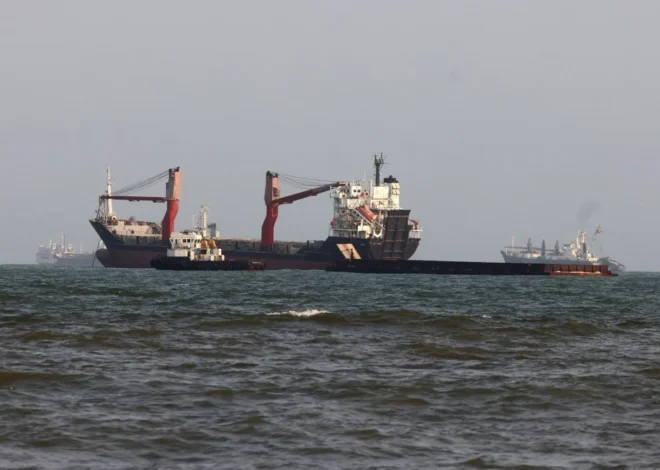
Over 150 Israeli Settlers Storm Al-Aqsa Compound and Perform Prayers, Violating Status Quo Under Police Protection.
UN Report Highlights Over 900 Obstacles Hampering West Bank Aid Amid Escalating Humanitarian Crisis