
Six Dead, Multiple Wounded in West Bank Shooting Amid Conflicting Narratives and Escalating Regional Tensions
A deadly shooting incident in the northern occupied West Bank village of Tal has resulted in the deaths of at least four Palestinians and two Israelis, marking the deadliest single confrontation in the territory in several months. The events, which unfolded amid a surge in violence following the October 7, 2023, Hamas-led attacks on Israel and the subsequent war in Gaza, are subject to sharply conflicting accounts from Palestinian residents and the Israel Defense Forces (IDF), further exacerbating already fraught tensions in the region. The incident has triggered immediate condemnations, calls for retaliation, and warnings of widespread escalation.
Chronology of a Deadly Encounter
The tragic sequence of events in Tal, a village located southwest of Nablus, began early in the morning, according to various reports. Palestinian eyewitnesses, including Ahmed Zeidan who spoke to the BBC, reported that approximately 30 Jewish settlers initiated an attack on Palestinian homes in the village. This aggression prompted local residents to confront the settlers, leading to hand-to-hand clashes. Zeidan stated that Israeli soldiers subsequently arrived at the scene and began firing. Essam Saifi, a local leader of the ruling Palestinian Authority’s Fatah party, corroborated parts of this account, telling Reuters that settlers opened fire before Israeli forces arrived and also began shooting. Saifi identified two brothers and two of their cousins among the Palestinian fatalities, while Palestinian officials confirmed several other Palestinians were wounded.
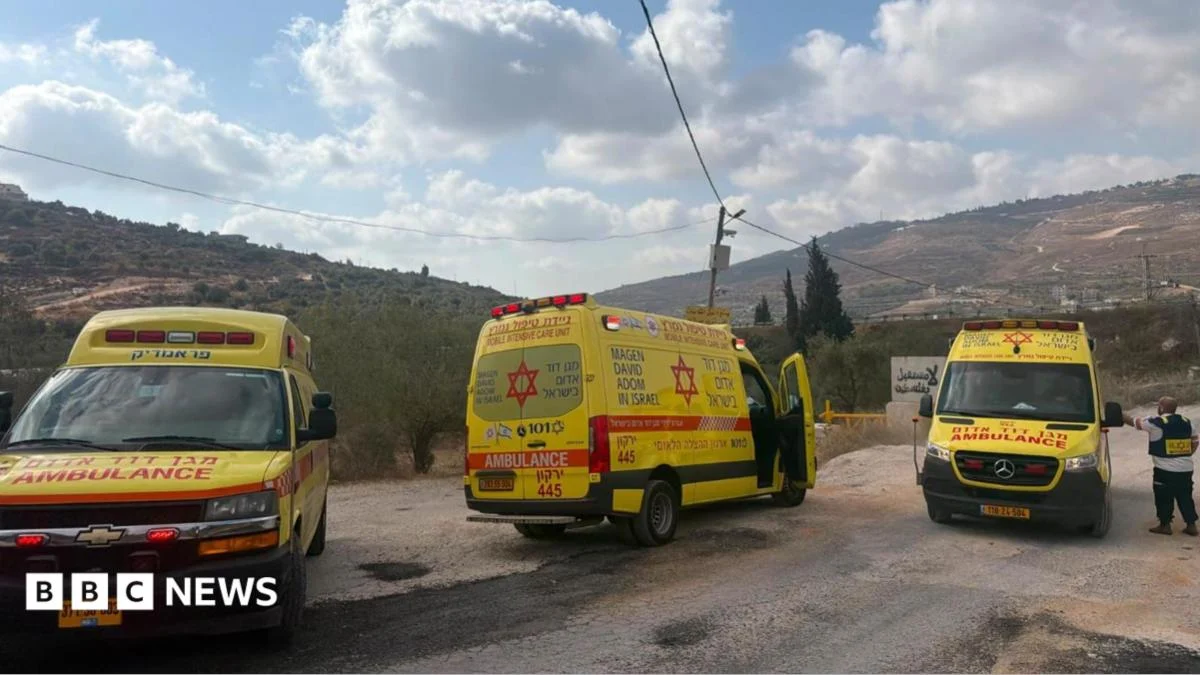
In stark contrast, the Israel Defense Forces (IDF) presented a different narrative, asserting that Palestinians initiated the attack. According to the IDF, soldiers were dispatched to Tal following reports of an assault on Israeli civilians who were hiking in the area. This particular area of the West Bank is complex, with parts falling under the full control of the Palestinian Authority (PA) and others under PA administrative control with Israeli security oversight. The IDF stated that the hike itself had not been coordinated with military authorities. A security guard from a nearby settler outpost reportedly arrived at the scene, where his weapon was allegedly snatched by a Palestinian. The IDF claims this individual then used the stolen weapon to fire upon the Israelis, killing the security guard. Subsequently, IDF soldiers reportedly "eliminated the terrorist who executed the terror attack." The military later confirmed that a 27-year-old soldier "fell during operational activity in the area," though the precise circumstances of his death remain unclear. The Israeli ambulance service also reported two Israelis wounded in the confrontation.
Two video clips, widely shared by local media but not independently verified, offer fragmented glimpses into the chaotic scene. One clip purportedly shows a confrontation between Palestinians, Israeli soldiers, and armed Israelis dressed in civilian attire. Gunshots are heard, and a group of Israeli civilians, including children, are seen observing and heckling. Armed Israelis in civilian clothes are then seen pushing and kicking two Palestinian men. A second video, shot from a different angle, appears to show both men attempting to seize firearms, with one successfully acquiring a weapon. This footage depicts a highly chaotic environment with multiple gunshots heard as the individual appears to fire the weapon, and troops respond in kind. These clips, while incomplete, underscore the intense and rapidly unfolding nature of the incident and the challenges in piecing together an definitive sequence of events.
Official Reactions and Immediate Aftermath
The tragic incident immediately drew strong condemnation and pledges of action from both sides. The Palestinian Foreign Ministry issued a vehement statement, "condemn[ing] in the strongest terms the massacre" in Tal. The ministry directly attributed the "escalation of settler terrorism" to the "protection, political backing, and complete impunity granted by the Israeli government and occupation forces." It further asserted that "Official Israeli incitement continues to fuel and encourage these crimes, creating an environment in which settler violence flourishes without accountability." This statement reflects a long-standing Palestinian grievance regarding what they perceive as systemic Israeli state support for settler activities, often perceived as encroaching on Palestinian land and rights.
On the Israeli side, Prime Minister Benjamin Netanyahu responded with a stern vow to act "with full force against the terrorists and those who orchestrate and sponsor them." He convened an emergency meeting with security officials, and reinforcements were swiftly dispatched to the area, near the settlement of Havat Gilad. In a joint statement with Defense Minister Israel Katz, Netanyahu’s office outlined immediate retaliatory measures. These included the demolition of the Palestinian shooter’s home in Tal, a standard Israeli punitive measure that human rights organizations often criticize as collective punishment. More significantly, the statement also declared an acceleration of the legalisation process for unauthorised settler outposts and the establishment of new ones. This move is highly controversial, as outposts – often rudimentary clusters of caravans on hilltops – are considered illegal under both international law and, until recently, Israeli law unless officially approved.
The political implications of Netanyahu’s announcement were swiftly highlighted. Yair Golan, leader of Israel’s Democrats Party and a reserve major general in the IDF, sharply criticised the joint statement on X (formerly Twitter), describing it as "a clear intent to set the area ablaze." Golan’s remarks underscore concerns within Israel’s political and security establishment that such policies could further destabilize the already volatile West Bank.
Following the initial attack in Tal, reports emerged of further violent confrontations between dozens of armed settlers and Palestinians in other nearby villages across the northern West Bank. Local medics reported several Palestinians wounded, with at least one shot in the head in Farata, indicating a rapid and dangerous spread of the violence. Israeli forces, according to the IDF, subsequently raided a hospital in Nablus, apprehending "two terrorists who took part in the shooting attack" and who had reportedly sought treatment there. This operation highlights the ongoing military presence and search efforts in the aftermath of the incident.
Broader Context: The Occupied West Bank and Escalating Tensions
This latest episode of violence is not an isolated event but rather a critical flashpoint within the broader, deeply entrenched Israeli-Palestinian conflict, particularly in the occupied West Bank. Israel has maintained military occupation of the West Bank and East Jerusalem since the 1967 Middle East war. Palestinians aspire to establish an independent state in these territories, along with the Gaza Strip. However, Israel has built hundreds of settlements, now housing approximately 700,000 Jewish settlers, on land that Palestinians envision as part of their future state. These settlements are widely considered illegal under international law, a position consistently upheld by the United Nations and most international bodies, though Israel disputes this. An estimated 3.3 million Palestinians live alongside these settlers, often under differing legal systems and facing significant restrictions on movement and development.
The legal status of settlements and especially "outposts" is a continuous point of contention. While all settlements are illegal under international law, outposts are also illegal under Israeli law if they lack official government approval. Netanyahu’s pledge to accelerate the legalization of unauthorized outposts and establish new ones is a significant policy shift, effectively legitimizing structures previously considered unlawful even by Israeli standards. This move is seen by critics as a deliberate expansion of the settlement enterprise, further entrenching Israeli control over West Bank land and making a future contiguous Palestinian state increasingly difficult to achieve. It also directly challenges the international consensus on the illegality of settlements.
Since the devastating Hamas-led attacks on Israel on October 7, 2023, and the subsequent Israeli military operation in Gaza, the West Bank has witnessed a dramatic and alarming surge in violence. The UN reports that since October 2023, 1,114 Palestinians have been killed in the West Bank, the vast majority by the IDF. Disturbingly, at least 35 of these deaths have involved attacks by Israeli settlers, reflecting a significant increase in settler-related violence. Concurrently, the UN states that 41 Israelis, including both civilians and security personnel, have been killed in Palestinian attacks or during Israeli military operations in the West Bank since the start of the Gaza war. These figures underscore a dangerous cycle of escalating violence and reprisal that shows no signs of abating. The presence of armed settlers, often operating with apparent impunity, alongside the pervasive military control by the IDF, creates a highly combustible environment where minor altercations can rapidly escalate into deadly confrontations.
Implications and Outlook
The events in Tal carry profound implications for the already precarious stability of the West Bank and the broader Israeli-Palestinian conflict. The conflicting narratives surrounding the incident highlight the deep chasm of distrust and animosity between the two sides, making reconciliation or even de-escalation exceptionally challenging. Each side views the other as the aggressor, reinforcing cycles of grievance and retaliation.
The Israeli government’s declared policy responses, particularly the acceleration of outpost legalization and the establishment of new settlements, are likely to be met with strong international condemnation and further inflame Palestinian anger. Such moves are seen as unilateral actions that prejudge the outcome of any future peace negotiations and further erode the possibility of a two-state solution. They also increase the likelihood of further land confiscations and restrictions on Palestinian development, fueling resentment and resistance.
For the Palestinian Authority, the incident and the Israeli response pose significant challenges. The PA’s ability to exert control and protect its population is often undermined by Israeli military and settler actions, leading to a loss of legitimacy among its own people. The call for international accountability by the Palestinian Foreign Ministry reflects a broader strategy to draw global attention to what it perceives as Israeli violations of international law and human rights.
The humanitarian impact of the ongoing violence is severe, with a continuous toll on civilian lives, injuries, and psychological trauma. Roadblocks, raids, and restrictions on movement disrupt daily life and exacerbate economic hardship for Palestinians. The incident in Tal serves as a stark reminder of the constant potential for eruption in the West Bank, a region perpetually on the brink. Without a fundamental shift in approach, addressing the root causes of the conflict, and upholding international law, the cycle of violence is likely to persist, exacting a tragic cost on both Israelis and Palestinians. The international community continues to call for de-escalation and adherence to international law, but effective intervention remains elusive amidst the entrenched positions and escalating rhetoric of the involved parties.

Related Posts
Zambia on Edge: Opposition Leader Arrested Amid Allegations of Insurrection Plot and Election Tensions
Rescuers search for survivors of powerful Indonesia earthquake

