Palestinian Man Shot and Arrested by Israeli Forces at Shuafat Checkpoint; Condition Unknown Amid Heightened Tensions
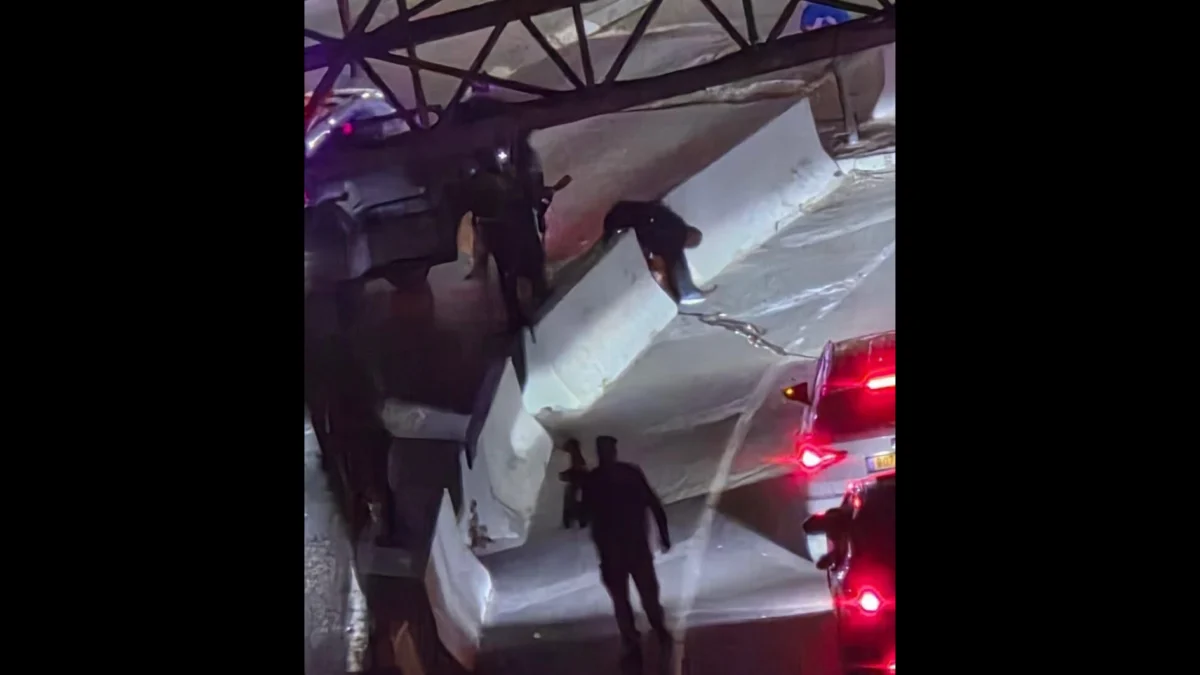
A Palestinian man was reportedly shot by Israeli forces late on Thursday, July 23, 2026, at the Shuafat refugee camp checkpoint in occupied East Jerusalem, before being arrested. Local reports indicate the man was left to bleed for an unspecified period following the shooting, and his current medical condition and whereabouts remain unconfirmed. The incident, which occurred amidst an already volatile regional climate, has immediately drawn concern from local residents and human rights advocates, fueling renewed calls for transparency and accountability regarding the use of force by security personnel at checkpoints.
Incident Details and Immediate Aftermath
The incident unfolded on Thursday evening at one of the primary access points to the Shuafat refugee camp, a densely populated area largely isolated by Israel’s separation barrier within the Jerusalem municipal boundaries. Eyewitness accounts circulating on social media and reported by local Palestinian news outlets described a scene where Israeli security forces engaged with a Palestinian individual, resulting in gunfire. The man, whose identity has not yet been released, was reportedly struck by live ammunition. Images and brief video clips, purportedly from the scene, circulated online, showing an individual lying on the ground near the checkpoint structure, though the authenticity and full context of these visuals could not be immediately verified by independent media.
Following the shooting, Israeli forces reportedly secured the area, preventing immediate access to the wounded man. Several local sources claimed that the individual was not provided with immediate medical attention by Israeli personnel for a period before being taken into custody. His subsequent transfer, to which facility, and the nature of his injuries, were not disclosed by Israeli authorities in the immediate hours following the event. The lack of information has been a significant point of contention for his family and community members, who expressed deep distress over his unknown status. This situation is particularly sensitive given historical precedents where individuals injured during security operations have faced delays in receiving critical care, a concern frequently highlighted by human rights organizations operating in the region.
The Shuafat Refugee Camp: A Crucible of Tensions
The Shuafat refugee camp, established in 1965, is unique in that it is the only Palestinian refugee camp located within the municipal boundaries of Jerusalem, albeit separated by the Israeli West Bank barrier since 2005. Home to an estimated 60,000 residents, the camp is severely overcrowded and suffers from chronic underdevelopment, limited infrastructure, and a complex administrative status. While technically part of Jerusalem, residents often feel neglected by the Jerusalem municipality and are subject to stringent Israeli security measures, including daily passage through the heavily fortified checkpoint that serves as its primary entry and exit point.
Life in Shuafat is defined by the checkpoint. Residents, many of whom hold Jerusalem residency permits, must pass through it to access jobs, schools, hospitals, and services in other parts of Jerusalem. This daily routine is often characterized by long queues, intrusive searches, and frequent security inspections, leading to a pervasive sense of frustration and humiliation among the population. The checkpoint itself has been the site of numerous confrontations, protests, and violent incidents over the years, making it a critical flashpoint in the broader Israeli-Palestinian conflict. The socio-economic conditions within the camp, coupled with the psychological impact of constant surveillance and limited freedom of movement, contribute to a highly combustible environment where tensions can escalate rapidly.
Broader Context: A Region on Edge
This incident occurs within a broader regional landscape marked by extreme volatility and heightened geopolitical tensions. The news environment, as reflected in trending topics such as "War on Iran" and "Israel’s genocide in Gaza," underscores a climate of severe conflict that has permeated the Middle East in mid-2026. The ongoing conflict in Gaza, characterized by widespread destruction and a devastating humanitarian crisis, continues to dominate regional discourse and international concern. The "War on Iran" topic further indicates significant strategic confrontations, potentially involving proxy conflicts or direct military engagements, which would inevitably exacerbate security concerns across the board.

In this context, every incident in occupied Palestinian territories, particularly in sensitive areas like Jerusalem, carries an elevated risk of sparking wider unrest. Israeli security forces operate under what they describe as an imperative to maintain order and prevent attacks, often citing ongoing threats from various Palestinian factions. However, Palestinian communities view these operations and the pervasive checkpoint system as manifestations of occupation and collective punishment, infringements on their rights, and a constant source of friction. The current regional instability amplifies the potential for miscalculation or disproportionate responses to ignite larger cycles of violence, making swift, transparent, and impartial investigations into incidents like the one at Shuafat critically important for de-escalation.
Official Reactions and Calls for Investigation
As of early Friday, July 24, 2026, official statements regarding the Shuafat checkpoint incident have been sparse, mirroring typical patterns in the immediate aftermath of such events.
Israeli Authorities: The Israel Police and the Israel Defense Forces (IDF), who often share security responsibilities in East Jerusalem and at checkpoints, have not yet issued a detailed public statement. However, initial unofficial reports from Israeli security sources, often relayed through Hebrew media, are expected to frame the incident as a response to a perceived security threat or an attempt to breach the checkpoint. A standard response might include phrases such as "forces responded to a suspicious individual," "an attempted attack," or "an investigation is underway to determine the exact circumstances." They are likely to confirm the arrest but defer on details regarding the individual’s condition, citing ongoing security procedures or medical privacy.
Palestinian Authority (PA) and Factions: Palestinian officials, including representatives of the Palestinian Authority, are anticipated to condemn the shooting as an act of excessive force against an unarmed civilian. They are expected to demand immediate information on the man’s condition and whereabouts, call for an international investigation into the incident, and reiterate denunciations of Israel’s policies in occupied Jerusalem and at military checkpoints. Palestinian resistance factions are also likely to issue statements condemning the shooting, potentially calling for retaliatory actions or increased resistance against Israeli forces, further exacerbating the volatile situation.
Human Rights Organizations: International and local human rights organizations, such as B’Tselem, Amnesty International, and Human Rights Watch, have swiftly expressed grave concerns over the reports. They are expected to issue urgent calls for a thorough, independent, and transparent investigation into the use of lethal force. Their statements will likely emphasize adherence to international law principles regarding proportionality and necessity in the use of force, particularly against civilians, and demand that the arrested man be granted immediate access to legal counsel and medical care. They will also highlight the consistent pattern of incidents at checkpoints and the lack of accountability for security personnel in many past cases. The unconfirmed status of the detained individual is a particular point of alarm for these groups, given their mandate to protect the rights of prisoners and detainees.
International Community: The United Nations Special Coordinator for the Middle East Peace Process and other international bodies, including the European Union and the United States, are likely to issue calls for restraint from all parties and emphasize the importance of upholding international humanitarian law and human rights. While typically cautious in their initial responses, they often stress the need for a full and transparent investigation to ascertain the facts and ensure accountability. However, the depth and impact of these international statements often depend on the level of escalation and the political weight of the member states involved.
Historical Context and Data on Checkpoint Incidents
The Shuafat checkpoint incident is not isolated but part of a grim continuum of violence and human rights concerns at Israeli checkpoints across the West Bank and East Jerusalem. Reports from organizations like the UN Office for the Coordination of Humanitarian Affairs (OCHA) and various human rights groups consistently document fatalities and injuries among Palestinians at checkpoints and during military operations. While specific figures for 2026 are not yet available, trends from previous years indicate a persistent pattern. For instance, in the preceding years, dozens of Palestinians have been killed by Israeli forces in the West Bank and East Jerusalem annually, with a significant proportion of these incidents occurring at or near checkpoints, often during alleged attempts to carry out attacks or during confrontations.

A 2025 report by a prominent human rights watchdog noted that out of X incidents involving the use of live fire at checkpoints in the West Bank and East Jerusalem, Y resulted in Palestinian fatalities, and Z resulted in serious injuries. The report highlighted concerns about rules of engagement, alleging that in many cases, force used was disproportionate to the perceived threat, or that less lethal alternatives were not adequately considered. Furthermore, the report documented instances where wounded individuals were denied immediate medical assistance, leading to preventable deaths or exacerbated injuries. These historical patterns underscore the urgency of a comprehensive inquiry into the latest incident at Shuafat. The psychological toll on communities living under constant surveillance and facing the potential for violence at these critical junctures cannot be overstated, contributing to a cycle of trauma and resentment.
Implications and Potential for Escalation
The shooting and arrest at the Shuafat checkpoint carry significant implications for the already fragile security situation in Jerusalem and the wider region.
Heightened Tensions in Jerusalem: The incident is highly likely to ignite further protests and confrontations within Shuafat camp and other Palestinian neighborhoods in East Jerusalem. The unconfirmed status of the injured man will fuel anger and distrust, potentially leading to clashes between residents and Israeli security forces. Such incidents have historically served as catalysts for wider unrest, particularly during periods of religious significance or political sensitivity.
Scrutiny on Rules of Engagement: The event will renew international scrutiny on Israel’s rules of engagement, particularly regarding the use of live ammunition at checkpoints. Human rights advocates will likely intensify their calls for a review of these rules, advocating for greater restrictions on lethal force and enhanced accountability mechanisms for incidents resulting in injury or death.
Impact on Regional Stability: Given the background of the "War on Iran" and the ongoing crisis in Gaza, any escalation in Jerusalem could have ripple effects across the region. Palestinian factions may seize upon the incident to rally support and justify further confrontational actions, potentially complicating diplomatic efforts to de-escalate wider regional conflicts. The perception of injustice and disproportionate force in Jerusalem can easily be integrated into broader narratives of oppression, further entrenching animosity.
Erosion of Trust and Peace Prospects: Each such incident further erodes trust between Israeli authorities and Palestinian communities, diminishing any prospects for peaceful coexistence or a negotiated resolution to the conflict. The daily reality of occupation, exemplified by checkpoint incidents, reinforces a narrative of sustained conflict and mutual suspicion. For residents of Shuafat, the checkpoint is not merely a security measure but a symbol of their marginalized existence and the systemic challenges they face.
In conclusion, the shooting and subsequent arrest of a Palestinian man at the Shuafat refugee camp checkpoint on July 23, 2026, represent a critical moment of concern in the ongoing Israeli-Palestinian conflict. The unconfirmed condition and whereabouts of the individual, combined with the volatile regional backdrop, underscore the urgent need for a thorough, transparent, and independent investigation. The international community, human rights organizations, and local stakeholders will be closely monitoring developments, reiterating calls for adherence to international law, accountability, and measures to prevent further escalation in a region already grappling with profound instability. The incident serves as a stark reminder of the daily human cost of protracted conflict and the critical importance of addressing underlying grievances to foster any hope for lasting peace.

Related Posts

Over 150 Israeli Settlers Storm Al-Aqsa Compound and Perform Prayers, Violating Status Quo Under Police Protection.
UN Report Highlights Over 900 Obstacles Hampering West Bank Aid Amid Escalating Humanitarian Crisis