
Wangchuk Ends Hunger Strike Amid Continued Youth Protests Over Exam Leaks, Escalating Scrutiny on Government Accountability
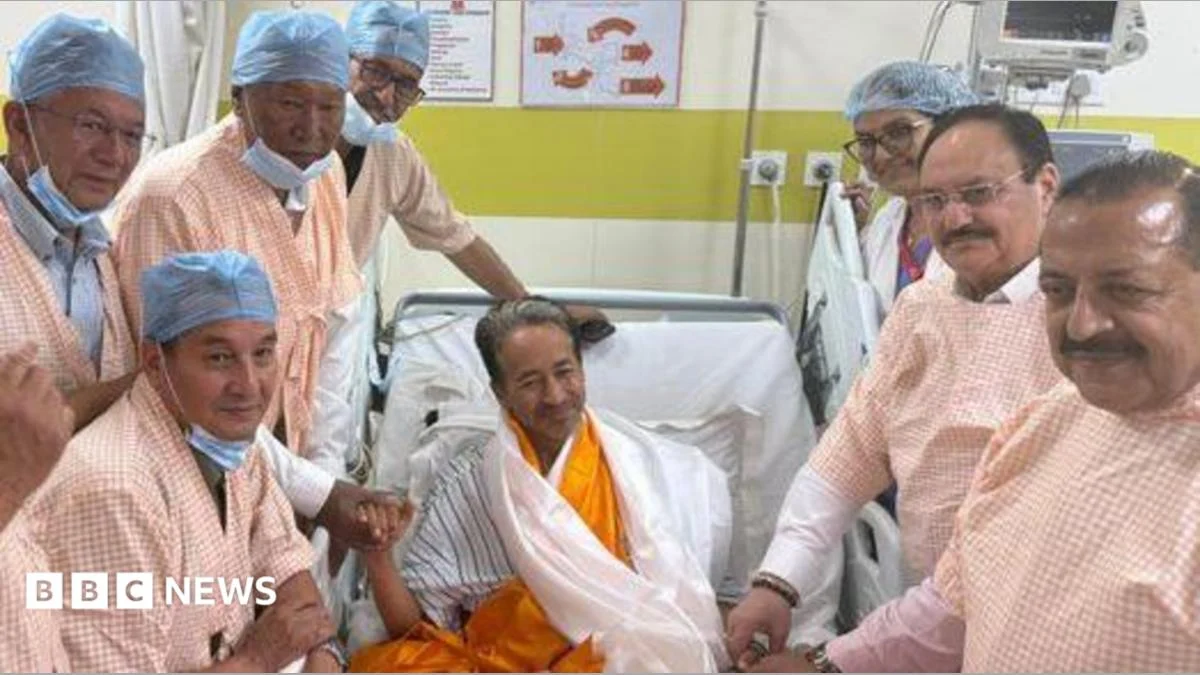
Sonam Wangchuk, a renowned Indian innovator, environmentalist, and education reformist, concluded his 26-day hunger strike, a development widely reported by India’s NDTV website, following assurances from the government that no legal action would be pursued against the student protesters rallying at Jantar Mantar, a designated protest site in the heart of the Indian capital. This decision, however, does not signal a cessation of the broader youth movement, as the "Cockroach Janta Party" (CJP), at the forefront of these demonstrations, has affirmed its commitment to continue its peaceful agitation until Education Minister Dharmendra Pradhan tenders his resignation. The minister’s departure is being demanded over a significant exam paper leak that led to the cancellation of a crucial national entrance examination for aspiring doctors, igniting a wave of nationwide dissent that has rapidly become one of the most visible public challenges to Prime Minister Narendra Modi’s administration since it came to power in 2014.
The Genesis of the Movement: The NEET Scandal and Systemic Leaks
The current wave of protests finds its roots in the widespread outrage following the cancellation of the National Eligibility cum Entrance Test (NEET) in early May. NEET is India’s sole entrance examination for undergraduate medical and dental courses, a high-stakes assessment that determines the future of millions of young aspirants. The integrity of this examination was severely compromised by a paper leak, forcing its cancellation and leaving countless students in a state of despair and uncertainty. This incident was not an isolated anomaly but rather the latest in a series of similar paper leaks and irregularities that have plagued India’s competitive examination system for years, affecting a wide array of state and central government recruitment exams, as well as entrance tests for various professional courses.
Such leaks undermine the credibility of the entire education and recruitment apparatus, eroding public trust and disproportionately impacting students from economically disadvantaged backgrounds who often invest years and meager resources into preparation, often through expensive private coaching. The psychological toll on these students, many of whom come from rural areas or low-income families, is immense, often leading to mental health crises and a pervasive sense of injustice. Data from various educational consultancies and government reports suggest that over the past five years, more than 1.5 crore (15 million) students have been affected by paper leaks across India, leading to the cancellation or rescheduling of at least 48 major examinations. This chronic issue highlights a deep-seated problem within the administrative and security protocols surrounding India’s examination bodies, prompting calls for comprehensive reforms and stringent accountability measures.
Sonam Wangchuk’s Intervention and its Impact
Sonam Wangchuk, a figure widely respected across India for his pioneering work in sustainable development, education, and climate advocacy, particularly in the Himalayan region of Ladakh, lent significant moral weight to the student protests by embarking on a hunger strike. Wangchuk, known globally for inspiring the character Phunsukh Wangdu in the Bollywood film "3 Idiots," announced his fast-unto-death in solidarity with the students and their demands for justice and systemic change. His involvement elevated the movement from a localized student protest to a national discourse, attracting widespread media attention and garnering support from various civil society groups, opposition parties, and concerned citizens.
Throughout his 26-day ordeal, Wangchuk maintained a steadfast resolve, articulating the students’ frustrations and emphasizing the urgent need for government action to safeguard the future of India’s youth. His decision to end the strike came after state and health ministers reportedly visited him in the hospital, where he was receiving medical attention, and conveyed the government’s assurance regarding the non-persecution of peaceful protesters. This engagement, while welcomed as a gesture of de-escalation, has been viewed by many as a tactical move by the government to diffuse immediate tension rather than a fundamental commitment to addressing the core issues of accountability and systemic reform.
The "Cockroach Janta Party": A New Face of Youth Dissent
The "Cockroach Janta Party" (CJP) emerged in May as a satirical online movement, initially conceived to protest against the pervasive issue of paper leaks and other irregularities plaguing India’s top examinations. The moniker "cockroaches" is imbued with potent symbolism; it represents the resilience, ubiquity, and ability of students to survive and persist even in the face of a seemingly insurmountable and corrupt system. It also carries a subversive undertone, implicitly criticizing those in power who might view protesting students as mere nuisances.
From its digital origins, the CJP swiftly transitioned into a formidable street movement, leveraging social media platforms like X (formerly Twitter), Instagram, and WhatsApp to mobilize thousands of students and young professionals. The movement’s founder, Abhijeet Dipke, expressed a sense of relief and gratitude for Wangchuk’s decision to end his hunger strike, acknowledging the immense personal sacrifice involved. However, Dipke’s immediate follow-up statement, affirming the continuation of CJP’s peaceful protest at Jantar Mantar until Education Minister Dharmendra Pradhan resigns, underscores the unwavering determination of the movement to achieve its primary demand.
The CJP’s demands extend beyond the resignation of Minister Pradhan. They call for a comprehensive overhaul of the examination system, including the implementation of stricter anti-cheating laws, transparent investigation mechanisms for paper leaks, establishment of an independent regulatory body for examinations, and a clear framework for compensation and re-examination for affected students. The movement has also highlighted broader issues of youth unemployment and the immense pressure on young Indians to secure government jobs or admission to elite institutions, often leading to cutthroat competition and vulnerability to exploitation by unscrupulous elements.
Escalation and Confrontation: The Jantar Mantar Protests and Police Crackdown
For nearly a month, Jantar Mantar, a historical observatory now a designated protest site in Delhi, has been the epicenter of the CJP’s demonstrations. Day after day, hundreds, sometimes thousands, of young people have gathered, holding placards, chanting slogans, and engaging in peaceful sit-ins, some even joining hunger strikes. The atmosphere has been largely one of determined resolve, but it took a turn towards confrontation on a Monday when a planned march to Parliament House escalated into a brutal police crackdown.
Reports from the ground indicated that police used water cannons, lathis (batons), and detained scores of protesters attempting to breach barricades and march towards the Parliament complex. The confrontation left numerous protesters and police officers injured, drawing widespread condemnation from civil society organizations and opposition political parties. Critics accused the authorities of using excessive force against peaceful demonstrators, questioning the government’s commitment to upholding the constitutional right to protest. The police, on their part, maintained that force was necessary to prevent protesters from violating prohibitory orders and disrupting public order. This incident further fueled public anger and solidified the perception among many that the government was more interested in suppressing dissent than in addressing the root causes of the protests.
Official Responses and Political Fallout
The government’s response to the crisis has been multi-faceted, characterized by a mix of assurances, defensive posturing, and coercive measures. While the visit by state and health ministers to Sonam Wangchuk in the hospital demonstrated a willingness to engage, albeit under specific circumstances, the broader official narrative has often downplayed the systemic nature of the exam leak problem. Education Minister Dharmendra Pradhan has, at various junctures, expressed regret over the incidents, assured students of remedial actions, and even announced the formation of expert committees to review examination protocols. However, he has steadfastly refused to resign, arguing that the ministry is actively working to resolve the issues and that accountability is being pursued through investigations and legal channels.
Opposition parties have seized upon the issue, lambasting the Modi government for its perceived failure to protect the integrity of the education system and for its heavy-handed response to student protests. Leaders from various political outfits have visited Jantar Mantar to express solidarity with the students, demanding Pradhan’s resignation and a parliamentary debate on the systemic failures. They argue that the repeated paper leaks are symptomatic of deeper governance issues and a lack of accountability within the administration.
Broader Implications and Future Trajectory
The ongoing protests, spearheaded by the CJP and amplified by figures like Sonam Wangchuk, carry significant implications for the political landscape and the future of youth engagement in India. This movement represents one of the most sustained and visible displays of dissent against the Modi government, particularly from the youth demographic, which has traditionally been a strong support base for the ruling Bharatiya Janata Party (BJP). The widespread anger over exam leaks challenges the government’s narrative of efficiency and good governance, especially among an aspirational youth population grappling with fierce competition and job insecurity.
The CJP’s ability to mobilize and sustain protests, despite police crackdowns and the government’s attempts to manage the narrative, signals a growing political consciousness among young Indians. It underscores a generation unwilling to passively accept systemic failures and demanding tangible accountability from its leaders. Should the government fail to address the core demands of the students, particularly regarding systemic reforms and accountability for those responsible for the leaks, the movement could potentially broaden its scope, drawing in other youth groups and civil society organizations concerned with wider issues of governance and social justice.
Furthermore, the events highlight the urgent need for comprehensive legislative and administrative reforms to safeguard the integrity of India’s examination system. While a new anti-paper leak law has been introduced, its effectiveness will depend on its rigorous implementation and the political will to enforce accountability at all levels. The episode serves as a stark reminder that the future of a nation hinges on the opportunities and fairness provided to its youth, and any perceived injustice in this regard can ignite powerful waves of public discontent with far-reaching consequences for political stability and social cohesion. The "Cockroach Janta Party" and its resilient members have effectively brought these critical issues to the forefront, ensuring that the demand for accountability and reform will likely continue to reverberate across India.

Related Posts
Zambia on Edge: Opposition Leader Arrested Amid Allegations of Insurrection Plot and Election Tensions
Rescuers search for survivors of powerful Indonesia earthquake

