
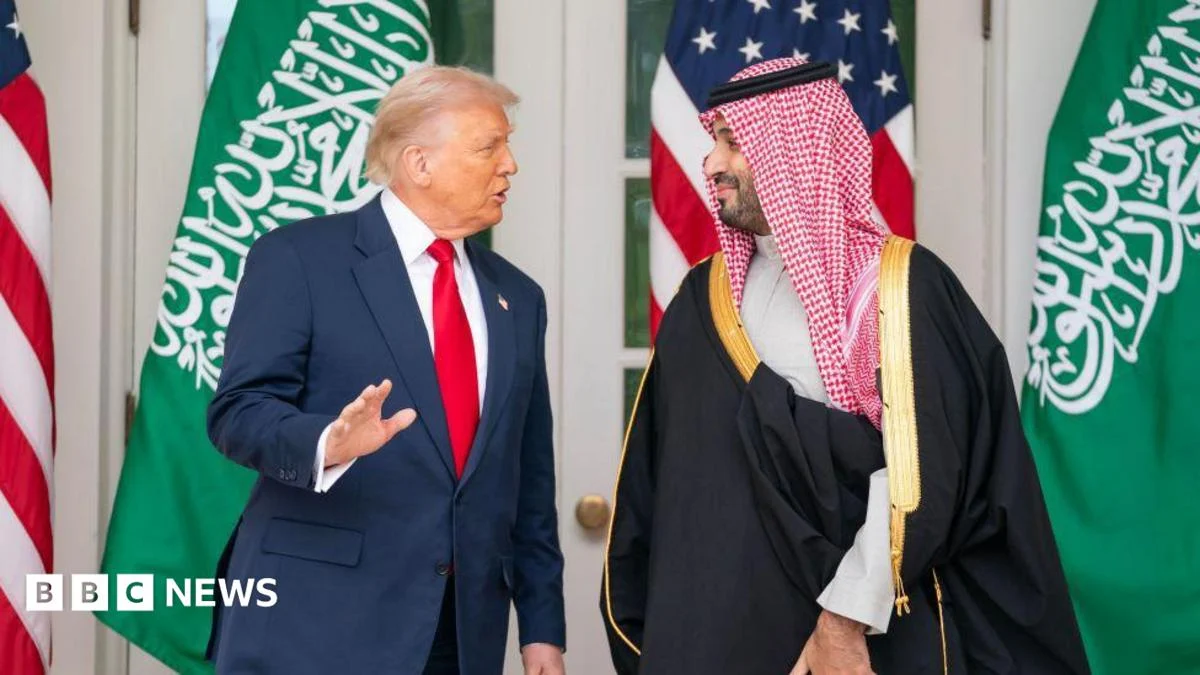
Trump’s nuclear deal with Saudis jettisons longstanding US demands
The Trump administration has finalized a nuclear cooperation agreement with Saudi Arabia, a move that fundamentally redefines Washington’s long-standing approach to its key Middle Eastern ally and has ignited fierce debate over nuclear proliferation risks in an already volatile region. This agreement, reportedly devoid of the stringent non-proliferation conditions historically demanded by the United States, grants Saudi Arabia access to American civilian nuclear technology without requiring the kingdom to normalize relations with Israel, a concession that has drawn sharp criticism from various quarters.
A Decisive Departure from Decades of US Policy
For decades, successive US administrations maintained a consistent stance regarding nuclear technology transfer to the Middle East: any such cooperation would be contingent upon the recipient nation accepting the highest standards of non-proliferation, often referred to as the "gold standard" of a 123 Agreement under the US Atomic Energy Act. This typically included commitments to forgo uranium enrichment and plutonium reprocessing on their own soil, and to adopt the International Atomic Energy Agency’s (IAEA) Additional Protocol for robust inspections. Furthermore, past presidents often linked the provision of advanced US technology to broader strategic objectives, such as fostering peace and stability, frequently implying or explicitly requiring progress on Israeli-Palestinian relations or normalization with Israel.
President Donald Trump, however, has jettisoned this traditional diplomatic calculus. His administration’s agreement with Riyadh grants Saudi Arabia what it has long sought – American nuclear expertise for its civilian energy program – without extracting concessions for Israel in return. This unilateral decision has been met with significant objections from critics who argue it could precipitate a dangerous nuclear arms race across the Middle East, particularly given Saudi Arabia’s explicit desire to match Iran’s nuclear capabilities. The pact signifies a broader reorientation of American foreign policy under Trump, prioritizing economic influence and strategic competition with global rivals like China and Russia, sometimes at the expense of traditional alliances or long-held diplomatic norms in the region.
Yusuf Can, a Middle East expert at Amena Strategies, articulated the underlying pragmatism behind Washington’s shift. "Countries in the Middle East want to develop their nuclear infrastructure, and they’re going to do it even if the US is not involved. Washington at this point is recognizing that," Can observed. He suggested that with this nuclear deal, "the US is basically saying you don’t have to work with China. You can work with us," framing the agreement as a strategic gambit to maintain American influence and prevent adversaries from gaining a foothold in critical sectors.
The Architecture of a Transactional Foreign Policy
The nuclear pact is emblematic of the transactional foreign policy that characterized Trump’s second term. The "America First" doctrine, resurrected with renewed vigor, has seen the US intensify economic competition with rivals in various strategic theaters, from the Arctic to the Middle East. However, forging a nuclear agreement in a region as volatile as the Middle East, where the US is simultaneously engaged in a shadow war with Iran, represents a particularly audacious move.
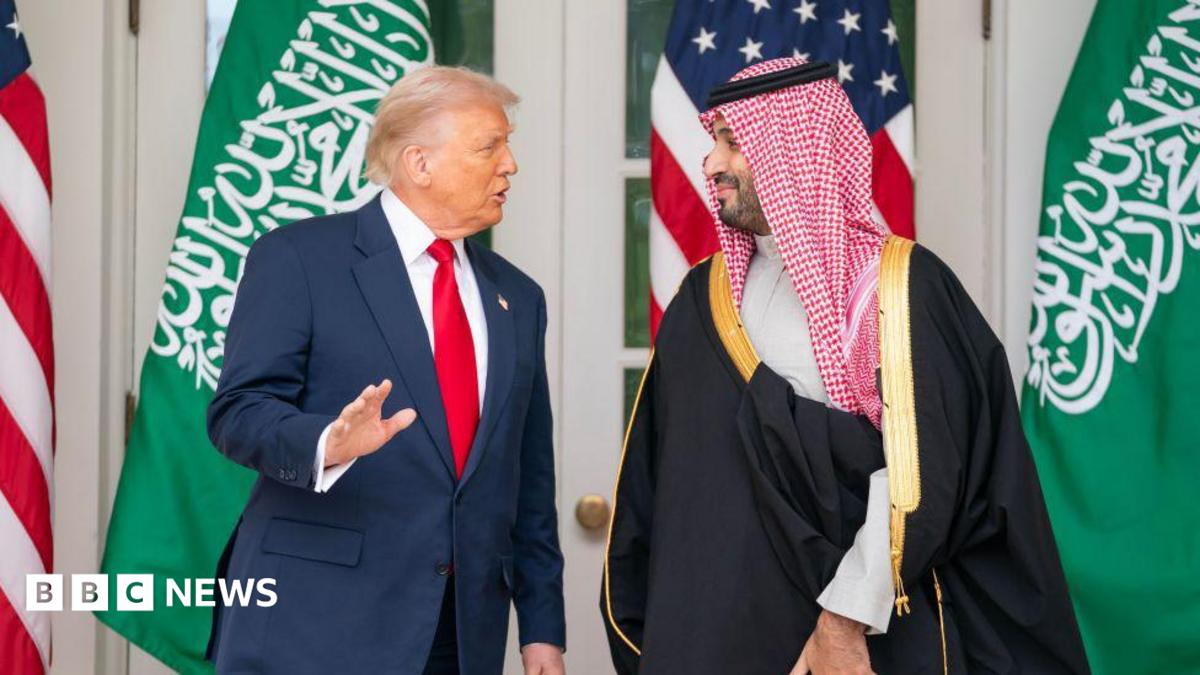
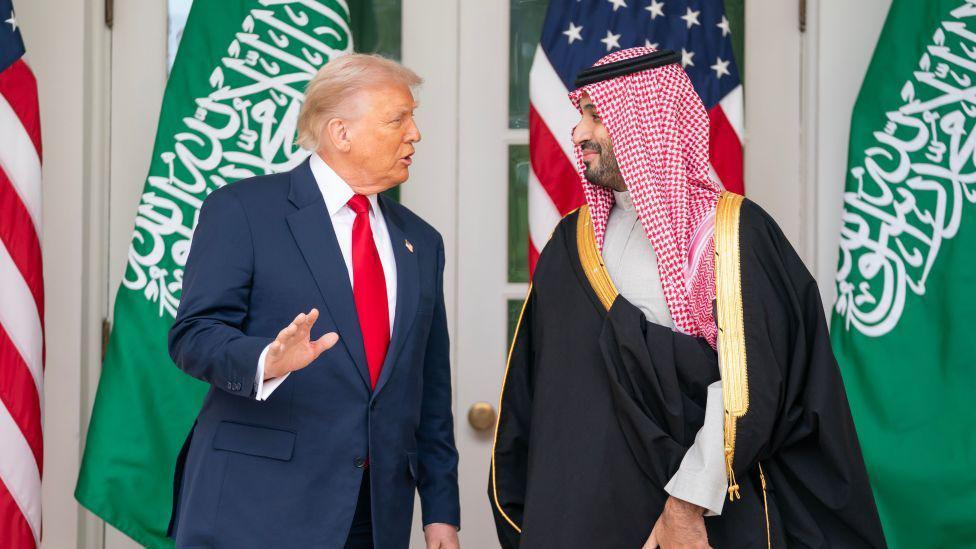
This agreement is a significant diplomatic triumph for Saudi Arabia’s Crown Prince Mohammed bin Salman (MBS). For years, MBS has actively pursued a nuclear agreement with the US as a cornerstone of his broader strategy to modernize the kingdom, diversify its economy under Vision 2030, and strengthen ties with Western powers. His ambitions for nuclear energy are not merely economic; they are deeply intertwined with national security and regional power dynamics. In 2018, MBS explicitly stated that if Iran were to develop nuclear weapons, Saudi Arabia would pursue its own in response, a declaration that underscores the kingdom’s strategic calculus and raises red flags for non-proliferation advocates.
While the Trump administration did not immediately release comprehensive details of the deal, reports indicate that the pact notably lacks the strict enforcement mechanisms designed to prevent Saudi Arabia from developing a military nuclear program in the future. This perceived laxity stands in stark contrast to previous US nuclear cooperation agreements. For instance, the 2009 nuclear cooperation agreement between the US and the United Arab Emirates (UAE) included rigorous inspections by the IAEA and explicitly prohibited the UAE from enriching uranium or reprocessing spent fuel on its own territory – key processes that can be diverted to produce weapons-grade material. The reported inclusion of a provision allowing Saudi Arabia to enrich uranium on its own soil is a critical point of contention and a departure from the "gold standard."
Potential for a Regional Arms Race
The implications of this deal extend far beyond Saudi Arabia’s energy sector. Analysts warn that even if the kingdom does not immediately embark on developing nuclear weapons, the inherent capability to do so, afforded by domestic enrichment, could serve as a powerful deterrent force in a region rife with geopolitical rivalries. Imran Bayoumi, a resident fellow at the Atlantic Council think tank and former policy adviser at the US Defense Department, articulated this concern plainly: "It certainly helps lay the groundwork for nuclear weapons in the future."
The prospect of Saudi Arabia achieving an indigenous uranium enrichment capability has sent tremors through the international non-proliferation community and among regional security planners. Uranium enrichment is the most sensitive part of the nuclear fuel cycle, as it can produce both low-enriched uranium for power reactors and highly-enriched uranium suitable for nuclear weapons. Allowing a nation in a conflict-prone region to control this process without the most stringent safeguards is seen by many as a dangerous precedent.
Economic Diversification and Energy Security
From an energy perspective, the agreement offers Saudi Arabia a path to significantly diversify its energy sector and meet its rapidly increasing electricity demands. Energy experts note that nuclear power could eventually diminish Saudi Arabia’s heavy reliance on oil, thereby insulating its economy from the notorious volatilities of the global oil market. Christopher Russo, an energy expert at Charles River Associates, highlighted the strategic advantage of nuclear power: "Oil can be disrupted. You can bomb oil fields. Oil tankers can be stuck somewhere, as we’re seeing right now" in the Strait of Hormuz, a critical chokepoint for global oil shipments. "Nuclear power is pretty self-contained."
Saudi Arabia’s Vision 2030 blueprint calls for an ambitious transformation of its economy, reducing its dependence on hydrocarbons and developing new industries. Building a robust civilian nuclear program aligns perfectly with this vision, promising a stable and clean energy source for future industrial and urban development. However, the economic benefits are not immediate. Experts estimate that it will likely take a decade, if not longer, for the country to construct and commission new nuclear power plants, reflecting the immense technical complexity and capital investment required for such projects.
Geopolitical Context and Timing
The short-term political payoff for Saudi Arabia is, however, immediately evident. The deal solidifies the kingdom’s status as a major force in the Gulf and the broader Middle East. Crucially, Saudi Arabia secured this agreement without having to recognize Israel or abandon its long-held demand that any eventual normalization deal with Israel must be explicitly tied to the creation of a Palestinian state. This outcome suggests a pragmatic assessment by the Trump administration that a diplomatic breakthrough between Saudi Arabia and Israel was unlikely to materialize in the immediate future, especially given the exacerbation of regional tensions following the Israel-Hamas conflict in Gaza and the broader US-Israel conflict with Iran.
The precise timing of the administration’s announcement was not explicitly detailed, leading to some speculation. However, the ongoing geopolitical dynamics, particularly the escalating conflict with Iran, likely played a significant role. Washington has sought to ease tensions with Saudi Arabia and other Gulf allies who have faced Iranian retaliation or proxy attacks since the start of the broader conflict. Notably, Saudi Arabia briefly denied the US access to its airspace earlier in the conflict, and has consistently urged both the US and Iran to de-escalate, underscoring the kingdom’s desire for regional stability even as it seeks to bolster its own capabilities.
American companies are also poised to benefit from this nuclear deal. Saudi Arabia’s plans to develop its civilian nuclear technology will open a lucrative market for US-based firms, such as Westinghouse, which specialize in manufacturing large-scale conventional nuclear reactors. This aspect aligns with the "America First" economic agenda, aiming to create jobs and export advanced American technology.
Widespread Criticism and Skepticism
Despite the administration’s justifications, the deal has been met with immediate and robust criticism from both within Israel and the United States. As news of the agreement emerged, prominent Israeli politicians voiced alarm over the potential for Saudi Arabia to become a new nuclear threat in the region. Israel, widely believed to possess its own undeclared nuclear arsenal, has historically viewed any regional nuclear proliferation as an existential threat. Avigdor Lieberman, a member of the Israeli parliament and a former defense minister, took to social media to warn, "A civilian nuclear program in Saudi Arabia [will] lead to a mad arms race across the entire Middle East." This concern is particularly acute given Israel’s shared apprehension with the US regarding Iran’s nuclear program.
Democratic lawmakers in the US Congress echoed these anxieties. Congressman Ro Khanna of California, a prominent voice on foreign policy, told the BBC, "The deal really is a giveaway to the Saudis, and it’s only going to fuel further ambitions from Iran. It’s only going to further destabilize the region with Israel. It’s just not smart policy." Critics within Congress are likely to scrutinize the agreement’s non-proliferation safeguards and could attempt to block or modify it through legislative means, citing national security concerns and the erosion of international norms.
In defense of the agreement, US Energy Secretary Chris Wright issued a statement via social media, asserting that the pact would "boost the American economy and strengthen national security." Wright further claimed that the US-Saudi agreement would "uphold the highest standards of nuclear safety and nonproliferation." However, the administration’s reluctance to immediately release comprehensive information about the deal on the day of its announcement fueled skepticism and transparency concerns. Adding to this perception, President Trump himself did not preside over the official signing ceremony, instead attending a dignified transfer ceremony for four US service members killed in Iran before holding a rally in Georgia, where he controversially claimed his policies were making the Middle East more stable than ever.
Broader Implications for Global Non-Proliferation
The ramifications of this nuclear agreement extend beyond the immediate geopolitical chessboard of the Middle East. It poses a significant challenge to the global nuclear non-proliferation regime, which relies on the strict adherence to safeguards and the prevention of the spread of technologies that can be used for weapons production. If a major power like the United States is perceived to be loosening its non-proliferation standards for strategic or economic gain, it could set a dangerous precedent for other aspiring nuclear nations.
The agreement could encourage other regional players, such as Egypt and Turkey, who have their own nascent nuclear energy ambitions, to demand similar concessions, potentially creating a cascade of demands for indigenous enrichment capabilities. This "domino effect" could further complicate efforts to control the spread of nuclear weapons technology globally, making the world a more dangerous place.
In essence, the Trump administration’s nuclear deal with Saudi Arabia is a high-stakes gamble. While proponents argue it secures US influence and economic interests, critics fear it could unravel decades of non-proliferation efforts, ignite a perilous regional arms race, and fundamentally alter the security landscape of the Middle East for generations to come. The long-term consequences of this dramatic policy shift will undoubtedly be a subject of intense scrutiny and debate in the years ahead.

Related Posts
Zambia on Edge: Opposition Leader Arrested Amid Allegations of Insurrection Plot and Election Tensions

Rescuers search for survivors of powerful Indonesia earthquake

