Russia is holding global food security hostage by strangling the Black Sea export corridor through systematic attacks on civilian cargo vessels.
The maritime lifeline that has sustained Ukraine’s economy and global food stability for the past three years has reached a precarious impasse. On Wednesday, for the first time since the inception of the Ukrainian Black Sea maritime corridor in 2023, zero commercial vessels entered the ports of Odesa, Chornomorsk, or Pivdennyi. This development marks a significant escalation in the ongoing naval conflict, signaling a return to the near-total maritime blockade conditions that characterized the early stages of the full-scale invasion in 2022.
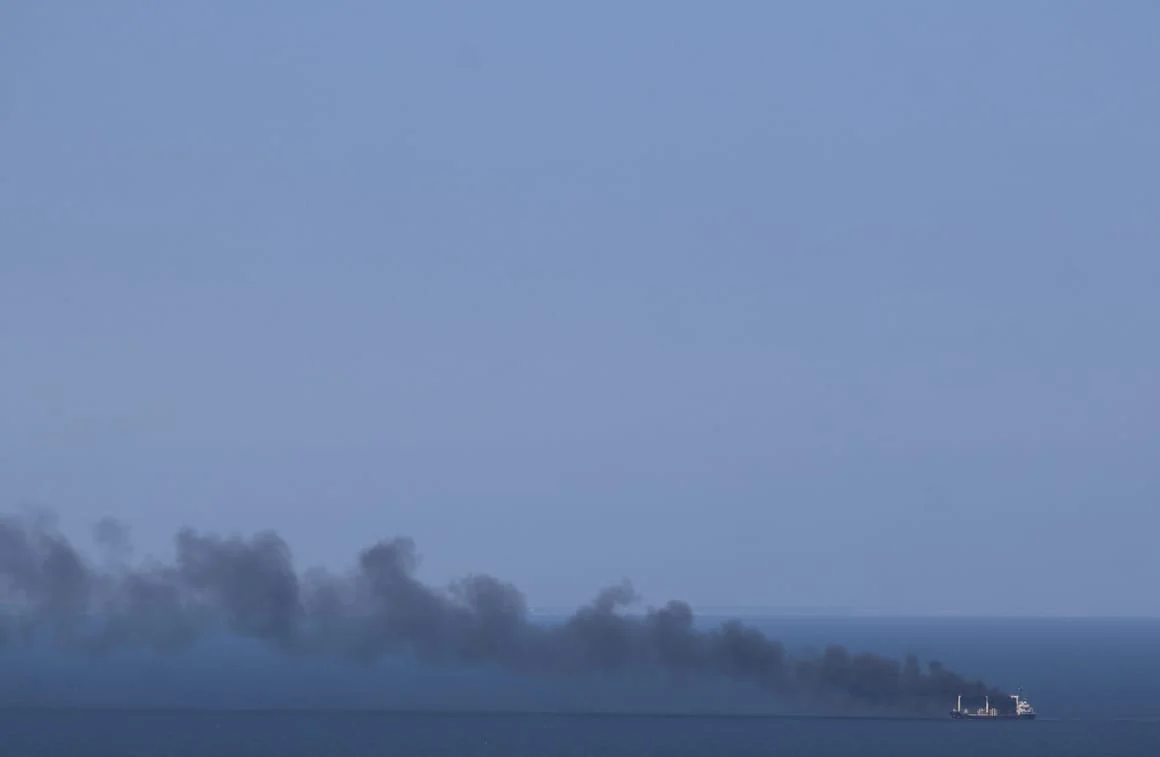
The cessation of traffic follows a series of aggressive Russian strikes targeting merchant ships, which have resulted in at least 10 fatalities among civilian sailors in recent weeks. As the peak harvest season arrives, the inability to move grain and other agricultural commodities threatens to trigger a new wave of volatility in global food markets, disproportionately affecting vulnerable populations across the Global South.
A Chronology of Escalation
The stability of the Black Sea maritime corridor has always been fragile, existing under the shadow of constant Russian military pressure. To understand the current crisis, it is necessary to examine the timeline of maritime hostilities:
- February 2022: Russia launches a full-scale invasion, immediately blockading Ukrainian ports and effectively halting maritime trade.
- July 2022: The Black Sea Grain Initiative, brokered by the United Nations and Turkey, is established, allowing for the limited export of grain from three specific Ukrainian ports.
- July 2023: Russia withdraws from the Grain Initiative, claiming its own demands regarding fertilizer exports and financial sanctions were not being met.
- August 2023: Ukraine unilaterally establishes a new, self-protected maritime corridor, leveraging its successful asymmetric naval strikes to push the Russian Black Sea Fleet away from the coastline.
- July 2026 (Recent Weeks): Ukraine conducts a series of high-precision strikes against the Russian "shadow fleet"—vessels used to bypass international sanctions on oil exports.
- July 23, 2026: Shipping activity drops to zero in the Odesa region as vessel owners, citing insurance risks and physical safety, pull back from the corridor.
The Economic and Humanitarian Stakes
The reliance of the international community on this specific corridor cannot be overstated. Since its inception, the corridor has facilitated the transport of over 168.9 million tons of cargo, with grain shipments exceeding 100 million tons. This volume has been instrumental in stabilizing global wheat and corn prices, which spiked by over 60 percent during the initial 2022 blockade.
Foreign Minister Andrii Sybiha’s comparison of the current situation to the strategic disruptions seen in the Strait of Hormuz highlights the Kremlin’s intent to weaponize maritime geography. By targeting the vessels themselves rather than just port infrastructure, Moscow has significantly increased the "war risk" insurance premiums for shipowners.
When industry giants like Maersk announce the suspension of operations in ports such as Chornomorsk—redirecting logistics to Romania’s Port of Constanta—it creates a bottleneck. The added costs of land-based transport and the limited capacity of neighboring ports act as a "hidden tax" on food, ultimately raising the price of bread and other staples in importing nations across Africa, the Middle East, and Asia.
Official Responses and Legal Distinctions
The rhetoric emanating from Kyiv is sharply focused on the distinction between legitimate military objectives and war crimes. Ukraine’s Navy spokesman, Dmytro Pletenchuk, has emphasized that while Ukraine strikes vessels involved in the illegal transport of sanctioned Russian oil or those violating the maritime sovereignty of occupied Ukrainian territories, Russia is targeting civilian ships operating under international maritime law.

"The war at sea has never stopped," Pletenchuk noted, acknowledging the increased pressure on shipping logistics. "We have been in similar situations before, and the objective remains the same: to ensure the continuity of the corridor."
In response to the current deadlock, Ukraine has formally requested an urgent meeting of the United Nations Security Council, scheduled for July 27. The Ukrainian diplomatic mission is expected to present evidence of the deliberate targeting of civilian merchant vessels, urging the international community to demand an immediate cessation of these attacks as a matter of global humanitarian urgency.
Analysis: The "Shadow Fleet" Connection
The intensification of Russian attacks is widely viewed by analysts as a retaliatory measure following Ukraine’s successful efforts to degrade the "shadow fleet." This fleet, composed of aging, often uninsured, or under-insured tankers, allows Moscow to circumvent G7 price caps on its oil exports.
Andrii Klymenko, head of the Black Sea and Baltic Strategic Research Monitoring Group, warns against accepting the Russian narrative that their attacks on ports are a direct, proportional response to Ukrainian strikes. "This is a pre-existing strategy," Klymenko argues. "By framing these strikes as a reaction to our targeting of their tankers, Russia is attempting to pressure the international community into forcing a maritime ceasefire. A ceasefire under these conditions would only serve to solidify Russia’s ability to continue its illegal oil exports while leaving Ukraine’s economy vulnerable."
The Road Ahead: Implications for Global Markets
The immediate implication of the current standoff is uncertainty. Insurance markets react poorly to uncertainty; as long as the threat of kinetic strikes against cargo vessels persists, insurance premiums will remain prohibitively high for many operators.
If the corridor remains closed or significantly curtailed, the impact will likely manifest in three stages:
- Short-term: A localized spike in shipping costs and insurance premiums, leading to a temporary decline in the volume of Ukrainian exports reaching world markets.
- Mid-term: Potential food price inflation in the Global South, where countries are highly dependent on Ukrainian grain to supplement their domestic food supply.
- Long-term: A structural shift in regional logistics, with a greater reliance on the Danube River ports and rail links through Central Europe, which are less efficient and more costly than the direct maritime route through the Bosphorus.
The international community now faces a critical juncture. The U.N. Security Council meeting will serve as a bellwether for how the global powers—specifically those who mediate between the warring parties—intend to address the weaponization of the Black Sea. With the global food supply chain once again held in a state of suspended animation, the need for a robust, internationally backed security framework for the maritime corridor is more apparent than ever.
As the calendar turns toward late July, the silence in the Odesa ports stands as a stark reminder of the cost of the ongoing conflict—not just for the belligerents on the ground, but for millions of families globally who remain tethered to the flow of goods through these contested waters.