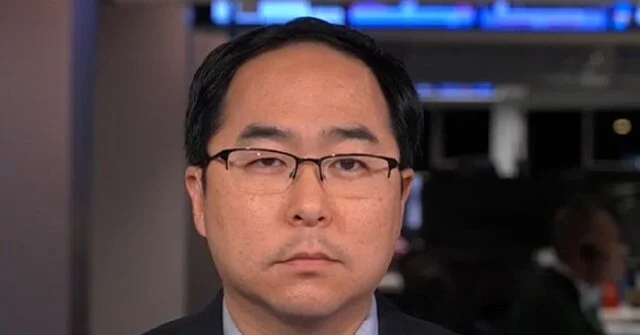
Senator Andy Kim Addresses New Jersey Motor Vehicle Commission Software Error, Emphasizing Isolated Nature Amid Broader Election Integrity Debates
On Tuesday, during an appearance on MSNBC’s "All In," Senator Andy Kim (D-NJ) addressed a significant software error within New Jersey’s Motor Vehicle Commission (MVC) system that led to the erroneous registration of approximately 6,600 individuals who were not U.S. citizens. While acknowledging the gravity of the oversight and calling for immediate fixes and accountability, Senator Kim was careful to contextualize the incident, stating unequivocally that it was "not this widespread systemic problem" that some political figures might attempt to portray. His remarks underscored a nuanced position: recognizing a serious administrative flaw that requires resolution, while simultaneously pushing back against narratives that could undermine public confidence in democratic processes by exaggerating the scope or nature of such errors.
Unpacking the Software Glitch: A Detailed Look at the MVC Error
The core issue stems from a "serious software error" within the New Jersey MVC’s digital infrastructure. This system is crucial, not only for vehicle registration and driver’s licenses but also for its integral role in the state’s voter registration process under the National Voter Registration Act of 1993 (NVRA), commonly known as "Motor Voter." The NVRA mandates that state motor vehicle agencies offer voter registration opportunities to applicants for driver’s licenses and state identification cards. While this system is designed to facilitate voter access, it also relies on robust software logic to correctly identify eligible citizens.
In New Jersey, as in many states, individuals who are not U.S. citizens can legally obtain driver’s licenses or state identification cards. The specific software error appears to have inadvertently linked some of these non-citizen applications with voter registration, bypassing critical citizenship verification checks that are supposed to prevent such occurrences. This is distinct from a deliberate act of voter fraud, representing instead a failure in the automated process designed to differentiate between individuals eligible for a driver’s license and those eligible to vote. The roughly 6,600 affected individuals were incorrectly registered to vote, though there is no immediate indication that a significant number, if any, actually cast ballots. The act of registration itself, however, constitutes a violation of state and federal election laws if the individual is not a citizen.
Senator Kim’s Stance: Accountability and Context
Senator Kim’s comments on "All In" provided a multi-faceted response to the MVC error. He unequivocally condemned the mistake, asserting, "this is unacceptable and this needs to be fixed immediately and needs people need to be held accountable for that, especially if they’ve known this since it’s happened a couple of years ago." This demand for accountability suggests that the issue might have been known internally for some time before becoming public, raising questions about the timeliness of disclosure and remedial action. His emphasis on fixing "things that are broken" aligns with a general commitment to good governance and efficient public administration.
However, a significant portion of his statement was dedicated to providing crucial context. He stressed the importance of "looking at the problems in the right size," explicitly drawing a distinction between the MVC error and broader, often unsubstantiated, claims of systemic election fraud. Kim directly referenced former President Donald Trump’s rhetoric, stating, "this is not akin to what Donald Trump was talking about. Yes, this is something that needs fixing, but it’s not this widespread systemic problem that Trump has been using and weaponizing to try to push forward a very extreme agenda when it comes to, you know, deterring voters and other things that he’s been trying to push on with his conspiracy theories and delusions about winning the 2020 election." This strategic framing highlights a prevalent challenge in contemporary political discourse: how to address legitimate administrative errors without allowing them to be exploited to fuel misinformation or undermine faith in democratic institutions.
Senator Kim further underscored his commitment to election security by advocating for broader infrastructure improvements. "I’ve been pushing to make sure that we’re upgrading our our voter, you know, equipment and ballots all across the country. We need to make sure we’re protecting it from cyber security and other issues like that. So those are things we need to make sure we’re pushing hard on." This statement positions him not as downplaying a problem, but as advocating for comprehensive, fact-based solutions to enhance election integrity, contrasting with what he perceives as politically motivated exaggerations.
Chronology of Discovery and Response (Inferred and Reported)
While precise dates of the error’s inception and discovery are not fully detailed in initial reports, Senator Kim’s comment about officials potentially knowing "since it’s happened a couple of years ago" suggests the flaw may have been present in the MVC system for an extended period, possibly since late 2021 or early 2022.
- Initial Occurrence (Inferred: Late 2021/Early 2022): The software error likely began at some point following an update or configuration change to the MVC’s system, leading to the incorrect processing of non-citizen applications for voter registration.
- Internal Discovery (Inferred: Throughout 2022-2023): It is plausible that the error was initially detected through internal audits, data cross-referencing efforts by the MVC or the New Jersey Division of Elections, or perhaps through isolated reports from individuals or election officials. The "couple of years ago" comment points to a period of internal awareness.
- Investigation and Verification (Inferred: Late 2023/Early 2024): Once identified, a period of investigation would be necessary to ascertain the scope of the problem, identify the specific software flaw, and determine the exact number of individuals affected. This would involve reviewing registration records and cross-referencing them with citizenship data.
- Public Disclosure and Senator Kim’s Statement (Reported: Tuesday, [Date of broadcast]): The issue became publicly known, leading to Senator Kim’s comments on MSNBC. This public acknowledgment signals that corrective measures are either underway or have been recently implemented, and that state officials are prepared to address the issue transparently.
Following the discovery, the New Jersey MVC and the Division of Elections would have initiated a process to identify and remove the erroneously registered non-citizens from the voter rolls. This involves a careful, legally compliant process to ensure that only ineligible individuals are removed and that no eligible voter is disenfranchised.
The Scope and Scale: Putting 6,600 Registrations into Perspective
The figure of "roughly 6,600 people" erroneously registered is significant in absolute terms, representing a clear failure in a system designed to protect election integrity. However, it is crucial to place this number within the broader context of New Jersey’s electorate. As of recent data, New Jersey boasts approximately 6.5 million registered voters. The 6,600 erroneous registrations constitute an extremely small fraction – less than 0.1% – of the total registered voter population. This statistical context is vital to understanding Senator Kim’s assertion that the issue, while serious, does not represent a "widespread systemic problem" threatening the overall integrity of the state’s elections.
Furthermore, it is important to distinguish between being registered to vote and actually casting a ballot. While the incorrect registration of non-citizens is a breach of election protocol, the actual impact on election outcomes would only occur if these individuals subsequently voted, and their votes were counted. State election systems have various checks in place, including poll worker verification and signature matching, which can sometimes catch ineligible voters at the ballot box. While the error is concerning, its immediate effect on past election results would likely be negligible given the small scale relative to total votes cast in any statewide or national election.
New Jersey’s Motor Voter System and the NVRA Framework
The National Voter Registration Act of 1993 (NVRA) was enacted to enhance voter participation by simplifying the registration process. It requires states to offer voter registration opportunities at state motor vehicle agencies, public assistance agencies, and through mail-in applications. While highly effective in increasing voter access, the NVRA’s implementation relies heavily on the accuracy and robustness of state-level systems.
In New Jersey, the MVC’s system is integrated with the voter registration database. Applicants for driver’s licenses or state IDs are presented with the option to register to vote, and their information is then transmitted to the Division of Elections. The system is designed to ask about citizenship status, and only those who affirm U.S. citizenship should proceed with voter registration. The software error evidently circumvented or improperly processed this critical citizenship verification step for a subset of applicants. This highlights the inherent challenges in managing complex, interconnected databases and the absolute necessity of rigorous testing, continuous auditing, and robust error-checking protocols in systems that handle sensitive civic processes like voter registration.
Reactions from Key Stakeholders (Inferred and Expected)
In response to such an incident, various state agencies and political figures would typically issue statements or take action:
- New Jersey Motor Vehicle Commission (MVC): The MVC would be expected to issue a formal statement acknowledging the software error, detailing the root cause, and outlining the specific corrective actions taken to prevent future occurrences. They would likely emphasize their commitment to data integrity, system security, and compliance with state and federal laws. An apology for the error and any inconvenience or concern it caused would also be anticipated.
- New Jersey Division of Elections: This office, responsible for overseeing elections, would likely confirm that steps have been taken to identify and remove the erroneously registered individuals from the voter rolls. They would reassure the public about the integrity of New Jersey’s elections and highlight existing safeguards designed to catch and prevent ineligible votes from being cast. They might also emphasize the importance of continuous improvement in voter registration system accuracy.
- Governor Phil Murphy’s Office: The Governor’s office would likely express concern over the error, support the MVC’s and Division of Elections’ efforts to rectify it, and possibly call for a comprehensive review of state agency software systems to prevent similar issues. They would aim to project an image of proactive governance and commitment to election security.
- State Legislators: Beyond Senator Kim, other state legislators, particularly those on oversight committees, might call for hearings or legislative action to investigate the error more deeply, assess accountability, and propose statutory changes to enhance system safeguards or data verification processes.
- Voter Advocacy Groups: Groups focused on voter access would likely acknowledge the administrative error while emphasizing that such issues should not be used to justify restrictive voting laws that might disenfranchise eligible citizens. They would likely support the swift correction of the error and advocate for solutions that maintain broad voter access while ensuring integrity.
- Election Integrity Advocates (broader spectrum): While some might seize upon the error as evidence of systemic vulnerability, more balanced advocates would likely praise the state for identifying and addressing the issue, seeing it as an example of internal checks working, even if belatedly.
Implications for Election Integrity and Public Trust
Even an isolated software error, especially one touching upon voter registration, carries significant implications for election integrity and public trust. In an era marked by heightened scrutiny of election processes, any perceived vulnerability can be amplified and exploited to sow doubt.
- Maintaining Public Confidence: Transparency and swift, decisive action are paramount. By openly acknowledging the error, detailing corrective measures, and explaining the limited scope, New Jersey officials can work to maintain public confidence in the state’s ability to manage its elections fairly and securely.
- Fueling Misinformation: Senator Kim’s direct rebuttal of "widespread systemic problem" narratives is crucial because such errors, however minor in scale, are frequently weaponized by those seeking to delegitimize election results or push for more restrictive voting laws. Without clear communication, a localized software glitch can be misrepresented as evidence of rampant fraud.
- Need for Continuous Improvement: The incident serves as a stark reminder that election systems, like all complex technological infrastructures, require continuous auditing, maintenance, and upgrades. The integration of different state databases, while efficient, introduces points of failure if not meticulously managed.
- Legal Ramifications: While the focus is on the software error, the individuals erroneously registered could face legal complications if they were to vote. It underscores the importance of citizens understanding their eligibility requirements and the potential consequences of voting when not legally entitled.
The Political Context: Countering Misinformation and Advocating for Real Solutions
Senator Kim’s remarks are deeply embedded in the ongoing national debate surrounding election integrity. Following the 2020 presidential election, claims of widespread fraud, largely unsubstantiated, led to significant challenges to election administration and fueled distrust in democratic processes. The term "weaponizing" used by Kim directly refers to this political strategy of leveraging isolated incidents or minor irregularities to support broader, often baseless, claims of systemic malfeasance.
By explicitly distinguishing the New Jersey MVC error from these "conspiracy theories and delusions," Kim aims to steer the conversation back to factual problem-solving. He argues that genuine concerns about election security should lead to investments in "upgrading our voter equipment and ballots all across the country" and protecting against "cyber security and other issues," rather than being used to justify measures that could deter eligible voters or erode confidence in legitimate outcomes. This approach seeks to differentiate between addressing real, albeit contained, administrative flaws and propagating politically motivated falsehoods about election systems.
Technical Solutions and Future Safeguards
A "serious software error" in this context typically points to a bug in the code, a flaw in the logic flow, or an oversight in data validation rules. For instance, the system might have failed to properly cross-reference the citizenship field in the driver’s license application with the voter registration component, or a default setting might have inadvertently pushed some non-citizens into the registration pathway.
To prevent similar occurrences, several technical and procedural safeguards are essential:
- Enhanced Data Validation: Implementing more stringent and redundant checks for citizenship status at multiple points in the registration process. This could involve real-time queries to federal databases (where permissible and legal) or stricter manual review for certain flags.
- System Audits and Penetration Testing: Regular, independent audits of the MVC and election system software to identify vulnerabilities, bugs, and potential points of failure. Penetration testing can simulate attacks or errors to expose weaknesses before they manifest in real-world scenarios.
- Improved Integration Protocols: Reviewing and refining the application programming interfaces (APIs) and data transfer protocols between the MVC and the Division of Elections to ensure data integrity and accurate filtering of ineligible applicants.
- Employee Training: Ensuring that MVC and election officials are thoroughly trained on updated software, citizenship requirements, and procedures for handling ambiguous cases.
- Version Control and Change Management: Implementing strict version control for software updates and a robust change management process to thoroughly test any modifications before deployment to production environments.
- Public Awareness Campaigns: Educating non-citizens about their ineligibility to vote and providing clear guidance to all applicants at the MVC about the voter registration process.
Conclusion: A Call for Precision and Prudence in Election Security
The New Jersey MVC software error, leading to the erroneous registration of approximately 6,600 non-citizens, represents a legitimate administrative flaw that demands immediate and thorough rectification. Senator Andy Kim’s response, characterized by a clear call for accountability and systemic fixes, simultaneously serves as an important counter-narrative against the broader weaponization of such incidents in political discourse. By emphasizing that the error is not a "widespread systemic problem," Kim aims to guide public discussion towards evidence-based solutions for election security, such as upgrading infrastructure and bolstering cybersecurity, rather than succumbing to unfounded claims that erode public trust.
The incident underscores the perpetual challenge of maintaining the delicate balance between expanding voter access, as mandated by laws like the NVRA, and rigorously upholding election integrity. It highlights the critical importance of robust technological systems, continuous oversight, and transparent communication from government agencies. As New Jersey moves to fully address and rectify this software error, its response will serve as a case study in how states can tackle genuine administrative shortcomings while steadfastly defending the foundational principles of democratic elections against politically motivated disinformation. The focus must remain on precise problem-solving, ensuring that every eligible citizen can vote, and every vote cast is legitimate, without allowing isolated issues to cast undue doubt on the entire electoral framework.

Related Posts
Democratic Candidates Must Moderate to Win General Elections, Says Rep. Greg Stanton
Lisa Demuth Secures Republican Gubernatorial Nomination in Minnesota, Defeating Trump-Endorsed Mike Lindell